
Japan Ginger Market Size, Growth, Trends and Demand Outlook 2026–2034
How Health Awareness, Functional Food Demand, and Natural Ingredient Applications Are Driving Japan’s Ginger Industry

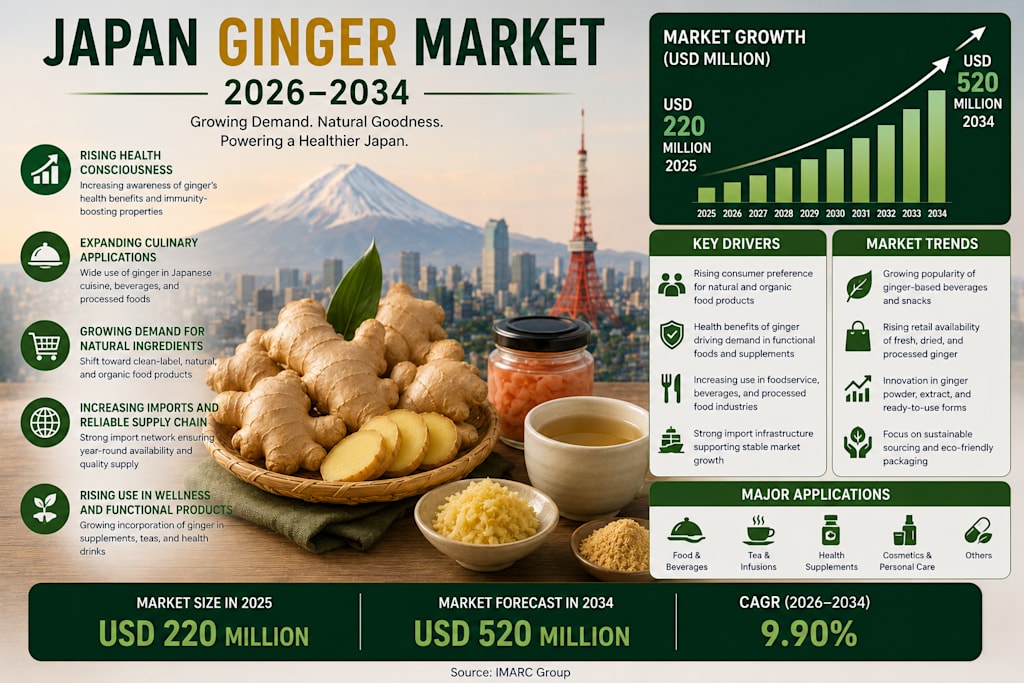
Market Overview
Ginger has long been an essential ingredient in Japanese cuisine, traditional remedies, and wellness products due to its distinctive flavor, nutritional benefits, and medicinal properties. The growing consumer preference for natural ingredients, functional foods, and plant-based health solutions is significantly contributing to the expansion of the ginger market in Japan. Ginger is widely utilized across food and beverage products, pharmaceutical formulations, cosmetic applications, and dietary supplements, making it a versatile commodity with broad commercial appeal.
The Japan ginger market size reached USD 220 Million in 2025. Looking forward, IMARC Group expects the market to reach USD 520 Million by 2034, exhibiting a growth rate (CAGR) of 9.90% during 2026-2034. The market is experiencing strong growth due to rising health consciousness, increasing demand for natural wellness products, and expanding applications across multiple end-use industries.
Request PDF Sample for more detailed market insights:
Role of Innovation in Market Development
- Expansion of Functional Food and Beverage Products
Food manufacturers are increasingly incorporating ginger into functional foods and beverages to meet consumer demand for health-enhancing products. Ginger is recognized for its antioxidant, anti-inflammatory, and digestive health benefits, making it a popular ingredient in wellness drinks, herbal teas, nutritional supplements, and fortified food products.
- Growth of Natural Pharmaceutical Ingredients
The pharmaceutical industry is increasingly utilizing ginger extracts and derivatives in the development of natural health products and traditional remedies. Ginger-based formulations are commonly used to support digestive health, reduce nausea, and promote overall wellness. Growing consumer interest in natural healthcare alternatives is encouraging further product development within this segment.
- Rising Demand in Cosmetics and Personal Care Products
The cosmetics industry is leveraging ginger’s antioxidant and skin-conditioning properties in a variety of personal care formulations. Ginger extracts are increasingly incorporated into skincare, haircare, and wellness products designed to improve skin health, enhance circulation, and support natural beauty solutions.
Japan Ginger Industry Trends and Drivers
- Increasing Consumer Focus on Health and Wellness
Growing awareness regarding preventive healthcare and healthy lifestyles is a key driver of market growth. Consumers are actively seeking natural ingredients that support immunity, digestion, and overall well-being. Ginger’s well-established health benefits are making it a preferred ingredient across numerous food and health products.
- Rising Popularity of Natural and Clean-Label Products
The clean-label movement is influencing purchasing decisions across Japan’s food and beverage industry. Consumers increasingly prefer products containing recognizable, natural ingredients with minimal processing. Ginger aligns well with this trend, supporting its growing use in premium and health-focused product categories.
- Expansion of Functional and Herbal Product Markets
The demand for herbal supplements, functional beverages, and plant-based wellness products is increasing steadily. Ginger’s versatility and broad health applications make it a valuable ingredient in these rapidly growing market segments, creating new opportunities for manufacturers and suppliers.
Japan Ginger Market Segmentation
Product Type Insights
• Fresh Ginger
• Dried Ginger
• Preserved Ginger
• Ginger Oil
• Others
Application Insights
• Food Industry
• Pharmaceuticals Industry
• Cosmetics Industry
• Others
Distribution Channel Insights
• Traditional Retail
• Modern Retail Stores
• Others
Regional Insights
• Kanto Region
• Kinki Region
• Central/Chubu Region
• Kyushu-Okinawa Region
• Tohoku Region
• Chugoku Region
• Hokkaido Region
• Shikoku Region
The segmentation highlights the diverse product forms, industrial applications, and retail channels contributing to the growth of Japan’s ginger market.
Competitive Landscape
The Japan ginger market includes agricultural producers, ingredient suppliers, food processing companies, pharmaceutical manufacturers, and cosmetics brands. Competition is driven by product quality, sourcing practices, innovation capabilities, and distribution networks. Companies are focusing on organic cultivation, value-added ginger products, and sustainable sourcing strategies to strengthen their market position and meet evolving consumer preferences.
Market Outlook
The Japan ginger market is expected to witness robust growth over the coming years, supported by increasing demand for functional foods, natural healthcare products, and clean-label ingredients. Expanding applications in the food, pharmaceutical, and cosmetics industries will continue to drive market development. Additionally, growing consumer awareness regarding wellness and preventive health is expected to create new opportunities for ginger-based products. As natural and plant-based solutions gain popularity, ginger is anticipated to remain a key ingredient across multiple sectors of Japan’s consumer goods market.
About IMARC Group
IMARC Group is a leading market research and consulting company that provides management strategy and market research services worldwide. The company offers industry analysis, market forecasting, feasibility studies, business consulting, and data-driven intelligence solutions across a wide range of industries and global markets.
About the Creator
David Michel
David Michel brings precision and depth to the world of market research. By uncovering trends, analyzing data, and delivering meaningful insights, he helps businesses navigate opportunities with confidence.
Enjoyed the story? Support the Creator.
Subscribe for free to receive all their stories in your feed.
Comments
There are no comments for this story
Be the first to respond and start the conversation.