
Japan Docking Station Boom: Powering the Future of Flexible Work
Growing demand for seamless connectivity and efficient workstations is reshaping tech accessories

Market Overview
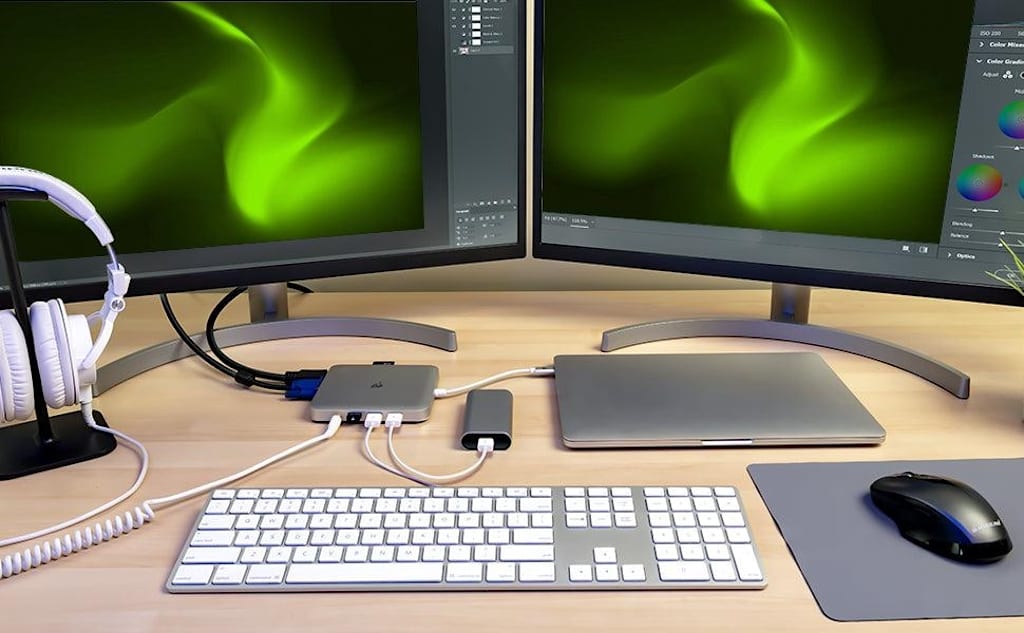
Docking stations are hardware devices that allow users to connect laptops, tablets, and smartphones to multiple peripherals such as monitors, keyboards, printers, and external storage devices through a single interface. These devices enhance productivity by simplifying connectivity and enabling a desktop-like experience with portable devices.
In Japan, the docking station market is gaining traction as work environments continue to evolve. The rise of hybrid work models, where employees split time between home and office, has increased the need for flexible and efficient workstation setups. Docking stations provide a convenient solution by allowing users to quickly connect and disconnect devices without complex configurations.
The Japan docking station market reached approximately USD 483.5 million in 2025. Looking ahead, the market is projected to grow to around USD 674.1 million by 2034, exhibiting a compound annual growth rate (CAGR) of 3.76% during 2026–2034. Growth is supported by increasing adoption of portable computing devices, expanding remote work culture, and demand for enhanced connectivity solutions.
Download a Sample PDF of This Report
Role of Innovation in Market Development
- USB-C and Universal Connectivity
The adoption of USB-C technology is transforming docking stations by enabling faster data transfer, power delivery, and compatibility across multiple devices. Universal docking solutions are becoming more popular due to their flexibility and ease of use.
- Multi-Display and High-Performance Support
Modern docking stations support multiple high-resolution displays, catering to professionals who require enhanced visual workspace for tasks such as design, programming, and data analysis.
- Compact and Portable Designs
Manufacturers are developing compact and lightweight docking stations that are easy to carry and suitable for mobile work environments. These designs align with the growing demand for portability and convenience.
- Growth of Remote and Hybrid Work
Japan Docking Station Industry Trends and Drivers
The shift toward remote and hybrid work models is a major driver of docking station demand. Employees require efficient home office setups that replicate traditional workplace functionality.
- Increasing Use of Multiple Devices
Consumers and professionals are using multiple devices simultaneously, including laptops, tablets, and smartphones. Docking stations help integrate these devices into a unified workspace.
- Expansion of IT Infrastructure and Digital Workflows
Businesses are investing in digital tools and infrastructure to improve productivity. Docking stations play a role in supporting efficient workflows and seamless connectivity.
Japan Docking Station Market Segmentation
By Type
• Laptop docking stations
• Smartphone and tablet docking stations
• Hard drive docking stations
• Others
By Connectivity
• Wired docking stations
• Wireless docking stations
By End User
• Individual consumers
• Enterprises
By Distribution Channel
• Online retail
• Offline retail
By Region
• Kanto Region
• Kansai / Kinki Region
• Chubu Region
• Kyushu–Okinawa Region
• Tohoku Region
• Chugoku Region
• Hokkaido Region
• Shikoku Region
This segmentation highlights how docking station demand varies across device types, connectivity options, and user segments in Japan.
Competitive Landscape
The Japan docking station market includes electronics manufacturers, IT accessory brands, and technology companies. Competition is driven by product compatibility, performance, design, and pricing.
Companies are focusing on developing advanced docking solutions with improved connectivity features, expanding product portfolios, and strengthening distribution channels. Innovation and user experience are key factors in maintaining competitiveness.
Market Outlook
The outlook for Japan’s docking station market remains positive as digital work environments continue to evolve. Increasing reliance on portable devices, growth of hybrid work models, and demand for efficient workspace solutions are expected to support steady market growth.
As connectivity and productivity become central to modern work and lifestyle needs, docking stations are likely to remain an essential accessory in Japan’s technology ecosystem.
About the Creator
David Michel
David Michel brings precision and depth to the world of market research. By uncovering trends, analyzing data, and delivering meaningful insights, he helps businesses navigate opportunities with confidence.
Enjoyed the story? Support the Creator.
Subscribe for free to receive all their stories in your feed.
Comments
There are no comments for this story
Be the first to respond and start the conversation.