
Japan Building Automation Systems Market Expands as Smart Cities and Sustainable Infrastructure Drive Digital Transformation
Growing demand for energy-efficient buildings, smart city development, and advanced automation technologies is accelerating the adoption of Building Automation Systems across Japan.

Japan has long been recognized as a global leader in technological innovation, urban development, and energy-efficient infrastructure. As the country continues to modernize its cities, address environmental challenges, and improve operational efficiency across commercial and industrial facilities, Building Automation Systems (BAS) are becoming increasingly important in shaping the future of intelligent infrastructure.
Modern buildings are no longer simply physical structures. They are evolving into interconnected ecosystems where lighting, heating, ventilation, air conditioning, security, and energy management systems work together to improve efficiency and occupant comfort. Building Automation Systems play a central role in this transformation by providing centralized control and real-time monitoring of building operations.
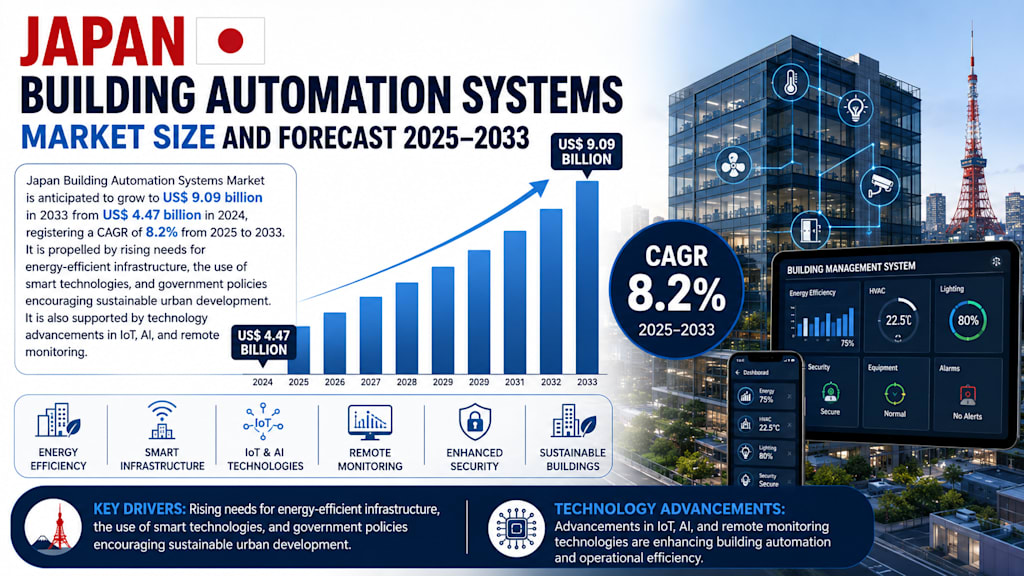
The growing emphasis on sustainability, digital transformation, and smart city initiatives is creating substantial opportunities for the Japanese Building Automation Systems industry. According to Renub Research, the Japan Building Automation Systems Market is expected to grow from US$ 4.47 billion in 2024 to US$ 9.09 billion by 2033, registering a compound annual growth rate (CAGR) of 8.2% between 2025 and 2033. This steady expansion reflects Japan’s commitment to energy conservation, technological innovation, and smart infrastructure development.
Understanding Building Automation Systems
A Building Automation System (BAS) is a centralized platform that monitors and controls a building's mechanical and electrical systems. These systems typically include heating, ventilation, and air conditioning (HVAC), lighting, security, fire safety, access control, and energy management infrastructure.
Using sensors, controllers, communication networks, and software platforms, BAS solutions collect and analyze data from various building systems. This allows facility managers to automate operations, optimize resource usage, improve occupant comfort, and reduce operating costs.
In modern buildings, automation has become increasingly important because of rising energy costs, environmental regulations, and the growing complexity of infrastructure management. BAS solutions help organizations streamline operations while ensuring that facilities remain efficient, safe, and sustainable.
Japan's focus on innovation and smart infrastructure has made Building Automation Systems a critical component of modern building management strategies.
Government Support Is Accelerating Market Growth
One of the most significant factors driving the Japan Building Automation Systems market is strong government support for energy efficiency and smart city development.
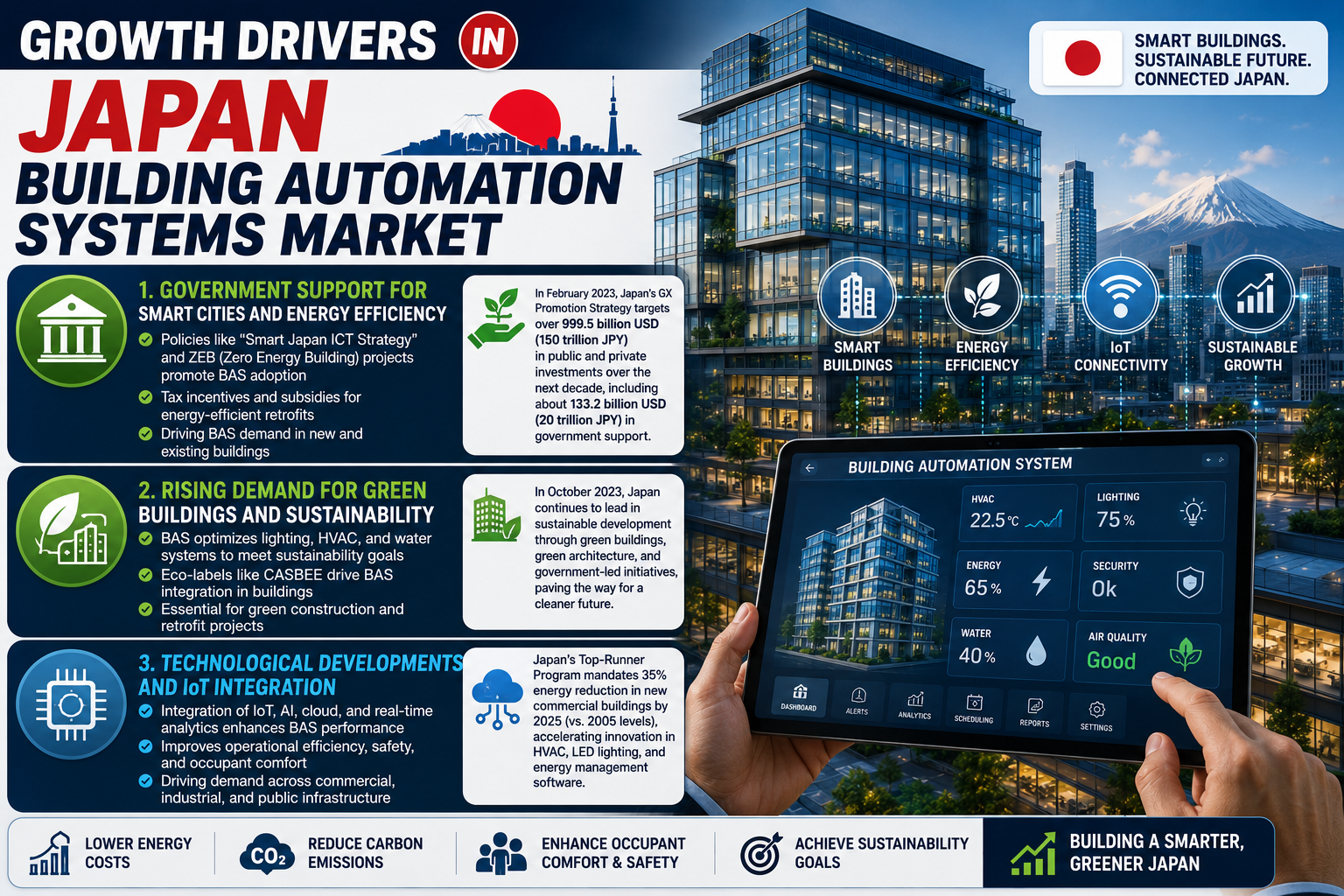
Japan has introduced multiple initiatives designed to reduce carbon emissions, improve urban sustainability, and encourage the adoption of advanced technologies. Programs such as the Smart Japan ICT Strategy and Zero Energy Building (ZEB) initiatives promote the use of intelligent building solutions capable of optimizing energy consumption and reducing environmental impact.
Government incentives, tax benefits, and subsidies for energy-efficient building upgrades have encouraged property owners and developers to invest in automation technologies. These policies support both new construction projects and the modernization of existing facilities.
Japan's Green Transformation strategy further highlights the country's commitment to sustainable infrastructure and long-term environmental objectives. Such initiatives are creating favorable conditions for widespread BAS adoption across multiple sectors.
Sustainability Is Becoming a Core Priority
Environmental sustainability has become a major consideration for developers, property owners, and government agencies throughout Japan.
Buildings consume substantial amounts of energy and contribute significantly to carbon emissions. As a result, organizations are increasingly seeking technologies that can improve energy efficiency while supporting sustainability goals.
Building Automation Systems help achieve these objectives by optimizing heating, cooling, lighting, and water management systems. Automated controls ensure that resources are used efficiently, reducing waste and lowering operating costs.
Japan's growing emphasis on green building certifications and environmentally responsible construction practices has further strengthened demand for automation technologies. Standards such as CASBEE (Comprehensive Assessment System for Built Environment Efficiency) encourage developers to incorporate advanced building management solutions into new projects.
As environmental concerns continue to influence construction and infrastructure decisions, BAS technologies are expected to play an increasingly important role in supporting sustainable development.
IoT and Digital Technologies Are Transforming Buildings
Japan's leadership in technology innovation is significantly enhancing the capabilities of Building Automation Systems.
The integration of Internet of Things (IoT) devices, artificial intelligence, cloud computing, and real-time analytics is enabling buildings to become more intelligent and responsive. Modern BAS platforms can collect vast amounts of operational data and use advanced algorithms to optimize performance automatically.
IoT sensors continuously monitor environmental conditions, occupancy levels, equipment status, and energy consumption. Artificial intelligence helps identify patterns and predict maintenance requirements, allowing facility managers to address issues before they become costly problems.
Cloud-based systems provide remote access and centralized management capabilities, making it easier for organizations to oversee multiple facilities from a single platform.
These technological advancements are improving operational efficiency while enhancing occupant comfort and safety, driving increased demand for BAS solutions across Japan.
Aging Infrastructure Creates New Opportunities
Japan's aging building stock represents another important driver of market growth.
Many commercial, industrial, and residential buildings were constructed before modern automation technologies became available. As these facilities require upgrades to meet contemporary efficiency and sustainability standards, Building Automation Systems are becoming attractive modernization solutions.
Retrofitting older buildings with intelligent management systems allows property owners to improve energy performance without undertaking complete reconstruction projects. BAS technologies help extend the useful life of existing infrastructure while reducing operating expenses.
The modernization of aging facilities is particularly important in urban areas where redevelopment opportunities may be limited. As a result, retrofit projects continue to generate substantial demand for automation solutions.
This trend is expected to remain a significant contributor to market expansion throughout the forecast period.
Commercial Buildings Lead Market Adoption
The commercial sector remains one of the largest adopters of Building Automation Systems in Japan.
Office buildings, shopping centers, hotels, healthcare facilities, and educational institutions require sophisticated infrastructure management solutions capable of supporting complex operations. BAS platforms provide centralized control over lighting, HVAC, security, and energy management systems, helping improve efficiency and reduce costs.
Rising energy prices and increasing environmental, social, and governance (ESG) reporting requirements are encouraging commercial property owners to invest in automation technologies. These systems help organizations meet sustainability objectives while enhancing operational performance.
The integration of security systems, access control technologies, and fire safety infrastructure further increases the value of BAS solutions within commercial environments.
As organizations continue prioritizing efficiency and sustainability, commercial adoption is expected to remain strong.
Industrial Facilities Embrace Automation
Japan's industrial sector is another important contributor to BAS market growth.
Manufacturing facilities require precise environmental controls to ensure product quality, workplace safety, and operational efficiency. Building Automation Systems help regulate temperature, humidity, air quality, and other critical parameters that influence production processes.
Industries such as electronics, pharmaceuticals, and food processing particularly benefit from automation technologies because of their strict environmental requirements.
BAS platforms also support predictive maintenance and real-time monitoring, helping reduce downtime and improve productivity. As Industry 4.0 initiatives gain momentum, the integration of building automation with factory management systems is becoming increasingly common.
The continued modernization of industrial facilities is expected to support sustained demand for BAS solutions.
Online Platforms Are Reshaping Building Management
Cloud-based and online Building Automation Systems are becoming increasingly popular across Japan.
These platforms allow facility managers to monitor and control building operations remotely using centralized dashboards and connected devices. Online BAS solutions offer advantages such as scalability, simplified updates, and reduced infrastructure requirements.
Remote access capabilities became particularly valuable as organizations embraced more flexible operational models and digital transformation strategies. Property managers can oversee multiple facilities simultaneously while responding quickly to operational issues.
Cloud-based platforms also facilitate data analytics, predictive maintenance, and performance optimization, enhancing overall system effectiveness.
As digitalization continues across the built environment, online BAS solutions are expected to experience strong growth.
Hardware Innovation Supports Industry Development
The hardware segment remains a critical component of the Building Automation Systems market.
Sensors, controllers, actuators, networking devices, and communication infrastructure form the foundation of intelligent building management systems. Japanese manufacturers are developing increasingly compact, energy-efficient, and reliable hardware solutions designed to meet the needs of modern buildings.
High-quality hardware is essential for enabling real-time communication between building systems and ensuring accurate monitoring capabilities. Advances in wireless connectivity and IoT integration are further enhancing the functionality of hardware components.
As smart building adoption expands, demand for advanced BAS hardware is expected to remain strong across both new construction and retrofit projects.
Air Quality Management Gains Importance
Indoor air quality has become an increasingly important consideration in building management.
Activated carbon filtration systems and advanced air purification technologies are being integrated into Building Automation Systems to improve indoor environmental quality. These solutions help remove pollutants, volatile organic compounds (VOCs), and other contaminants from indoor environments.
Growing awareness of health and wellness, combined with lessons learned from the COVID-19 pandemic, has increased demand for intelligent air quality management systems.
Building Automation Systems use sensors and automated controls to continuously monitor air quality and adjust filtration systems as needed. This helps create healthier indoor environments while supporting compliance with environmental standards.
The growing focus on occupant health is expected to generate additional opportunities for BAS providers.
Regional Markets Driving Growth
Tokyo
Tokyo remains the largest and most influential market for Building Automation Systems in Japan. The city's concentration of commercial buildings, corporate headquarters, and smart infrastructure projects creates substantial demand for advanced automation technologies. Government initiatives supporting carbon neutrality and energy efficiency further strengthen market growth.
Aichi
Aichi Prefecture is a major industrial hub and an important market for BAS solutions. Manufacturing facilities increasingly adopt automation technologies to improve productivity, optimize energy usage, and support smart factory initiatives.
Chiba
Chiba's ongoing urban development and expanding residential communities are driving demand for energy-efficient buildings and smart home technologies. Commercial property developers are also investing in automation solutions to enhance building performance.
Shizuoka
Shizuoka's combination of industrial activity and urban infrastructure development creates growing opportunities for BAS adoption. Public institutions, healthcare facilities, and educational organizations are increasingly implementing automation technologies to improve efficiency and sustainability.
Challenges Facing the Market
Despite strong growth prospects, the Japan Building Automation Systems market faces several challenges.
One of the primary barriers is the high cost associated with installation and maintenance. BAS implementation often requires significant investments in hardware, software, networking infrastructure, and specialized technical expertise.
Integration with legacy systems also presents difficulties. Many older buildings lack the digital infrastructure necessary for seamless BAS deployment, making retrofit projects more complex and expensive.
Addressing these challenges will be essential for expanding adoption across smaller organizations and older facilities.
Nevertheless, ongoing technological advancements and government support are expected to help overcome these obstacles over time.
Market Forecast: Strong Growth Through 2033
According to Renub Research, the Japan Building Automation Systems Market is forecast to grow from US$ 4.47 billion in 2024 to US$ 9.09 billion by 2033, representing a CAGR of 8.2% between 2025 and 2033. Growth will be supported by smart city initiatives, sustainability objectives, increasing adoption of IoT technologies, and continued investment in intelligent infrastructure.
As organizations continue prioritizing energy efficiency, operational performance, and digital transformation, Building Automation Systems are expected to become increasingly important throughout Japan's built environment.
Final Thoughts
Japan's Building Automation Systems market is entering a new phase of growth driven by technological innovation, sustainability goals, and urban modernization. Intelligent building management solutions are helping organizations improve efficiency, reduce environmental impact, and enhance occupant experiences while supporting broader smart city initiatives.
With Renub Research forecasting market growth from US$ 4.47 billion in 2024 to US$ 9.09 billion by 2033, the industry is well positioned for continued expansion. Advances in artificial intelligence, IoT connectivity, cloud computing, and predictive analytics will further strengthen the capabilities of Building Automation Systems and expand their role across commercial, industrial, and residential sectors.
As Japan continues building smarter, greener, and more connected cities, Building Automation Systems will remain at the heart of the country's infrastructure transformation.
About the Creator
Enjoyed the story? Support the Creator.
Subscribe for free to receive all their stories in your feed.
Comments
There are no comments for this story
Be the first to respond and start the conversation.