
Japan Automotive HVAC Market: Size, Share Report 2026-2034
How Electrification, Smart Climate Technologies, and Passenger Comfort Trends Are Transforming Japan Automotive HVAC Industry

Market Overview
The automotive HVAC (Heating, Ventilation, and Air Conditioning) industry plays an essential role in enhancing passenger comfort, vehicle efficiency, and in-cabin air quality across Japan’s automotive ecosystem. HVAC systems are increasingly becoming more advanced as automakers focus on energy efficiency, smart climate control technologies, and electric vehicle integration. In addition, rising consumer expectations for comfort and safety are encouraging manufacturers to invest in intelligent thermal management systems for both passenger and commercial vehicles.
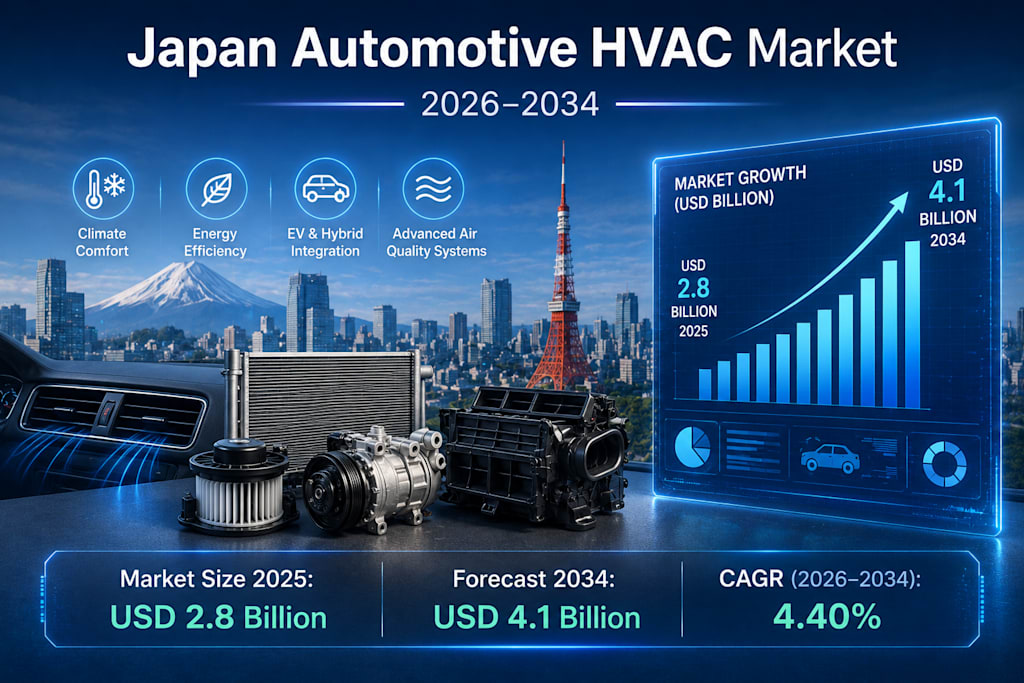
The Japan automotive HVAC market size reached USD 2.8 Billion in 2025. Looking forward, IMARC Group expects the market to reach USD 4.1 Billion by 2034, exhibiting a growth rate (CAGR) of 4.40% during 2026-2034. The market is experiencing stable growth due to increasing vehicle production, rapid electrification of transportation, and growing demand for energy-efficient cabin climate solutions.
Request PDF Sample for more detailed market insights:
Role of Technological Advancements in Market Development
- Smart Climate Control Systems
Automotive manufacturers in Japan are increasingly integrating advanced climate control technologies into modern vehicles. Smart HVAC systems equipped with automatic temperature regulation, humidity sensing, and air purification features are enhancing passenger comfort and driving experience. These intelligent systems can automatically adjust airflow and cabin conditions according to weather and occupancy levels, improving convenience and energy efficiency.
- Growth of Electric Vehicle Thermal Management
The rapid expansion of electric vehicles (EVs) is significantly influencing HVAC system innovation. Unlike conventional vehicles, EVs require specialized thermal management systems to regulate battery temperature while maintaining cabin comfort without excessive energy consumption. Heat pump-based HVAC systems are gaining popularity as they improve energy efficiency and extend EV driving range, making them increasingly important in Japan’s evolving electric mobility landscape.
- Integration of Air Purification Technologies
Growing consumer awareness regarding air quality and health safety is encouraging automakers to integrate advanced filtration and purification technologies into HVAC systems. Features such as PM2.5 filtration, antibacterial filters, and ion-based air purification are becoming more common in premium and mid-range vehicles. These innovations help improve cabin air quality and support healthier driving environments.
Japan Automotive HVAC Industry Trends and Drivers
- Rising Demand for Passenger Comfort
Japanese consumers increasingly prioritize comfort, convenience, and in-cabin experience while purchasing vehicles. This trend is encouraging automakers to introduce advanced HVAC systems with multi-zone climate control, automatic airflow adjustment, and enhanced cooling and heating performance. Luxury and premium vehicle segments are especially contributing to the demand for technologically advanced climate systems.
- Expansion of Electric and Hybrid Vehicles
The increasing adoption of electric and hybrid vehicles in Japan is creating significant opportunities for automotive HVAC manufacturers. Electrified vehicles require energy-efficient HVAC technologies that minimize battery power consumption while maintaining thermal comfort. As automakers accelerate EV production and launch new electric models, demand for innovative thermal management solutions is expected to rise steadily.
- Focus on Energy Efficiency and Sustainability
Environmental regulations and sustainability initiatives are encouraging the development of low-emission and energy-efficient automotive systems. Manufacturers are focusing on lightweight HVAC components, eco-friendly refrigerants, and efficient compressor technologies to reduce vehicle emissions and improve fuel economy. These efforts align with Japan’s broader environmental and carbon neutrality goals.
Japan Automotive HVAC Market Segmentation
By Technology
• Automatic HVAC
• Manual HVAC
By Vehicle Type
• Passenger Cars
• Light Commercial Vehicles
• Heavy Commercial Vehicles
By Component
• Compressor
• Condenser
• Evaporator
• Receiver/Drier
• Expansion Valve
• Others
By Propulsion Type
• Internal Combustion Engine (ICE)
• Electric Vehicles (EVs)
• Hybrid Vehicles
By Region
• Kanto
• Kansai / Kinki
• Chubu
• Kyushu–Okinawa
• Tohoku
• Chugoku
• Hokkaido
• Shikoku
The segmentation highlights the broad application of HVAC technologies across multiple vehicle categories and propulsion systems throughout Japan’s automotive sector.
Competitive Landscape
The Japan automotive HVAC market is highly competitive, with the presence of established automotive component manufacturers, thermal management solution providers, and technology-driven suppliers. Companies are focusing on innovation, energy-efficient system development, and strategic partnerships with automakers to strengthen their market presence. Integration of smart sensors, advanced compressors, and EV-compatible HVAC technologies remains a major area of competition within the industry.
Market Outlook
The Japan automotive HVAC market is expected to witness steady expansion over the coming years, supported by ongoing vehicle electrification, rising consumer expectations for cabin comfort, and advancements in intelligent thermal management technologies. Increasing focus on sustainability, air quality improvement, and energy-efficient vehicle systems will continue to shape market development. As Japan strengthens its position in electric mobility and automotive innovation, HVAC technologies will remain critical in improving overall vehicle performance and passenger experience.
About IMARC Group
IMARC Group is a leading market research and consulting company that provides management strategy and market research worldwide. The company offers comprehensive industry analysis, feasibility studies, business consulting, and market intelligence services across various sectors and regions.
About the Creator
David Michel
David Michel brings precision and depth to the world of market research. By uncovering trends, analyzing data, and delivering meaningful insights, he helps businesses navigate opportunities with confidence.
Enjoyed the story? Support the Creator.
Subscribe for free to receive all their stories in your feed.
Comments
There are no comments for this story
Be the first to respond and start the conversation.