
Is It Truly Random? A 2026 Guide to RNG and Blockchain Fairness in Online Slots
Unboxing the algorithms: How cryptographic hashing and AI are ending the era of "hidden" house secrets.

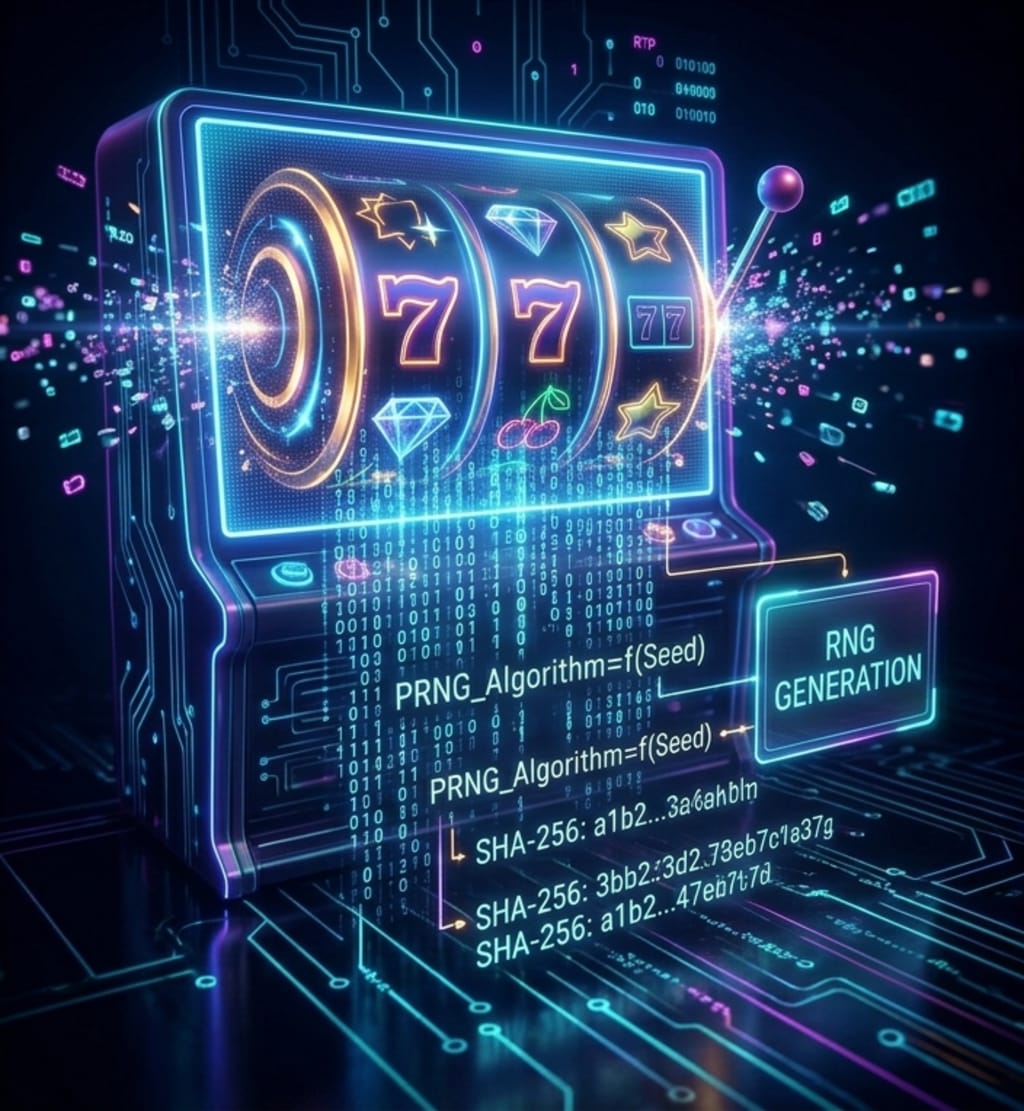
When you click the "Spin" button on a digital slot, a complex chain of events triggers in less than a millisecond. To the casual observer, it’s just flashing lights and moving symbols. But behind the screen lies a sophisticated battle for integrity. In 2026, the question "Is this game rigged?" has a more transparent answer than ever before.
The shift from blind trust to verifiable data has redefined the iGaming industry. Today, players aren't just looking for luck; they are looking for provably fair online slots. Here is how modern technology ensures that every win (and every loss) is mathematically sound.
The Black Box: How Modern RNG Works
At the heart of every licensed slot game is the Random Number Generator (RNG). Specifically, developers use a Pseudo-Random Number Generator (PRNG) that utilizes complex mathematical algorithms to produce sequences of numbers that lack any discernible pattern.
It is a common myth that slots have a "memory"—that they are "due" for a win after a long losing streak. In reality, according to experts at iTech Labs, a leading accredited testing laboratory, each spin is an independent event. The RNG generates thousands of numbers per second; the moment you click "Spin," the latest number determines the outcome, regardless of what happened five minutes or five hours ago.
The Blockchain Revolution: What is "Provably Fair"?

While RNGs are the industry standard, the rise of blockchain technology has introduced a new gold standard: Provably Fair gaming. This technology removes the "black box" element by allowing players to verify the result of each spin themselves using cryptographic hashes.
How does it work? Before the spin starts, the server provides a "hashed" version of the result. Because it's hashed (encrypted), you can't see it, but you have a digital fingerprint of the outcome. After the spin, you receive the "key" to unhash it. If the results match, you have mathematical proof that the game was not altered during the play. This level of blockchain casino transparency is exactly what modern, tech-savvy players demand.
AI and Machine Learning: The New Guardians of Integrity
In 2026, the industry has integrated Artificial Intelligence to move beyond static testing. AI algorithms now monitor gaming platforms in real-time. Their job isn't just to catch cheating players, but to detect software anomalies or bugs that could tilt the house edge unfairly.
These AI "guardians" analyze billions of data points to ensure that the actual Return to Player (RTP) aligns perfectly with the theoretical RTP. If a game starts behaving outside of its programmed probability, the system can flag it for review instantly, ensuring a level of integrity that human auditors alone could never achieve.
Third-Party Audits: Beyond the Code
Technology is powerful, but independent oversight remains the foundation of trust. Major international organizations, such as eCOGRA, act as the "Supreme Court" of online gaming.
These agencies perform rigorous audits of the software and the companies operating it. They don't just check the code; they analyze the actual payouts to ensure that when a game says it returns 96%, it actually does. For a player, seeing an eCOGRA or iTech Labs seal of approval is the most reliable indicator that the platform meets global standards for fairness and safety.
How to Verify Fairness Yourself (Step-by-Step)

If you are playing on a modern platform that supports transparency tools, follow these steps to verify your results:
- Locate the "Provably Fair" tab: Usually found in the game settings or your betting history.
- Check the Seeds: Look for the "Server Seed" and your "Client Seed."
- Use a Verifier: Copy these strings into an independent third-party calculator (hash verifier) to see if the outcome matches the game's record.
Conclusion: An Art Form in Motion
The evolution of online slots from simple mechanical gears to blockchain-verified algorithms is a testament to the industry's commitment to transparency. In 2026, the "math" is no longer a hidden secret—it is a public record. As long as you choose licensed platforms and understand the technology behind the spin, you can enjoy the thrill of the game knowing that the "luck" is as real as the code it’s written on.
Disclaimer: This article is for informational and entertainment purposes only. Always remember to play responsibly and ensure you are playing on licensed platforms.
About the Creator
Olena Ludenko
Digital entertainment analyst and iGaming enthusiast with a passion for uncovering the best in online slots. From classic reels to the latest high-tech releases, I dive into game mechanics and the evolving world of virtual casinos.
Enjoyed the story? Support the Creator.
Subscribe for free to receive all their stories in your feed.
Comments
There are no comments for this story
Be the first to respond and start the conversation.