
Is Fahrenheit 451 About to Become a Reality
And are AI companies destroying rare books in a cynical attempt to monopolise knowledge?

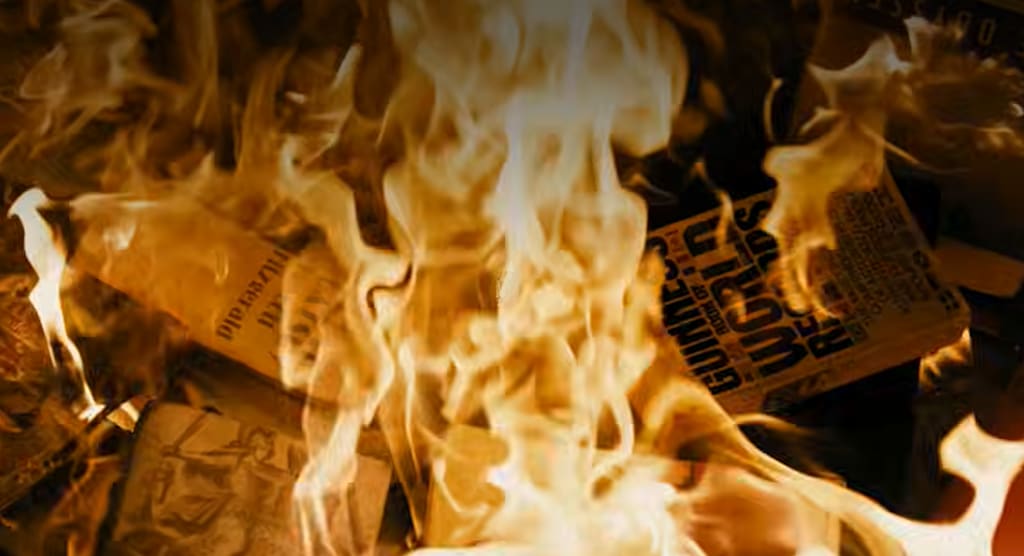
News has begun to surface that AI tech companies are destroying rare and antique books in their millions, in order to store 'pure' knowledge in digital form. It is not clear at this stage how much of this destruction is simply done in order to limit cost, and how much of it is part of a plan to monopolise historic and cultural knowledge for future gain.
AI tech companies are now destroying rare books in their millions in order to feed the knowledge machine
Ray Taylor
For decades now, libraries around the world have been carefully and meticulously digitising some, or all, of their collections in order to make the knowledge more accessible. In the case of the Library of Congress, for instance, all of that knowledge is also made public domain. The source texts for such digitisation projects are, of course, carefully preserved and protected.
In the case of the mass digitisation of books by tech companies for machine learning purposes, there is no care about it. The books are fed into a machine that strips off the covers, cuts the book into pages, and scans each individual leaf, before consigning the physical book to environmentally-friendly (huzzah!) compost. How can this be permissible?
I had a think about the legalities of this process. (I should say that I have a law master's degree but am not qualified to offer legal advice). In the case of books that have sufficient other copies that the tech companies are merely pulping pulp, I have no issues. Yes, of course such a thing is legally permissible if it is done responsibly. I would even suggest that it is a sensible way of using clean texts for machine learning, without the endless recycling of AI cack. But if they are taking rare books, perhaps those which are of historical or cultural importance, to copy and then destroy, I would say they are in direct breach of international laws in additional to domestic law in many jurisdictions.
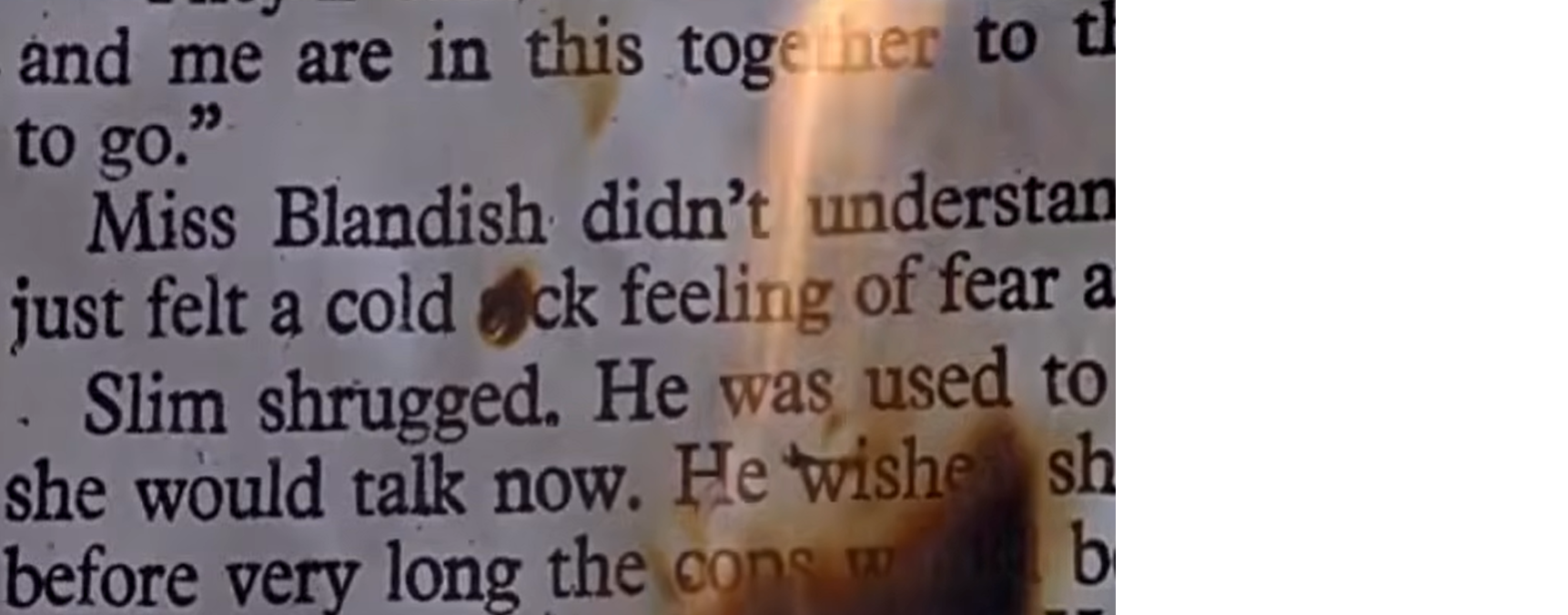
Such actions as destruction, plunder, and private appropriation of rare books and cultural heritage, are specifically prohibited by the 1972 World Heritage Convention and the 1954 Hague Convention (and Protocols). Not only has the USA ratified these conventions, it was the first to ratify the 1972 Convention, having proposed the measure in the time of the Nixon administration.
Only problem is, ratification of an international convention does not over-rule US federal laws. Furthermore, in the current international climate of mass bombing of civilians, 'international law' is itself under threat of cultural destruction. And, even if such actions are unlawful, legal proceedings are likely to take many years to resolve and there is no certainty of any useful outcome, nor of any effective enforcement.
I started to research an article on this subject, providing examples and reference, but then thought... No! Why bother when I could ask my AI friend, Google Gemini, to do all the leg work for me. I was going to just post this under the "AI generated" label but the article I had generated, from the title and input string, lacked the moral indignation that only a human author could provide. So that, to that end, I wrote my own moral outrage piece as above and reserved the Gemini article, with references, for anyone wishing to delve into the story further. Please feel free to read, make of it what you will, and do your own verification and research. Please feel free to use the narrative for your own writings, should you feel the need, like me, to express your horror at the prospect of the destruction of human heritage by AI corporations.
Please note Amazon's part in all this.
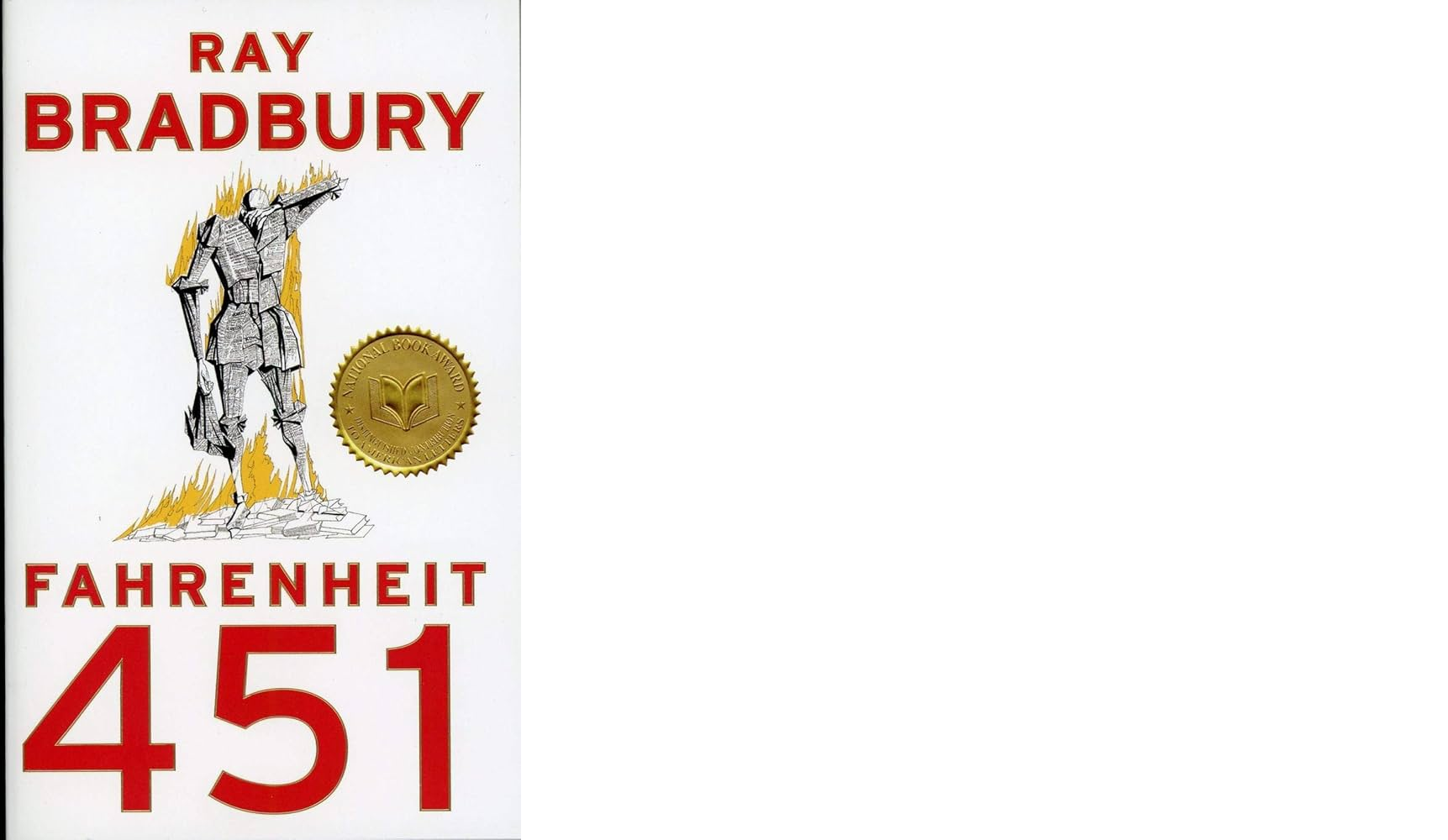
The following article is reproduced from the Gemini output, verbatim, formatted for ease of reading. I have included my input string:
Draft an article on the subject "Are AI companies destroying rare books in order to monopolise knowledge." Use the sources from this conversation and anything else that is relevant. Make a distinction between any apparent attempt to monopolise knowledge and simple wanton destruction to save cost or make commercial gain. Include all references with links to source and a bibliography at the end with links. Use the working title "Is Fahrenheit 451 about to become a reality?"
Ray Taylor, input string used to generate the article below
AI-generated text as follows
In Ray Bradbury’s classic 1953 dystopian novel Fahrenheit 451, firemen do not extinguish fires—they ignite them. Their sole duty is to burn books, reducing human thought and physical literature to ashes to enforce social order and intellectual compliance. For seven decades, Bradbury’s narrative stood as a stark warning against ideological censorship and state control. Today, however, a similar spectacle of book destruction is unfolding—not orchestrated by totalitarian governments in public squares, but executed behind closed doors by high-tech corporations using industrial hydraulic paper-cutters.
Investigative reports and court disclosures have revealed that major artificial intelligence developers—including Anthropic and Amazon—have systematically purchased millions of physical books, including rare, out-of-print, and foreign-language volumes. The bindings are sliced off, the pages are fed through high-speed scanners, and the mutilated physical remains are sent off to be pulped or recycled.
As these industrial "destructive scanning" pipelines operate at an unprecedented scale, an urgent question confronts ethicists, legal scholars, and bibliophiles: Are AI companies deliberately destroying rare books in an attempt to monopolise world knowledge, or is this simply a byproduct of reckless commercial opportunism?
The Machinery of Destruction: Panama and VGT3
The scale of this industrial operation first came to light during legal proceedings against AI developer Anthropic. Court disclosures from a landmark copyright lawsuit revealed "Project Panama," an internal enterprise described in company memos as an effort to "destructively scan all the books in the world." To avoid public scrutiny—with internal memos explicitly noting, "we don't want it to be known that we are working on this"—Anthropic procured millions of used books from global resellers like Better World Books, World of Books, and obscure bookstores across Europe. Hydraulic cutters removed the spines, and high-speed imaging equipment digitized the text before the physical pages were discarded and recycled.
Shortly thereafter, an investigation by 404 Media demonstrated that the practice is widespread across the tech industry. Journalists placed a hidden tracking device inside a rare book sold via a bulk order on an online marketplace and followed its journey to an Amazon facility in Las Vegas designated as VGT3. Workers at VGT3 confirmed that their daily routine consists entirely of receiving shipments of printed books, slicing off their bindings, running pages through industrial scanners, and destroying the physical items.
"Print books from the pre-LLM era are structurally guaranteed to be free of AI contamination... Physical books published before this date are structurally clean of modern poisoning tools."
ISBNdb marketing materials targeted at AI developers
Monopoly Strategy vs. Wanton Commercial Gain
To analyze the ethics of this practice, one must distinguish between two competing explanations: a deliberate attempt to build a digital monopoly on knowledge, versus wanton destruction driven by cost reduction and regulatory arbitrage.
The Monopolisation Hypothesis: Under this interpretation, AI firms are intentionally sweeping up rare physical literature to convert it into proprietary mathematical weight parameters. By destroying the physical originals, they permanently eliminate public domain or out-of-print physical access, effectively forcing future generations to rely on subscription-based corporate AI interfaces to query historical knowledge.
The Commercial Opportunism Hypothesis: Under this interpretation, destructive scanning is chosen purely because it is the cheapest, legally defensible, and technically fastest method to obtain unpolluted text data without incurring copyright liability.
While the prospect of tech monopolies controlling all human knowledge carries dystopian weight, the factual evidence suggests that the primary driver is wanton commercial gain and legal arbitrage, rather than a top-down conspiracy to erase physical culture:
Legal Laundering via the First-Sale Doctrine:
Earlier AI models relied on downloading pirated digital repositories ("shadow libraries" such as Books3 or Library Genesis). When copyright holders filed massive lawsuits—resulting in Anthropic settling for $1.5 billion—AI firms shifted strategy. Under the US First-Sale Doctrine (17 U.S.C. § 109), buying a physical book gives the owner the absolute right to alter, re-sell, or destroy that paper. By pairing physical destruction with digitization, AI companies argued under Fair Use that they were replacing one legally purchased physical format with one digital training copy, creating a legally defensible "clean chain-of-title."
The "Clean Data" Gold Rush:
The open internet is increasingly polluted by low-quality, AI-generated content. If a language model is trained on AI-generated text, it suffers from "model collapse"—a rapid degradation of cognitive performance. Physical books published prior to 2022 represent "structurally clean" training data. Bulk book aggregators like ISBNdb actively market pre-2022 physical inventories to AI labs for this exact reason.
Speed and Cost Efficiency:
Non-destructive scanning of bound books requires slow, specialized equipment or manual page-turning. Slicing the spine off a book allows high-speed sheet-fed scanners to process hundreds of pages per minute. For a tech firm racing to train a multi-billion-parameter model, the physical book is viewed merely as disposable "fodder."
The Collateral Damage: Erasing Out-of-Print History
Even if the primary motivation is rooted in commercial efficiency rather than malicious monopolization, the practical outcome still tilts dangerously toward an accidental monopoly on information.
When AI intermediaries buy up obscure, out-of-print, or rare books in bulk, they are frequently acquiring the final remaining physical copies in existence. Unlike public libraries or archive initiatives like Google Books and the Internet Archive—which preserve digital copies for public access or lending—AI companies keep their scanned corpora strictly confidential. The digitized text is converted into mathematical vectors embedded inside proprietary black-box algorithms.
When the last physical copy of an out-of-print work is sliced, scanned, and shredded, the public original vanishes forever. What remains is a digital representation accessible only through a paid subscription to a corporate chatbot.
Conclusion: A Dystopia of Indifference
Is Fahrenheit 451 becoming a reality? In Bradbury's novel, the book burners were motivated by ideological enforcement. In the 2020s, the "book burners" are driven by corporate incentives, training data hunger, and legal loopholes. The danger is not that AI companies hate literature; it is that they view physical human heritage as entirely friction-bound raw material to be processed into commercial software.
If left unregulated, this combination of legal arbitrage and industrial efficiency risks creating an intellectual paradigm where out-of-print historical knowledge is permanently erased from the physical realm and locked behind proprietary corporate interfaces. Preventing this future will require courts and legislators to recognize that the First-Sale Doctrine was never intended to authorize the systemic erasure of out-of-print literature for private commercial gain.
References & Bibliography
404 Media: Maiberg, E. (2026, August 17). We Tracked a Shipment of Rare Books. It Ended at an Amazon AI Training Facility.
The Guardian: James, K. (2026, August 5). Why is Anthropic destroying books?
https://www.theguardian.com/commentisfree/2026/aug/05/anthropic-ai-destroying-books
Wikipedia: Wikipedia Contributors. (2026). Project Panama. Wikipedia, The Free Encyclopedia.
Futurism: Tangermann, V. (2026, July 25). AI Companies Are Buying Antique Books, Ingesting Their Contents to Train Models, and Then Destroying Them at Incredible Scale.
https://futurism.com/artificial-intelligence/ai-companies-destroying-rare-books
Firstpost: Vantage on Firstpost. (2026, July 30). AI Companies Are Destroying Rare Physical Books To Feed Their Chatbots [Video]. YouTube.
The Washington Post: Schaffer, A., Oremus, W., & Tiku, N. (2026, January 27). Inside an AI start-up's plan to scan and dispose of millions of books.
https://www.washingtonpost.com/technology/2026/01/27/anthropic-project-panama-books-ai-training/
AI-generated text ends
About the Creator
Raymond G Taylor
Author based in Margate on the English Kent coast, having moved from London. Known for his short stories and flash fiction, as well as poetry and non-fiction writing on subjects such as art, science, technology and the human condition
Enjoyed the story? Support the Creator.
Subscribe for free to receive all their stories in your feed. You could also become a paid subscriber, letting them know you appreciate their work.
Comments
There are no comments for this story
Be the first to respond and start the conversation.