
IoT and Mobile App Development Companies in Dallas Leading Industrial Innovation
Beyond the Oil Boom — How Dallas Tech Firms Are Leading the Next Wave of IoT and Mobile Innovation

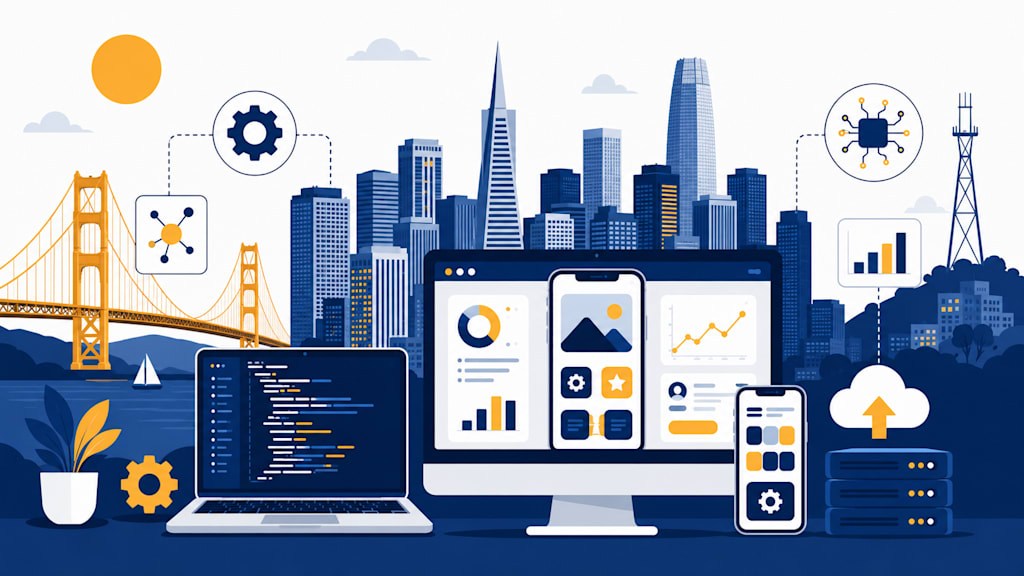
Dallas has never been a city that waits for someone else to define its next chapter. The oil boom shaped it. The corporate relocations of the past decade reshaped it again. And now, quietly but unmistakably, a third transformation is underway — one happening inside warehouses, hospitals, logistics centers, and manufacturing facilities across the DFW area, driven by IoT sensors and the mobile applications that make sense of what those sensors collect.
This isn't a story about Dallas trying to become Silicon Valley. It's a story about a city with deep roots in the industries that IoT actually serves — logistics, healthcare, energy, manufacturing — developing genuine technical capability in the technology those industries need most. For business owners and operations managers in the region looking for development partners who understand that context, the local market has more to offer than most people expect.
Here are five firms worth knowing about.
1. TechGropse
TechGropse operates as a full-cycle mobile app development company in Dallas, Texas, which in the IoT context matters more than it might sound. Connected industrial applications involve multiple layers — hardware integration, backend data architecture, real-time dashboards, and the mobile interface that field workers or operations managers actually use. When different vendors own different layers, the handoffs between them become a source of risk. TechGropse keeps those layers under one roof, which means the team designing the data architecture is the same team building the mobile interface on top of it.
Their client work spans healthcare, logistics, field services, and manufacturing — industries that are heavily represented in the Dallas-Fort Worth area and that have specific, non-negotiable requirements around reliability and data integrity. For organisations building connected industrial applications where continuity of development ownership matters, they're a strong option to evaluate.
2. Syberry
Syberry has built a quiet but solid reputation in the Dallas market through a consulting-led approach that prioritises understanding a client's operational context before proposing technical solutions. They're not the most visible firm in the region, but the consistency of positive client feedback tells a more reliable story than marketing presence.
Their strength is in enterprise-level custom development — the kind of work that arises when an organisation has operational complexity that off-the-shelf software can't address. For medium to large businesses with specific integration requirements or workflows that standard platforms weren't designed to support, Syberry's methodical approach to scoping and delivery is genuinely valuable.
3. Momentum Design Lab
Momentum Design Lab sits at the intersection of UX design and mobile development, which gives them a perspective on IoT applications that purely engineering-oriented firms often lack. The observation that drives their approach is worth taking seriously: most IoT implementations fail not because the hardware doesn't work, but because the mobile interface that workers interact with every day is poorly designed.
In industrial environments, that friction carries real operational cost. An app that field technicians find confusing or slow to navigate doesn't just create frustration — it affects the quality and speed of the work they're doing. Momentum's focus on how software actually gets used, rather than just how it functions technically, addresses a failure mode that organisations often don't anticipate until they're already experiencing it.
4. Sideways8
Sideways8 takes a pragmatic, outcome-oriented approach to mobile and web development that suits small and medium-sized businesses in the Dallas area particularly well. They're not trying to compete with the largest enterprise agencies in the market — their value is in delivering quality digital products efficiently for organisations that need capable development partners without the overhead and process complexity of a large firm.
Their work spans mobile applications, web platforms, and digital strategy across real estate, retail, and professional services. For growing Dallas businesses that need a development partner focused on practical outcomes rather than elaborate engagements, Sideways8 represents a sensible and well-regarded option.
5. Ntooitive Digital
Ntooitive Digital has developed specific expertise in analytical application design, which makes them particularly relevant in the IoT context. The challenge for most organisations implementing connected industrial systems isn't collecting data — modern IoT infrastructure generates it abundantly. The challenge is building the analytical layer that turns that data into decisions.
Ntooitive's experience in designing applications around data intelligence rather than just user interfaces means they think about the problem from the output backwards — what does a manager or operator need to understand, and how should the application surface that information clearly? For Dallas businesses in logistics, energy, or manufacturing that are sitting on IoT data they're not fully utilising, that analytical orientation is worth exploring.
What to Think Through Before Choosing a Partner
IoT and industrial mobile development involves a set of considerations that standard app development projects don't always surface.
Start by thinking seriously about integration requirements. Industrial mobile applications rarely exist in isolation — they need to connect with existing enterprise systems, hardware APIs, and data infrastructure that may have been built over many years. A development partner's experience with those integration challenges is more relevant than their general portfolio quality.
Consider who will maintain the application after launch. IoT applications operate in environments that change — hardware gets updated, OS versions shift, operational requirements evolve. The post-launch relationship with your development partner matters more in this context than in consumer app development, where a stable product can run without much intervention for extended periods.
Ask specifically about their experience with real-time data handling. Mobile applications that surface IoT data often need to process and display information with minimal latency. That's a specific technical requirement that not every development firm has genuinely solved before.
Final Thought
Dallas's position at the centre of industries that depend most heavily on IoT — logistics, healthcare, energy, manufacturing — gives the firms operating here a practical advantage that development studios in other markets don't have. They're not learning about these industries from briefs and discovery calls alone; they're surrounded by the operational realities their clients are trying to solve.
The five firms above represent different approaches to that challenge, and the right fit depends on your specific project, industry context, and organisational scale. The discovery conversation is where that fit becomes clear — and in a market with this much genuine capability, it's worth having several of them before making a decision.
About the Creator
Jack Cook
Hi myself Jack, a mobile application developer with 5+ years of experience in creating intuitive and engaging user experiences for iOS and Android platforms.
Enjoyed the story? Support the Creator.
Subscribe for free to receive all their stories in your feed.
Comments
There are no comments for this story
Be the first to respond and start the conversation.