
Invisible Infrastructure: How Teater Besar’s Wireless Revolution Freed Its Engineers to Focus on Art
By adopting Sennheiser Spectera, Jakarta’s premier performance venue transformed wireless audio from a logistical burden into an intelligent, adaptive system proving that the most advanced technology is often the kind you stop noticing.

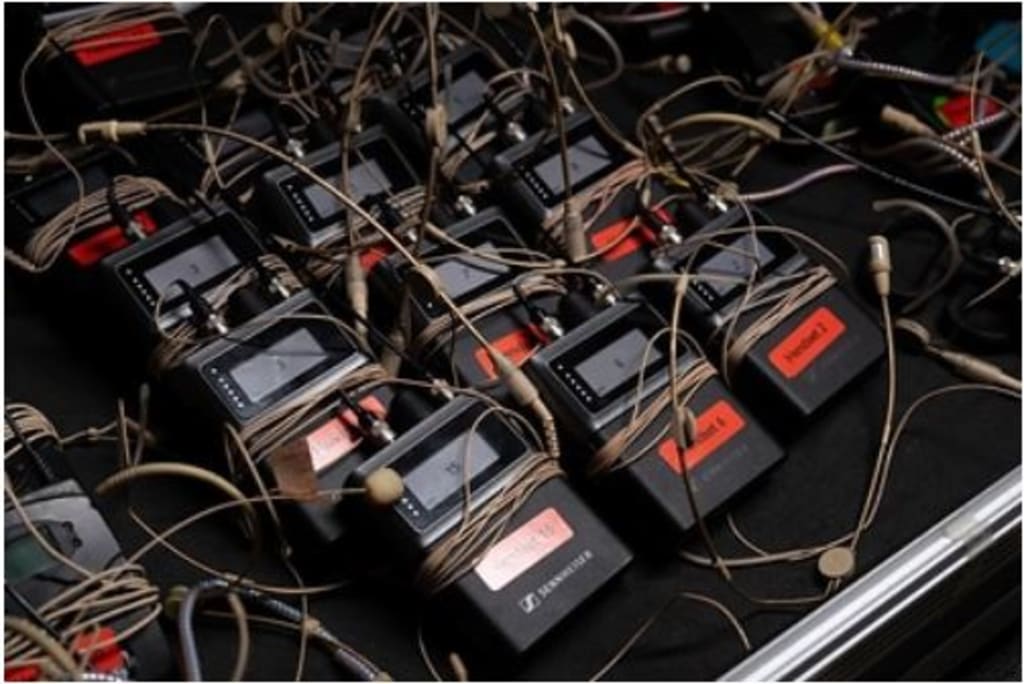
In the high-stakes world of live theatre, audio failure isn’t just a technical glitch; it’s a narrative rupture. For Teater Besar, the 1,200-seat cornerstone of Jakarta’s Taman Ismail Marzuki arts complex, this reality has long defined its operational rhythm. Hosting everything from large-scale musicals to corporate panels, the venue faces a unique challenge: no two productions share identical technical demands. Each brings its own crew, stage configuration, and wireless microphone requirements, forcing the audio team to rebuild their RF environment from scratch for every event. After upgrading from analog to digital in 2018, they hit a new ceiling: as productions grew more ambitious, so did the number of wireless channels, leading to frequency clashes, bulky equipment racks, and hours spent troubleshooting interference instead of refining sound. The solution wasn’t more gear, but smarter architecture. Enter Sennheiser Spectera, the world’s first wideband, bidirectional wireless ecosystem, and with it, a fundamental shift in how Teater Besar approaches live sound.
Spectera’s impact begins with physical transformation. Where 32 traditional wireless microphones once required massive racks of dedicated receivers, a single compact base station now handles the entire load. This isn’t merely space-saving; it reconfigures workflow. Load-in times shrink. Setup becomes predictable. The cognitive load on engineers drops dramatically. But the deeper revolution lies in RF management. Previously, coordinating 40–50 simultaneous microphones meant navigating invisible interference through trial and error a high-wire act where mistakes echoed through the auditorium. Spectera’s WebUI changes this entirely, rendering the RF spectrum visible in real time. Engineers can now scan for clean frequencies before curtain-up, monitor signal health during performances, and verify battery status without guesswork. As Technical Audio Specialist Dwi Winarno notes, “RF performance is visible and we can analyse it directly through the monitoring software before an event begins.” This transparency turns uncertainty into confidence.
The system’s bidirectional design further distinguishes it from conventional wireless platforms. Traditional setups operate on a one-device-to-one-receiver model, scaling linearly with channel count. Spectera uses shared spectrum resources intelligently, allowing multiple bodypacks to communicate through a single infrastructure without mutual interference. This efficiency is critical in Teater Besar’s acoustically complex space, where architectural features already challenge sound propagation. With 70% of wireless-dependent productions now using Spectera (typically around 15 channels), the venue has achieved remarkable consistency: zero reported interference issues since deployment across eight to ten major shows. Reliability here isn’t abstract; it means engineers spend less time firefighting and more time listening, adjusting, and serving the artistic vision.
Crucially, this upgrade was never about replacing existing infrastructure. System integrator Albeta designed the Spectera deployment as an expansion layer, preserving prior investments while solving emergent bottlenecks. This pragmatic approach reflects mature technical stewardship: innovation as evolution, not disruption. The result is a system that grows with the venue’s needs rather than dictating them. When future productions demand more channels or different configurations, Spectera’s software-defined architecture adapts without hardware overhauls. For a cultural institution operating in a rapidly evolving arts landscape, this flexibility is as valuable as sonic fidelity.
Ultimately, Teater Besar’s adoption of Spectera exemplifies a broader truth about live production technology: the best systems disappear. They don’t announce themselves through specs or branding; they enable artists and technicians to focus on what matters. Dwi Winarno’s assessment “Up until now, there really hasn't been another system quite like this” speaks not to novelty, but to alignment. Spectera doesn’t impose a workflow; it accommodates the messy, variable reality of live performance. In doing so, it restores agency to the humans behind the console. For audiences, nothing changes audibly. But backstage, a quiet revolution has taken root: wireless audio is no longer a constraint to manage, but a foundation to trust. And in that trust, art finds room to breathe.
About the Creator
Mark Lim
Hi I am mark an automotive student and a car, tech and food enthusiast ! Im gonna try and post daily & hope you enjoy what I write and do share my page with people you know. I would gladly appreciate it! Cheers
Enjoyed the story? Support the Creator.
Subscribe for free to receive all their stories in your feed.
Comments
There are no comments for this story
Be the first to respond and start the conversation.