
Instagram’s Crackdown on Undisclosed AI Personas
As artificial intelligence blurs the line between human and machine, the platform introduces strict labeling requirements and algorithmic penalties to restore digital authenticity and user trust.

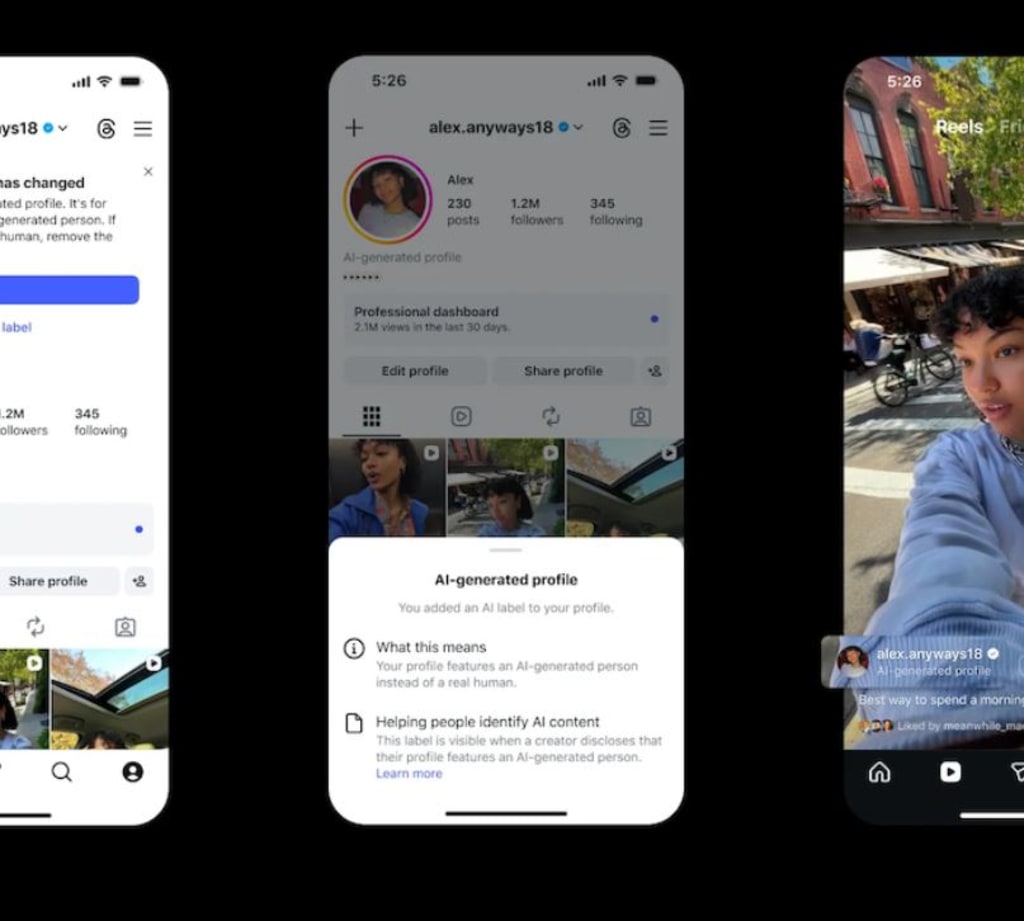
Social media has always been a theater of curated realities, but the advent of generative artificial intelligence has introduced a profound new layer of deception: the completely synthetic human. For years, users have scrolled past flawless influencers, empathetic doctors, and charismatic dating prospects, only to discover that the person on the other side of the screen never actually existed. Recognizing the growing erosion of user trust, Instagram announced a significant policy shift on Monday, targeting the proliferation of undisclosed AI-generated profiles. By mandating clear disclosures and penalizing those who hide behind synthetic faces, the platform is attempting to redraw the boundary between human authenticity and algorithmic fabrication in an era where seeing is no longer believing.
At the core of Instagram’s new strategy is a fundamental rebranding of its transparency tools. The platform is retiring its somewhat ambiguous “AI creator” label in favor of the much more explicit “AI-generated profile.” This semantic shift is designed to eliminate any confusion about the nature of the account, making it immediately clear to users that the individual featured is a product of generative AI rather than a human being assisted by digital tools. To enforce this standard, Instagram is wielding its most powerful currency: algorithmic reach. Accounts that feature AI-generated people but fail to apply the new label will face reduced visibility, effectively throttling the distribution of synthetic influencers who attempt to pass as human. Conversely, creators who embrace the label will not be penalized for their use of AI, signaling that the platform’s issue is not with the technology itself, but with the deception surrounding it. Crucially, Instagram has drawn a distinct line between synthetic identities and AI-assisted creativity; users who employ AI merely to edit photos, polish captions, or generate graphics are entirely exempt from the new labeling requirements.
This policy intervention arrives at a critical juncture, driven by a rising tide of user frustration and investigative reporting that has exposed the darker applications of synthetic personas. The catalyst for Instagram’s crackdown is the fundamental violation of the social contract: users simply do not like being tricked. As the company acknowledged in its announcement, the experience of engaging with a profile that appears human, only to later discover it is a sophisticated algorithmic construct, breeds resentment and distrust. This is not a hypothetical concern. Earlier this year, an investigation revealed that the gay dating app Goose had deployed a network of AI-generated male influencers on Instagram to lure potential users, with some synthetic personas even initiating direct messages to drive sign-ups. Similarly, recent reporting uncovered hundreds of AI-generated doctors and wellness personalities dispensing unverified health claims and promoting supplements to vulnerable audiences. In these contexts, an undisclosed AI profile is not merely a quirky digital art project; it is a vehicle for manipulation, fraud, and public health risks.
Instagram’s push for AI transparency must also be understood within the broader, increasingly turbulent context of its parent company’s relationship with artificial intelligence and user safety. The platform recently faced severe backlash over an AI image-generation tool that allowed users to create pictures utilizing the likenesses of real people without their explicit consent, prompting Meta to quietly remove the feature after users objected to their public content being scraped. Furthermore, this new labeling policy coincides with Meta’s efforts to rehabilitate its image regarding user well-being. Just last week, the company reached a staggering $18 billion settlement with U.S. states over allegations that Facebook and Instagram deliberately harmed the mental health of children and teenagers. As part of that landmark agreement, Meta is implementing stringent new guardrails, including default two-hour daily usage limits for teens, a “Night Mode” block, and muted notifications during school hours.
Together, these developments paint a picture of a tech giant attempting to retrofit trust into a platform strained by its own scale and the rapid acceleration of generative technologies. Instagram’s crackdown on undisclosed AI profiles is a necessary, if belated, acknowledgment that the digital public square cannot function if its participants cannot distinguish between humans and machines. By tying algorithmic reach to transparent disclosure, the platform is establishing a new baseline for digital authenticity. As AI models become increasingly capable of generating photorealistic humans with compelling backstories and interactive capabilities, the burden of proof will inevitably shift. Instagram’s new policy is a vital first step in ensuring that the future of social media remains a space for genuine human connection, rather than an endless hall of mirrors populated by beautiful, profitable ghosts.
About the Creator
Mark Lim
Hi I am mark an automotive student and a car, tech and food enthusiast ! Im gonna try and post daily & hope you enjoy what I write and do share my page with people you know. I would gladly appreciate it! Cheers
Enjoyed the story? Support the Creator.
Subscribe for free to receive all their stories in your feed.
Comments
There are no comments for this story
Be the first to respond and start the conversation.