
India’s Biodiesel Industry Is Accelerating the Nation’s Journey Toward Energy Independence
Government Initiatives, Rising Energy Demand, and Sustainability Goals Are Fueling Growth in India’s Biodiesel Market

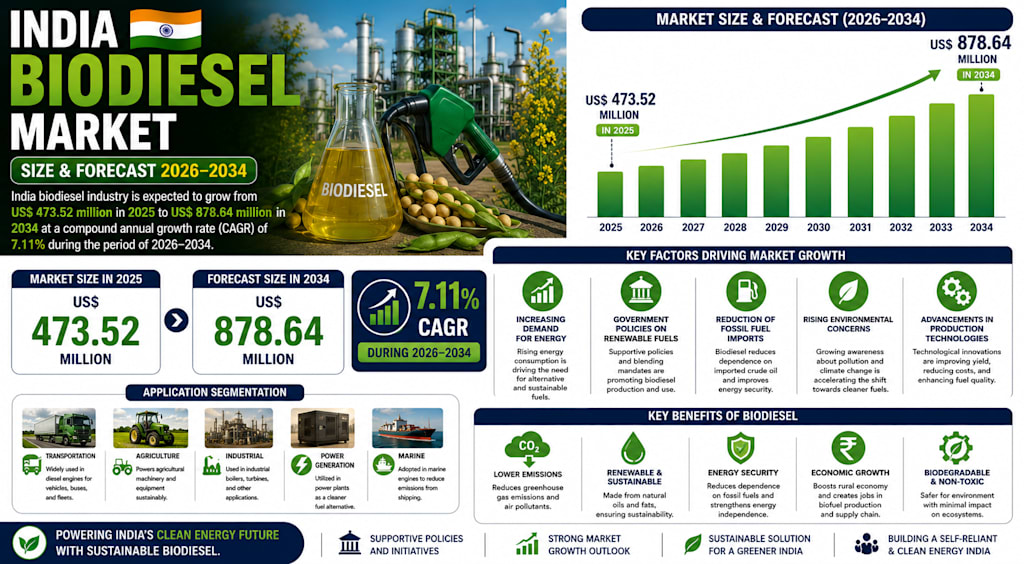
India's energy landscape is undergoing a major transformation as the country seeks cleaner, more sustainable alternatives to conventional fossil fuels. With rising energy consumption, increasing environmental concerns, and a growing commitment to reducing carbon emissions, biodiesel has emerged as a strategic component of India's renewable energy roadmap.
As one of the world's fastest-growing economies, India faces the challenge of meeting rapidly increasing energy demands while simultaneously addressing climate change and reducing dependence on imported crude oil. Biodiesel offers a practical solution by providing a renewable, biodegradable, and cleaner-burning fuel that can be integrated into existing diesel infrastructure.
According to Renub Research, the India Biodiesel Market is expected to grow from US$ 473.52 million in 2025 to US$ 878.64 million by 2034, expanding at a compound annual growth rate (CAGR) of 7.11% during 2026–2034. Government support, growing energy security concerns, environmental sustainability goals, and advancements in biofuel production technologies are driving this growth.
As India accelerates its transition toward cleaner energy sources, biodiesel is becoming an increasingly important contributor to the nation's long-term energy strategy.
Understanding Biodiesel and Its Growing Importance
Biodiesel is a renewable fuel produced from natural feedstocks such as vegetable oils, animal fats, and used cooking oils.
Through a process known as transesterification, these feedstocks are converted into a fuel that can be used in diesel engines either independently or blended with conventional diesel.
One of biodiesel's most significant advantages is its compatibility with existing diesel-powered vehicles and machinery.
Unlike many alternative fuels that require extensive infrastructure changes, biodiesel can often be used without major engine modifications.
In addition to reducing greenhouse gas emissions, biodiesel produces fewer air pollutants and contributes to improved environmental sustainability.
These benefits have made biodiesel a key component of India's renewable energy ambitions.
Government Support Is Driving Market Expansion
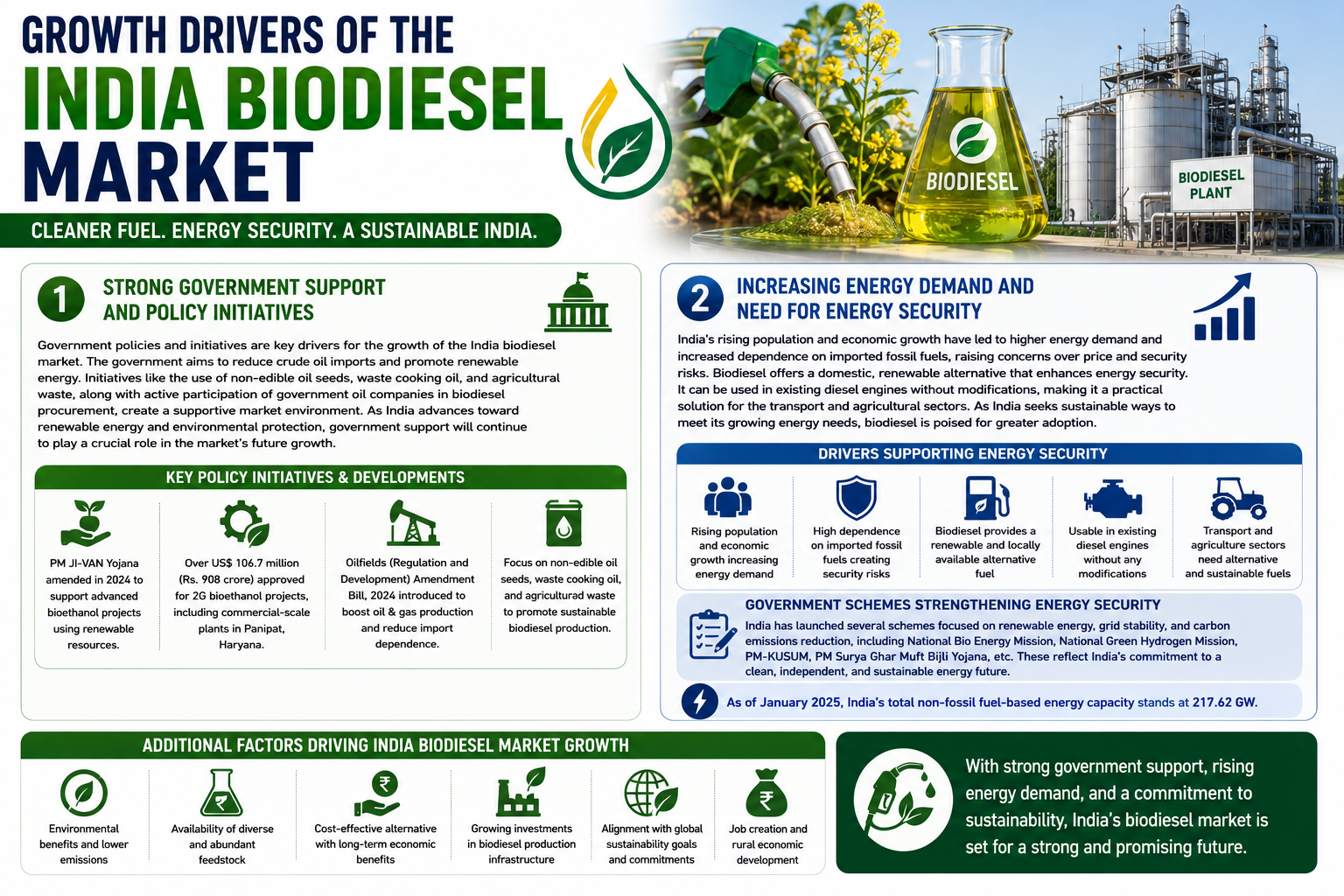
Government policy remains one of the most important catalysts for biodiesel market growth in India.
Recognizing the importance of renewable fuels, the Indian government has introduced numerous initiatives aimed at promoting biofuel production and adoption.
The country's biofuel policies encourage the use of non-edible oilseeds, waste cooking oil, and agricultural residues as feedstocks for biodiesel production.
Government-owned oil marketing companies are actively participating in biodiesel procurement, creating a more stable market environment for producers.
A significant development occurred in 2024 when the Pradhan Mantri Jaiv Indhan - Vatavaran Anukool Fasal Awashesh Nivaran (PM JI-VAN) Yojana was amended to provide financial support for advanced biofuel projects. More than ₹908 crore (approximately US$106.7 million) has been approved for second-generation bioethanol projects, including commercial-scale facilities.
Such initiatives demonstrate India's strong commitment to expanding its renewable energy sector.
Energy Security Concerns Are Encouraging Biodiesel Adoption
India remains heavily dependent on imported crude oil to satisfy its growing energy needs.
This dependence exposes the country to global price volatility, geopolitical uncertainties, and supply disruptions.
As population growth, urbanization, and industrial development continue increasing energy consumption, ensuring energy security has become a national priority.
Biodiesel offers an opportunity to diversify energy sources while reducing reliance on imported fossil fuels.
Locally produced biodiesel can help strengthen domestic energy resilience and support rural economic development through feedstock cultivation and processing activities.
Importantly, biodiesel can be utilized in existing diesel engines without requiring significant modifications, making adoption relatively straightforward.
As India seeks long-term energy independence, biodiesel is expected to play a vital role.
Renewable Energy Goals Are Creating New Opportunities
India has established ambitious renewable energy targets as part of its broader climate commitments.
The government is actively promoting renewable energy technologies through programs such as:
- National Bio Energy Mission
- National Green Hydrogen Mission
- PM-KUSUM
- PM Surya Ghar Muft Bijli Yojana
These initiatives reflect the country's commitment to building a cleaner and more self-reliant energy ecosystem.
As of January 2025, India's total non-fossil fuel-based energy capacity had reached approximately 217.62 GW, highlighting substantial progress in renewable energy development.
Biodiesel is expected to remain an important contributor within this broader renewable energy framework.
Environmental Sustainability Is Supporting Growth
Environmental concerns are becoming increasingly influential in India's energy policy decisions.
Air pollution remains a major challenge across many urban areas, while climate change concerns continue driving demand for cleaner fuel alternatives.
Compared to conventional diesel, biodiesel generates significantly lower greenhouse gas emissions and fewer harmful pollutants.
Its production from waste materials such as used cooking oils further supports circular economy principles and sustainable resource utilization.
India has established ambitious carbon reduction objectives, including plans to reduce its carbon footprint by approximately 30–35% by 2030. The government also aims to achieve 5% biodiesel blending in diesel by 2030.
These sustainability goals are expected to strengthen demand for biodiesel throughout the coming decade.
Biodiesel Fuel Applications Continue Expanding
The transportation sector represents the largest application area for biodiesel in India.
Commercial vehicles, buses, trucks, agricultural machinery, and industrial equipment increasingly utilize biodiesel blends to reduce emissions and improve sustainability.
One of biodiesel's key advantages is its ability to function effectively in existing diesel engines without requiring major modifications.
This compatibility reduces adoption barriers while allowing users to transition toward cleaner fuels more easily.
Rising fuel prices and increasing awareness of environmental responsibility are encouraging transportation operators to explore biodiesel solutions.
As transportation activity continues growing nationwide, demand for biodiesel fuel is expected to expand significantly.
Power Generation Creates Additional Demand
The use of biodiesel in power generation is becoming increasingly important, particularly in remote and rural regions.
Diesel generators remain widely used across India for backup electricity and decentralized power generation.
Biodiesel provides a cleaner alternative that helps reduce emissions while maintaining reliable electricity supply.
Industries, institutions, and commercial facilities are increasingly incorporating biodiesel-powered generators into sustainability programs.
Government efforts to promote renewable and decentralized energy systems further support biodiesel adoption within the power generation sector.
As electricity demand continues increasing, biodiesel's role in power generation is expected to grow steadily.
Vegetable Oil Feedstocks Lead Production
Vegetable oil-based biodiesel remains one of the most important segments within India's biodiesel market.
Non-edible oil crops such as jatropha and pongamia are particularly valuable because they do not compete directly with food production.
Government initiatives encourage cultivation of these crops on wastelands, helping maximize land utilization while supporting renewable fuel production.
Although supply consistency and crop yields remain challenges, ongoing agricultural improvements are expected to enhance feedstock availability.
The growing emphasis on sustainable feedstock cultivation will continue supporting the vegetable oil biodiesel segment.
Animal Fat Biodiesel Supports Circular Economy Goals
Animal fat biodiesel is gaining attention as a sustainable method of converting waste materials into valuable energy resources.
Feedstocks such as tallow and meat processing by-products can be transformed into biodiesel while reducing waste disposal challenges.
This approach aligns closely with circular economy principles by maximizing resource efficiency and minimizing environmental impact.
Although collection and processing infrastructure remain limited, growing awareness of waste-to-energy opportunities is encouraging investment in this segment.
Animal fat biodiesel is expected to become an increasingly important part of India's diversified feedstock strategy.
Maharashtra Leads Regional Growth
Maharashtra represents one of India's most important biodiesel markets.
The state's strong industrial base, large urban population, and proactive renewable energy initiatives contribute significantly to biodiesel demand.
Cities such as Mumbai and Pune generate substantial volumes of waste cooking oil, supporting feedstock availability for biodiesel production.
Government efforts to encourage waste collection and biofuel adoption continue strengthening market development.
As renewable energy investments increase, Maharashtra is expected to maintain its leadership position within the biodiesel sector.
Karnataka and Uttar Pradesh Present Strong Opportunities
Karnataka has emerged as another important biodiesel market due to strong policy support, technological capabilities, and growing sustainability awareness.
Bengaluru's focus on innovation and clean technology has helped create favorable conditions for biodiesel adoption.
Meanwhile, Uttar Pradesh benefits from abundant agricultural resources and significant energy demand.
Agricultural residues and non-edible oilseeds provide important feedstock opportunities, while rural energy needs create additional demand for biodiesel-based power solutions.
These states are expected to play increasingly important roles in future market growth.
Challenges Facing the Industry
Feedstock Availability Remains a Concern
One of the biggest obstacles facing the biodiesel industry is securing sufficient feedstock supplies.
Competition with food crops, inconsistent collection systems, and fragmented supply chains can create production challenges.
Developing alternative feedstocks such as algae and expanding waste oil collection infrastructure will be essential for long-term growth.
High Production Costs and Infrastructure Gaps
Biodiesel production costs often remain higher than those of conventional diesel.
Inadequate storage, transportation, and distribution infrastructure also limits broader market penetration.
Greater investment in production facilities, logistics networks, and technological innovation will be necessary to improve competitiveness.
Final Thoughts
India's biodiesel industry is emerging as a critical component of the country's renewable energy future.
According to Renub Research, the India Biodiesel Market is projected to grow from US$ 473.52 million in 2025 to US$ 878.64 million by 2034, driven by strong government support, rising energy demand, sustainability goals, and increasing environmental awareness.
As India continues pursuing energy independence and carbon reduction objectives, biodiesel will play an increasingly important role in diversifying the nation's energy mix.
The future of biodiesel in India extends beyond fuel production—it represents an opportunity to strengthen energy security, support rural development, reduce emissions, and create a more sustainable economy for future generations.
About the Creator
Enjoyed the story? Support the Creator.
Subscribe for free to receive all their stories in your feed.
Comments
There are no comments for this story
Be the first to respond and start the conversation.