
Impact of Overhead Cranes on Warehouse Logistics and Workflow
Enhancing Efficiency and Safety with Overhead Cranes in Warehouse Operations

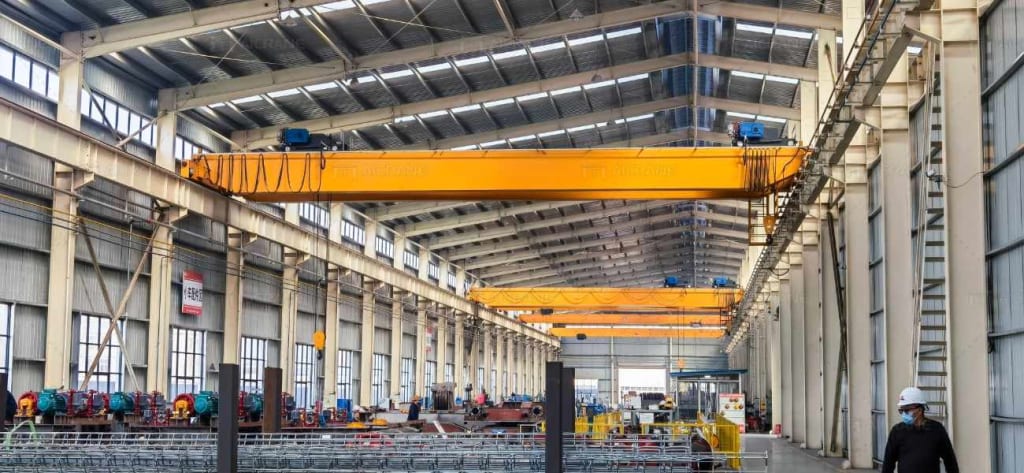
In the fast-paced world of warehousing and logistics, efficiency and precision are crucial. Overhead cranes have become an integral part of modern warehouse operations, offering a range of benefits that enhance workflow, safety, and overall productivity.
This article explores the impact of overhead cranes on warehouse logistics and workflow, focusing on their design, operational advantages, safety enhancements, and the transformative effects on warehouse management.
Design and Functionality of Overhead Cranes
Types of Overhead Cranes
Overhead cranes come in various configurations, each suited to different warehouse needs:
Single-Girder Cranes: Featuring one girder and suitable for lighter loads.
Double-Girder Cranes: With two girders, these overhead cranes in warehouse handle heavier loads and provide greater stability.
Gantry Cranes: Supported by freestanding legs, ideal for spaces without suitable ceiling structures.
Jib Cranes: Providing localized lifting capability within specific areas of the warehouse.
Key Components
Overhead cranes consist of several key components:
Bridge: The primary horizontal beam spanning the width of the warehouse.
Hoist: The lifting mechanism that moves along the bridge, raising and lowering loads.
Trolley: The component that moves the hoist horizontally along the bridge.
Runway: The rails or tracks along which the crane travels, usually mounted on the building’s structure.
Operational Advantages
Increased Efficiency
Overhead cranes streamline material handling processes, significantly increasing operational efficiency. Their ability to move heavy loads quickly and precisely reduces the time required for manual handling, leading to faster turnaround times and higher throughput. By optimizing material flow, overhead cranes enable warehouses to handle more volume with the same resources.
Enhanced Flexibility
The adaptability of overhead cranes allows for versatile warehouse layouts and workflows. Cranes can cover large areas and reach spaces that might be inaccessible with other material handling equipment. This flexibility supports dynamic warehouse operations, accommodating changes in inventory levels, storage configurations, and operational demands.
Space Utilization
By utilizing vertical space, overhead cranes maximize the use of available warehouse area. This is particularly beneficial in high-bay warehouses where floor space is limited. Cranes facilitate the efficient stacking of goods and materials, improving overall storage density and allowing for better organization and accessibility.
As a professional and experienced crane manufacturer and supplier, Aicrane has provided different types of cranes for many years and has cooperated with many customers all over the world.
Safety Enhancements
Reduced Manual Handling
One of the most significant safety benefits of overhead cranes is the reduction in manual handling. By mechanizing the lifting and moving of heavy loads, cranes minimize the risk of injuries related to manual lifting, such as strains, sprains, and musculoskeletal disorders. This contributes to a safer working environment and reduces absenteeism due to injuries.
Advanced Safety Features
Modern overhead cranes are equipped with advanced safety features, including:
Load Limiters: Preventing the crane from lifting loads beyond its rated capacity.
Anti-Collision Systems: Using sensors to prevent collisions with other equipment or structural elements.
Emergency Stop Functions: Allowing operators to halt crane operation immediately in case of an emergency.
Operator Training and Certification
Ensuring that crane operators are well-trained and certified is essential for safe operation. Comprehensive training programs cover crane controls, safety protocols, and emergency procedures, helping to maintain high safety standards and prevent accidents.
Transformative Effects on Warehouse Management
Improved Inventory Management
Overhead cranes contribute to more efficient inventory management by facilitating faster and more accurate movement of goods. This supports just-in-time inventory systems, reducing the need for excess stock and minimizing storage costs. Real-time tracking and precise placement of goods also enhance inventory accuracy and reduce errors.
Streamlined Workflow
Integrating overhead cranes into warehouse operations streamlines workflow by reducing bottlenecks and enhancing coordination between different tasks. Cranes can seamlessly integrate with conveyor systems, automated storage and retrieval systems (AS/RS), and other material handling equipment, creating a cohesive and efficient workflow.
Cost Savings
While the initial investment in overhead cranes can be substantial, the long-term cost savings are significant. Reduced labor costs, lower injury-related expenses, and increased operational efficiency all contribute to a favorable return on investment. Additionally, the enhanced productivity and faster turnaround times can lead to increased revenue.
Scalability and Future-Proofing
Overhead cranes offer scalability, allowing warehouses to expand or reconfigure their operations without significant disruptions. As businesses grow and their needs evolve, cranes can be adapted to accommodate new requirements, ensuring that the warehouse remains future-proof and capable of meeting changing demands.
Challenges and Considerations
Structural Requirements
The integration of overhead cranes requires a robust structural framework capable of supporting the crane and its loads. This often involves reinforcing existing structures or designing new buildings with the necessary load-bearing capacity. Consulting with structural engineers during the planning phase is crucial to ensure safety and stability.
Maintenance and Inspections
Regular maintenance and inspections are essential to ensure the continued safe and efficient operation of overhead cranes. This includes routine checks of mechanical components, lubrication, and addressing any wear and tear. A proactive maintenance schedule helps prevent unexpected downtime and extends the lifespan of the equipment.
Initial Investment
The initial cost of purchasing and installing overhead cranes can be a barrier for some businesses. However, financing options, leasing arrangements, and the long-term benefits often justify the investment. Conducting a thorough cost-benefit analysis can help businesses make informed decisions.
The impact of overhead cranes on warehouse logistics and workflow is profound, offering significant advantages in terms of efficiency, safety, and operational flexibility. By reducing manual handling, optimizing space utilization, and streamlining workflow, overhead cranes transform warehouse operations, contributing to improved inventory management, cost savings, and scalability. While there are challenges to consider, the long-term benefits of integrating overhead cranes make them a valuable asset in modern warehousing and logistics. As technology continues to advance, the role of overhead cranes in enhancing warehouse efficiency and productivity will only grow, solidifying their place as a cornerstone of industrial material handling.
About the Creator
Aicrane Group
Aicrane is a professional fabrication and trade integration enterprise in Overhead Crane, Gantry Crane, Rubber Tire Gantry Crane, Boat Lift, Steel Structure Workshop, Construction Winch, Marine Winch,etc.
Enjoyed the story? Support the Creator.
Subscribe for free to receive all their stories in your feed.
Comments