
Huawei’s Terminal Business Now Has Two Voices in the Boardroom
He Gang’s promotion matters because Terminal’s next fight is about margins, inventory, and chip supply, not comeback stories.
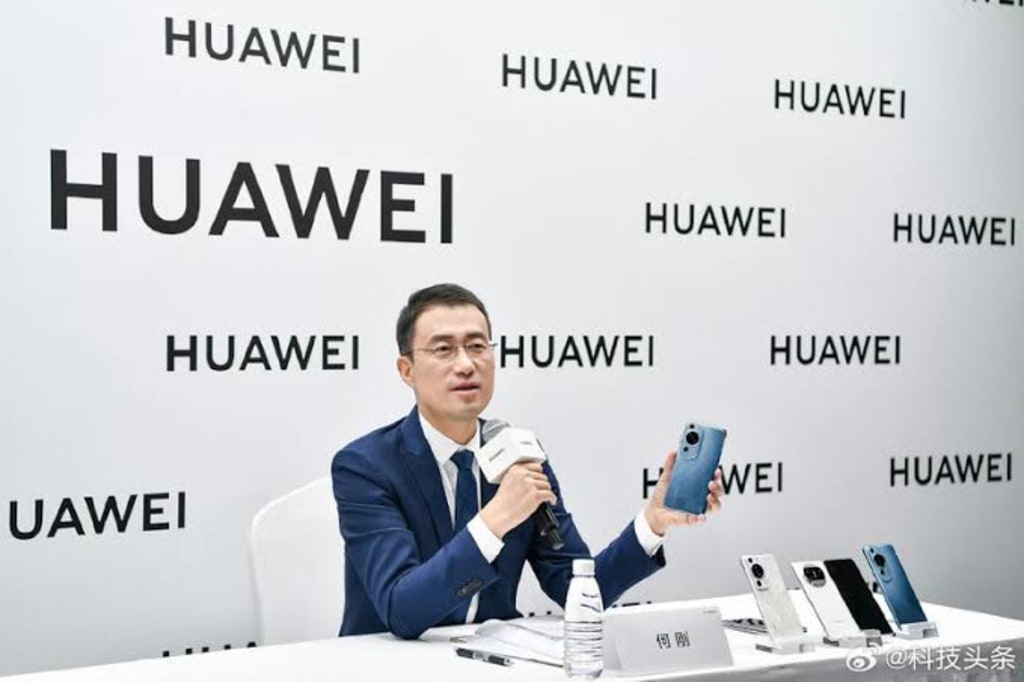
On October 23, 2026, Huawei updated its management page. He Gang moved from alternate director to full director and remains CEO of Terminal BG. That is one more line on a list. Put it next to Huawei’s board rules and Terminal’s recent numbers, and the line changes how the business speaks at the top.
One correction first. Yu Chengdong’s current titles on Huawei’s site are executive director, chairman of Terminal BG, and director of the Product Investment Review Committee. He no longer chairs the Intelligent Automotive Solution BU. After the Vehicle BU’s assets and people were spun into Yinwang, Yu became Yinwang’s vice chairman, and Huawei’s current-positions list no longer includes the Vehicle BU chairmanship. So “two Terminal seats” means this: Yu, as executive director, handles Terminal’s strategic direction. He Gang, as a director, handles daily operations. One business line now has two full board seats.
Huawei’s board is the highest body for strategy, business management, and customer satisfaction. It exercises decision-making power over strategy and operations. The Standing Committee sits under the board. It studies major matters and oversees delegated decisions when the board is not in session. How many people a BG has on the board, and what titles they hold, shapes how its agenda gets discussed and how fast it moves.
Terminal booked RMB 344.473 billion in sales in 2025, up 1.6% year on year. That makes it Huawei’s second-largest revenue source, behind ICT infrastructure at RMB 375.014 billion. Handset shipments were 46.7 million units. HarmonyOS devices passed 40 million. For years, a business of that size relied mainly on Yu Chengdong to represent it at board level. Yu is one of Huawei’s loudest executives. His launch cadence, his communication style, and his way of fighting for resources all carry his personal mark. That single-point, forceful style worked when Terminal needed to break out and recover from sanctions. The decision chain was short. One person could fight a matter to the end in a meeting.
Then the growth numbers changed. Terminal revenue grew 1.6% in 2025. In the first half of 2026, Huawei’s overall revenue rose 9.55% year on year, but net profit attributable to the parent fell 36.77%. Net margin shrank from 8.71% to about 5.09%. R&D spending rose to 25.94% of revenue. Rising memory chip prices squeezed Terminal’s hardware margins, and Huawei adjusted prices in September. Terminal’s next questions are different. How much more goes into the HarmonyOS ecosystem? Can PCs and tablets turn a profit? How does the overseas base hold without GMS? When memory costs rise, which product lines protect profit and which protect share? Launch-event language cannot answer those questions. Operating language can. One person, however strong, cannot keep information density high across every operating issue.
He Gang’s résumé has a section that usually gets skipped. He joined Huawei in 1998 and spent years in wireless. He was president of the Wireless GSM&UMTS product line and director of Global Wireless Solutions Sales before moving to Terminal. There he ran the mobile phone product line and served as Terminal BG COO. Wireless is a carrier business: few customers, large orders, long cycles, hard delivery requirements, and contract and cost accounting that is more granular than consumer electronics. Someone from that background looks at Terminal and asks how much margin a product line makes, how many days inventory turns, whether channel inventory is healthy, and how long an R&D investment takes to pay back. As Terminal BG COO, He Gang managed those items. After April 2024, when Yu Chengdong became Terminal BG chairman and He Gang became CEO, Terminal already had a working split: Yu set strategic direction, He Gang ran operations. Outsiders call He Gang low-key and steady at launch events. More accurately, his attention was never on volume. With someone who deals daily with margins, inventory, channels, and R&D payback on the board, Terminal no longer has to prepare its operating data at the last minute.
He Tingbo holds another seat to watch. She attends as a non-voting executive director. She is also director of Huawei’s Scientist Committee, director of ITMT, and president of the Semiconductor Business Department. Attending as a non-voting executive director does not automatically give her the same voting rights as an executive director. Her powers depend on the board’s rules of procedure. Do not read it as half a vote. The coordination signal is still clear. Two Terminal concerns overlap with her domain: chip supply and HarmonyOS’s underlying capabilities. How flagship chip capacity gets allocated, and which device categories a major HarmonyOS release prioritizes, used to be handled through horizontal talks between BGs. Terminal raised a request, relevant departments assessed it, and the matter moved upward. Now that Terminal’s CEO sits on the board, those issues have a smoother path to company-level discussion. The effect will not arrive as a big announcement. It will show up in details: steadier product cadence, more predictable launch timing for new categories, tighter alignment between HarmonyOS releases and hardware launches. Outsiders cannot verify those details directly. They are still where a governance change shows up first.
Yu Chengdong remains an executive director and remains on the Standing Committee. The Standing Committee is the board’s standing executive body when the board is not in session. It studies major matters and oversees delegated decisions. That position has not lost weight. What changed is that Yu no longer has to be the only board contact for Terminal’s daily operations. He Gang carries the operating language. Yu can put more energy into Terminal’s long-term direction, product investment review, and automotive affairs. The split is now confirmed at the governance level. Nobody has been diluted.
Huawei’s timing also matters. In April 2024, it moved Yu Chengdong to Terminal BG chairman and made He Gang CEO, then gave the arrangement two and a half years to settle. He Gang first became an alternate director, then a full director. The procedure moved step by step. Huawei did not solve overdependence on one person with a sudden replacement. It used time to fix the split, then wrote the split into the board list. That approach is not dramatic. It is harder to reverse than a high-profile reshuffle.
Terminal went from one board seat to two. On paper, that is a personnel change. In practice, it changes governance. A business with more than RMB 300 billion in annual revenue no longer depends on one person’s style and energy to represent its interests. It depends on a structure that can speak about strategy and operations at the same time. Yu Chengdong is still there. He Gang now sits beside him. Two Terminal BG people carry the business’s presence at the top.
About the Creator
Jin
Writer of reamstories
https://reamstories.com/jin
Enjoyed the story? Support the Creator.
Subscribe for free to receive all their stories in your feed. You could also become a paid subscriber, letting them know you appreciate their work.
Comments
There are no comments for this story
Be the first to respond and start the conversation.