
How to Hire Mobile App Developers in 2026 Without Wasting Money
Hiring the right mobile app developers in 2026 is the biggest budget decision a founder makes. This guide breaks down freelancer vs agency vs dedicated teams, iOS and React Native hiring, and the red flags that cost you most.

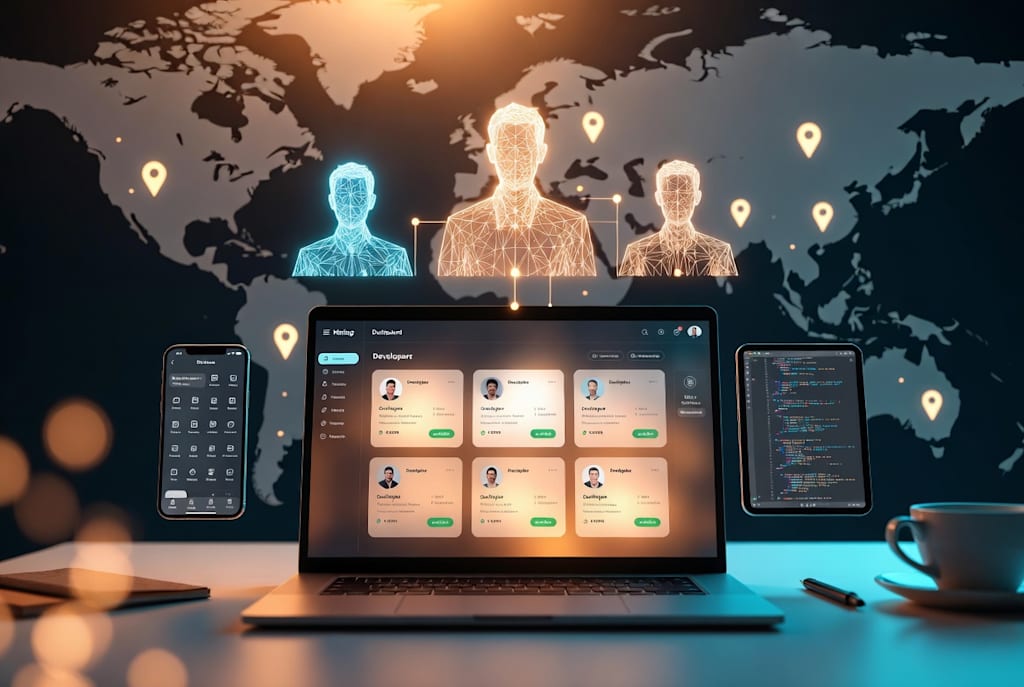
You've got an app idea. You've maybe got a budget. What you don't have is a clear path from "I want to build this" to "it's live in the store and making money." That gap is where most founders lose time and cash.
Hiring the right developers is the make-or-break step in mobile app development. Get it right and your app ships on time and stays clean for years. Get it wrong and you'll spend twice the budget rebuilding code you already paid for once.
This guide walks you through what to look for, what to avoid, and how to think about mobile app development hiring in 2026.
Why Hiring Is the Biggest Cost in Mobile App Development
Software is people. The cost of building a mobile app is mostly the cost of the humans writing the code. Servers, tools, and store fees are pocket change next to a development team's monthly rate.
That means your hiring choice is your biggest budget lever. A great team ships fast and clean. A weak team burns hours, ships bugs, and forces a rewrite six months later.
The good news? You don't need to be technical to hire well. You just need to know what questions to ask and what signals to watch for. Most founders mess up because they trust the wrong gut, not because they lack tech skills.
Freelancer vs Agency vs Dedicated Team
Freelancers are cheap and flexible. They're also a coin toss. The good ones are great. The bad ones disappear mid-project with half your money. If you go freelance, expect to manage them closely and have a backup plan ready.
Agencies sit in the middle. You pay more, but you get accountability, project managers, and a team that won't vanish overnight. Most agencies juggle several clients at once, so don't expect your project to be the priority every week.
Dedicated teams are the sweet spot for growing companies. You get a fixed team that works only on your app, long-term. They learn your product, your users, and your codebase. The rate is usually lower than a US agency and the output is higher than a freelancer scramble.
What "Dedicated" Actually Means
A dedicated developer or team works full-time on your project. They sit in your sprint meetings, they own their work, and they don't get pulled to other clients without warning.
This matters because mobile app development is a long game. The team that builds version 1 should also build version 2 and patch the bugs in between. Context is everything. A team that knows your codebase ships fixes in hours that a stranger would take days to figure out.
Dedicated isn't the same as in-house, by the way. You can have a dedicated offshore team in another country that feels like part of your own staff. Same focus, same continuity, lower cost.
iOS Native Hiring: What to Look For
If your app is iPhone first, you need Swift specialists. Swift is Apple's main language for iOS, and it's moved fast over the last few years. A developer who hasn't shipped iOS work in the last 18 months is already behind.
Ask candidates about Swift Concurrency, SwiftUI, and the App Store review process. If they fumble those topics, keep looking. Real iOS pros know how Apple thinks because Apple's rules shape every build, every release, and every update.
One firm worth knowing here is SoftAims. They've built their model around dedicated Swift talent and long-term engagements where the same developers stay with your project from kickoff through launch and beyond. That kind of continuity matters more than most founders realize when they're starting out. It's the difference between a clean codebase at year two and a tangled mess no one wants to touch.
The Offshore Question
You don't need to hire in your own city. The talent pool for mobile app development is global now. Eastern Europe, South Asia, and Latin America all have strong teams that work for less than US rates.
The savings are real. Some businesses cut development costs by 40 to 60 percent without losing quality. The key is finding a partner who communicates well, hits deadlines, and writes code you can audit.
Time zones can actually help you. A team that works while you sleep means fresh progress every morning. Daily handoffs become a productivity boost instead of a friction point.
For iOS work specifically, offshore options have come a long way. SoftAims runs offshore iOS development as one of its core services and pre-screens talent for English fluency and code quality. That removes the two biggest headaches founders hit when going offshore for the first time. You skip the trial-and-error of finding good people and start shipping faster.
Cross-Platform Hiring Is a Different Game
If you're building with React Native, the skill set you need is different. React Native uses JavaScript and the React framework. Good developers also know enough native iOS and Android to drop in custom modules when performance matters.
The React Native talent market is wide. That's both good and bad. There's plenty of supply, but also plenty of underqualified candidates who took a weekend course and added the framework to their resume.
To skip the noise, work with specialists. HireReactNativeDevs is a focused team that builds cross-platform apps every day. Specialists like that have already solved the common issues: performance tuning, navigation libraries, push notifications, and app store submission for both stores. You're not paying them to learn on your project. You're paying them to apply lessons they've already learned on someone else's.
How to Vet Any Mobile App Developer
Whether you go local or offshore, freelance or dedicated, the vetting process is the same. Here's what works.
First, ask for live App Store and Play Store links. Not screenshots. Not mockups. Real apps you can download and use. If they can't show you shipped work, they don't have shipping experience.
Second, talk to a past client. A 15-minute call tells you more than a polished proposal. Ask about deadlines, communication, and how the team handled the first major bug. That's where you find out who they really are.
Third, give them a small paid test project before signing a big contract. Two weeks, one feature. See how they work in real conditions, not in sales mode.
Red Flags to Walk Away From
A team that promises everything in the first call is selling, not engineering. Real pros ask questions and sometimes push back on your idea. Push-back is a good sign. It means they're thinking.
Prices that are way below market are a warning, not a deal. If a quote is half what everyone else charges, the team is either inexperienced, cutting corners, or planning to disappear with the deposit. Cheap up front almost always costs more by the end.
No clear process is the third red flag. Ask how they handle sprints, code reviews, bug tracking, and version control. If the answer is vague, the project will be too.
Communication Matters More Than Code
The best code in the world doesn't help if the team can't tell you what they're doing. Look for partners who write clear updates, hold short stand-ups, and respond within reasonable hours.
You should know each week what shipped, what's next, and what's stuck. If a team goes quiet for days, that's a problem. It almost always means they hit a wall and don't want to say so.
Good communication isn't fluency in English alone. It's clarity, honesty, and consistency. A team that says "we hit a problem and here's our plan" is worth more than one that says "everything's fine" and ships late.
Build for the Long Run
Mobile app development doesn't end at launch. Apps need updates, OS upgrades, new features, and bug fixes. iOS gets a major update every year. Android keeps moving too. App Store guidelines shift without warning.
Plan for maintenance from day one. A team that ships and disappears leaves you stranded. A team that sticks around grows with your product. The second option costs more upfront but saves you many times that over three years.
Budget at least 15 to 20 percent of your build cost per year for ongoing work. That's realistic for an app that stays competitive in the store.
A Quick Hiring Decision Guide
- Need iOS only with top quality? Hire Swift specialists from a dedicated team.
- Need iOS and Android on a tight budget? Hire React Native specialists.
- Want lower cost without quality loss? Go offshore with a vetted partner.
- Want one team that owns the product long-term? Skip freelancers and go dedicated.
- Building an MVP to test demand? Pick speed over polish and a small focused team.
Final Thoughts on Mobile App Development Hiring in 2026
Hiring is the single most important decision in mobile app development. Pick well and the app pays for itself. Pick badly and you'll start over, sometimes more than once. That's not a fun lesson to learn the hard way.
Take your time on the front end. Ask hard questions. Check live work. Talk to past clients. The week you spend vetting saves you months of rework later.
Dedicated teams, whether onshore or offshore, are the strongest model for most growing businesses. They give you the focus of a full-time hire with the flexibility of an agency. That balance is hard to beat in 2026.
Get the team right and the rest gets easier. That's still the truth, the same as it's always been.
About the Creator
Cristina Baker
I’m Cristina Baker, a business and market expert with 8+ years of experience helping brands and entrepreneurs grow. I share insights, strategies, and ideas that inspire growth, spark curiosity, and turn challenges into actionable results.
Enjoyed the story? Support the Creator.
Subscribe for free to receive all their stories in your feed.
Comments
There are no comments for this story
Be the first to respond and start the conversation.