
How to Build a Successful Legacy Application Modernization Roadmap
Legacy Application Modernization Roadmap

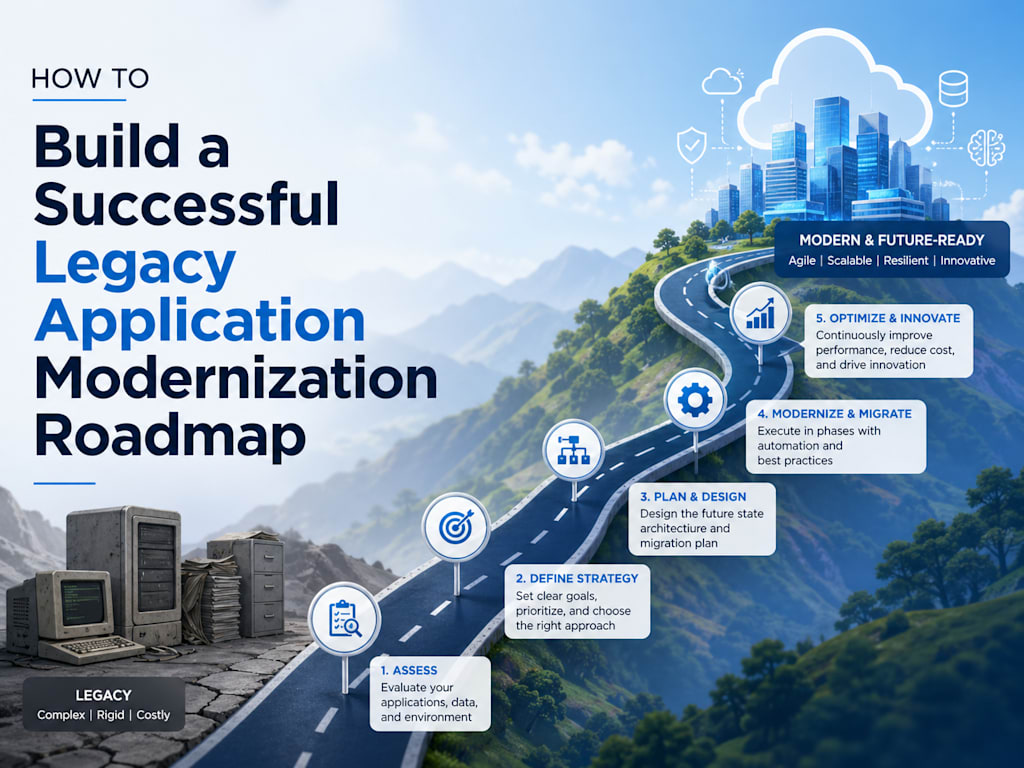
In today’s fast-evolving digital landscape, businesses can no longer rely on outdated systems that limit scalability, performance, and innovation. Legacy applications often become bottlenecks—slowing down operations, increasing maintenance costs, and restricting integration with modern technologies like AI, cloud, and IoT. That’s why building a well-structured Legacy Application Modernization Roadmap is critical for organizations aiming to stay competitive.
This comprehensive legacy application modernization guide will walk you through the essential steps, strategies, and best practices required to create a successful roadmap while aligning with business goals and future technological advancements.
Why Legacy Application Modernization is Important
Before diving into the roadmap, it’s essential to understand why modernization is necessary:
- High Maintenance Costs: Legacy systems require continuous support and expensive resources.
- Security Risks: Older systems are more vulnerable to cyber threats.
- Limited Scalability: Difficulty in handling growing user demands.
- Poor User Experience: Outdated interfaces and slow performance impact customer satisfaction.
- Integration Challenges: Legacy apps often fail to integrate with modern tools and APIs.
This is where legacy application modernization services play a key role in helping businesses transition smoothly.
Key Steps to Build a Successful Legacy Application Modernization Roadmap
1. Assess Your Existing Systems
The first step in building a Legacy Application Modernization Roadmap is conducting a thorough assessment of your current systems. Identify:
- Application architecture
- Dependencies and integrations
- Performance issues
- Security vulnerabilities
- Business criticality
This evaluation helps determine which applications need immediate modernization and which can be phased later.
2. Define Business Goals and Objectives
Modernization should not be driven by technology alone; it must align with business objectives. Ask yourself:
- Do you want to improve scalability?
- Are you aiming to reduce operational costs?
- Is enhancing user experience a priority?
- Do you need faster time-to-market?
Clear goals ensure your roadmap supports long-term business growth and aligns with your digital transformation strategy.
3. Choose the Right Modernization Strategy
There are several approaches to modernization, and selecting the right one depends on your business needs:
- Rehosting (Lift and Shift): Moving applications to the cloud without major changes
- Refactoring: Modifying code to improve performance and scalability
- Replatforming: Upgrading platforms while keeping core functionality intact
- Rebuilding: Redesigning applications from scratch
- Replacing: Switching to modern SaaS solutions
Many legacy application modernization companies recommend a hybrid approach based on application complexity and business priorities.
4. Prioritize Applications for Modernization
Not all applications need immediate transformation. Prioritize based on:
- Business impact
- Technical complexity
- Cost of maintenance
- User demand
Start with high-impact, low-risk applications to achieve quick wins and build momentum.
5. Adopt Cloud-First Approach
A modern roadmap often revolves around cloud adoption. Leveraging cloud application modernization services allows businesses to:
- Improve scalability and flexibility
- Reduce infrastructure costs
- Enhance performance and uptime
- Enable faster deployment cycles
Cloud platforms like AWS, Azure, and Google Cloud play a crucial role in modern application ecosystems.
6. Focus on Data Modernization
Applications are only as powerful as the data they manage. Ensure your roadmap includes:
- Data migration strategies
- Data cleansing and validation
- Real-time analytics integration
- Secure data storage solutions
Modernizing data architecture ensures seamless functionality and better decision-making.
7. Implement DevOps and Automation
A successful Legacy Application Modernization Roadmap incorporates DevOps practices to streamline development and deployment. Benefits include:
- Faster release cycles
- Improved collaboration between teams
- Automated testing and deployment
- Reduced human errors
Automation tools help ensure consistency and efficiency throughout the modernization process.
8. Ensure Security and Compliance
Security should be embedded at every stage of modernization. Key considerations include:
- Data encryption
- Identity and access management
- Compliance with regulations (GDPR, HIPAA, etc.)
- Regular security audits
Partnering with experienced legacy application modernization services providers can help mitigate risks effectively.
9. Test and Validate Continuously
Testing is critical to ensure the modernized application functions as expected. Focus on:
- Functional testing
- Performance testing
- Security testing
- User acceptance testing
Continuous validation minimizes disruptions and ensures a smooth transition.
10. Monitor and Optimize Post-Modernization
Modernization doesn’t end with deployment. Continuous monitoring is essential to:
- Identify performance issues
- Optimize resource usage
- Improve user experience
- Adapt to changing business needs
Use analytics and monitoring tools to track performance and make data-driven improvements.
Challenges in Building a Legacy Application Modernization Roadmap
While modernization offers numerous benefits, it also comes with challenges:
High Initial Costs: Investment in tools, resources, and infrastructure
Skill Gaps: Need for expertise in modern technologies
Data Migration Risks: Potential loss or corruption of data
Downtime Concerns: Risk of business disruption during transition
Resistance to Change: Employees may be hesitant to adopt new systems
Working with reliable application modernization companies can help overcome these challenges effectively.
Best Practices for a Successful Modernization Roadmap
To ensure success, follow these proven best practices:
- Start with a clear vision and strategy
- Involve stakeholders across departments
- Choose scalable and future-ready technologies
- Focus on incremental modernization instead of complete overhaul
- Partner with experienced application modernization services providers
- Continuously measure ROI and performance
Future Trends in Legacy Application Modernization
As technology evolves, modernization strategies continue to advance. Key trends include:
- AI-Driven Modernization: Automating code transformation and optimization
- Microservices Architecture: Breaking monolithic applications into smaller, scalable services
- Containerization: Using Docker and Kubernetes for efficient deployment
- Low-Code/No-Code Platforms: Accelerating development cycles
- Serverless Computing: Reducing infrastructure management
These innovations are shaping the future of cloud application modernization services and enabling faster, smarter transformations.
Conclusion
Building a successful Legacy Application Modernization Roadmap is not just a technical initiative; it’s a strategic business transformation. By assessing your current systems, defining clear goals, choosing the right modernization approach, and leveraging modern technologies, you can unlock new levels of efficiency, scalability, and innovation.
Whether you partner with leading application modernization companies or adopt in-house strategies, the key lies in careful planning, phased execution, and continuous optimization.
This legacy application modernization guide provides a strong foundation to help your business transition from outdated systems to future-ready applications; ensuring long-term success in a competitive digital world.
About the Creator
keith laurance
Keith Laurance, a Tech Blogger and Entrepreneur working with Octal IT Solution. I'm passionate about my work and want to spread knowledge everywhere, so everyone can take advantage of the latest technologies and trends.
Enjoyed the story? Support the Creator.
Subscribe for free to receive all their stories in your feed.
Comments
There are no comments for this story
Be the first to respond and start the conversation.