
How Roaming Solutions Are Reshaping the EV Charging Landscape for CPOs
the EV Charging Landscape for CPOs

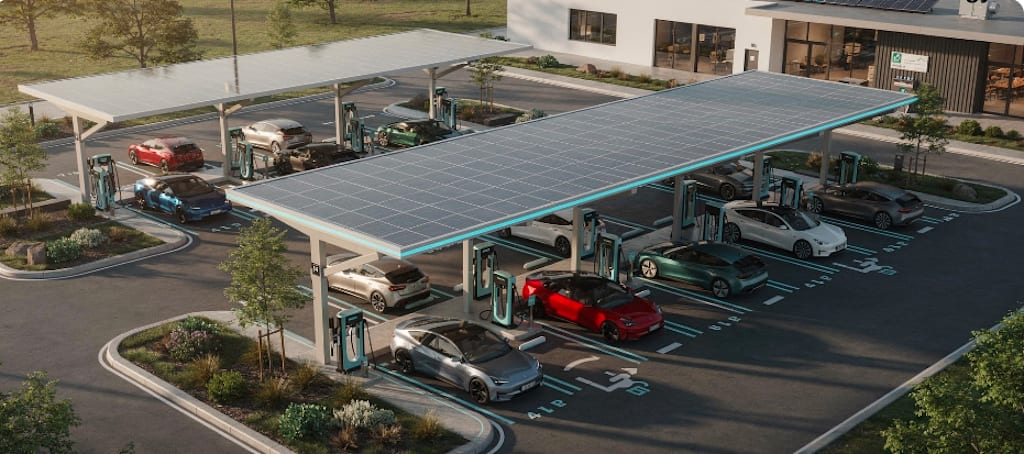
The electric vehicle revolution is no longer a distant promise — it's happening on roads across the world right now. As EV adoption accelerates, one challenge keeps surfacing for both drivers and the businesses that serve them: interoperability. A driver in one city should be able to charge their vehicle at a station operated by a completely different company, without juggling five different apps or worrying whether their membership card will even be recognized. This is where Roaming solutions for CPOs come in, and for Charge Point Operators, understanding and implementing them has become essential rather than optional.
The Fragmentation Problem
In the early days of EV infrastructure, charging networks grew in silos. Each operator built its own hardware, its own app, and its own payment system. While this made sense during the initial rollout phase, it created a fragmented experience for drivers. Imagine needing a different account for every gas station brand you visit — that's essentially what EV charging looked like before roaming networks matured.
This fragmentation doesn't just frustrate drivers; it actively slows down EV adoption. Range anxiety is already a psychological barrier for many potential EV buyers, and the fear of arriving at a charger they can't access only compounds that anxiety. For CPOs, this translates directly into underutilized assets — chargers sitting idle simply because the right driver couldn't authenticate on the platform.
What Roaming Actually Solves
Roaming, in the context of EV charging, refers to the ability of a driver to access and pay for charging services across multiple networks using a single account, app, or RFID card. Behind the scenes, this requires CPOs to integrate with roaming platforms and e-mobility service providers (eMSPs) through standardized protocols like OCPI (Open Charge Point Interface).
For a Charge Point Operator, joining a roaming network unlocks several concrete benefits:
Higher utilization rates — chargers become accessible to a much wider pool of drivers instantly, rather than only those who happen to have downloaded a specific app.
New revenue streams — every roaming session processed through the network is a transaction that wouldn't have happened otherwise.
Reduced customer support burden — standardized authentication and billing reduce the number of "why can't I charge here" support tickets.
Competitive parity — as more networks adopt roaming, operators who don't participate risk being seen as inconvenient or outdated by drivers comparing options in real time on their in-car navigation or charging apps.
Choosing the Right Roaming Partner
Not all roaming platforms are built the same, and CPOs need to evaluate a few key factors before integrating:
Protocol compatibility — Does the platform support OCPI, OCHP, or other widely adopted standards that your existing charge point management system (CPMS) already speaks?
Settlement transparency — How quickly and clearly are transactions reconciled and paid out between operators?
Network reach — A roaming hub is only as valuable as the number of eMSPs and CPOs already connected to it.
Technical support and uptime guarantees — Roaming introduces a new dependency in the charging transaction chain, so reliability matters.
This is exactly the kind of decision where dedicated infrastructure providers add real value. For operators looking to simplify this process, working with an established roaming platform offers a way to plug into existing networks without having to build custom integrations for every partner from scratch.
Looking Ahead
As governments push harder on EV mandates and charging infrastructure targets, the pressure on CPOs to deliver a seamless driver experience will only grow. Roaming is quickly moving from a "nice to have" feature to a baseline expectation, much like contactless payment became standard across retail. Operators who treat interoperability as a strategic priority — rather than an afterthought — will be the ones best positioned to capture the growing wave of EV drivers on the road.
Ultimately, the future of EV charging isn't about which single network wins. It's about how well these networks talk to each other. For CPOs, investing in solid roaming infrastructure today is one of the clearest ways to future-proof their business and improve the driver experience across the board.
About the Creator
Gulshan
SEO Services, Guest Post & Content Writter.
Enjoyed the story? Support the Creator.
Subscribe for free to receive all their stories in your feed.
Comments
There are no comments for this story
Be the first to respond and start the conversation.