
How Professional Congress Organisers (PCOs) Drive Innovation in Modern Association Events
Exploring How Technology, Research, and Leadership are Reshaping Modern Association Conferences and Global Events
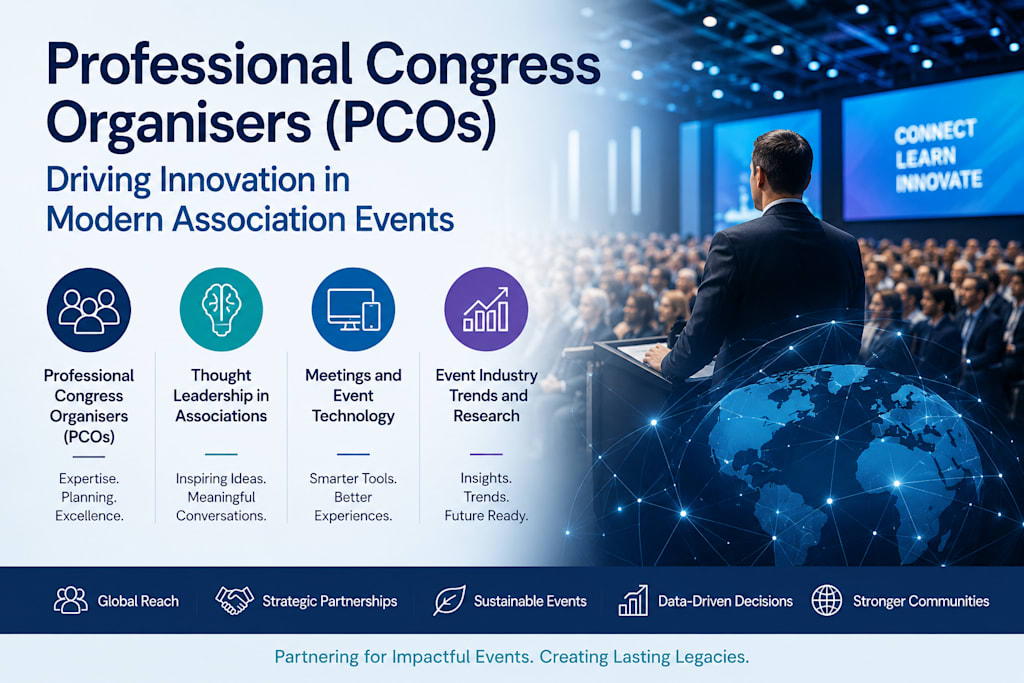
The global events sector continues to evolve rapidly as associations seek better ways to engage attendees, improve knowledge sharing, and create more impactful experiences. In this changing landscape, Professional Congress Organisers (PCOs) have become essential partners for associations, conference planners, and event stakeholders worldwide.
From strategic planning to technology integration, Professional Congress Organisers (PCOs) play a major role in shaping successful conferences and association meetings. Their expertise helps organisations adapt to changing attendee expectations while maintaining operational excellence and long-term event growth.
The Growing Importance of Professional Congress Organisers (PCOs)
Today’s association events are far more complex than traditional conferences held a decade ago. Event organisers now manage hybrid participation, international delegates, digital networking, sustainability initiatives, and data-driven attendee engagement. This is why many associations rely on Professional Congress Organisers (PCOs) to handle planning, logistics, communication, sponsorship coordination, and event execution.
Professional Congress Organisers (PCOs) bring specialised industry knowledge that helps associations reduce operational challenges while improving event quality. Their understanding of global event standards, venue coordination, budget management, and attendee experience allows associations to focus more on strategic goals and member engagement.
As global conferences become increasingly competitive, associations also depend on experienced organisers to strengthen event positioning and increase attendance growth year after year.
The Role of Thought Leadership in Associations
Strong events are not only about logistics and venue management. They are also about creating value-driven discussions and meaningful industry conversations. This is where Thought Leadership in Associations becomes extremely important.
Associations are now expected to deliver insights, innovation, and educational opportunities that help professionals stay ahead in their industries. Through keynote sessions, panel discussions, research presentations, and networking forums, Thought Leadership in Associations helps organisations build credibility and strengthen their influence globally.
Professional event planners and organisers often collaborate with association leaders to design conference agendas that reflect emerging market demands. This ensures that attendees gain relevant knowledge and practical insights during the event experience.
In many industries, associations that prioritise Thought Leadership in Associations are more successful at attracting sponsors, partners, and returning delegates because they consistently provide educational and professional value.
How Meetings and Event Technology is Transforming Conferences
Technology continues to reshape the future of association events. Modern Meetings and Event Technology solutions are helping organisers improve attendee engagement, simplify event management, and enhance communication before, during, and after conferences.
From AI-powered networking platforms to virtual meeting applications, Meetings and Event Technology allows associations to create more personalised event experiences. Mobile event apps, live polling tools, smart registration systems, and hybrid event platforms have become standard components of modern conferences.
Technology also helps organisers collect valuable attendee insights. Through data analytics and engagement tracking, associations can better understand participant behaviour, session popularity, and networking preferences. These insights help improve future events and increase attendee satisfaction.
For Professional Congress Organisers (PCOs), technology has become an essential part of strategic event planning. Integrating digital tools into conferences allows organisers to improve efficiency while creating more interactive and accessible experiences for global audiences.
Understanding Event Industry Trends and Research
Keeping up with Event Industry Trends and Research is critical for associations that want to remain competitive in the global meetings sector. Industry trends continuously shape attendee expectations, sponsorship models, event formats, and engagement strategies.
Recent Event Industry Trends and Research show increasing demand for hybrid events, sustainability-focused conferences, wellness integration, AI-powered event tools, and personalised attendee journeys. Associations that understand these developments can adapt more effectively and deliver stronger event experiences.
Research-driven planning also helps event organisers identify emerging opportunities in regional and international markets. By analysing attendee feedback, industry reports, and behavioural data, associations can make smarter decisions regarding event formats, marketing strategies, and technology investments.
Professional organisers often rely on Event Industry Trends and Research to guide strategic conference planning and help associations stay aligned with evolving market expectations.
Building the Future of Association Events
The future of association conferences will continue to depend on innovation, collaboration, and strategic event planning. Associations that combine experienced organisers, strong leadership, and modern technology will be better positioned for long-term success.
As the global meetings landscape evolves, Professional Congress Organisers (PCOs) will remain valuable partners in helping associations manage operational complexity while delivering high-quality experiences. At the same time, investments in Meetings and Event Technology and a strong focus on Thought Leadership in Associations will continue driving attendee engagement and industry growth.
Organisations that closely follow Event Industry Trends and Research can better adapt to market changes and create conferences that remain relevant, impactful, and globally competitive.
About the Creator
Enjoyed the story? Support the Creator.
Subscribe for free to receive all their stories in your feed.
Comments
There are no comments for this story
Be the first to respond and start the conversation.