
How Password Cracking Really Works.
And why "Password123" is basically the same as having no lock on your front door

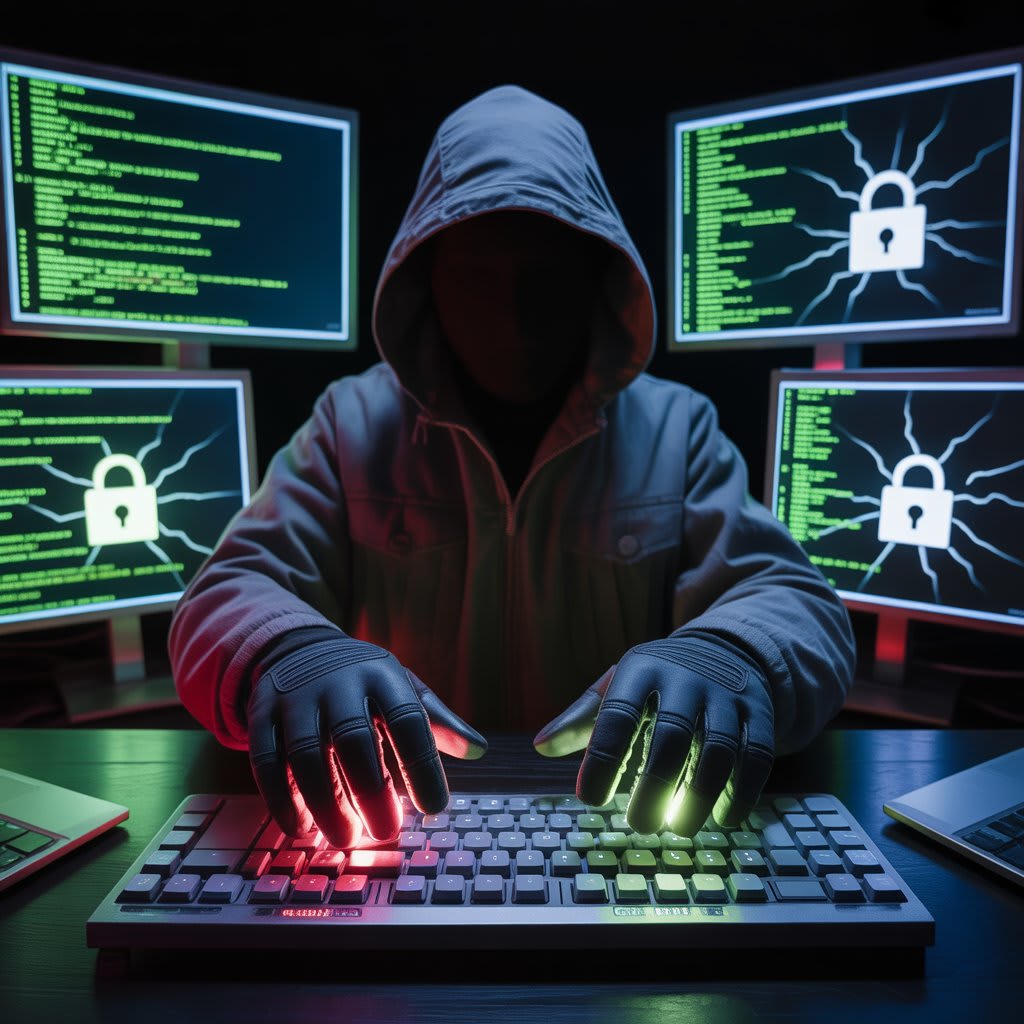
How Password Cracking Really Works "And why "Password123" is basically the same as having no lock on your front door" You think your password is safe. You really do. You use something clever. Your dog's name plus your birthday. Your favorite sports team with an exclamation mark at the end. Maybe you got really fancy and replaced an "e" with a "3". Here is the truth nobody wants to tell you. A hacker with a decent computer can crack most passwords in under ten minutes. Not hours. Not days. Minutes. I am not exaggerating. I am not trying to scare you. I am telling you how the real world works. Because if you do not understand how password cracking actually works, you will keep using bad passwords. And one day, someone will take everything you have. Let me explain the methods. Step by step. No technical nonsense. Just the truth. **The Brute Force Method** This is the dumbest method. It is also the most effective if your password is weak. Brute force means trying every possible combination until one works. The computer starts with "a", then "b", then "c". All the way to "z". Then "aa", "ab", "ac". You get the idea. A normal computer can try about 100 million passwords per second. A good gaming computer can do one billion per second. A serious cracking rig with multiple graphics cards? Ten billion per second. Let me put that in perspective. A 6-character password with only lowercase letters has 308 million possibilities. That sounds like a lot. A computer trying one billion passwords per second will crack it in less than one second. An 8-character password with lowercase letters only? 208 billion possibilities. That takes about three and a half minutes on a good machine. But most people use longer passwords. So brute force alone is not always enough. That is where smarter methods come in. **The Dictionary Attack** This is the real killer. Because most people do not use random passwords. They use words. The dictionary attack takes a list of common words. "Password." "Football." "Superman." "Letmein." It tries every word on the list. Then it tries variations. "Password1." "Password123." "Password!" The most common password in the world is still "123456". It takes a computer less than a second to guess that. The second most common is "password". Also less than a second. Then "123456789". Then "qwerty". Then "abc123". You see the pattern. People are predictable. Hackers know this. They have lists of the most common passwords. Millions of them. They just run the list. And it works more often than you would believe. **The Hybrid Attack** This is where it gets scary. The hybrid attack takes dictionary words and adds numbers or symbols at the end. Or the beginning. "Football1." "Football12." "Football123." "Football!" Most people think adding a number makes their password safe. It does not. Not if the number is at the end. Not if the number is 1 or 12 or 123. Hackers know exactly what you are going to do. They have been doing this for decades. Your dog's name plus your birth year? That takes maybe two seconds to crack. Your favorite band name plus an exclamation mark? Two seconds. You are not clever. Hackers have already seen your trick a million times. **The Mask Attack** This is more advanced. The mask attack is used when the hacker knows something about your password. Maybe they know you work at a certain company and your password policy requires 8 characters, one capital letter, and one number. So they build a mask. They know the password has 8 characters. They know the first letter is probably capital. They know there is a number somewhere, probably at the end. Now instead of trying every possible combination, they only try the combinations that fit the mask. This reduces the time from years to hours. Sometimes minutes. This is why password policies that force you to use one capital and one number actually help hackers. Because they narrow down the possibilities. The hacker knows exactly what to look for. **The Database Breach Method** This is the most dangerous method. Because it does not require guessing at all. Hackers break into websites and steal their password databases. These databases do not store your actual password. They store a "hash" of your password. A hash is like a digital fingerprint. You cannot turn the fingerprint back into your password. But you can guess a password, hash it, and see if the fingerprints match. If you use the same password on multiple websites, the hacker only needs to crack it once. Then they have access to every account you own. Email. Banking. Social media. Everything. This is not theoretical. This happens every single day. Billions of passwords have been leaked in data breaches. You have probably been in at least three of them. I am not guessing. Statistically, it is almost certain. **The Tools Hackers Use** You do not need to be a genius to crack passwords. The tools are free and easy to use. There is a tool called Hashcat. Anyone can download it. It runs on a normal laptop. It can try billions of passwords per second. It has all the attack methods I just described built in. You just point it at a password hash and click go. There is another tool called John the Ripper. Same idea. Free. Easy. Powerful. These are not dark web secrets. They are regular software. Security professionals use them to test their own systems. Hackers use them to break into yours. **The Role of Graphics Cards** Here is something most people do not know. Graphics cards are better at cracking passwords than regular computer processors. A good graphics card can be 50 times faster than a good CPU. Hackers build rigs with multiple graphics cards. Four cards. Eight cards. Twelve cards. Each card adds speed. A twelve-card rig can try hundreds of billions of passwords per second. An 8-character password with uppercase, lowercase, numbers, and symbols? 6 quadrillion possibilities. That sounds like a lot. A twelve-card rig can try that many combinations in about 17 hours. Your password is not safe. Not if it is only 8 characters. **How Long Does It Really Take?** Let me give you real numbers from real cracking tests. - 6 characters, only lowercase: less than 1 second - 7 characters, only lowercase: about 4 seconds - 8 characters, only lowercase: about 3 minutes - 8 characters, lowercase and uppercase: about 3 hours - 8 characters, uppercase, lowercase, numbers: about 2 days - 8 characters, uppercase, lowercase, numbers, symbols: about 17 hours Wait. Did you notice? Adding symbols actually made it faster with the 8-character test? That is because hackers have masks for symbols. They know which symbols people actually use. "!" and "?" and "@". Nobody uses "*" or "%" or "&". So the hackers only try the common ones. This is the game. Hackers know your habits better than you do. **The Only Real Defense** You have two options. Only two. Option one: use a password manager. A password manager creates random passwords that are 20 characters long with everything mixed in. Those passwords take billions of years to crack. Not hours. Not days. Years. Billions of years. Option two: use a passphrase. Not a password. A passphrase. "correct horse battery staple" is a famous example. Four random words. No numbers. No symbols. Just words. Here is the magic. That passphrase is 25 characters long. It has no uppercase. No numbers. No symbols. Just lowercase letters and spaces. A computer trying to brute force that passphrase would need trillions of years. Because 25 characters of lowercase gives you 26 to the 25th power possibilities. That number is so big it does not have a name. Length is everything. A long password made of simple words is stronger than a short password made of random symbols. Remember that. **The 2FA Backup** Even a good password can be stolen. Keyloggers. Phishing attacks. Data breaches. There are many ways. That is why you need two-factor authentication. 2FA. It means that even if someone has your password, they cannot log in without a second code from your phone. Use it. On every account that offers it. Email. Banking. Social media. Work accounts. Everything. If you do not use 2FA, you are one cracked password away from disaster. **The Bottom Line** Password cracking is not magic. It is just math. Fast math. Hackers have powerful computers. They have smart methods. They have your bad habits. You cannot change how fast computers are. You cannot change how clever hackers are. But you can change your passwords. Stop using "Password123." Stop using your dog's name. Stop using your birthday. Get a password manager. Use long passphrases. Turn on 2FA. It takes an hour to set up. That hour will save you years of pain when the breach happens. Because the breach will happen. It is not a matter of if. It is a matter of when. Be ready. Share this article with your family and friends. Most people have no idea how easy it is to crack their passwords. You just changed that. Written by DDM ATIQ #ddmatiq #password_hack
About the Creator
DDM ATIQ
ll
Enjoyed the story? Support the Creator.
Subscribe for free to receive all their stories in your feed.
Comments
There are no comments for this story
Be the first to respond and start the conversation.