
How Entrepreneurs Can Create New Revenue Streams Through Real World Asset Tokenization
Unlock liquidity, fractional ownership, and global investment opportunities as Real World Asset Tokenization enables entrepreneurs to monetize assets in innovative ways.

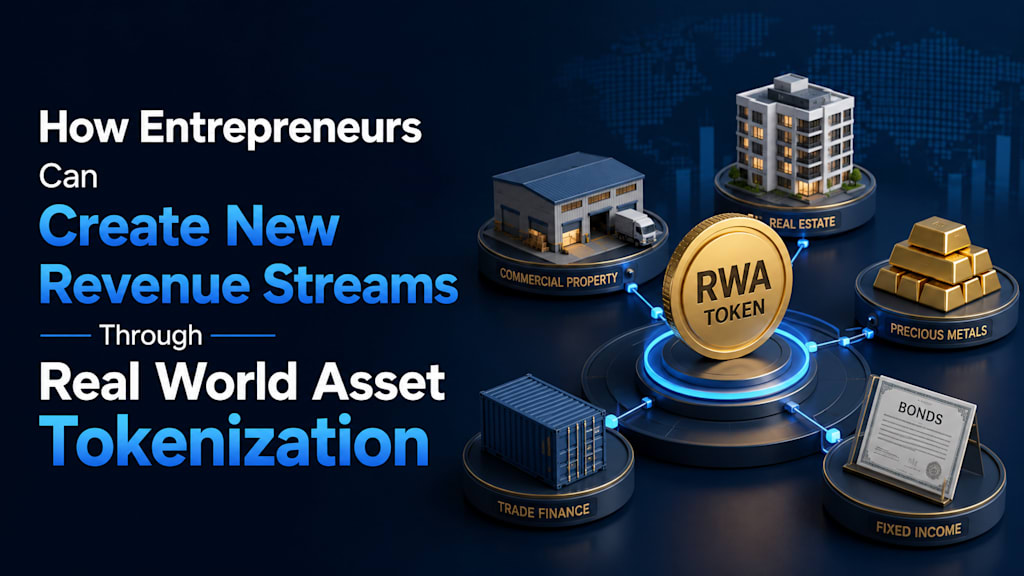
Entrepreneurs are constantly looking for practical ways to increase revenue without relying entirely on traditional business models. In recent years, digital assets have introduced new opportunities for businesses to monetize physical and financial assets that were previously difficult to divide, sell, or access. Among these opportunities, Real World Asset Tokenization has emerged as a growing area of interest for startups, investors, property owners, and business operators. By converting ownership rights of real-world assets into digital tokens, entrepreneurs can create investment opportunities, attract broader audiences, and generate income from assets that may otherwise remain underutilized.
The concept is gaining attention because it bridges traditional assets with blockchain technology. Assets such as real estate, commodities, infrastructure projects, intellectual property, and private equity holdings can be represented digitally and offered to investors in fractional portions. This approach opens the door to new business models and revenue channels that were difficult to establish using conventional methods. For entrepreneurs, the value lies not only in asset digitization but also in the various services, platforms, and investment ecosystems that can be developed around tokenized assets.
Understanding the Business Potential of Real World Asset Tokenization
Real World Asset Tokenization refers to the process of representing ownership or investment rights in a physical or traditional asset through blockchain-based digital tokens. These tokens can represent fractions of ownership, profit-sharing rights, revenue participation, or other forms of economic interest connected to an asset. Instead of requiring a single buyer to purchase an entire asset, ownership can be divided among multiple investors.
For entrepreneurs, this creates possibilities that go beyond simply selling assets. Tokenized assets can generate recurring revenue through transaction fees, management services, platform subscriptions, and investment administration. Businesses can also use tokenization to access capital more efficiently while retaining operational control over valuable assets. This combination of investment accessibility and business flexibility has encouraged many organizations to consider entering the tokenization market.
Converting Existing Assets Into Revenue-Producing Opportunities
Many entrepreneurs own valuable assets that generate limited liquidity. Commercial buildings, rental properties, industrial facilities, agricultural land, and intellectual property portfolios often hold substantial value but cannot easily be converted into working capital without a complete sale. Through RWA Tokenization, these assets can be divided into smaller ownership units and offered to investors.
Instead of selling an entire property or business asset, an entrepreneur can tokenize a portion of its value and attract investors who are interested in fractional ownership. The capital raised can then be used for expansion, operational improvements, or new business initiatives. At the same time, the entrepreneur may continue managing the asset and collecting service-related income. This approach creates a new source of funding while preserving ownership interests and long-term revenue potential.
Building Businesses Around Tokenization Services
One of the most attractive opportunities for entrepreneurs lies in providing RWA Tokenization Services to asset owners. Many businesses and investors understand the potential benefits of tokenization but lack the technical expertise required to execute projects successfully. This gap creates demand for professional service providers who can guide clients through planning, implementation, and operational management.
Entrepreneurs can establish companies that assist clients with asset evaluation, legal structuring, token issuance, compliance preparation, investor onboarding, and platform management. Since tokenization projects often require ongoing support, businesses offering these services can generate recurring income rather than relying solely on one-time project fees. As adoption continues to expand across industries, demand for experienced service providers is expected to grow alongside it.
Creating Investment Platforms for Tokenized Assets
Investment platforms represent another significant revenue opportunity. Entrepreneurs can develop digital marketplaces where tokenized assets are issued, managed, and traded. These platforms act as the connection point between asset owners and investors while generating revenue through multiple channels.
A business focused on rwa tokenization platform development can earn income from listing fees, transaction commissions, subscription plans, account management services, and investor onboarding processes. As more asset owners seek access to tokenization solutions, platform operators can build large ecosystems that support ongoing trading activity and investor engagement. The platform model is particularly attractive because revenue can continue growing as transaction volumes increase over time.
Developing Industry-Specific Tokenization Solutions
Different industries have unique requirements when it comes to asset tokenization. Entrepreneurs who focus on specialized sectors often find opportunities to serve niche markets with dedicated solutions. Real estate remains one of the most active areas because properties are highly valuable and naturally suited to fractional ownership structures. However, opportunities also exist in agriculture, renewable energy, luxury assets, intellectual property, and private business investments.
By focusing on a specific industry, entrepreneurs can create solutions designed around the needs of asset owners and investors within that market. This specialization often allows businesses to position themselves as experts while attracting clients seeking industry-focused tokenization services. Over time, this approach can create sustainable revenue streams through project implementation, consulting engagements, and long-term management contracts.
Establishing a RWA Tokenization Company
The growing interest in tokenized assets has encouraged many entrepreneurs to launch a dedicated RWA Tokenization Company. Such businesses typically provide end-to-end solutions that combine technology, compliance support, investor management, and operational services. Rather than focusing solely on software development, these companies help clients move through the entire tokenization process.
Revenue can be generated through consultation fees, development contracts, maintenance agreements, compliance support services, and marketplace operations. Since asset tokenization often requires collaboration among legal professionals, technology providers, and financial specialists, a company that offers comprehensive solutions can attract clients seeking a single service provider for multiple requirements.
Offering Asset Management and Administrative Services
Tokenized assets require ongoing management long after the initial issuance process is completed. Investors expect regular reporting, revenue distributions, compliance monitoring, and transparent communication regarding asset performance. Entrepreneurs can create businesses that focus exclusively on managing tokenized assets on behalf of owners and investors.
This service-based model creates recurring income because administrative functions continue throughout the life cycle of the asset. Asset management services can include investor communication, financial reporting, dividend distribution, asset valuation updates, and documentation maintenance. These responsibilities create opportunities for businesses specializing in Real World Asset Tokenization Services to establish long-term client relationships and predictable revenue streams.
Supporting Businesses Through Development Services
Technology remains a major component of any tokenization initiative. Many organizations interested in tokenization do not possess in-house blockchain development capabilities. This creates demand for companies offering RWA tokenization development services and technical implementation support.
A business specializing in development can assist clients with blockchain integration, smart contract creation, investor portals, security testing, and digital asset management systems. As tokenization projects become more sophisticated, organizations increasingly seek experienced development partners capable of delivering reliable infrastructure. This demand has created opportunities for entrepreneurs to establish profitable technology-focused businesses within the tokenization ecosystem.
The Growing Demand for RWA Token Development
Digital tokens serve as the foundation of every tokenized asset project. Entrepreneurs involved in RWA token development can provide services related to token creation, governance structures, ownership management, and transaction functionality. Since each asset category may require different token features, businesses with expertise in token architecture often become valuable partners for asset owners.
Revenue can come from development projects, software licensing, maintenance contracts, and ongoing technical support. As asset tokenization expands into additional industries, demand for specialized token development knowledge is likely to increase. Entrepreneurs who establish expertise in this area can position themselves within a market that continues to attract institutional and private-sector interest.
Leveraging Fractional Ownership Models
Fractional ownership represents one of the most commercially attractive aspects of Real World Asset Tokenization. Many valuable assets remain inaccessible to average investors due to high purchase costs. Tokenization allows these assets to be divided into smaller units, making participation possible for a broader audience.
For entrepreneurs, fractional ownership creates opportunities to attract more investors while increasing capital formation potential. Instead of seeking a small number of large investors, businesses can engage a larger community of participants. This broader investor base can contribute to greater market activity, increased transaction volume, and additional fee-based revenue opportunities. The concept has already demonstrated significant interest across property investments, private equity opportunities, and alternative asset markets.
Working With a RWA Tokenization Development Company
Many entrepreneurs entering the tokenization market choose to collaborate with a RWA tokenization development company to reduce technical complexity and shorten project timelines. Development partners provide expertise in blockchain architecture, platform functionality, security implementation, and compliance integration.
Working with experienced providers allows entrepreneurs to focus on business development, asset acquisition, and investor relations rather than managing every technical detail internally. This collaborative approach can improve project execution while reducing operational risks associated with technology implementation. As the market continues to evolve, development partnerships are becoming a common strategy for businesses seeking efficient entry into tokenized asset markets.
Addressing Market Challenges
While opportunities are significant, entrepreneurs should also recognize the challenges associated with tokenized asset businesses. Regulatory requirements vary across jurisdictions, and compliance obligations can affect project structure and investor participation. Asset valuation processes require accuracy and professional oversight, while investor education remains important because many participants are still unfamiliar with tokenized ownership models.
Technology maintenance, cybersecurity considerations, and market liquidity also require careful planning. Entrepreneurs who address these factors early are generally better positioned to establish sustainable business operations. Long-term success often depends on combining sound business practices with appropriate technology and compliance strategies.
Future Opportunities for Entrepreneurial Growth
The market for tokenized assets continues to expand as businesses seek alternative methods for raising capital and increasing investment accessibility. Financial institutions, property developers, investment firms, and asset managers are increasingly evaluating tokenization as part of their long-term strategies. This growing interest creates opportunities for entrepreneurs across multiple areas, including platform operations, consulting, technology development, asset management, and investor services.
As more industries adopt tokenized ownership models, the demand for specialized expertise is likely to increase. Businesses that establish a presence today may benefit from long-term market growth while creating multiple revenue channels connected to tokenized asset ecosystems. Entrepreneurs who understand both traditional asset markets and blockchain technology may find significant opportunities in the years ahead.
Conclusion
Real World Asset Tokenization is creating new possibilities for entrepreneurs seeking additional revenue streams beyond traditional business models. By converting physical and financial assets into digital investment opportunities, businesses can attract investors, access capital, and create recurring income through services, platforms, and marketplace activities. Opportunities exist in asset tokenization, platform operations, consulting, administration, and technology implementation, making the sector attractive to a wide range of entrepreneurs.
Whether launching a RWA Tokenization Company, offering RWA Tokenization Services, focusing on RWA Tokenizaion development, or investing in rwa tokenization platform development, entrepreneurs have numerous paths to participate in this growing market. As interest in tokenized assets continues to increase, businesses that enter the space with a thoughtful strategy and a clear understanding of market requirements may find valuable opportunities for long-term revenue generation and business expansion.
About the Creator
Ethan hunt
Ethan is a blockchain and Web3 specialist focused on building decentralized ecosystems that enhance transparency, security, and global accessibility.
Enjoyed the story? Support the Creator.
Subscribe for free to receive all their stories in your feed.
Comments
There are no comments for this story
Be the first to respond and start the conversation.