
How Does Real Estate Tokenization Improve Liquidity in Property Markets?
Unlocking Faster Property Sales and Flexible Investment Through Fractional Ownership and Digital Asset Trading

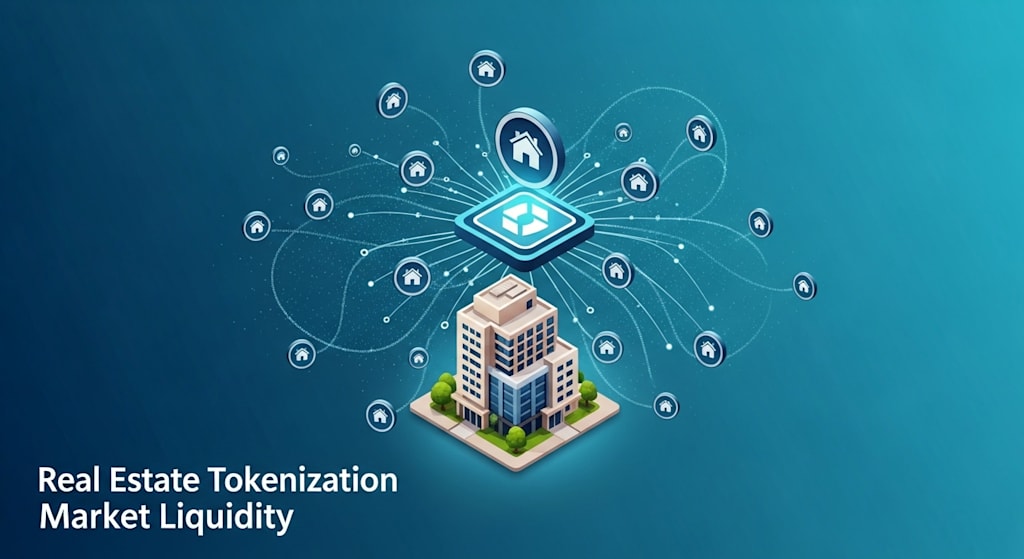
Property has long been seen as a stable investment, but it often comes with one major limitation: liquidity. Selling a property can take months, sometimes even longer, depending on market conditions, pricing, and legal processes. This lack of liquidity has discouraged many potential investors from entering the market, especially those who prefer flexibility and faster access to their funds.
Real estate tokenization introduces a different approach by converting property ownership into digital tokens stored on a blockchain. These tokens represent shares in a property and can be traded more easily than traditional real estate assets. As interest grows in real estate tokenization development, investors and businesses are starting to see how it can improve liquidity and make property markets more dynamic.
This article explains how tokenization improves liquidity, the methods behind it, and why it is gaining attention in 2026.
Understanding Liquidity in Property Markets
Liquidity refers to how quickly an asset can be bought or sold without affecting its price. Stocks and cryptocurrencies are considered liquid because they can be traded almost instantly. Real estate, on the other hand, is illiquid due to:
* Lengthy transaction processes
* High entry costs
* Limited buyer pools
* Complex legal procedures
For example, selling a residential or commercial property involves negotiations, inspections, paperwork, and approvals. This process creates delays and limits investor participation.
Real estate asset tokenization addresses these issues by converting ownership into smaller digital units that can be traded on platforms.
What Is Real Estate Tokenization?
Real estate tokenization is the process of dividing property ownership into digital tokens using blockchain technology. Each token represents a fraction of the property, allowing multiple investors to hold shares.
Instead of buying an entire property, investors can purchase tokens that reflect partial ownership. These tokens can then be traded on digital marketplaces.
A real estate tokenization company typically handles the technical and legal processes required to convert property into tokens. These firms also provide real estate tokenization services that include compliance, smart contract creation, and platform integration.
Why Traditional Real Estate Lacks Liquidity
Before understanding how tokenization improves liquidity, it is important to look at the challenges in traditional markets.
High Capital Requirements
Buying property usually requires a large amount of money, limiting participation to wealthy individuals or institutions.
Long Holding Periods
Investors often need to hold assets for years before seeing returns or selling them.
Limited Market Access
Real estate transactions are often restricted to specific regions or countries.
Complex Transactions
Legal documentation, intermediaries, and approval processes slow down transactions.
These factors reduce the ability to quickly convert property into cash.
How Real Estate Tokenization Improves Liquidity
Fractional Ownership
One of the main ways tokenization improves liquidity is by dividing property into smaller shares. Investors no longer need to purchase an entire building or land parcel.
With fractional ownership:
* More investors can participate
* Entry barriers are lower
* Assets become easier to trade
Real estate tokenization development allows properties to be split into thousands of tokens, each representing a small portion of ownership.
Secondary Market Trading
Tokenized assets can be traded on digital platforms, similar to stocks. This creates a secondary market where investors can buy and sell tokens without waiting for the entire property to be sold.
Benefits include:
* Faster transactions
* Continuous market activity
* Better price discovery
A real estate tokenization platform development process often includes integrating trading features that allow users to exchange tokens easily.
Reduced Transaction Time
Traditional real estate deals can take weeks or months. Tokenized transactions can occur much faster because:
* Smart contracts automate agreements
* Digital records replace manual paperwork
* Fewer intermediaries are involved
Real estate tokenization services simplify processes that previously required multiple steps and approvals.
Global Investor Access
Tokenization opens property markets to international investors. Instead of being limited to local buyers, property owners can reach a wider audience.
Advantages include:
* Increased demand for tokens
* Better chances of selling assets quickly
* More competitive pricing
A real estate tokenization development company often designs platforms that support cross-border investments while meeting regulatory requirements.
Improved Price Flexibility
In traditional markets, property pricing is often rigid due to negotiation and valuation processes. Tokenized assets allow more flexible pricing since tokens can be traded in smaller units.
This flexibility:
* Encourages frequent trading
* Helps investors adjust positions quickly
* Reduces the need for large financial commitments
Increased Market Participation
Tokenization attracts a broader group of investors, including:
* Retail investors
* Younger investors
* International buyers
With more participants, the market becomes more active, improving liquidity.
Real estate tokenization services make it easier for new investors to enter the market without needing deep knowledge of property transactions.
Methods Behind Liquidity Improvement
Token Creation
The first step involves converting property ownership into digital tokens. Each token represents a share of the asset.
This process is handled during real estate tokenization development and includes:
* Asset valuation
* Legal structuring
* Token issuance
Smart Contracts
Smart contracts are digital agreements stored on a blockchain. They automatically execute transactions when conditions are met.
They help by:
* Reducing manual intervention
* Lowering transaction costs
* Speeding up processes
A real estate tokenization development company typically designs these contracts to manage ownership transfers and investor rights.
Digital Marketplaces
Tokenized assets are traded on online platforms. These marketplaces function similarly to stock exchanges.
Features include:
* Real-time trading
* Order matching
* Portfolio tracking
Real estate tokenization platform development focuses on creating user-friendly marketplaces that support secure trading.
Compliance and Regulation
Legal compliance is critical for tokenized real estate. Proper frameworks ensure that investors are protected and transactions are valid.
Real estate tokenization services often include:
* KYC (Know Your Customer) checks
* AML (Anti-Money Laundering) processes
* Regulatory approvals
These measures build trust and encourage more participation, indirectly improving liquidity.
Benefits of Improved Liquidity
Faster Exit Options
Investors can sell their tokens without waiting for the entire property to be sold. This flexibility makes real estate more appealing.
Better Portfolio Management
Tokenization allows investors to adjust their holdings easily. They can buy or sell tokens based on market conditions.
Increased Investment Opportunities
With lower entry barriers, more properties become accessible to a wider audience.
Market Efficiency
More frequent trading leads to better price discovery and more accurate property valuations.
Challenges to Consider
While tokenization improves liquidity, there are still challenges:
Regulatory Uncertainty
Different countries have different rules for digital assets, which can limit adoption.
Market Awareness
Many investors are still unfamiliar with tokenized real estate.
Technology Risks
Security and platform reliability are important factors.
Despite these challenges, real estate tokenization development continues to grow as solutions improve.
Role of Companies in Tokenization
A real estate tokenization company plays a significant role in bringing properties onto blockchain platforms. These companies offer:
* Asset tokenization
* Legal structuring
* Platform integration
* Investor onboarding
Real estate tokenization development services are designed to support property owners, developers, and investors throughout the process.
A real estate tokenization development company also works on maintaining platforms, updating systems, and ensuring compliance with regulations.
Use Cases in 2026
Commercial Real Estate
Office buildings and retail spaces are being tokenized to attract multiple investors.
Residential Projects
Developers are offering tokenized shares in housing projects to raise funds quickly.
Rental Income Distribution
Token holders receive a share of rental income, making investments more attractive.
Real Estate Funds
Tokenization is being used to create digital real estate funds that investors can trade easily.
Future Outlook
As awareness grows, more investors are expected to participate in tokenized real estate markets. Improvements in technology and regulations may further increase liquidity.
Real estate tokenization platform development is likely to focus on:
* Better user experience
* Enhanced security
* Integration with financial systems
Real estate tokenization services will continue to expand, offering new ways for investors to interact with property markets.
Conclusion
Liquidity has always been a challenge in property markets due to high costs, slow transactions, and limited access. Real estate tokenization offers a practical solution by dividing ownership into digital tokens that can be traded more easily.
Through fractional ownership, digital marketplaces, and faster transactions, tokenization makes it possible for investors to enter and exit the market with greater flexibility. Real estate tokenization development is opening new opportunities for both property owners and investors by making assets more accessible and tradable.
As more businesses adopt this approach, the gap between traditional real estate and liquid financial markets continues to narrow. With support from a real estate tokenization company and reliable real estate tokenization services, the future of property investment is becoming more accessible and efficient for a wider audience.
About the Creator
Ethan hunt
Ethan is a blockchain and Web3 specialist focused on building decentralized ecosystems that enhance transparency, security, and global accessibility.
Enjoyed the story? Support the Creator.
Subscribe for free to receive all their stories in your feed.
Comments
There are no comments for this story
Be the first to respond and start the conversation.