
How AI and IoT Improve Concrete Production in Modern Wet Mix Batching Plants
AI and IoT Improve Concrete Production

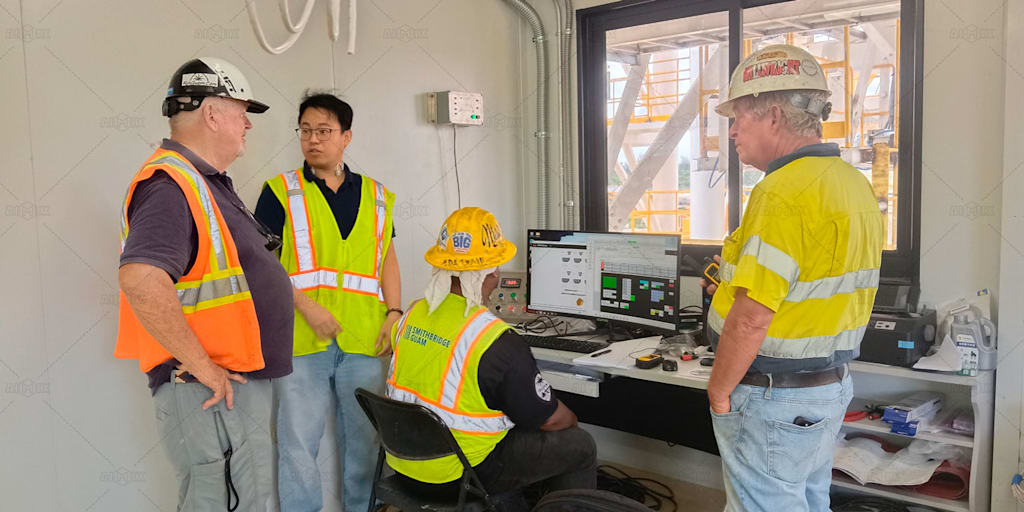
The construction industry is undergoing a quiet but profound algorithmic revolution. Gone are the days when batching plant operators relied solely on mechanical interlocks and handwritten logbooks. Today's wet mix plant is morphing into sentient production hubs, leveraging the twin technologies of Artificial Intelligence (AI) and the Internet of Things (IoT). This is not merely an upgrade; it is a complete recalibration of what consistency, efficiency, and predictive maintenance mean. We are witnessing the emergence of the "cognitive plant"—a system that sees, learns, and adjusts its own parameters in real-time. This article analyzes three critical vectors where this technological synergy is dismantling traditional operational constraints and setting new benchmarks for the built environment.
1. Predictive Quality Control: Moving Beyond Slump Testing
The traditional slump cone is a blunt instrument. It tells you what happened five minutes ago. AI-driven wet mix plants, conversely, predict the future. By ingesting data from IoT sensors embedded in aggregate bins (measuring moisture granulometry) and paste temperatures, the neural network forecasts the exact water demand before the first pedal turns. The result is a hyper-stable workability index, batch after batch. This shift from reactive to predictive quality control eliminates the guesswork that has plagued ready-mix production for decades.
1.1 Moisture Compensation Algorithms in Real Time
Surface moisture in sand is the bane of consistent concrete. A 3% fluctuation can alter the slump by 60mm. Legacy plants used manual probe tests, creating a latency that allowed wet pockets to slip through. Modern IoT-enabled plants deploy microwave resonance sensors that ping the material 200 times per second. This data feeds into a regression model that adjusts the water addition valve within milliseconds. The algorithm doesn't just react; it anticipates the drying effect of heat from the cement mill. This is hyper-specific hydration modeling, and it is turning variable aggregates into predictable outputs.
1.2 Visual Recognition for Aggregate Grading
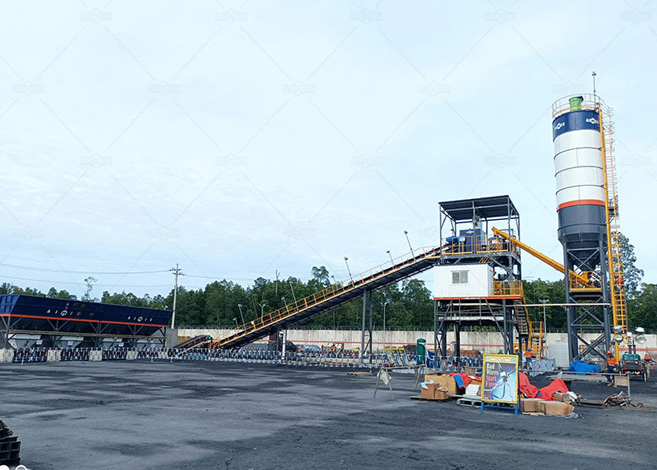
Perhaps the most cutting-edge application involves computer vision. High-resolution cameras mounted above the main conveyor belt capture images of the moving stone. An AI classifier, trained on millions of images, identifies flaky particles, elongated slivers, or an overabundance of dust. If the feeder is drawing from the "dirty" side of the stockpile, the system flags a deviation from the mix design. Some advanced concrete batching plants for sale even interface with robotic arms to divert sub-par material into a reject chute. This fusion of vision and actuation ensures that only geometrically sound aggregates enter the mixer drum.
2. Autonomous Fleet Synchronization and Logistics Optimization
Concrete is a unforgiving material. Its clock starts ticking the moment water hits cement. A stationary plant might produce perfectly, but if the truck isn't under the chute, the batch degrades. IoT breaks down this silo. By tracking the GPS location, drum revolutions, and engine idling status of every mixer truck, the plant's central AI calculates the "just-in-time" dispatch window. It won't drop a batch if the truck is stuck at a red light 800 meters away. This level of choreography reduces truck turnaround times by up to 22% and slashes the incidence of rejected "dead" loads.
2.1 Dynamic Route Recalculation for Pour Integrity
Traffic is a stochastic variable that ruins concrete quality. The AI acts as a digital traffic controller. As a truck departs the weighbridge, the system analyzes real-time traffic density from mapping APIs. If an accident blocks the intended artery, the AI doesn't just tell the driver; it recalculates the need for a retarding admixture. It signals the onboard dosing pump to inject a set-delaying additive based on the extended travel time. This closed-loop feedback between the plant and the vehicle preserves the pour's structural integrity despite external chaos.
2.2 Silo Inventory Awareness and Reorder Triggers
Running out of cement mid-pour is a catastrophic failure. Traditional silo monitoring relied on "dipsticks" or ultrasonic level sensors that drifted out of calibration. The new paradigm uses load cells on each silo leg connected to an IoT gateway. When the weight drops below a calculated threshold (accounting for consumption rate and lead time), the system automatically generates a purchase order to the cement supplier. This "demand sensing" prevents stockouts without the cost of excessive inventory holding. It is lean manufacturing applied to pulverized material.
3. Energy Optimization and Predictive Maintenance Loops
Wet mix plants are energy hogs. The motors driving the twin-shaft mixer, the bucket elevator, and the screw conveyors consume vast amounts of current. AI modulates this consumption. By analyzing the amp draw curve of the mixer, the system identifies the exact point where the concrete reaches homogeneity and signals an immediate stop. It shaves seconds off every cycle, but over a 20,000-hour operational life, those seconds translate into megawatt-hours of savings. Furthermore, vibration analysis on rotating assets prevents the breakdown before it happens.
3.1 Spectral Analysis for Gearbox Health
A planetary gearbox in a pan mixer fails catastrophically, usually on a Friday afternoon. IoT accelerometers sample vibration at 20 kHz. The AI performs a Fast Fourier Transform (FFT) on this spectral data, isolating the harmonics associated with a chipped tooth or a bearing race flaw. When the algorithm detects an anomaly—perhaps a 2x sideband pattern around the gear mesh frequency—it pushes a "scheduled replacement" alert. This provides a window of 48 to 72 operating hours to order parts and plan the swap. The plant avoids the 40-hour downtime of a spontaneous wreck.
3.2 Air Management and Dust Suppression
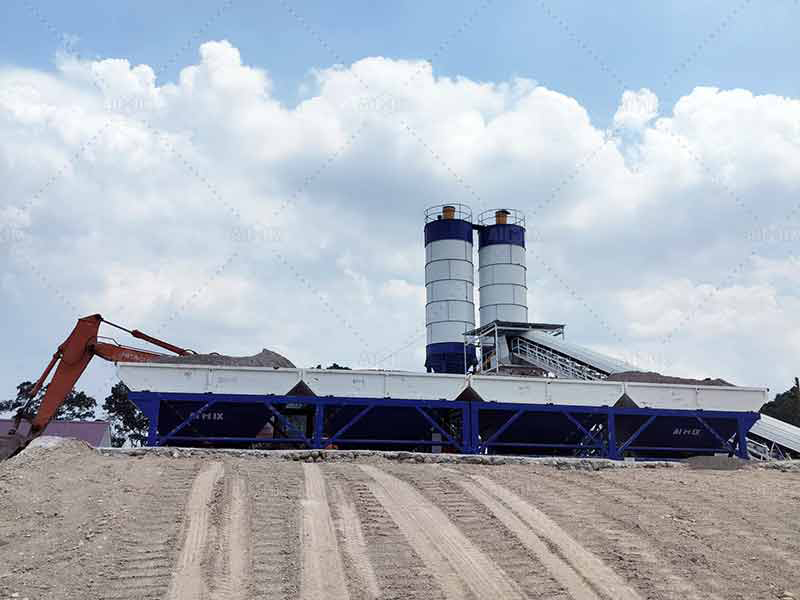
Dust is the visible waste of concrete production. AI-controlled baghouse filters monitor the pressure differential across the filter cartridges. When the delta-P rises (indicating clogging), the system initiates a pulsed compressed air cleaning sequence. If the pressure remains high, it triggers a maintenance request. Simultaneously, IoT weather stations detect wind direction and speed. The AI dynamically adjusts the angle of the water misting cannons to maximize dust capture while minimizing water usage. This responsive environmental stewardship keeps the ready mix plant compliant with emissions regulations without wasting a drop of water.
The Algorithmic Aggregate: A New Baseline
The integration of AI and IoT into wet mix batching plants represents a maturation of the industry. We are moving from mechanical certainty to probabilistic optimization. These technologies do not just improve production; they fundamentally redefine the relationship between the raw material and the finished good. For the plant operator, the value proposition is clear: less waste, higher strength reliability, and the elimination of silent downtime. As edge computing becomes cheaper and sensor technology more robust, the "dumb" batching plant will become an archaic anomaly. The cognitive plant is the new standard.
About the Creator
AIMIX
Construction Machine Manufacturer in China. Find Machines here: https://aimixconcretesolution.com/
Enjoyed the story? Support the Creator.
Subscribe for free to receive all their stories in your feed.
Comments