
How a 12-Person AI Team Hit Millions in Monthly Revenue Without Paid Ads
A look at Zhiling Xinjing, its canvas-based tool Neowow, and why professional creators may be the market AI companies have overlooked
The AI application market has cooled off.
Manus lost about 5 million monthly visits over a recent period, dropping from 28 million to 23 million. Genspark fell from 15 million to 11 million. Dokie went from 740,000 to 540,000. Flowith went from 670,000 to 490,000. More than 300 small and midsize AI companies have shut down after running out of cash.
Investors who once chased every new agent startup have pulled back. The phrase “we’re not looking at Agents anymore” has become common in venture capital circles. So has “AI application projects can’t get pushed internally.” What started as caution inside a few firms turned into a broader pattern.
Against that backdrop, one company’s recent funding round stands out.
Zhiling Xinjing, a Chinese AI application company, raised tens of millions of yuan in angel funding from Huace Film & TV. 36Kr reported the deal, noting that Chenrui Capital served as financial advisor and that a second round is in progress. The company’s product, Neowow, passed tens of millions of yuan in monthly revenue in August, more than 100 times its March launch figure. Registered-user paid conversion is above 16%. During promotions, short-term conversion can reach 30%. It spends almost nothing on paid acquisition. It is already profitable.
Those numbers are unusual for an AI application company right now. What makes the case more interesting is how the company got there, and what its approach says about where AI applications may still find room to grow.
A different kind of tool
Most AI video tools work the same way. You type a prompt. You get a video. If you dislike it, you rewrite. That works for a single short clip. It falls apart when a creator has to finish a narrative work with five or six shots. You end up switching between browser tabs, trying to remember which version is which, and losing track of what changed between drafts.
Neowow takes a different approach. Its main workspace is an infinite canvas. Creators can organize ideas, break down scripts, design storyboards, generate assets, schedule shots, produce sound, and handle post-production on the same surface. The canvas uses a node-based structure. Text, images, video, audio, and a 3D director’s console connect through links, creating a visual record of the production process.
That design raises the learning curve. It also raises switching costs. Once creators store their workflow on the canvas, including shot parameters, style changes, and discarded versions, moving to another platform means rebuilding all of it. The canvas becomes the place where the project lives, not just a tool they open and close.
Neowow covers designer-level image work such as layer separation, local retouching, LUT color grading, and multi-panel exploration. It also handles director-level video work such as first and last frame control, keyframe editing, multi-person lip sync, motion imitation, and image enhancement. It supports layer separation and PSD export, so work can move into Photoshop. Those features are not easy to copy by wrapping a large model.
How a hit series built the user base
Neowow’s growth came alongside one series.
On May 17, 2026, a Douyin creator released the first episode of a series called Wanwusheng. The 10-minute video follows a modern Daoist priest who lands in a world of machines and cultivation. It mixes cyberpunk imagery with Chinese Daoist themes. Within 10 days, it reached 50 million plays and nearly 2.6 million likes. By August, after the third episode, total plays passed 100 million.
The creator is one of Neowow’s most active users. In an interview, he said he broke the script into sections in a shared document. Members who specialized in Chinese style, illustration, and fight scenes claimed parts. He edited the final cut. The team worked with a clear division of labor. Neowow’s multi-person collaboration features, Skill marketplace, and digital asset system gave that workflow a place to run.
The company’s difference is not what it can generate. It is whether the output can be stored and reused. The platform lets creators share their Skills and show their process. Users can see whether a Skill was used and how many times. Likes and tips are built in.
“Our experience is that the same tool with different Skills can produce completely different results,” founder Fei Yuanhua said. A finished, high-quality work rarely comes from one Skill. When a creator calls many Skills with different functions, their own ideas and differences start to show. The stored, reused, and combined data becomes the company’s advantage. It also reaches a space large models cannot cover. Large models handle huge volumes and many users. They do not have the time or focus to study the habits and needs of one narrow group.
That last point matters. The biggest fear among AI application founders is that a large model company will absorb their product into its next release. The standard advice is to build something the model makers cannot easily copy. Neowow’s answer is a community of professional users and a library of reusable Skills. Neither is simple to replicate overnight.
Why high-cost content makes money
One number stands out. High-quality content on Neowow costs far more to make than the industry average. The series Wanwusheng costs about 2,000 yuan per minute. Most AI short dramas cost about 200 yuan per minute. Neowow’s token consumption on Volcano Engine sits in the first tier of AI creation tool customers.
High costs usually mean thin margins. Neowow’s model runs the other way.
Subscriptions start at 29 yuan per month for Basic, 119 yuan for Pro, and 329 yuan for Max. The highest bundle reaches 1,645 yuan per month. The target user is a professional AI-native creator with art skills and aesthetic judgment. This group cares more about control and asset libraries than casual users do. They are also more willing to pay. High-ticket subscriptions cover high token use. Zero paid acquisition keeps customer acquisition cost near zero.
The model is narrow and profitable. It does not chase hundreds of millions of users. It serves thousands to tens of thousands of creators who pay for professional tools. It does not chase the cheapest generation. It trades higher creative precision for stickiness and subscription revenue.
Why an entertainment company invested
Huace Film & TV, through its subsidiary Xixi Investment, took a 9.9% stake in the round. Fei Yuanhua said the money is mainly for strategic cooperation. The two companies plan to work together on talent, technology research, and content.
This is not Huace’s first AI move. Over six months, the company has built a clear line of investments. It developed vertical large models. It built the Tonglu AIGC intelligent computing center. In July 2026, it set up a 400 million yuan fund for AI video generation. In August and September, it invested in Shuimu Intelligence and Zhiling Xinjing. On September 22, Huace said its subsidiary would put 100 million yuan into Hangzhou Junlian Jiatu, a fund that invests in AI and related application companies. Huace now has 8,000P of computing capacity, all signed under long-term agreements with leading tech clients.
Huace is making a simple bet. AI is rebuilding how film and television content gets made. Huace wants a position in the new production chain. The investment gives Huace an entry point into the ecosystem where professional AI creators work. A tool alone would not do that. Control that entry point, and you have a stake in the next generation of content production.
From subscriptions to IP
Subscriptions solve today’s revenue problem. The ceiling is visible. Neowow’s next move is IP.
Since Seedance 2.0 arrived, the group of highly active AI creators has grown fast. Works like Zombie Scavenger and The Laid-Off Girl spread across the internet. But individual creators have few ways to make money. Most take ads or sell live-streaming courses. They do not have the platform resources or operations capacity to build an IP.
Zhiling Xinjing’s answer is a split. The platform provides technical support, and creators handle art and content. The company is developing games based on its AI-native IPs Wanwusheng and Fuguang. A demo is planned for September for internal testing. Later, it aims for Steam and domestic game platforms. The company is also exploring film and theatrical releases for those IPs.
There is a precedent. The AI short film Zombie Scavenger spawned a game of the same name. Its Steam store page went live in August 2026. That shows the distribution path can work. But tool subscriptions and IP derivatives require different skills. Subscriptions depend on product iteration and community operations. IP derivatives depend on cross-media storytelling and long-cycle project management.
That is the hard part. A tool company can move fast, ship updates daily, and respond to user feedback in hours. An IP company needs patience, narrative discipline, and a much longer time horizon. The two skill sets do not always live in the same building.
A small team and many agents
Zhiling Xinjing has just over ten people. All have technical backgrounds. No one has a fixed role. Each person works with several AI Agents.
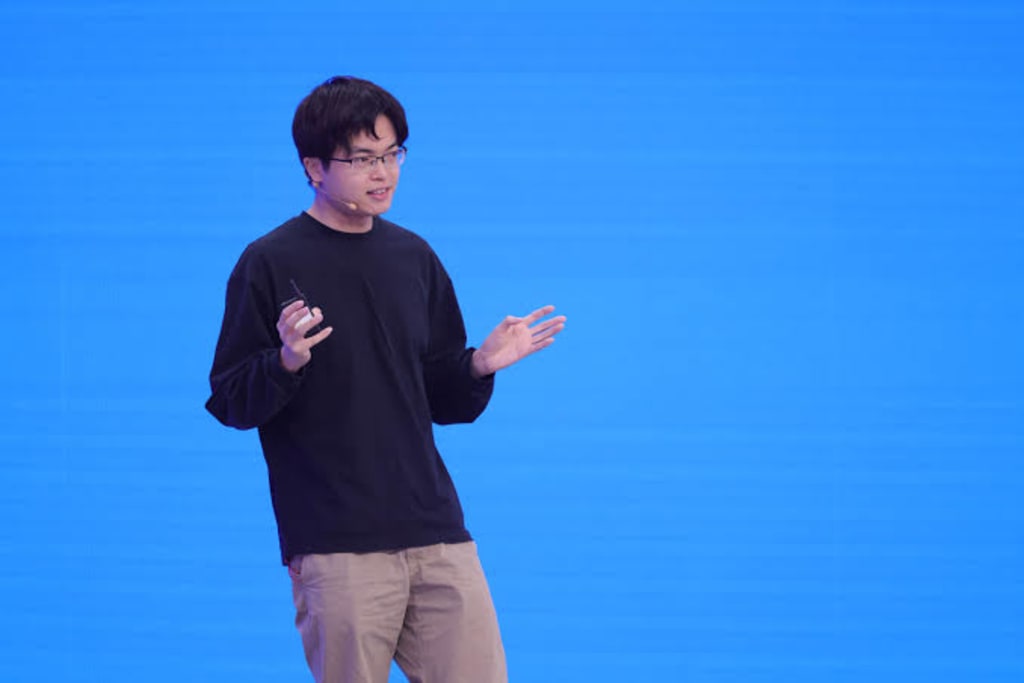
Founder Fei Yuanhua was born in 1982. As a teenager, he won Olympiad awards in physics and computer science. He dropped out of high school in 2000 and started working. He founded his own company in 2005 and later worked in gaming. He started this AI company in June 2025. Inside the team, each person’s AI colleagues handle different jobs. Some cover legal work. Some run tests. Some act as project assistants.
The setup mirrors Neowow’s product idea. The team also packaged its AI video capabilities into standardized skill packs and plugged them into the OpenClaw ecosystem for other developers.
“Almost every active creator tells me our strength is speed,” Fei Yuanhua said. “When core users give feedback, the team responds fast. Some issues get fixed immediately. We have pushed a dozen versions in a day.”
A team of just over ten people can scale its impact when a hit lands. It can also keep margins high. That combination is rare in a market where many AI companies raised large rounds, hired aggressively, and still failed to find paying users.
What this case suggests
The financing winter in AI applications is not over. Investors have lost patience with wrapper products. Every leap in large-model capability squeezes the space for applications. Zhiling Xinjing offers a different case.
It chose professional users while others chased general ones. It served paying creators while building data assets and a community in a corner model makers have little reason to enter. It kept the team small and the product focused.
Tool subscriptions work. Moving from selling tools to raising IP is a harder problem. Can just over ten people walk both paths at once?
That question is worth watching. Not because the answer is obvious, but because the AI application market needs more examples of companies that found a narrow, profitable lane instead of chasing scale and running out of money.
About the Creator
Jin
Writer of reamstories
https://reamstories.com/jin
Enjoyed the story? Support the Creator.
Subscribe for free to receive all their stories in your feed. You could also become a paid subscriber, letting them know you appreciate their work.
Comments
There are no comments for this story
Be the first to respond and start the conversation.