
Home Service App Development Cost in USA 2026: Features, Pricing & Business Insights
Home Service App Development Cost

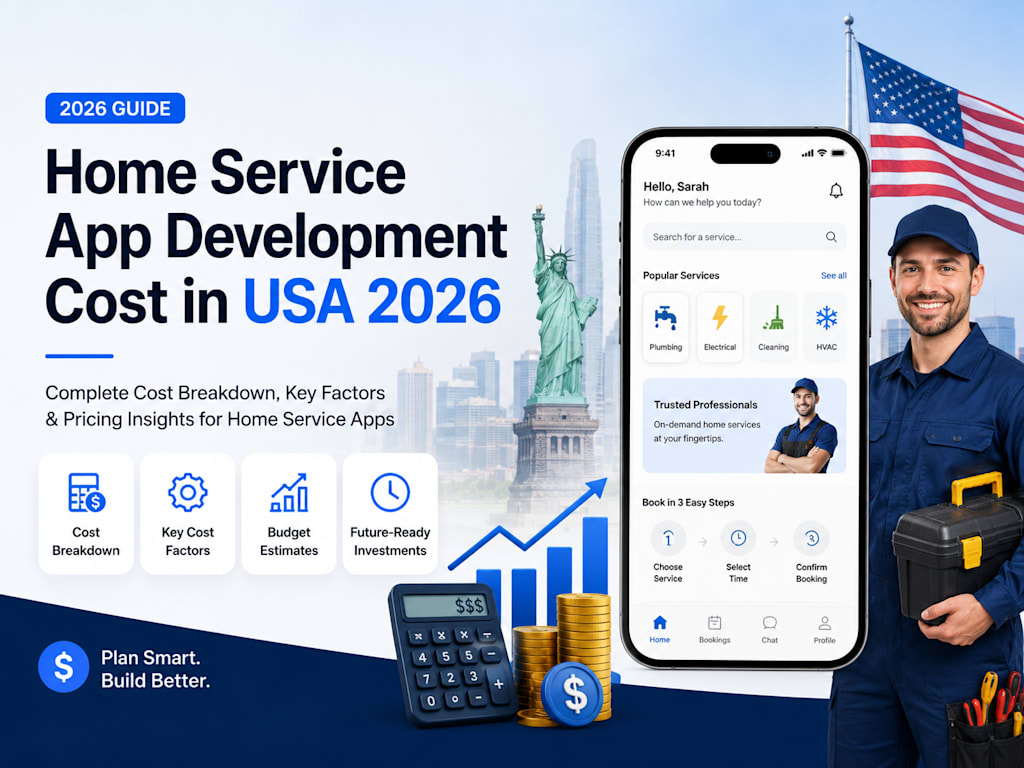
The demand for home service applications in the USA is growing rapidly in 2026. From cleaning and plumbing to beauty, repair, moving, and handyman services, businesses are investing heavily in digital platforms that connect users with service professionals instantly. As customer expectations continue to rise, companies are focusing on building scalable and feature-rich apps that deliver convenience, speed, and reliability.
One of the most common questions business owners ask is: How much does home service app development cost in 2026? The answer depends on several factors including app complexity, features, technology stack, UI/UX design, platform selection, and development location.
In this guide, we will break down the complete cost structure of home service app development in the USA while covering essential features, trends, and development considerations.
What is a Home Service App?
A home service app is an on-demand digital platform that allows users to book household services through mobile devices. These apps work similarly to marketplaces where customers can search, schedule, pay, and review services online.
Popular categories include:
Home cleaning
Plumbing
Electrical repair
Appliance maintenance
Salon at home
Pest control
Laundry services
Car washing
Home painting
Handyman services
These applications typically include three panels:
Customer App
Service Provider App
Admin Dashboard
Home Service App Development Cost in USA (2026)
The estimated home service app development cost in the USA ranges between $25,000 to $250,000+ depending on the project scope and technical requirements.
Cost Breakdown Based on App Complexity
App Type Estimated Cost
Basic MVP App $25,000 – $50,000
Medium Complexity App $50,000 – $120,000
Advanced Enterprise Solution $120,000 – $250,000+
Factors Affecting Home Service App Development Cost
1. App Features and Functionality
Features directly impact development hours and overall project cost.
Basic Features
User registration
Profile management
Service listings
Booking system
Push notifications
Payment integration
Ratings & reviews
Advanced Features
AI-based recommendations
Real-time tracking
Video consultation
Multi-language support
Smart scheduling
In-app chat
Voice search
Analytics dashboard
The more advanced functionalities you add, the higher the development cost.
2. Platform Selection
The platform you choose significantly affects pricing.
Platform Estimated Cost
Android App $20,000 – $80,000
iOS App $25,000 – $90,000
Cross-Platform App $30,000 – $100,000
Businesses in 2026 increasingly prefer Flutter or React Native to reduce development costs and launch faster.
3. UI/UX Design
Modern users expect intuitive and visually engaging interfaces. High-quality UI/UX design improves customer retention and user engagement.
UI/UX Cost Estimate
Basic Design: $3,000 – $8,000
Advanced Interactive Design: $10,000 – $25,000
4. Backend Infrastructure
A scalable backend is essential for handling:
User traffic
Real-time booking
Payments
Data storage
Notifications
Cloud integration and API development can add substantial costs to the project.
5. Development Team Location
Hiring an experienced on-demand app development firm in the USA usually costs more compared to offshore development companies.
Region Hourly Rate
USA $100 – $250/hr
Europe $50 – $150/hr
India $25 – $80/hr
Many businesses choose hybrid outsourcing models to balance quality and budget.
Essential Features for Home Service Apps in 2026
Customer Panel Features
- Easy sign-up/login
- Service search filters
- Real-time booking
- Secure payment gateway
- Live tracking
- Booking history
- Reviews & ratings
- Service Provider Features
- Profile creation
- Availability management
- Earnings dashboard
- Accept/reject requests
- Navigation support
- Chat with customers
Admin Panel Features
- User management
- Service management
- Commission tracking
- Reports & analytics
- Customer support management
Technology Stack Used in Home Service App Development
Choosing the right technology stack affects app performance and maintenance costs.
Frontend Technologies
- Flutter
- React Native
- Swift
- Kotlin
Backend Technologies
- Node.js
- Python
- Laravel
- Firebase
- Database
- MongoDB
- PostgreSQL
- MySQL
- Cloud Services
- AWS
- Google Cloud
- Microsoft Azure
Hidden Costs of On-Demand App Development
Many businesses overlook additional expenses involved in on demand app development cost calculations.
Additional Expenses Include:
- App maintenance
- Server hosting
- Third-party API integration
- Marketing
- Security updates
- App store fees
- Technical support
Annual maintenance generally costs around 15%–20% of the initial development budget.
How to Reduce Home Service App Development Cost
1. Start with MVP Development
Launch with essential features first and expand later.
2. Choose Cross-Platform Development
Flutter and React Native reduce separate iOS and Android development costs.
3. Use Agile Development
Agile methodology helps businesses optimize development budgets efficiently.
4. Outsource Strategically
Partnering with a reliable on-demand app development firm can help reduce operational costs without compromising quality.
Latest Trends in Home Service Apps for 2026
AI-Powered Automation
AI improves customer support, scheduling, and service recommendations.
IoT Integration
Smart home integrations are becoming increasingly popular.
Subscription-Based Services
Businesses now offer recurring service plans for customer retention.
Voice Assistant Support
Voice-enabled bookings through Alexa and Google Assistant are gaining traction.
Hyperlocal Services
Apps focus more on location-based personalization and faster service delivery.
Revenue Models for Home Service Apps
Businesses can monetize home service apps through multiple strategies.
- Popular Monetization Methods
- Commission from service providers
- Subscription plans
- Featured listings
- In-app advertisements
- Surge pricing
- Membership programs
Why Businesses Invest in Home Service Apps
The home services industry is highly competitive in the USA, and mobile apps help businesses:
- Increase customer engagement
- Improve operational efficiency
- Expand market reach
- Generate recurring revenue
- Build customer loyalty
With rising digital adoption in 2026, investing in home service app development offers long-term growth opportunities.
Choosing the Right On-Demand App Development Firm
Before selecting a development company, businesses should evaluate:
- Portfolio and experience
- Technical expertise
- Industry specialization
- Communication process
- Development methodology
- Post-launch support
A professional on-demand app development firm can help businesses build scalable and future-ready applications aligned with market trends.
Conclusion
The home service app development cost in the USA in 2026 depends on various factors including app complexity, features, platform selection, and development approach. Businesses can expect costs ranging from $25,000 for a basic MVP to over $250,000 for enterprise-grade solutions.
As the on-demand economy continues to expand, investing in a high-performing home service app can provide significant business growth and competitive advantages. Whether you are a startup or an established enterprise, focusing on user experience, scalability, and advanced technology will help you succeed in the evolving digital marketplace.
About the Creator
keith laurance
Keith Laurance, a Tech Blogger and Entrepreneur working with Octal IT Solution. I'm passionate about my work and want to spread knowledge everywhere, so everyone can take advantage of the latest technologies and trends.
Enjoyed the story? Support the Creator.
Subscribe for free to receive all their stories in your feed.
Comments
There are no comments for this story
Be the first to respond and start the conversation.