
Home Infusion Therapy Is Reshaping American Healthcare Through Convenience, Technology, and Cost Efficiency
Rising Chronic Disease Burden, Home-Based Care Adoption, and Advanced Infusion Technologies Are Driving Growth in the U.S. Home Infusion Therapy Market

The American healthcare system is undergoing a significant transformation as patients, healthcare providers, and insurers increasingly embrace treatment options that improve outcomes while reducing costs. Among the most important developments in this shift is home infusion therapy, a healthcare solution that enables patients to receive complex intravenous treatments in the comfort of their own homes instead of hospitals or specialized infusion centers.
As healthcare costs continue to rise and chronic diseases become more common, home infusion therapy has emerged as a practical and patient-centered alternative to traditional inpatient care. Supported by advancements in portable infusion devices, remote monitoring technologies, and specialty pharmaceuticals, this treatment approach is helping patients maintain independence while receiving high-quality medical care.
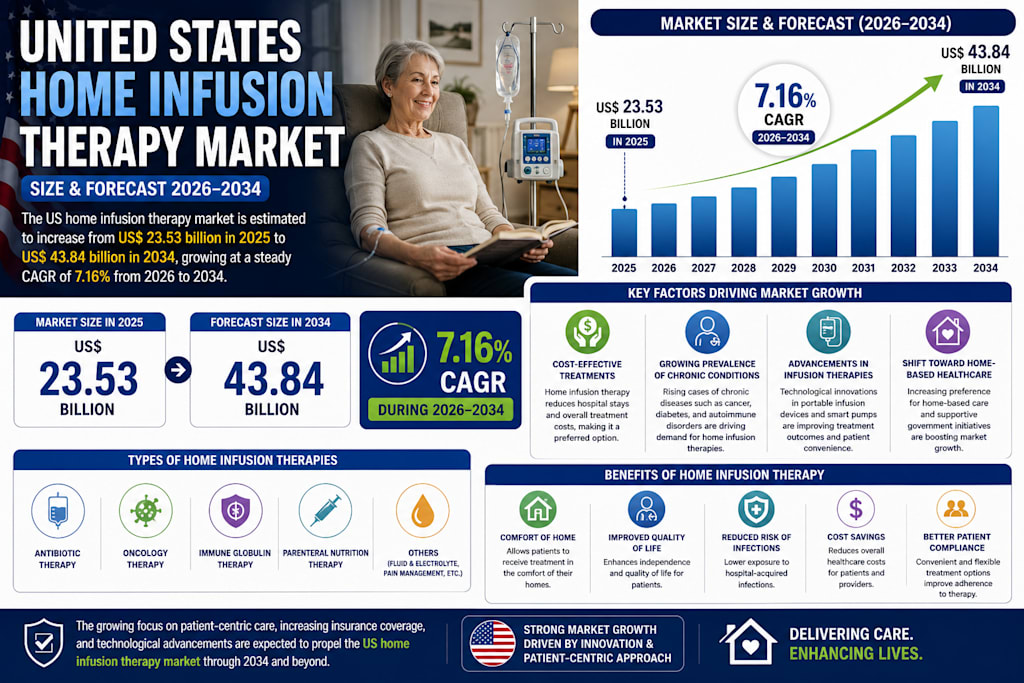
According to Renub Research, the United States Home Infusion Therapy Market is projected to grow from US$ 23.53 billion in 2025 to US$ 43.84 billion by 2034, expanding at a CAGR of 7.16% between 2026 and 2034. Growing demand for cost-effective treatment, increasing prevalence of chronic illnesses, technological advancements, and rising preference for home-based healthcare are key factors supporting this remarkable growth.
Understanding Home Infusion Therapy
Home infusion therapy refers to the administration of medications, fluids, or nutritional support directly into a patient's bloodstream through intravenous or subcutaneous routes while the patient remains at home. This treatment method is commonly used for patients suffering from chronic diseases, severe infections, cancer, immune disorders, gastrointestinal conditions, and other illnesses that require long-term medical intervention.
The therapy allows patients to receive hospital-grade treatment without the need for prolonged hospital stays. Healthcare professionals often oversee treatment plans, provide patient education, and monitor outcomes while advanced infusion equipment ensures safe and accurate medication delivery.
The ability to receive specialized care in a familiar environment has significantly improved patient satisfaction and treatment adherence, making home infusion therapy one of the fastest-growing segments of modern healthcare.
Chronic Diseases Continue to Fuel Demand
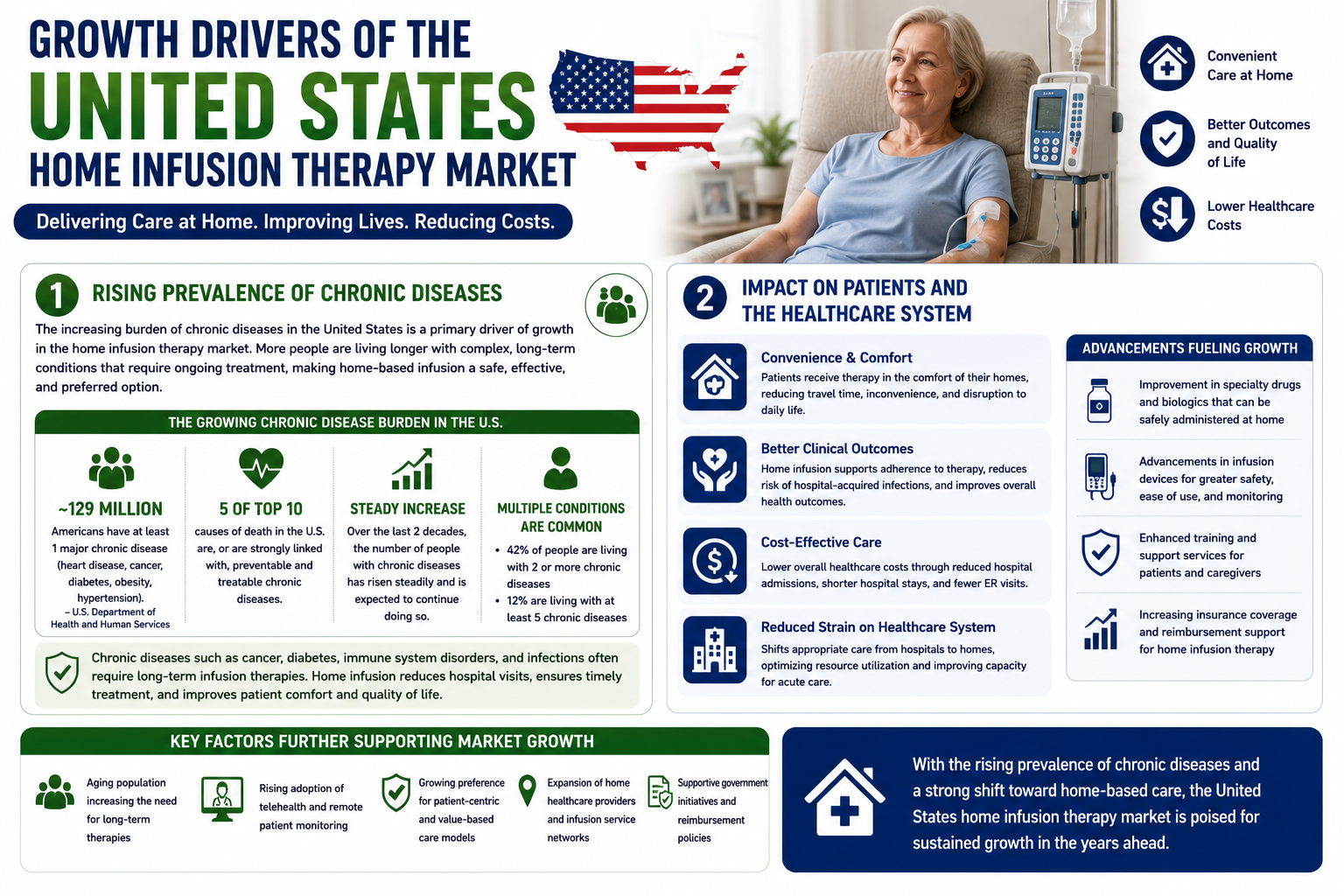
One of the most significant factors driving the growth of the home infusion therapy market is the increasing prevalence of chronic diseases across the United States.
According to healthcare statistics referenced in the report, approximately 129 million Americans live with at least one major chronic condition, including heart disease, cancer, diabetes, obesity, or hypertension. Furthermore, nearly 42% of Americans are affected by two or more chronic conditions, while 12% struggle with five or more chronic diseases simultaneously.
These conditions often require long-term treatment, ongoing medication administration, and frequent monitoring. Home infusion therapy provides a convenient and effective solution by allowing patients to continue receiving treatment without repeatedly visiting hospitals or clinics.
As the prevalence of chronic illnesses continues to increase, demand for home-based treatment services is expected to rise significantly throughout the forecast period.
Healthcare Cost Reduction Is Encouraging Adoption
The economic advantages of home infusion therapy have become increasingly attractive for healthcare providers, insurance companies, and policymakers.
Traditional hospital-based treatments can be expensive due to inpatient care costs, facility expenses, and prolonged hospital stays. Home infusion therapy offers a cost-effective alternative while maintaining treatment quality and clinical effectiveness.
By shifting eligible patients from hospital settings to home environments, healthcare systems can reduce overall treatment costs and allocate resources more efficiently. Hospitals also benefit because they can focus more attention on critically ill patients who require intensive care.
Patients experience financial benefits as well, including fewer transportation costs, reduced hospitalization expenses, and greater flexibility in managing their treatment schedules.
The growing emphasis on value-based healthcare is expected to further strengthen the adoption of home infusion therapy across the country.
Technology Is Revolutionizing Home Healthcare
Technological innovation has played a critical role in making home infusion therapy safer, more effective, and more accessible.
Modern infusion pumps are equipped with advanced safety features, automated dosing systems, wireless connectivity, and remote monitoring capabilities. These improvements help reduce medication errors while enhancing treatment accuracy.
In April 2024, Baxter received FDA clearance for its Novum IQ large-volume infusion pump and Dose IQ safety software. This advancement represents an important milestone in the development of intelligent infusion therapy systems designed to improve patient safety and optimize treatment outcomes.
Further innovation occurred in April 2025 when ICU Medical received FDA clearance for additions to its infusion pump portfolio, including the Plum Solo single-channel pump and updated Plum Duo dual-channel precision IV pumps. These devices enhance flexibility and precision for patients receiving therapy outside traditional healthcare facilities.
As technology continues advancing, home infusion therapy is expected to become even more efficient, reliable, and widely adopted.
Improved Patient Comfort Is Driving Acceptance
Patients increasingly prefer receiving treatment at home because it provides greater comfort and convenience.
Hospital visits can be stressful, time-consuming, and disruptive to daily life. Home infusion therapy allows individuals to remain in familiar surroundings while continuing work, family activities, and personal routines whenever possible.
Patients also benefit from increased independence, reduced travel requirements, improved quality of life, and a lower risk of exposure to hospital-acquired infections.
For individuals requiring long-term therapies, the psychological and emotional benefits of remaining at home can be just as important as the clinical advantages.
This patient-centered approach is becoming a key factor supporting market expansion.
Endocrinology Applications Are Expanding
The endocrinology segment represents a growing area within the home infusion therapy market.
Conditions such as diabetes, thyroid disorders, obesity, and hormonal imbalances often require ongoing treatment and monitoring. Technological advancements including insulin pumps, hormone therapies, and continuous glucose monitoring systems have significantly improved disease management.
The increasing prevalence of endocrine disorders, combined with an aging population and rising obesity rates, continues to create demand for specialized home-based treatment solutions. Telemedicine services have further enhanced access to endocrinology care, particularly in underserved and rural areas.
As endocrine disorders become more common, this segment is expected to contribute significantly to market growth.
Home-Based Chemotherapy Is Gaining Momentum
Cancer remains one of the leading health concerns in the United States, and chemotherapy continues to play a central role in cancer treatment.
Advances in oncology care and infusion technologies have made it possible for selected chemotherapy treatments to be administered safely in home environments. Patients benefit from greater convenience, reduced travel burdens, and improved quality of life while continuing to receive professional medical supervision.
In addition, ongoing advancements in personalized medicine, targeted therapies, and oncology drug development are expanding treatment options available through home infusion therapy.
As cancer prevalence increases and healthcare systems seek more efficient treatment models, home-based chemotherapy is expected to become increasingly important.
Parenteral Nutrition Therapy Supports Specialized Care
Parenteral nutrition therapy represents another important application within the market.
Patients suffering from severe gastrointestinal disorders, cancer-related complications, Crohn's disease, short bowel syndrome, and malnutrition often require nutrients to be delivered directly into the bloodstream.
Home-based parenteral nutrition allows patients to receive essential nutritional support while maintaining independence and avoiding lengthy hospital stays. Improvements in infusion technologies and personalized nutritional planning continue to enhance treatment outcomes.
This segment is expected to remain a key contributor to future market growth.
Infusion Pumps Continue to Lead Product Demand
Infusion pumps represent the largest product segment within the home infusion therapy market.
These devices play a critical role in delivering medications, fluids, and nutrients safely and accurately. They are widely used for chemotherapy, antibiotic therapy, hydration treatment, pain management, and nutritional support.
As healthcare providers increasingly adopt home-based treatment models, demand for advanced infusion pumps is expected to remain strong. Innovations focused on safety, portability, and digital connectivity will continue driving this segment forward.
Regional Markets Continue Expanding
California remains one of the largest home infusion therapy markets in the United States due to its large population, advanced healthcare infrastructure, and growing prevalence of chronic diseases. The state's leadership in telemedicine and healthcare innovation further supports market expansion.
New Jersey continues to experience steady growth driven by strong healthcare infrastructure, favorable reimbursement policies, and proximity to major pharmaceutical and biotechnology centers.
New York's large and diverse patient population, combined with increasing demand for long-term treatment solutions, has contributed to strong adoption of home infusion services.
Washington state benefits from a technology-focused healthcare ecosystem that embraces remote monitoring, telemedicine, and patient-centered treatment models, supporting continued market growth.
Challenges Remain Despite Strong Growth
Although the outlook for the home infusion therapy market remains positive, several challenges continue to affect industry development.
Insurance reimbursement policies vary significantly among Medicare, Medicaid, and private insurance providers. In some cases, patients may face out-of-pocket expenses for medications, equipment, or nursing services, limiting accessibility.
Patient safety also remains a critical concern. Potential risks include catheter-related infections, medication administration errors, and complications associated with long-term therapy. Adequate patient education, caregiver training, and professional oversight are essential for minimizing these risks.
Additionally, shortages of skilled home healthcare nurses may impact service availability in certain regions, creating workforce-related challenges for providers.
Final Thoughts
Home infusion therapy is rapidly transforming healthcare delivery across the United States by providing patients with safe, effective, and convenient treatment options outside traditional healthcare facilities.
According to Renub Research, the United States Home Infusion Therapy Market is expected to grow from US$ 23.53 billion in 2025 to US$ 43.84 billion by 2034, reflecting increasing demand for home-based healthcare solutions, advanced infusion technologies, and cost-effective treatment models.
As healthcare systems continue emphasizing patient comfort, chronic disease management, and operational efficiency, home infusion therapy is poised to become an even more important component of modern medical care.
The future of healthcare is increasingly moving into the home, and home infusion therapy is leading that transformation by combining advanced technology, personalized care, and improved patient experiences.
About the Creator
Enjoyed the story? Support the Creator.
Subscribe for free to receive all their stories in your feed.
Comments
There are no comments for this story
Be the first to respond and start the conversation.