
Home Energy Management System Market Set for Rapid Expansion as Smart Homes Drive Energy Efficiency
Rising electricity costs, renewable energy adoption, and smart home technologies are transforming how households manage energy consumption worldwide.

The modern home is becoming smarter than ever before. From voice-controlled lighting and intelligent thermostats to connected appliances and rooftop solar panels, technology is reshaping the way people live. One of the most important developments within this transformation is the growing adoption of Home Energy Management Systems (HEMS), which are helping homeowners monitor, control, and optimize their energy consumption like never before.
As energy prices continue to rise and sustainability becomes a priority for households around the world, consumers are increasingly searching for practical solutions that help reduce electricity bills while improving energy efficiency. Home Energy Management Systems have emerged as one of the most effective tools for achieving these goals. By combining smart devices, software platforms, sensors, and data analytics, these systems provide real-time insights into energy consumption and allow homeowners to make informed decisions about how energy is used within their homes.
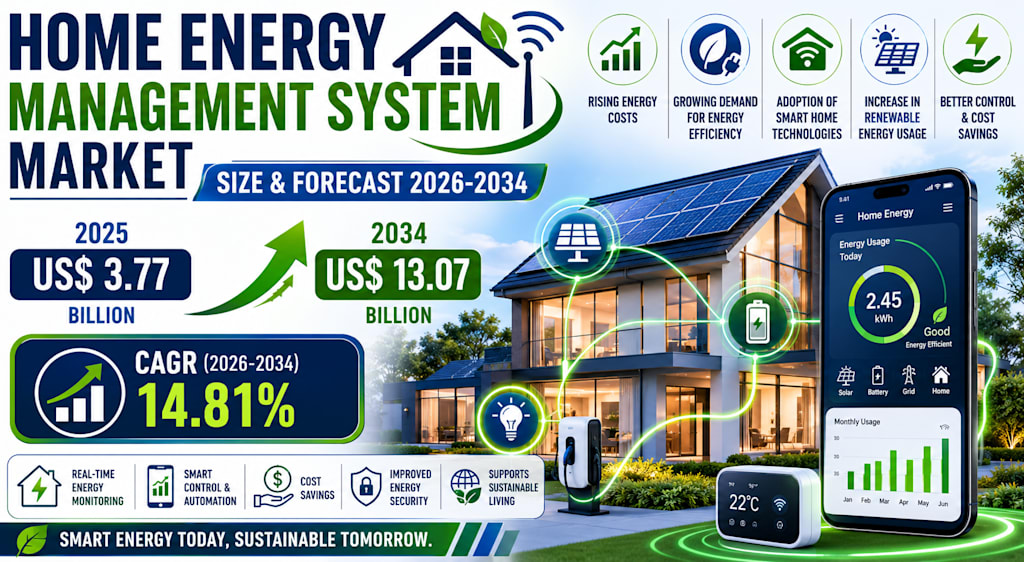
The market's growth reflects a broader shift toward smarter and more sustainable living. According to Renub Research, the global Home Energy Management System market is expected to increase from US$ 3.77 billion in 2025 to US$ 13.07 billion by 2034, registering a strong compound annual growth rate (CAGR) of 14.81% between 2026 and 2034. This impressive growth trajectory highlights the increasing importance of intelligent energy solutions in residential environments.
Understanding Home Energy Management Systems
A Home Energy Management System is a technology platform designed to help homeowners monitor, manage, and optimize energy usage within residential buildings. These systems integrate various hardware and software components, including smart meters, sensors, connected appliances, mobile applications, and cloud-based analytics platforms.
Unlike traditional energy monitoring methods, which rely primarily on monthly utility bills, HEMS solutions provide real-time visibility into household energy consumption. Homeowners can track electricity usage, identify inefficient appliances, schedule energy-intensive activities, and automate systems to reduce unnecessary energy waste.
Many modern solutions also allow users to remotely control devices through smartphones and tablets. Whether adjusting air conditioning settings, turning off unused lighting, or managing electric vehicle charging schedules, homeowners gain unprecedented control over their energy consumption.
As consumers become more interested in reducing costs and improving sustainability, these capabilities are making Home Energy Management Systems an increasingly attractive investment.
Growing Demand for Energy Efficiency
One of the most significant factors driving market growth is the increasing global emphasis on energy efficiency.
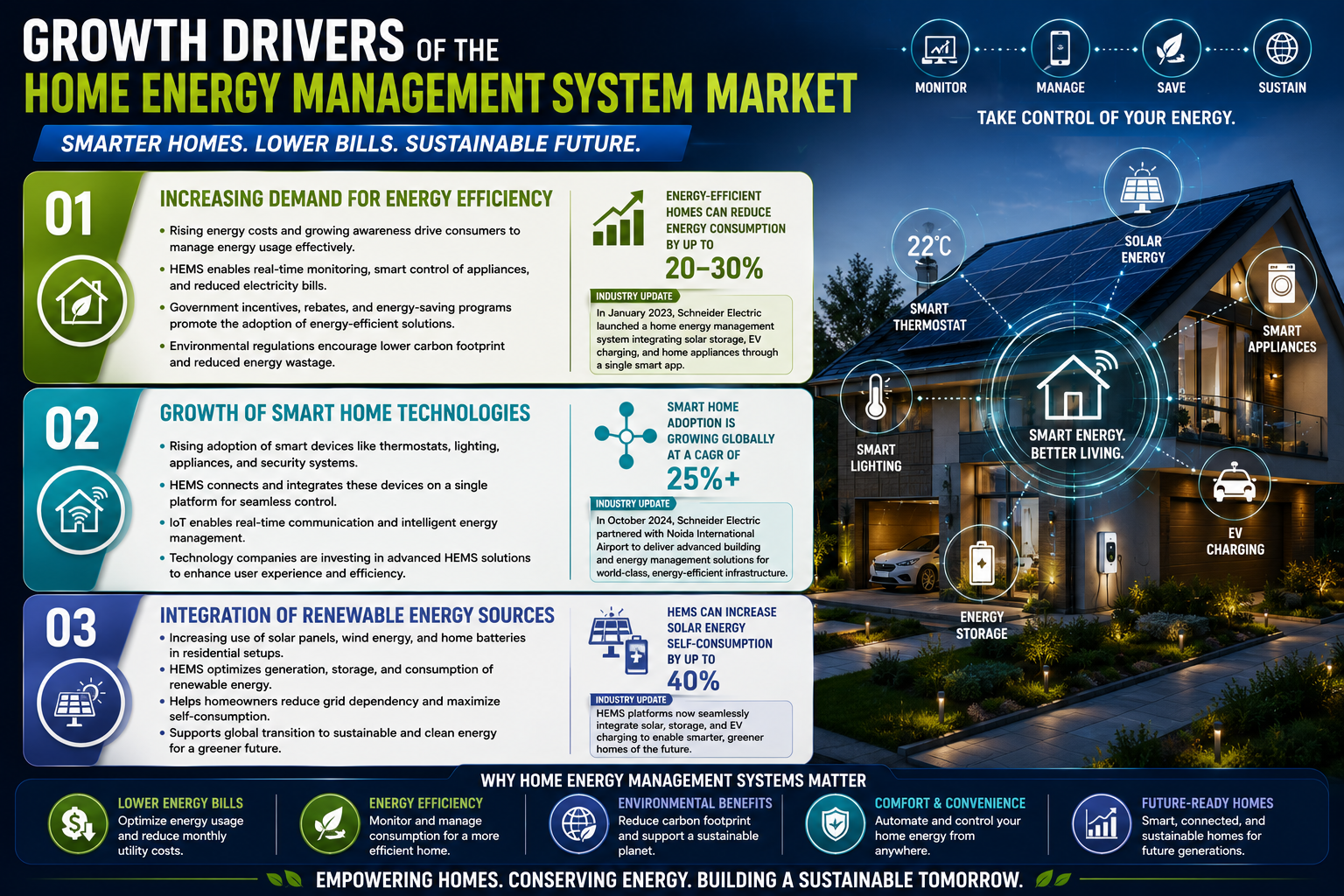
Across both developed and emerging economies, households are facing higher energy costs. Rising electricity prices have encouraged consumers to seek technologies that help manage consumption more effectively. Home Energy Management Systems provide detailed insights into energy usage patterns, enabling users to identify opportunities for savings.
Real-time monitoring allows homeowners to understand which devices consume the most energy and when usage peaks occur. This information can then be used to adjust behaviors, automate schedules, and improve overall efficiency.
Governments are also supporting energy conservation efforts through incentive programs, rebates, and regulatory initiatives designed to encourage the adoption of energy-efficient technologies. These programs are helping increase awareness and making energy management solutions more attractive to consumers.
As global efforts to reduce energy waste continue, demand for Home Energy Management Systems is expected to grow steadily throughout the forecast period.
Smart Home Technology Creates New Opportunities
The rapid expansion of smart home technology has created an ideal environment for Home Energy Management Systems.
Today's homes are increasingly equipped with connected devices, including smart thermostats, lighting systems, security cameras, voice assistants, and intelligent appliances. These devices generate valuable data that can be integrated into a centralized energy management platform.
The rise of the Internet of Things (IoT) has further accelerated this trend. IoT technology enables connected devices to communicate with one another, creating an ecosystem where energy consumption can be monitored and optimized automatically.
Homeowners can now manage multiple systems through a single interface, improving convenience while enhancing energy efficiency. This level of connectivity has transformed energy management from a manual process into an intelligent, automated experience.
Technology companies continue investing heavily in smart home innovation, and as connected devices become more affordable, the adoption of Home Energy Management Systems is expected to increase significantly.
Renewable Energy Integration Is Fueling Adoption
The increasing popularity of renewable energy systems is creating additional growth opportunities for the Home Energy Management System market.
Residential solar installations have expanded rapidly in many countries as homeowners seek greater energy independence and lower electricity costs. Battery storage systems are also becoming more common, allowing households to store excess electricity generated from renewable sources.
Managing these energy resources effectively requires advanced monitoring and control capabilities. Home Energy Management Systems provide the tools needed to coordinate energy generation, storage, and consumption.
For example, homeowners can schedule appliances to operate when solar energy production is highest or use stored battery power during peak electricity pricing periods. These capabilities maximize the value of renewable energy investments while reducing reliance on traditional utility providers.
Government support for renewable energy adoption is further strengthening demand for integrated energy management solutions, creating a favorable environment for market expansion.
Cloud-Based Platforms Are Reshaping Energy Management
Cloud computing technology is playing an increasingly important role in the evolution of Home Energy Management Systems.
Cloud-based platforms allow homeowners to access energy data remotely through smartphones, tablets, and computers. This flexibility enables users to monitor and control energy systems from virtually anywhere, providing greater convenience and responsiveness.
In addition to remote access, cloud platforms support advanced analytics capabilities. Large volumes of energy consumption data can be processed to identify trends, generate recommendations, and predict future usage patterns.
Software updates can also be deployed automatically through cloud infrastructure, ensuring systems remain secure and up to date without requiring hardware modifications.
As cloud technology continues to mature, its integration within Home Energy Management Systems is expected to become even more widespread.
Home Energy Monitoring Is Becoming More Important
Consumers today want greater visibility into how energy is being consumed within their homes.
Home energy self-monitoring systems provide detailed information about electricity usage, enabling homeowners to make more informed decisions. Through smart meters and connected sensors, users can track real-time consumption and identify energy-intensive appliances.
This increased awareness often leads to behavioral changes that improve efficiency. Homeowners may choose to adjust appliance usage, upgrade inefficient equipment, or modify daily routines to reduce energy costs.
As environmental awareness and electricity prices continue to rise, demand for energy monitoring solutions is expected to strengthen further.
Regional Markets Show Strong Potential
Different regions are contributing to market growth in unique ways.
United States
The United States remains one of the most advanced Home Energy Management System markets globally. Strong adoption of smart home technologies, increasing energy costs, and growing environmental awareness are driving demand. The widespread use of solar panels, battery storage systems, and electric vehicles is creating additional opportunities for integrated energy management solutions.
United Kingdom
The United Kingdom continues to focus heavily on energy efficiency and sustainability. Government support for smart meter deployment and renewable energy adoption has created favorable conditions for Home Energy Management Systems. Consumers are increasingly seeking solutions that help reduce energy bills while supporting environmental goals.
India
India represents a significant growth opportunity due to rapid urbanization and rising electricity consumption. Smart home adoption is increasing in major cities, while growing awareness of energy conservation is encouraging consumers to explore advanced energy management technologies. Expanding rooftop solar installations are also contributing to market development.
Saudi Arabia
Saudi Arabia is witnessing increased interest in energy management solutions as the country focuses on modernization and sustainability. High cooling requirements and rising electricity demand are encouraging households to adopt technologies that improve energy efficiency and reduce costs.
Challenges Facing the Market
Despite strong growth prospects, the Home Energy Management System market faces several challenges.
One of the most significant barriers is the relatively high initial installation cost. Implementing a complete system often requires investment in smart meters, sensors, controllers, communication networks, and software platforms. For some consumers, particularly in developing regions, these costs may limit adoption.
Cybersecurity and data privacy concerns also remain important considerations. Because Home Energy Management Systems rely on internet connectivity and cloud-based services, they generate large amounts of household data. Consumers may hesitate to adopt these technologies if they are concerned about unauthorized access or data breaches.
Manufacturers are responding by strengthening security measures and developing more affordable solutions, helping address these challenges over time.
Market Forecast: Strong Growth Through 2034
The outlook for the Home Energy Management System market remains highly positive. According to Renub Research, the market is projected to grow from US$ 3.77 billion in 2025 to US$ 13.07 billion by 2034, reflecting a CAGR of 14.81% during the forecast period from 2026 to 2034. The combination of rising energy costs, growing smart home adoption, renewable energy integration, and increasing environmental awareness is expected to continue supporting market expansion.
As technology advances and costs become more competitive, Home Energy Management Systems are likely to become a standard feature in residential properties worldwide.
Final Thoughts
The Home Energy Management System market is entering a period of rapid growth driven by powerful technological and societal trends. Consumers are increasingly looking for ways to reduce energy costs, improve efficiency, and support sustainability goals, while advances in smart home technology are making sophisticated energy management more accessible than ever.
With Renub Research forecasting market growth from US$ 3.77 billion in 2025 to US$ 13.07 billion by 2034 at a CAGR of 14.81%, the industry is positioned for substantial expansion. As smart homes become the norm rather than the exception, Home Energy Management Systems will play a critical role in shaping the future of residential energy consumption and creating more sustainable living environments for households around the world.
About the Creator
Enjoyed the story? Support the Creator.
Subscribe for free to receive all their stories in your feed.
Comments
There are no comments for this story
Be the first to respond and start the conversation.