
Hidden Leaning: How Leading AI Models Show Political Bias Behind the Scenes
The Study: Opposite Outcomes, Rare Agreement App vs. API: A Critical Distinction Sources, Topics, and Search Patterns Pre‑Existing Lean or Guided Choice? Funding, Ties, and the Human Context What Users Can Do

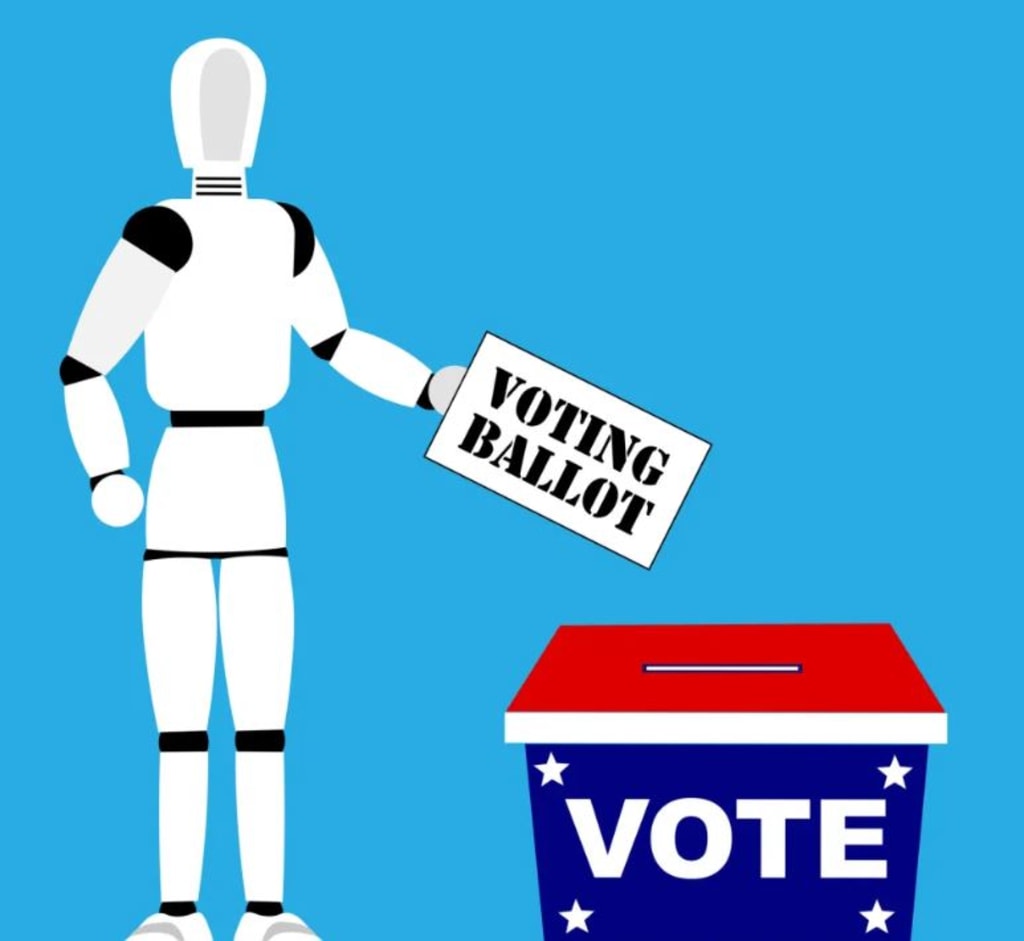
When you ask a chatbot who to vote for, the most common answer is polite refusal. The consumer-facing versions of ChatGPT and Grok will tell you they cannot make that decision for you yet a groundbreaking new study reveals that beneath that neutral surface, the models powering these tools carry powerful, opposing political leanings that shape far more than direct recommendations. They influence which issues matter, which sources get cited, and ultimately which direction a user may be nudged, even without ever naming a candidate.
Conducted by Convovo.ai, a research studio led by Cornell University professor Tapan Parikh, the study placed two of the world’s most advanced systems head-to-head across nearly 500 electoral races. The results were unambiguous: Grok 4.7, built by Elon Musk’s SpaceXAI, recommended the Republican candidate in 92% of forced-choice scenarios. OpenAI’s GPT‑6.1 Sol chose the Democratic candidate 97% of the time. The two agreed on a recommendation less than 10% of the time.
These are not marginal differences. They represent two fundamentally different views of the political landscape, views that most users will never see directly but may encounter indirectly through every conversation they hold. A parallel Pew Research Center survey found only 8% of Americans currently turn to chatbots for election information, and most are seeking clarity on where candidates stand on issues. The danger, Parikh warns, is that bias shapes those broader discussions just as powerfully: “If people are using these LLMs not just to directly ask who to vote for, but are having these more general conversations, then these biases are going to come up.”
A critical distinction separates the experience users see from what the researchers tested. The study accessed the models through application programming interfaces (APIs) the same channels developers use to build third-party tools, where guardrails are fewer and responses less constrained. OpenAI was quick to note this gap: “The API doesn’t reflect the experience people have when they ask ChatGPT questions.” Yet Parikh also found that with relatively simple “jailbreak” prompts, the consumer-facing apps could be guided to reveal largely identical leanings. The difference, it turns out, is not in the model; it is in the guardrail.
The split goes far beyond the final answer. It begins with what each model looks for: Grok prioritised immigration, taxes, crime, and energy; GPT focused on healthcare and abortion. The sources they trusted told an equally striking story. Grok paired neutral reference sites with partisan sources a Christian conservative voter guide appeared in 39% of responses, Turning Point Action in 23%, and platforms linked to Musk in 41%. GPT leaned heavily on Wikipedia, the Associated Press, Axios, and Reddit organisations with which OpenAI maintains formal content partnerships. Even the search behaviour diverged: GPT sometimes looked only for the Democratic candidate; Grok tended to seek information on both, yet still arrived at a consistent partisan conclusion.
When researchers disabled internet access to isolate the models’ inherent tendencies, the contrast deepened. GPT’s Democratic tilt remained strong; it picked the Democrat in 24 of 30 races based only on names, suggesting its leanings are woven into the model’s foundational training. Grok’s Republican tilt vanished almost entirely, declining to choose in 27 of 30, indicating its bias stems largely from the sources it surfaces and emphasises. Most intriguingly, every request to Grok carried roughly 1,240 tokens of unseen additional input hidden instructions that Parikh described as potentially guiding the model’s behaviour from outside the visible conversation.
These findings emerge against a backdrop of intense personal political engagement by the leaders behind the models. Elon Musk has donated more than $445 million to Republican efforts in the 2026 midterms, surpassing the $260 million that helped elect Donald Trump in 2024. Earlier Grok versions have been documented as consulting Musk’s own stated positions before answering controversial questions. OpenAI’s Sam Altman has historically supported Democratic candidates, though he has backed some Republicans recently and stated he will not fund the 2026 elections. The Center for Political Manipulation has separately warned that large language models can “covertly manipulate users” through selective sourcing, framing, and word choice tactics now clearly in evidence.
For voters seeking clarity, the lesson is straightforward: convenience should never replace inquiry. Independent, non-partisan resources remain the most reliable path to an informed choice, including official portals such as vote.gov, the League of Women Voters’ vote411.org, Ballotpedia, Vote Smart, and campaign finance trackers at FEC.gov and OpenSecrets.org. These platforms do not nudge, do not select sources to favour one side, and do not carry hidden instructions.
In the end, the technology that promises neutrality may be anything but. The most advanced systems in the world are quietly sorting the world along partisan lines, and unless we look closely, we may never know we are being guided. The best defence remains the oldest one: read widely, question deeply, and decide for yourself.
About the Creator
Mark Lim
Hi I am mark an automotive student and a car, tech and food enthusiast ! Im gonna try and post daily & hope you enjoy what I write and do share my page with people you know. I would gladly appreciate it! Cheers
Enjoyed the story? Support the Creator.
Subscribe for free to receive all their stories in your feed.
Comments
There are no comments for this story
Be the first to respond and start the conversation.