
Google’s $15 Billion AI Ambition in India Faces Local Backlash Over Environmental Concerns
As construction advances on a gigawatt-scale data center in Visakhapatnam, the tech giant defends its air-cooling strategy and economic promises against community fears of resource depletion, grid strain, and ecological disruption.

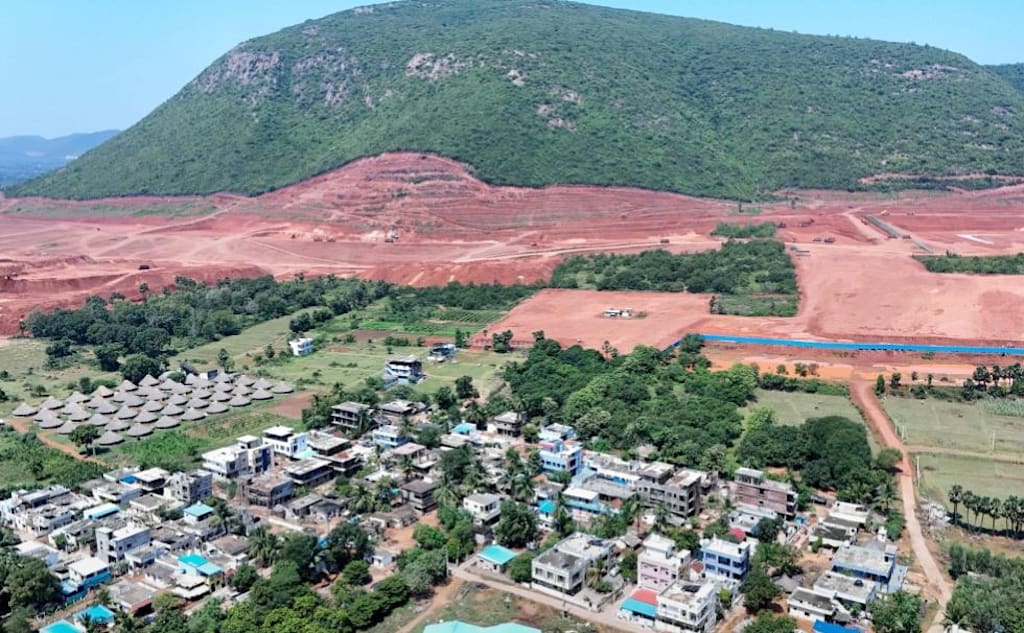
Visakhapatnam, a bustling coastal city in India’s Andhra Pradesh, is poised to become a cornerstone of the global artificial intelligence infrastructure boom. However, Google’s planned $15 billion, gigawatt-scale AI data center has ignited fierce local opposition, highlighting the growing friction between the insatiable resource demands of Big Tech and the environmental vulnerabilities of host communities. As activists demand a moratorium on new data centers across the state, Google is mounting a robust defense, emphasizing advanced engineering solutions, stringent environmental assessments, and substantial long-term economic benefits.
The Environmental Flashpoint: Water and Power
The core of the local resistance stems from the immense resource consumption associated with modern AI data centers. Critics warn that these facilities will place unprecedented strain on electricity grids that are still heavily reliant on fossil fuels, while simultaneously draining already-stressed local water supplies traditionally used to cool massive server farms.
Acknowledging these valid concerns, Alexander Smith, Google’s head of infrastructure and energy for the Asia-Pacific region, emphasized that the company’s approach is fundamentally shaped by local realities. “Our water assessment for Visakhapatnam pointed to pressure on the local watershed,” Smith explained. “That finding shaped our choice of cooling configuration from the outset.”
Consequently, Google has committed to utilizing advanced air-cooling systems rather than traditional water-intensive cooling methods for this facility. For the minimal freshwater required for non-cooling operational needs, the company has pledged to replenish 120% of the volume it consumes across its operations by 2030. Furthermore, Smith assured that Google will fully fund the necessary upgrades to the local power infrastructure and is actively planning to invest in new clean energy projects in the region that exceed baseline regulatory requirements. “If there is insufficient power in a location, or if operating a data centre would mean taking power away from a community, Google will either find ways to develop more power, or it will not build there,” he stated.
Strategic Geography: Why Visakhapatnam?
The selection of Visakhapatnam is not arbitrary; it is the result of a rigorous global site-selection process that weighs proximity to users, talent availability, clean energy potential, and community partnership opportunities. Crucially, the city’s coastal location offers a distinct geopolitical and logistical advantage. It will serve as a landing point for new undersea fiber-optic cables linking India directly to South Africa and Australia. This connectivity is designed to position Andhra Pradesh as India’s third major subsea communications hub, dramatically reducing latency and boosting the region’s digital infrastructure capacity.
The Economic Promise vs. Community Skepticism
Despite Google’s assurances, local activists remain deeply skeptical, arguing that the benefits of massive, warehouse-like tech facilities rarely trickle down to the everyday residents who bear the environmental brunt. Similar protests have erupted globally, including a recent instance where Finnish authorities ordered a halt to construction on two Google data center sites pending mandatory environmental reviews.
To counter the narrative of unequal benefit, Google has outlined a detailed economic impact projection. Smith noted that a development of this scale is expected to generate approximately $688 million in local economic activity annually. The company highlights a strong job multiplier effect: for every direct job created inside the Google data center, an estimated nine additional jobs are supported in the surrounding community through ancillary services, hospitality, and local supply chains.
During the typical three-to-five-year construction phase, the project is projected to employ an average of 4,200 construction workers annually. Once operational, the facility is designed to have a lifespan of at least 20 years, sustaining hundreds of highly specialized, well-paying on-site roles and fostering a new ecosystem of tech talent in the region.
A "Good Neighbor" Obligation
Google maintains that independent environmental assessments covering grid stability, power supply, water risk, ecology, and acoustics are conducted 12 to 24 months before any project breaks ground. Smith framed the Visakhapatnam project not as a short-term extraction of resources, but as a “multi-decade commitment” that carries a profound “obligation to be a good neighbor.”
“That means the watershed, the grid, and the communities around our facilities must be better off for our being here,” Smith asserted.
As the 2028 operational target approaches, the Visakhapatnam data center will serve as a critical test case for the tech industry. It will demonstrate whether it is genuinely possible to scale the immense computational power required for the AI revolution while simultaneously respecting ecological boundaries and delivering tangible, equitable prosperity to local communities. For now, Google’s success will depend not just on its technological prowess, but on its ability to prove that its promises of sustainability and shared growth are more than just corporate public relations.
About the Creator
Mark Lim
Hi I am mark an automotive student and a car, tech and food enthusiast ! Im gonna try and post daily & hope you enjoy what I write and do share my page with people you know. I would gladly appreciate it! Cheers
Enjoyed the story? Support the Creator.
Subscribe for free to receive all their stories in your feed.
Comments
There are no comments for this story
Be the first to respond and start the conversation.