
Global Vision Care Market Outlook 2026–2034: How Digital Lifestyles and Aging Populations Are Driving Demand for Better Eye Health
Rising vision disorders, increasing screen exposure, technological innovation in corrective products, and growing awareness of preventive eye care are fueling strong growth in the global vision care market.

Vision is one of the most important aspects of human health, influencing everything from education and employment to daily activities and overall quality of life. As modern lifestyles become increasingly dependent on digital technology and populations continue to age, maintaining good eye health has become a growing priority worldwide.
The vision care industry encompasses a wide range of products and services designed to prevent, diagnose, and treat eye-related conditions. From prescription eyeglasses and contact lenses to advanced diagnostic technologies and surgical procedures, vision care solutions are helping millions of people improve their eyesight and maintain healthy vision.
The growing prevalence of vision disorders, combined with increased awareness regarding preventive healthcare, is creating significant opportunities across the industry. At the same time, advances in lens technology, laser treatments, artificial tears, and digital diagnostic equipment are transforming how vision problems are managed.
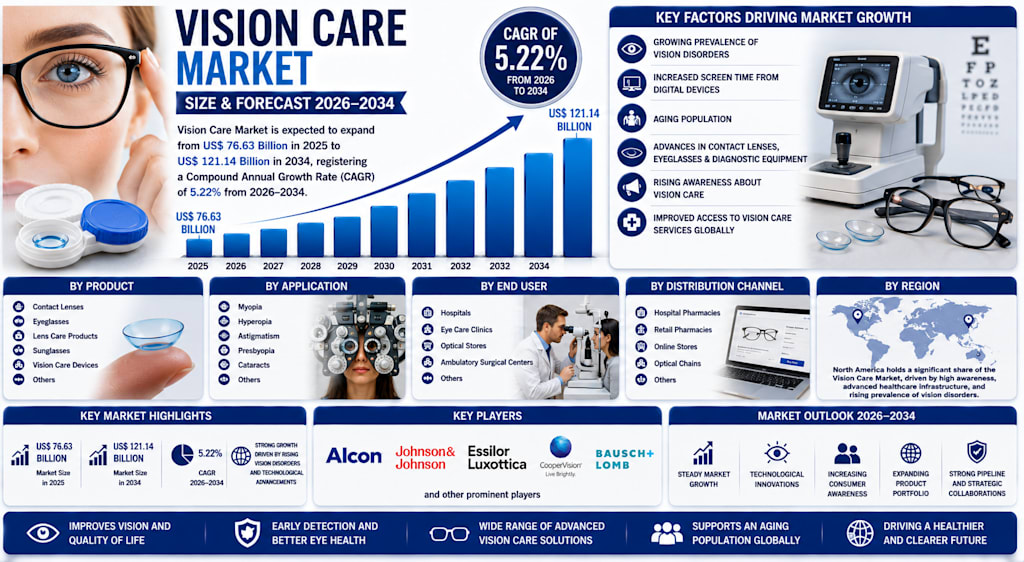
According to Renub Research, the Global Vision Care Market is projected to grow from US$ 76.63 Billion in 2025 to US$ 121.14 Billion by 2034, registering a Compound Annual Growth Rate (CAGR) of 5.22% from 2026 to 2034. Rising vision disorders, increasing screen time, technological advancements in vision correction products, and growing awareness of eye health are among the key drivers supporting market growth.
As consumers become increasingly proactive about eye care and vision wellness, the industry is expected to remain one of the fastest-growing segments within global healthcare.
Understanding Vision Care
Vision care refers to the prevention, diagnosis, treatment, and management of eye-related conditions and visual impairments.
It includes comprehensive eye examinations, prescription eyewear, contact lenses, vision correction procedures, and treatments for eye diseases.
Vision care helps address conditions such as myopia, hyperopia, astigmatism, presbyopia, cataracts, glaucoma, macular degeneration, and dry eye syndrome.
Regular eye examinations allow healthcare professionals to identify vision problems early and provide appropriate interventions before complications develop.
Modern vision care also incorporates advanced technologies designed to improve diagnosis accuracy, treatment effectiveness, and patient comfort.
As awareness regarding eye health continues increasing, more consumers are seeking routine eye care services and preventive treatments.
Rising Vision Disorders Are Driving Market Growth
One of the most significant factors supporting market expansion is the increasing prevalence of vision disorders worldwide.
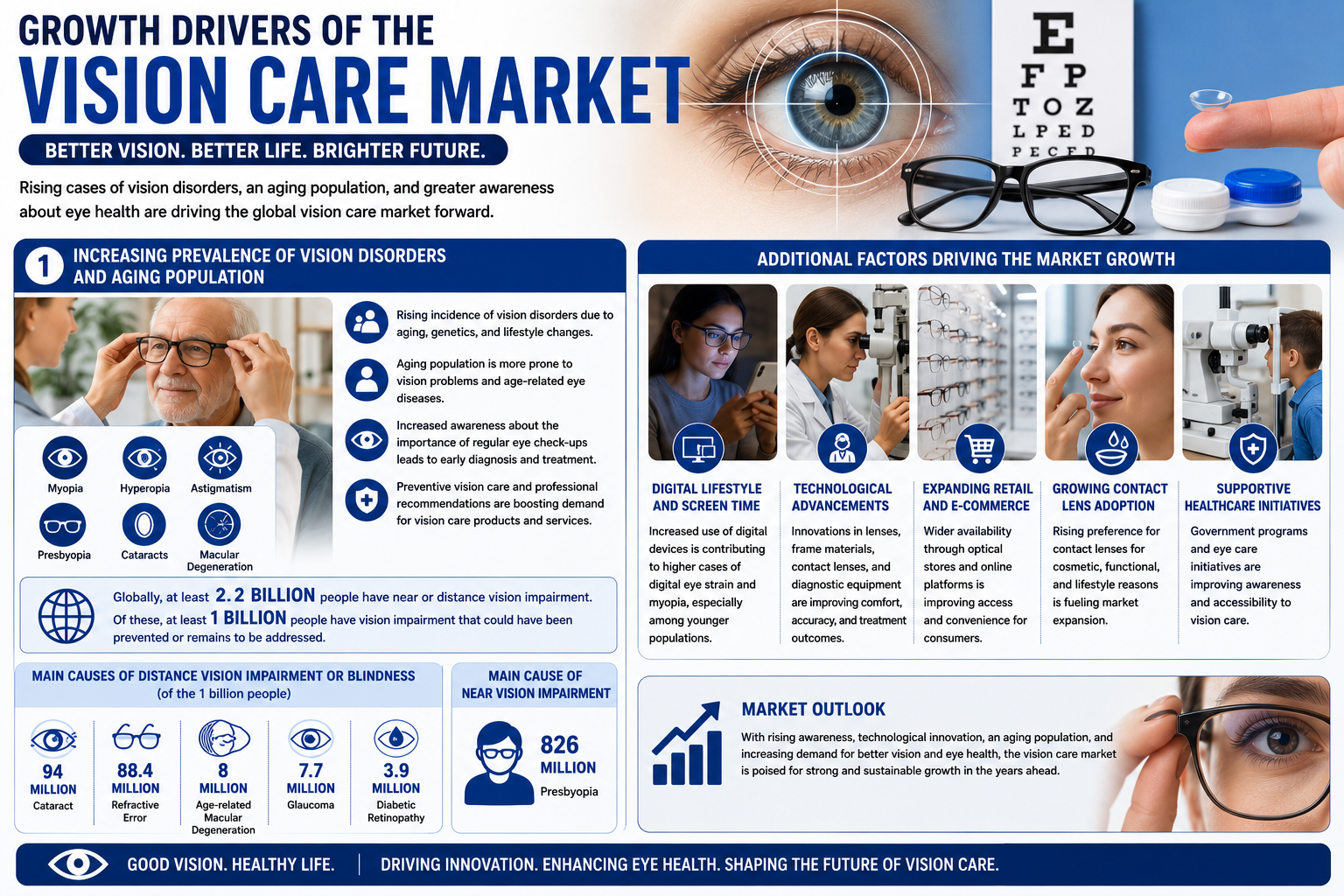
According to global estimates, approximately 2.2 billion people suffer from near or distance vision impairment. Of these, nearly 1 billion cases could have been prevented or remain untreated. Major causes include cataracts, refractive errors, age-related macular degeneration, glaucoma, diabetic retinopathy, and presbyopia.
The growing incidence of myopia, hyperopia, astigmatism, and presbyopia is creating sustained demand for corrective eyewear, contact lenses, surgical procedures, and diagnostic services.
Genetic factors, lifestyle changes, increased screen usage, and aging populations are all contributing to the rising burden of visual impairment.
As awareness regarding eye health improves, more individuals are seeking early diagnosis and treatment.
This growing patient population is expected to remain a major driver of long-term market growth.
Aging Populations Continue Supporting Demand
Demographic shifts are playing a major role in shaping the future of the vision care industry.
As populations age, age-related eye disorders become increasingly common.
Older adults are more susceptible to cataracts, macular degeneration, glaucoma, diabetic retinopathy, and presbyopia.
These conditions often require ongoing monitoring, prescription eyewear, medications, surgeries, or specialized treatment plans.
The growing number of elderly individuals worldwide is increasing demand for comprehensive vision care services and products.
Healthcare providers are also placing greater emphasis on preventive eye care to preserve vision and improve quality of life among aging populations.
As life expectancy continues rising globally, demand for vision care solutions is expected to expand significantly.
Digital Eye Strain Is Becoming a Global Concern
The widespread use of smartphones, tablets, computers, and digital screens has fundamentally changed modern lifestyles.
While these technologies offer numerous benefits, prolonged screen exposure has contributed to a growing problem known as digital eye strain.
Symptoms commonly include dry eyes, headaches, blurred vision, eye fatigue, neck pain, and shoulder discomfort.
Research indicates that more than two hours of screen exposure daily significantly increases the risk of computer vision syndrome and related symptoms. The average office worker spends approximately seven hours per day using digital devices, making digital eye strain an increasingly common health concern.
Students, professionals, gamers, and remote workers are particularly vulnerable due to extended periods of screen use.
As digital lifestyles continue expanding, demand for vision care products designed to address screen-related discomfort is expected to rise substantially.
Technological Innovation Is Transforming Vision Care
Technology remains one of the strongest growth drivers within the vision care market.
Advances in contact lens materials, lens coatings, diagnostic equipment, and surgical technologies are improving patient outcomes and treatment experiences.
Modern contact lenses offer enhanced oxygen permeability, moisture retention, and extended wear capabilities.
Eyeglass lenses now incorporate advanced coatings such as anti-reflective layers, scratch-resistant protection, and blue-light filtering technologies.
Diagnostic equipment has become increasingly sophisticated, enabling earlier detection of eye diseases and more accurate prescriptions.
In January 2026, ZEISS Vision Care introduced a recyclable lens wipe sachet, representing a significant step toward sustainable and environmentally responsible vision care products.
These innovations continue enhancing convenience, safety, and overall consumer satisfaction.
Glass Lenses Continue Maintaining Market Relevance
Glass lenses remain an important segment within the vision care industry.
Known for their excellent optical clarity, durability, and scratch resistance, glass lenses continue to be preferred by many individuals with complex vision correction requirements.
Advances in manufacturing technology have helped reduce weight and improve comfort, addressing some traditional limitations associated with glass lenses.
Additional enhancements such as anti-reflective coatings further improve visual performance and user experience.
As awareness regarding vision correction continues growing, demand for high-quality optical solutions remains strong.
Glass lenses continue serving specialized applications where superior optical precision is required.
Contact Lenses Are Experiencing Strong Growth
The contact lenses market continues expanding due to increasing consumer preference for convenient and aesthetically appealing vision correction solutions.
Many consumers prefer contact lenses because they provide unobstructed vision without altering physical appearance.
Technological advancements have resulted in soft contact lenses, daily disposable products, moisture-enhanced designs, and lenses with improved oxygen permeability.
These innovations improve comfort while reducing irritation and dryness.
Cosmetic and colored contact lenses have also gained popularity among fashion-conscious consumers.
Online retail channels and optical stores have made contact lenses more accessible than ever before.
As consumers continue seeking convenient alternatives to traditional eyewear, the contact lenses segment is expected to experience sustained growth.
Laser Vision Correction Is Becoming Increasingly Popular
Laser vision correction procedures have transformed the treatment landscape for refractive eye disorders.
Technologies such as LASIK and PRK enable surgeons to reshape the cornea and reduce dependence on eyeglasses or contact lenses.
Advances in laser precision, safety, and treatment planning have significantly improved patient outcomes.
Many individuals view laser correction as a long-term solution that provides greater convenience and lifestyle flexibility.
Growing awareness regarding permanent vision correction options has contributed to increased patient interest.
Laser technologies are also used to treat glaucoma and certain retinal disorders.
As technology continues advancing, laser vision correction procedures are expected to become increasingly popular worldwide.
Vision Care Surgery Market Continues Expanding
Surgical interventions represent an important segment within the vision care industry.
Procedures such as cataract surgery, retinal surgery, refractive surgery, and glaucoma treatment help restore or preserve vision for millions of patients annually.
The aging population remains one of the primary drivers behind rising surgical demand.
Technological advancements have improved surgical accuracy, reduced recovery times, and enhanced treatment outcomes.
Minimally invasive approaches are also increasing patient acceptance and improving overall experiences.
Government healthcare initiatives and insurance coverage programs have expanded access to surgical treatments in many regions.
As visual impairment continues affecting large populations, surgical solutions will remain critical components of comprehensive eye care.
Hospitals Play a Central Role in Vision Care Delivery
Hospitals remain among the most important providers of vision care services globally.
These institutions offer comprehensive diagnostic, therapeutic, and surgical capabilities for managing both routine and complex eye conditions.
Specialized ophthalmology departments utilize advanced imaging systems, laser technologies, and surgical equipment to provide high-quality care.
Hospitals also play an important role in emergency eye care, patient education, and preventive health initiatives.
Growing demand for specialized eye care services continues supporting investment in hospital-based ophthalmology infrastructure.
As healthcare systems continue expanding worldwide, hospitals are expected to remain major contributors to vision care market growth.
High Costs Remain a Challenge
Despite positive growth prospects, the vision care market faces several challenges.
One of the most significant concerns is the cost associated with advanced vision care products and treatments.
Premium eyeglasses, specialized contact lenses, advanced coatings, and laser surgeries can be expensive for many consumers.
In many regions, insurance coverage for vision care services remains limited, creating financial barriers to access.
As a result, some individuals delay treatment or continue living with untreated visual impairments.
Improving affordability and accessibility remains an important priority for industry stakeholders.
Addressing cost-related challenges will be critical for ensuring broader adoption of advanced vision care solutions.
Limited Access in Developing Regions
Another significant challenge involves unequal access to vision care services across developing and rural regions.
Many communities lack sufficient healthcare infrastructure, trained eye care professionals, and diagnostic equipment.
Limited awareness regarding eye health further contributes to underdiagnosis and undertreatment.
Economic constraints and weak distribution networks also reduce access to corrective products such as eyeglasses and contact lenses.
Governments, healthcare organizations, and non-profit groups continue implementing outreach programs, mobile clinics, and awareness campaigns to improve accessibility.
Expanding infrastructure and improving healthcare delivery systems remain essential for supporting future market growth.
Regional Market Insights
United States
The United States represents one of the world's largest vision care markets due to widespread vision disorders, strong healthcare infrastructure, and advanced treatment technologies. In July 2025, Alcon announced the commercial availability of TRYPTYR® (acoltremon ophthalmic solution) 0.003% for the treatment of Dry Eye Disease, offering new therapeutic options for millions of patients.
United Kingdom
The United Kingdom market benefits from support provided by the National Health Service (NHS), increasing awareness regarding eye health, and strong demand for corrective lenses and vision care products. In July 2025, Scope Healthcare introduced a moisturizing eye cream through its Optase Life cosmetics range.
India
India is experiencing rapid market growth due to increasing awareness, government eye care initiatives, rising incomes, and expanding access to vision care services. In April 2025, Alcon announced plans to launch several advanced ophthalmic products in India to address growing demand for innovative eye care technologies.
Saudi Arabia
Saudi Arabia's vision care market continues expanding due to healthcare investments, growing awareness regarding eye health, and rising demand for specialized eye care services. In March 2025, Alcon opened the Alcon Experience Center in Jeddah to support ophthalmology education and innovation within the region.
Competitive Landscape
The global vision care market remains highly competitive, with major companies investing heavily in innovation, product development, sustainability, and strategic expansion.
Leading industry participants include Essilor International, Johnson & Johnson Services Inc., Bausch Health Companies Inc., Novartis International AG, Grand Vision, Carl Zeiss, Valeant Pharmaceuticals, Paragon Vision Science, and Menicon.
These organizations continue developing advanced contact lenses, optical products, diagnostic technologies, and therapeutic solutions designed to improve patient outcomes and expand market reach.
Research and development remain critical as companies compete to deliver increasingly sophisticated vision care solutions.
Final Thoughts
The global vision care market is entering a period of sustained growth driven by rising vision disorders, aging populations, increasing digital screen usage, and continuous technological innovation. As eye health becomes a growing priority for consumers worldwide, demand for comprehensive vision care solutions is expected to expand across every major region.
Advances in contact lenses, eyeglasses, laser therapies, surgical procedures, and diagnostic technologies are transforming patient experiences while improving treatment outcomes. Although challenges related to affordability and accessibility remain, ongoing investments in innovation and healthcare infrastructure are helping address these issues.
With the market projected to grow from US$ 76.63 Billion in 2025 to US$ 121.14 Billion by 2034, vision care will continue playing an essential role in supporting global health and quality of life. Companies that successfully combine innovation, accessibility, and patient-centered solutions will be best positioned to capitalize on future opportunities in this rapidly evolving industry.
About the Creator
Enjoyed the story? Support the Creator.
Subscribe for free to receive all their stories in your feed.
Comments
There are no comments for this story
Be the first to respond and start the conversation.