
Global OTC Artificial Tears Market Outlook 2026–2034: How Digital Lifestyles and Aging Populations Are Driving Eye Care Demand
Rising cases of dry eye syndrome, increasing screen exposure, and growing awareness of preventive eye health are fueling strong growth in the global OTC artificial tears market.

The global eye care industry is witnessing significant growth as modern lifestyles increasingly contribute to vision-related discomfort and chronic eye conditions. Among the most common concerns affecting people worldwide is dry eye syndrome, a condition characterized by insufficient tear production or poor tear quality that leads to irritation, burning sensations, redness, and discomfort.
As digital devices become an integral part of daily life, prolonged exposure to screens has emerged as a major contributor to eye fatigue and dryness. Millions of consumers now spend hours each day using smartphones, computers, tablets, and televisions, creating unprecedented demand for convenient eye care solutions.
Over-the-counter (OTC) artificial tears have become one of the most widely used products for managing dry eye symptoms. These lubricating eye drops provide immediate relief by moisturizing the eye surface, improving tear film stability, and protecting the eyes from environmental irritants.
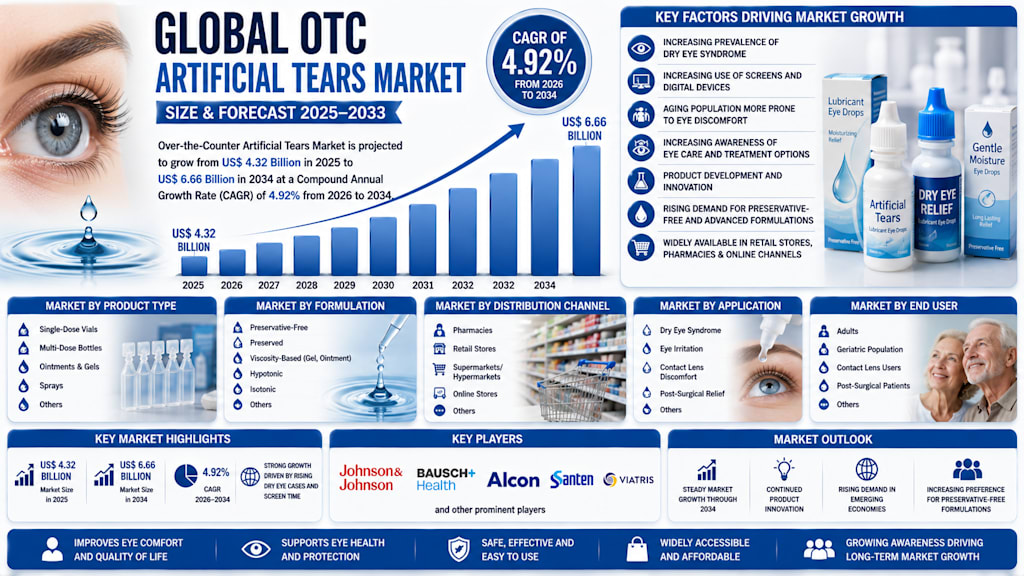
According to Renub Research, the Global OTC Artificial Tears Market is projected to grow from US$ 4.32 billion in 2025 to US$ 6.66 billion by 2034, registering a compound annual growth rate (CAGR) of 4.92% from 2026 to 2034. Rising prevalence of dry eye syndrome, increasing screen time, growing awareness of eye health, product innovation, and wider accessibility through retail and online channels are among the major factors driving market expansion.
As consumers increasingly prioritize preventive healthcare and eye wellness, OTC artificial tears are expected to remain a critical segment within the global ophthalmic care market.
Understanding OTC Artificial Tears
OTC artificial tears are lubricating eye drops available without a prescription that help relieve symptoms associated with dry eyes.
These products are designed to mimic natural tears by moisturizing the eye surface and restoring lubrication.
Artificial tears commonly contain ingredients such as carboxymethylcellulose, glycerin, hyaluronic acid, and other moisture-retaining compounds that support tear film stability.
They help alleviate dryness, irritation, burning sensations, redness, and discomfort caused by environmental factors, prolonged screen exposure, aging, and reduced tear production.
Unlike prescription medications, OTC artificial tears offer consumers a convenient and affordable option for managing mild to moderate dry eye symptoms.
Their ease of use, widespread availability, and effectiveness have contributed significantly to their growing popularity worldwide.
Rising Prevalence of Dry Eye Syndrome Is Driving Demand
One of the most important growth drivers for the market is the increasing prevalence of dry eye syndrome globally.
Dry eye disease occurs when the eyes either do not produce sufficient tears or produce tears that evaporate too quickly.
This condition can significantly affect quality of life by causing discomfort, blurred vision, sensitivity to light, and chronic irritation.
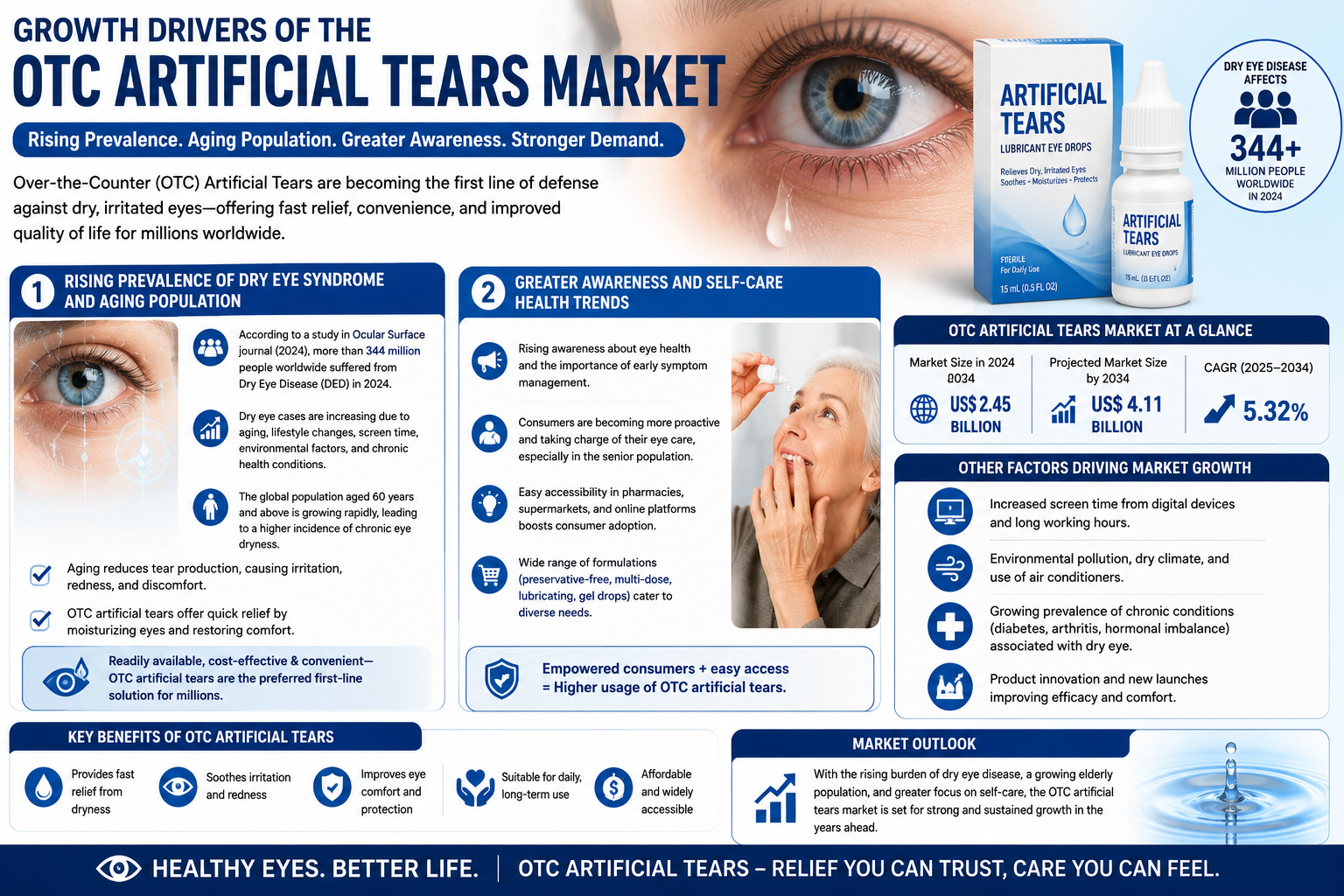
According to research published in The Ocular Surface journal in 2024, more than 344 million people worldwide were affected by Dry Eye Disease (DED), highlighting the substantial global burden of this condition.
Growing awareness regarding eye health has encouraged consumers to seek treatment earlier, often turning to OTC artificial tears as a first-line solution.
As the prevalence of dry eye syndrome continues increasing, demand for lubricating eye products is expected to rise accordingly.
Aging Populations Continue Supporting Market Growth
Demographic changes are creating significant opportunities for the OTC artificial tears market.
As people age, natural tear production tends to decline, increasing susceptibility to dry eye symptoms and ocular discomfort.
Older adults frequently experience chronic eye dryness due to age-related physiological changes, hormonal fluctuations, and underlying health conditions.
Conditions such as diabetes, arthritis, and certain autoimmune disorders can further contribute to tear film instability and dry eye disease.
The global population aged 60 years and older continues expanding rapidly, creating a growing consumer base for eye care products.
Because artificial tears offer a convenient and affordable solution without requiring a prescription, they are particularly popular among elderly consumers seeking symptom relief.
The continued aging of populations worldwide is expected to remain a key factor supporting long-term market growth.
Digital Eye Strain Is Becoming a Global Health Concern
The rapid adoption of digital technology has fundamentally changed how people work, communicate, learn, and entertain themselves.
While these technologies offer numerous benefits, they have also contributed to a dramatic rise in digital eye strain.
Extended screen use often reduces blinking frequency, which is essential for maintaining adequate tear distribution across the eye surface.
As blinking decreases, eyes become more vulnerable to dryness, irritation, and fatigue.
According to data from The Vision Council, approximately 60% of men and 65% of women in the United States report symptoms associated with Computer Vision Syndrome. Additionally, nearly 80% of adults use digital devices for at least two hours per day, while many regularly use multiple screens simultaneously.
The growth of remote work, online learning, gaming, and social media usage continues increasing exposure to digital screens.
As digital lifestyles become increasingly common, demand for OTC artificial tears is expected to grow significantly.
Product Innovation Is Enhancing Consumer Confidence
Continuous innovation is helping manufacturers differentiate products within a highly competitive marketplace.
Consumers increasingly seek eye drops that provide longer-lasting hydration, improved comfort, and greater convenience.
One of the most important developments has been the introduction of preservative-free formulations, which reduce the risk of irritation among individuals with sensitive eyes.
Advanced lubrication technologies have also improved tear retention and moisture protection.
Manufacturers continue investing in research and development to create products that address specific consumer needs, including severe dryness, contact lens discomfort, and environmental irritation.
In January 2022, Alcon introduced Systane Complete Preservative-Free Lubricant Eye Drops in Europe, expanding its portfolio of advanced dry eye management solutions.
As product innovation continues advancing, consumers are gaining access to more effective and specialized treatment options.
Retail and E-Commerce Expansion Is Improving Accessibility
The widespread availability of OTC artificial tears has played a major role in market growth.
Consumers can purchase these products through pharmacies, supermarkets, convenience stores, online marketplaces, and healthcare retailers without requiring medical prescriptions.
The expansion of e-commerce has further enhanced accessibility by enabling consumers to compare products, read reviews, and order directly from home.
Online retailers frequently offer subscription services, discounts, and personalized recommendations that encourage repeat purchases.
Pharmaceutical companies are also expanding distribution networks to ensure availability across both developed and emerging markets.
This accessibility allows consumers to address symptoms quickly and conveniently, contributing to broader market adoption.
As digital retail channels continue growing, accessibility is expected to remain a significant competitive advantage for manufacturers.
Ointment-Based Products Are Gaining Popularity
While liquid eye drops dominate the market, ointment-based artificial tears are becoming increasingly important within specific patient populations.
These products contain thicker ingredients such as mineral oil and petrolatum that create a protective barrier over the eye surface.
Ointments provide longer-lasting lubrication and are particularly useful for individuals experiencing severe dry eye symptoms or nighttime dryness.
Because of their thicker consistency, they are typically applied before bedtime.
Many healthcare professionals recommend ointments for patients who require extended hydration beyond what traditional eye drops can provide.
As awareness regarding advanced dry eye treatment options increases, demand for ointment-based artificial tears is expected to continue growing.
Dry Eye Syndrome Remains the Largest Application Segment
Dry eye syndrome represents the primary application area for OTC artificial tears.
Consumers experiencing eye dryness, irritation, inflammation, and discomfort frequently rely on lubricating eye drops for symptom management.
Environmental pollution, aging, air conditioning, medical conditions, and extensive screen exposure all contribute to the increasing prevalence of dry eye symptoms.
Healthcare professionals often recommend artificial tears as a safe and accessible first-line treatment option.
Growing awareness campaigns and preventive healthcare initiatives are encouraging consumers to seek treatment earlier.
As diagnosis rates and awareness continue increasing, the dry eye syndrome segment is expected to remain the largest contributor to market revenue.
UV and Blue Light Protection Is Emerging as a Growth Opportunity
Consumer awareness regarding the effects of UV radiation and blue light exposure has increased substantially in recent years.
Sunlight, smartphones, computers, tablets, and LED screens expose eyes to various forms of potentially harmful light.
Many consumers now seek products that help reduce eye strain and support overall eye comfort during prolonged exposure.
Artificial tears are increasingly marketed as part of broader eye wellness strategies aimed at protecting eye surfaces from environmental stressors.
The rise of digital lifestyles and growing concern about long-term eye health are creating new opportunities within this segment.
As consumers become more proactive about eye care, UV and blue light protection applications are expected to gain importance within the market.
Retail Pharmacies Continue Dominating Distribution
Retail pharmacies remain one of the most important distribution channels for OTC artificial tears.
Consumers frequently trust pharmacists for guidance regarding product selection and eye care recommendations.
Retail pharmacies offer a wide variety of artificial tear formulations designed to address different levels of dryness and irritation.
The extensive reach of pharmacy networks across urban and rural areas ensures broad product accessibility.
Consumers often appreciate the convenience of immediate product availability combined with professional advice.
As self-medication trends continue expanding globally, retail pharmacies are expected to maintain a dominant role within the OTC artificial tears market.
Intense Competition Creates Market Challenges
Despite favorable growth prospects, the market remains highly competitive.
Numerous global and regional companies offer products containing similar active ingredients and delivering comparable therapeutic benefits.
This creates challenges related to product differentiation and pricing.
Consumers often compare products based on price, brand reputation, and perceived effectiveness.
Manufacturers must continually invest in research, innovation, marketing, and brand development to maintain competitiveness.
Smaller companies may struggle to compete with established brands that benefit from extensive distribution networks and strong consumer loyalty.
Managing competitive pressures remains an ongoing challenge across the industry.
Product Safety and Quality Concerns Require Constant Attention
Product safety remains one of the most critical considerations within the ophthalmic care industry.
Artificial tears come into direct contact with the eyes and therefore require stringent manufacturing and quality control standards.
Any contamination during production or packaging can result in serious health risks, including infections and irritation.
Regulatory authorities closely monitor ophthalmic products and enforce strict compliance requirements.
Product recalls can damage brand reputation, reduce consumer trust, and create significant financial consequences.
Manufacturers must continue investing in advanced production technologies and quality assurance systems to maintain safety standards and consumer confidence.
Regional Market Insights
United States
The United States remains one of the largest OTC artificial tears markets globally due to widespread digital device usage, aging demographics, and strong consumer awareness regarding eye health. In February 2025, Alcon launched SYSTANE PRO Preservative-Free eye drops in the United States, further expanding advanced treatment options for dry eye sufferers.
United Kingdom
The United Kingdom market continues growing due to increased screen exposure, rising numbers of older adults, and widespread awareness of preventive eye care. Strong pharmacy networks and online retail accessibility support continued market expansion.
India
India is experiencing rapid market growth driven by urbanization, increasing smartphone usage, environmental pollution, and growing awareness of eye health. Expanding retail pharmacy networks and e-commerce platforms are improving product accessibility nationwide.
Saudi Arabia
Saudi Arabia benefits from strong demand due to harsh environmental conditions, high exposure to air conditioning, increasing screen time, and growing awareness regarding preventive eye care. Rising disposable incomes are also supporting demand for premium eye care products.
Competitive Landscape
The global OTC artificial tears market remains highly competitive, with major pharmaceutical and eye care companies investing in innovation, product differentiation, and distribution expansion.
Leading industry participants include AbbVie Inc., Akorn Inc., Alcon, Bausch Health Companies Inc., Johnson & Johnson, Nicox S.A., Novartis AG, Santen Pharmaceutical Co. Ltd., and Sun Pharmaceutical Industries Ltd.
These organizations continue focusing on preservative-free formulations, advanced lubrication technologies, and premium product development to strengthen their market positions.
Strategic product launches, regulatory approvals, and international expansion initiatives are expected to remain key growth strategies throughout the forecast period.
Final Thoughts
The global OTC artificial tears market is benefiting from powerful demographic, technological, and healthcare trends that continue driving demand worldwide. Rising cases of dry eye syndrome, expanding screen exposure, and increasing awareness regarding preventive eye care are creating strong opportunities for manufacturers and healthcare providers alike.
Product innovation, improved accessibility through retail and e-commerce channels, and growing consumer interest in eye wellness are further strengthening market growth prospects.
With the market projected to expand from US$ 4.32 billion in 2025 to US$ 6.66 billion by 2034, OTC artificial tears are expected to remain one of the most important categories within consumer eye care. Companies that successfully combine safety, innovation, accessibility, and consumer trust will be well positioned to capture future growth opportunities in this expanding global market.
About the Creator
Enjoyed the story? Support the Creator.
Subscribe for free to receive all their stories in your feed.
Comments
There are no comments for this story
Be the first to respond and start the conversation.