
Global Home Infusion Therapy Market to Reach US$74.07 Billion by 2034 as Home-Based Healthcare Becomes the Future of Patient Care
Rising prevalence of chronic diseases, growing preference for home-based treatment, advances in infusion technologies, and expanding telehealth services are driving strong growth in the global home infusion therapy market.

Home Infusion Therapy Is Transforming Modern Healthcare Delivery
Healthcare systems around the world are shifting toward patient-centered care that emphasizes convenience, affordability, and improved treatment outcomes. One of the most significant developments supporting this transition is home infusion therapy, which enables patients to receive intravenous or subcutaneous medications safely in their own homes instead of remaining in hospitals for extended periods.
Home infusion therapy has become an attractive solution for individuals requiring long-term treatment for chronic illnesses, infections, cancer, immune disorders, gastrointestinal diseases, and nutritional deficiencies. By reducing hospital admissions while improving patient comfort, home infusion therapy continues to reshape healthcare delivery across developed and emerging markets.
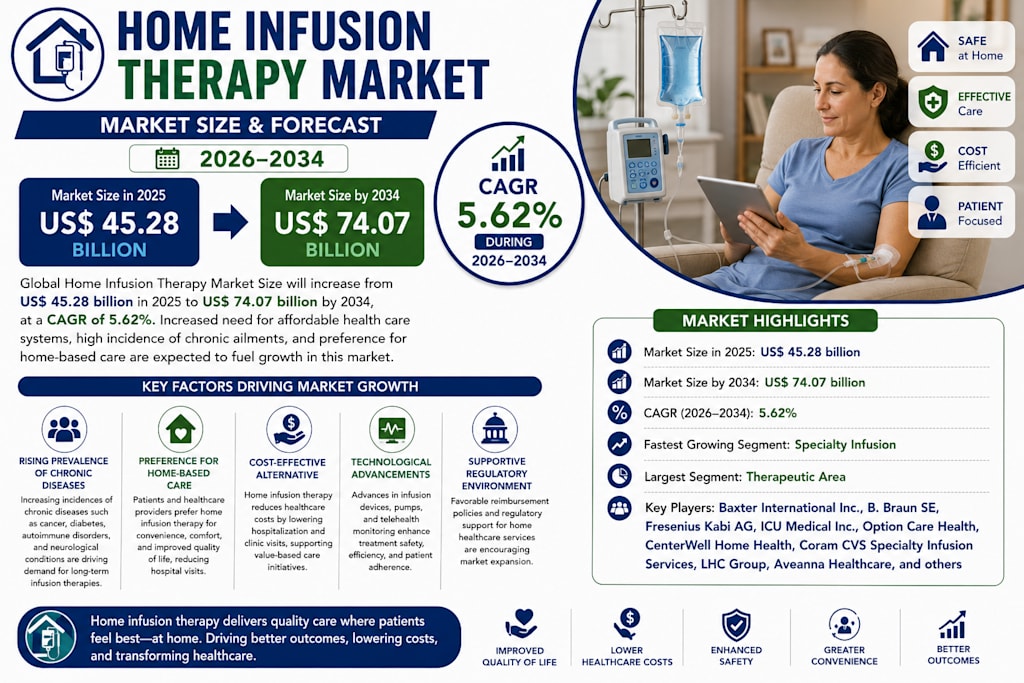
According to the latest market outlook, the Global Home Infusion Therapy Market is projected to grow from US$45.28 billion in 2025 to US$74.07 billion by 2034, registering a compound annual growth rate (CAGR) of 5.62% during 2026–2034. Rising chronic disease prevalence, increasing healthcare costs, technological innovation, and growing acceptance of home healthcare services continue to support long-term market expansion.
Understanding Home Infusion Therapy
Home infusion therapy involves administering medications, nutrients, hydration fluids, or biological therapies through intravenous or subcutaneous infusion in a patient's home.
Treatment is typically delivered using portable infusion pumps, intravenous catheters, injectable delivery systems, and specialized infusion equipment under the supervision of trained healthcare professionals.
Common home infusion therapies include antibiotics, chemotherapy, hydration therapy, pain management medications, immunotherapies, parenteral nutrition, and specialty pharmaceuticals.
By allowing patients to receive treatment in familiar surroundings, home infusion therapy improves comfort while reducing repeated hospital visits and minimizing exposure to hospital-acquired infections.
Rising Chronic Diseases Continue Driving Market Growth
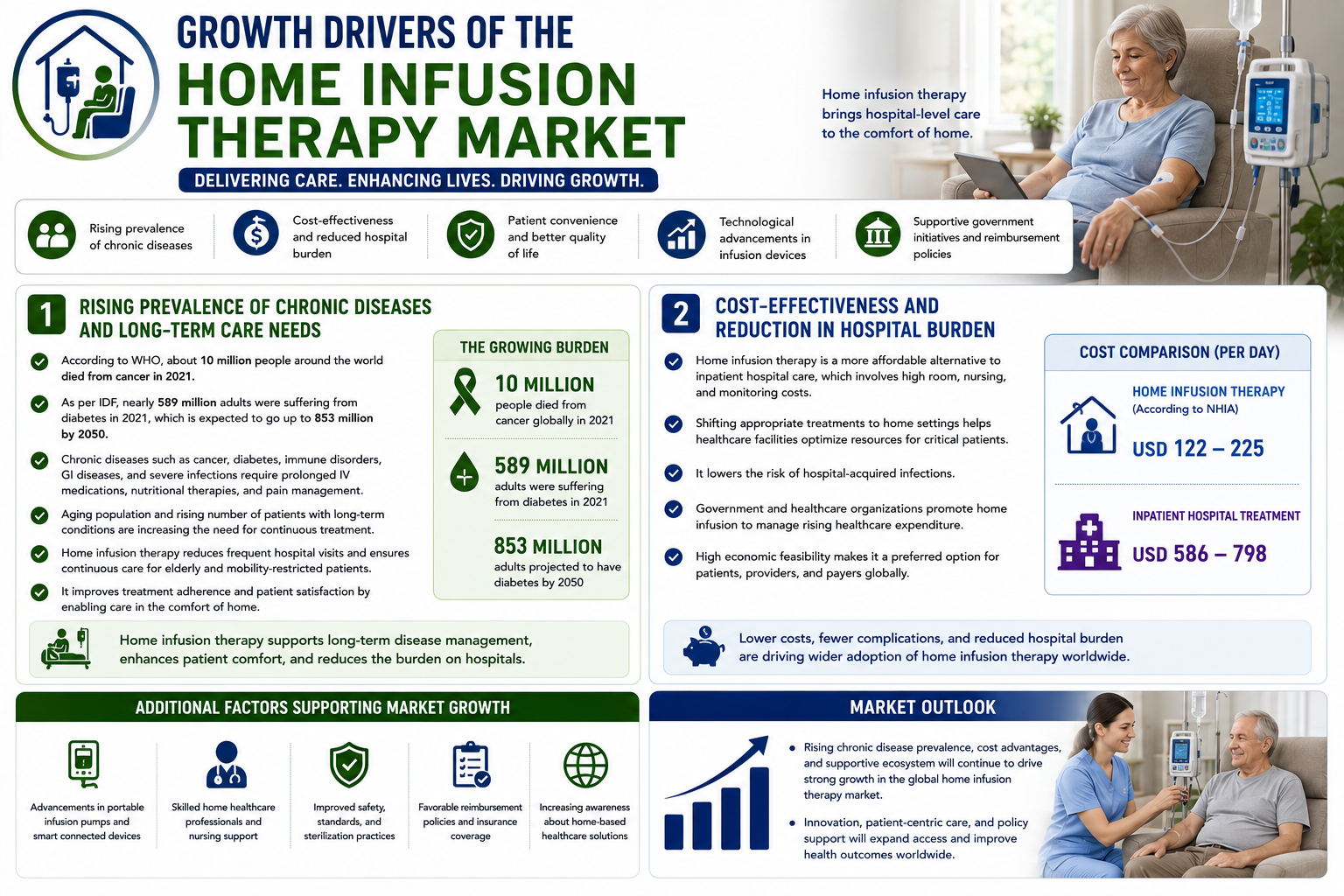
One of the strongest drivers of market expansion is the growing global burden of chronic diseases.
Patients suffering from cancer, diabetes, autoimmune disorders, gastrointestinal diseases, severe infections, and neurological conditions often require continuous intravenous treatment over extended periods.
As the global population continues aging, demand for long-term disease management is increasing significantly.
Home infusion therapy enables patients to receive uninterrupted treatment without frequent hospital admissions, improving both treatment adherence and overall quality of life.
Healthcare providers increasingly recommend home-based infusion as a practical solution for managing chronic illnesses efficiently.
Cost-Effective Healthcare Supports Market Expansion
Healthcare systems worldwide continue facing rising treatment costs and increasing pressure on hospital capacity.
Home infusion therapy offers a more affordable alternative to prolonged inpatient care by reducing hospitalization expenses, room charges, nursing costs, and resource utilization.
Patients also benefit financially through lower transportation expenses and fewer hospital visits.
Insurance providers and government healthcare agencies increasingly recognize the economic advantages of home-based treatment, encouraging broader adoption through favorable reimbursement policies.
The combination of improved patient outcomes and healthcare cost savings continues strengthening market growth.
Technological Innovation Improves Patient Care
Rapid technological progress has significantly enhanced the safety and effectiveness of home infusion therapy.
Modern portable infusion pumps feature programmable dosing systems, wireless connectivity, automatic alarms, battery backup, and remote monitoring capabilities that improve treatment accuracy.
Healthcare professionals can now supervise patient progress remotely using telehealth platforms and connected infusion devices.
Smart infusion technologies reduce medication errors while improving adherence to prescribed treatment schedules.
Continuous innovation continues making home infusion therapy safer, more reliable, and easier for both patients and caregivers.
Telehealth Is Strengthening Home-Based Treatment
The rapid growth of telemedicine has significantly expanded the capabilities of home infusion therapy.
Healthcare providers now monitor patients remotely through video consultations, digital health platforms, wearable devices, and electronic medical records.
Physicians can adjust treatment plans, review infusion data, manage side effects, and provide immediate guidance without requiring patients to travel to healthcare facilities.
Telehealth integration also improves communication between patients, caregivers, nurses, and physicians while enhancing treatment continuity.
As digital healthcare continues evolving, telemedicine will remain a key contributor to market growth.
Infusion Pumps Dominate the Product Segment
Infusion pumps represent the largest product category within the home infusion therapy market.
These programmable devices deliver medications, nutrition, hydration fluids, chemotherapy agents, antibiotics, and pain management therapies with exceptional precision.
Modern pumps include safety alarms, wireless communication, dose tracking, and automated programming that minimize medication errors.
Manufacturers continue developing smaller, lighter, and more user-friendly infusion systems that improve patient mobility and comfort during treatment.
Growing demand for portable healthcare technologies continues supporting strong sales of advanced infusion pumps.
Intravenous Sets Support Safe Drug Delivery
Intravenous sets remain essential components of home infusion therapy.
These products include tubing, connectors, catheters, needles, and accessories required for safe medication administration.
Manufacturers increasingly focus on infection prevention technologies, anti-kink tubing, needle-free connectors, and sterile disposable components that improve patient safety.
Growing awareness regarding infection control continues encouraging adoption of higher-quality intravenous delivery systems.
Hydration Therapy Continues Expanding
Home hydration therapy has become increasingly popular among patients recovering from surgery, gastrointestinal illnesses, dehydration, infections, and cancer treatment.
Receiving intravenous fluids at home reduces unnecessary hospital admissions while supporting faster recovery.
Older adults and mobility-restricted patients particularly benefit from convenient access to hydration therapy without traveling to healthcare facilities.
Healthcare providers increasingly incorporate home hydration services into comprehensive chronic disease management programs.
Home Chemotherapy Gains Acceptance
Cancer treatment represents one of the fastest-growing applications within the home infusion therapy market.
Selected chemotherapy medications can now be administered safely at home using specialized infusion pumps under professional supervision.
Home chemotherapy reduces hospital visits, improves patient comfort, minimizes exposure to infectious diseases, and enhances quality of life throughout lengthy treatment cycles.
Advances in portable infusion devices and oncology nursing continue supporting this rapidly expanding segment.
Safety and Skilled Supervision Remain Challenges
Despite significant advantages, home infusion therapy requires careful monitoring to ensure patient safety.
Potential complications include catheter infections, medication errors, infusion reactions, equipment malfunctions, and improper device operation.
Patients and caregivers require comprehensive education before beginning home treatment.
Healthcare systems also face shortages of skilled home healthcare nurses in certain regions, limiting service availability.
Maintaining high standards of patient training and professional supervision remains essential for safe therapy delivery.
Reimbursement and Setup Costs Affect Adoption
Initial implementation costs remain another important challenge.
Home infusion therapy requires specialized infusion pumps, medical supplies, trained healthcare professionals, and ongoing technical support.
Although long-term treatment costs are generally lower than hospitalization, initial expenses may discourage adoption in regions with limited insurance coverage.
Expanding reimbursement policies and improving healthcare financing will remain important priorities for supporting future market growth.
Regional Markets Continue Driving Expansion
The United States remains the world's largest home infusion therapy market because of advanced healthcare infrastructure, favorable reimbursement systems, widespread telehealth adoption, and growing demand for home-based chronic disease management.
Germany continues experiencing steady growth through its well-developed healthcare system, increasing elderly population, supportive reimbursement policies, and growing patient preference for home healthcare services.
India has emerged as a rapidly expanding market driven by rising chronic disease prevalence, growing healthcare awareness, expanding telemedicine services, and increasing private investment in home healthcare.
Saudi Arabia continues strengthening demand through healthcare modernization under Vision 2030, growing digital health initiatives, increasing chronic disease management programs, and rising adoption of home-based medical services.
Together, these regional markets continue driving global innovation in home infusion therapy.
Innovation Will Shape the Future of Home Healthcare
The future of home infusion therapy will be defined by smart infusion technologies, artificial intelligence, telehealth integration, remote monitoring, and personalized medicine.
Manufacturers continue developing intelligent infusion pumps capable of real-time monitoring, predictive maintenance, automated dose adjustments, and seamless integration with electronic health records.
Advances in wearable sensors, cloud-based healthcare platforms, and digital patient management systems will further improve treatment safety and efficiency.
As healthcare systems increasingly prioritize patient-centered care, home infusion therapy will become an even more important component of modern healthcare delivery.
Final Thoughts
The global home infusion therapy market is entering a period of sustained growth as healthcare providers increasingly embrace convenient, cost-effective, and patient-centered treatment models.
The projected expansion from US$45.28 billion in 2025 to US$74.07 billion by 2034, supported by a 5.62% CAGR, reflects rising demand for chronic disease management, technological innovation, telehealth integration, and home healthcare services.
Although patient safety, reimbursement limitations, and workforce shortages remain important challenges, continued advances in infusion technology, digital healthcare, and remote patient monitoring position the home infusion therapy industry for strong long-term growth. As healthcare continues shifting beyond hospital walls, home infusion therapy will play an increasingly important role in delivering safe, effective, and personalized medical care worldwide.
About the Creator
Enjoyed the story? Support the Creator.
Subscribe for free to receive all their stories in your feed.
Comments
There are no comments for this story
Be the first to respond and start the conversation.