
GCC Smart Home Market Expected to Reach US$ 7.40 Billion by 2034 as Smart Cities and IoT Adoption Accelerate Across the Gulf
Rising luxury real estate development, government-backed smart city initiatives, and growing demand for energy-efficient homes are driving rapid transformation in the GCC smart home industry.

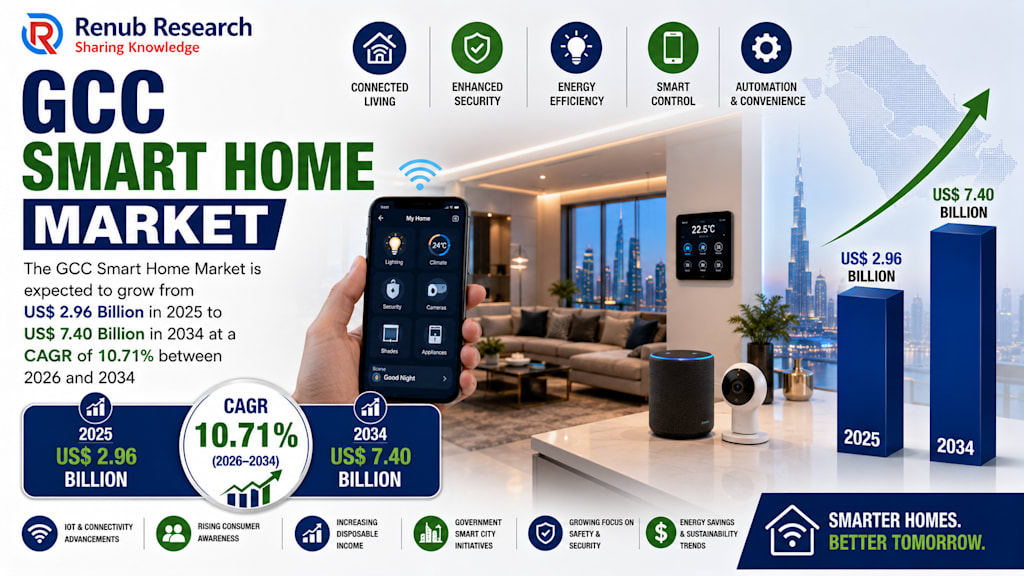
The GCC smart home industry is entering a phase of rapid expansion as Gulf countries continue investing heavily in digital transformation, smart city development, and advanced residential infrastructure.
According to Renub Research, the GCC smart home market is projected to grow from US$ 2.96 billion in 2025 to US$ 7.40 billion by 2034, registering a CAGR of 10.71% during 2026–2034.
The market’s strong growth is being fueled by rapid urbanization, rising disposable incomes, increasing adoption of Internet of Things (IoT) technologies, and growing demand for connected, secure, and energy-efficient homes.
From AI-powered climate control systems to smart security cameras and voice-controlled appliances, smart home technologies are becoming increasingly integrated into daily life across the Gulf region.
Smart Homes Are Becoming Central to GCC Urban Development
A smart home refers to a digitally connected residence equipped with devices and systems that can be remotely controlled through internet connectivity, smartphones, or voice assistants.
Modern smart homes commonly include:
- Smart lighting systems
- Automated climate control
- Smart security cameras
- Smart locks
- Entertainment systems
- Voice-controlled assistants
- Energy management solutions
Advanced technologies such as:
- Internet of Things (IoT)
- Artificial Intelligence (AI)
- Cloud computing
- Machine learning
allow homeowners to automate and monitor household functions more efficiently.
The GCC region has emerged as one of the world’s most promising smart home markets because of its strong focus on digital infrastructure and futuristic urban planning.
The region’s extreme climate conditions also increase the importance of energy-efficient technologies capable of optimizing air conditioning and electricity usage.
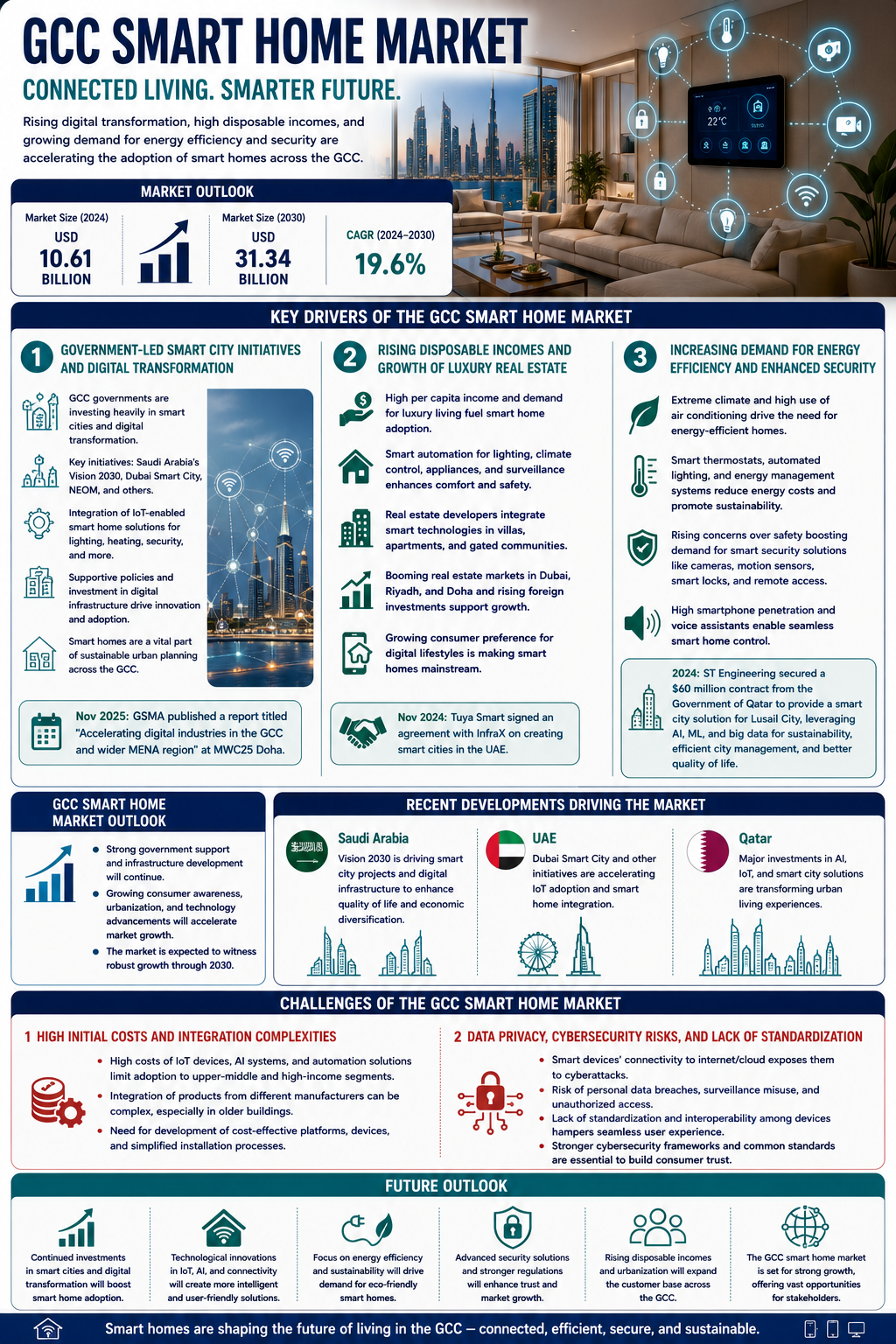
Government Smart City Initiatives Are Accelerating Adoption
One of the biggest growth drivers behind the GCC smart home market is the aggressive development of smart cities across Gulf nations.
Governments throughout the GCC are heavily investing in large-scale digital transformation projects aimed at improving urban living standards and supporting economic diversification.
Major initiatives include:
- Saudi Arabia’s Vision 2030
- NEOM City
- Smart Dubai
- Qatar National Vision 2030
These projects increasingly integrate smart residential infrastructure into broader urban planning strategies.
Smart homes are being designed alongside:
- Intelligent transportation systems
- Smart utilities
- AI-powered city management systems
- Connected public services
Government support through favorable regulations and investments in advanced telecommunications infrastructure has significantly accelerated adoption of home automation technologies.
In November 2025, GSMA published a report titled “Accelerating Digital Industries in the GCC and Wider MENA Region” during MWC25 Doha, highlighting the growing importance of digital transformation across the region.
Rising Disposable Income and Luxury Real Estate Fuel Demand
The GCC’s high-income population and expanding luxury real estate market are also major contributors to smart home growth.
Affluent consumers increasingly seek residences equipped with:
- Smart lighting
- Automated air conditioning
- Remote-controlled appliances
- Integrated surveillance systems
- Voice-controlled ecosystems
Luxury villas, gated communities, and premium apartment projects across cities such as:
- Dubai
- Riyadh
- Doha
- Abu Dhabi
are increasingly incorporating advanced smart technologies as standard features.
Real estate developers view smart home integration as an important competitive advantage in attracting modern buyers and foreign investors.
In November 2024, Tuya Smart signed an agreement with InfraX to support smart city development initiatives in the UAE.
The agreement reflects rising collaboration between technology companies and infrastructure developers across the Gulf.
Energy Efficiency Is Becoming a Major Priority
Energy management and sustainability concerns are playing a critical role in shaping the GCC smart home market.
The Gulf region’s harsh climate conditions result in heavy dependence on air conditioning systems, significantly increasing electricity consumption.
Smart home technologies help optimize energy usage through solutions such as:
- Smart thermostats
- Automated cooling systems
- Motion-sensitive lighting
- Energy monitoring systems
- Smart curtains and blinds
These technologies reduce energy waste while improving household comfort and operational efficiency.
Governments across the GCC are increasingly promoting:
- Green building standards
- Sustainable infrastructure
- Energy conservation initiatives
which further support adoption of energy-efficient home automation systems.
Consumers are becoming more aware of the long-term financial savings associated with optimized energy management technologies.
Home Security Technologies Continue Expanding Rapidly
The GCC smart home security segment is experiencing particularly strong growth due to increasing demand for safety and remote monitoring capabilities.
Popular smart security products include:
- Surveillance cameras
- Smart locks
- Motion detectors
- Video doorbells
- Alarm systems
- Biometric access systems
Consumers increasingly value the ability to monitor homes remotely through smartphones and cloud-based systems.
The rise of luxury housing developments and growing expatriate populations across Gulf countries are also contributing to stronger demand for advanced home security solutions.
Artificial intelligence and facial recognition technologies are further improving the effectiveness of modern security systems.
In 2024, ST Engineering secured a US$ 60 million contract with the government of Qatar to provide smart city technologies for Lusail City.
The project integrates AI, machine learning, and big data technologies aimed at improving urban sustainability and quality of life.
Smart Comfort and Lighting Segment Gains Momentum
The GCC smart comfort and lighting market is growing rapidly due to increasing demand for convenience, automation, and energy savings.
Products within this segment include:
- Smart thermostats
- Automated air conditioning systems
- Smart lighting
- Smart curtains
- Motion-sensitive lighting controls
The GCC’s extremely hot climate makes intelligent cooling systems especially valuable for reducing electricity costs.
Consumers increasingly prefer systems that can automatically adjust temperature and lighting conditions based on occupancy and user preferences.
The expansion of broadband connectivity and smart city infrastructure continues strengthening this segment’s growth potential.
Smart Appliances Become More Popular Among Urban Consumers
Smart home appliances are witnessing rising adoption across GCC households due to changing lifestyles and increasing digital awareness.
Popular smart appliances include:
- Smart refrigerators
- Robot vacuum cleaners
- Smart ovens
- Smart washing machines
- Air purifiers
- Dishwashers
Urban professionals and younger consumers increasingly value products offering:
- Time-saving automation
- Voice control
- Mobile connectivity
- Energy optimization
Artificial intelligence and predictive maintenance technologies are further enhancing product usability and consumer appeal.
E-commerce platforms and online retail channels are also helping improve product accessibility throughout the region.
Connectivity Infrastructure Is Strengthening the Market
The rapid deployment of advanced telecommunications infrastructure is significantly supporting smart home adoption across the GCC.
Technologies driving the market include:
- 5G networks
- Wi-Fi connectivity
- Zigbee
- Bluetooth
- Z-Wave
- Cloud-based platforms
Consumers increasingly expect centralized control systems capable of integrating multiple devices within one digital ecosystem.
Smartphones and voice assistants are becoming primary interfaces for controlling household automation systems.
The widespread adoption of high-speed internet services across Gulf countries continues improving device reliability and connectivity performance.
Cybersecurity and High Costs Remain Key Challenges
Despite strong market potential, the GCC smart home industry still faces several important challenges.
One of the biggest barriers is the relatively high cost of smart home installation and integration.
Advanced technologies involving:
- IoT systems
- AI-powered automation
- Smart security infrastructure
often require significant upfront investment.
As a result, adoption remains strongest among upper-middle-class and affluent consumers.
Integration complexity also presents challenges because devices from different manufacturers may not always operate seamlessly together.
Cybersecurity concerns remain another major issue.
Since smart home systems rely heavily on internet and cloud connectivity, consumers worry about:
- Data privacy risks
- Hacking threats
- Unauthorized access
- Surveillance vulnerabilities
The lack of universal standardization across IoT devices also continues limiting interoperability within smart home ecosystems.
UAE Leads the GCC Smart Home Market
The United Arab Emirates remains one of the region’s most advanced smart home markets due to strong government support and high consumer technology adoption.
Cities such as:
- Dubai
- Abu Dhabi
have become global showcases for smart city innovation.
The UAE market benefits from:
- Luxury real estate development
- Advanced internet infrastructure
- High smartphone penetration
- Strong consumer purchasing power
Voice-controlled assistants and smart climate systems are especially popular.
According to the report, Alexa performed over 24 million lighting control actions in UAE and Saudi Arabian homes during 2023.
More than 9 million users in the UAE and KSA also used Alexa voice commands to control air conditioning systems.
Saudi Arabia Emerges as a High-Growth Market
Saudi Arabia is witnessing exceptionally rapid growth in smart home adoption due to Vision 2030 initiatives and large-scale infrastructure development projects.
Mega-projects including:
- NEOM
- The Red Sea Project
- Qiddiya
are accelerating deployment of advanced residential technologies.
The country’s harsh climate is also increasing demand for:
- Smart cooling systems
- Automated energy management
- Intelligent climate control solutions
Rapid urbanization, rising middle-class incomes, and expansion of 5G networks are further strengthening market growth.
Saudi Arabia has also launched a sandbox initiative targeting the municipal housing segment to encourage innovation within the smart housing sector.
Qatar and Kuwait Continue Expanding Digital Adoption
Qatar’s smart home market continues growing steadily because of strong digital infrastructure and increasing luxury real estate development.
Government initiatives aligned with Qatar National Vision 2030 continue promoting smart city technologies and sustainable urban development.
In February 2024, Qatar’s Investment Promotion Agency and Ministry of Communications and Information Technology released the report “Smarter Qatar: Embracing Emerging Technologies and Innovation.”
Meanwhile, Kuwait’s smart home market is benefiting from increasing urbanization, rising disposable incomes, and growing awareness regarding home automation technologies.
The country’s extreme temperatures are driving adoption of energy-efficient smart cooling systems.
In September 2024, Kuwait’s Public Authority for Housing Welfare signed an MoU with China for future housing development projects.
Major Companies Operating in the Market
Several major companies continue shaping the GCC smart home industry, including:
- Johnson Controls
- Schneider Electric
- Emerson Electric
- LG
- Legrand SA
- Siemens AG
- Honeywell
- Apple
These companies continue investing in IoT integration, AI-powered automation, cybersecurity solutions, and energy-efficient technologies to strengthen their presence across the GCC region.
Final Thoughts
The GCC smart home market is entering a period of rapid technological transformation driven by smart city development, rising digital lifestyles, and increasing demand for connected living environments.
Governments across the Gulf are aggressively investing in digital infrastructure and sustainable urban planning, creating ideal conditions for smart home adoption.
Although challenges related to cybersecurity, interoperability, and high installation costs remain important concerns, the long-term growth outlook for the market remains highly positive.
As consumers increasingly prioritize convenience, security, energy efficiency, and automation, smart homes are expected to become a central component of modern living across the GCC through 2034.
About the Creator
Enjoyed the story? Support the Creator.
Subscribe for free to receive all their stories in your feed.
Comments
There are no comments for this story
Be the first to respond and start the conversation.