
Future Trends in Shopify App Development Industry
Shopify App Development Industry

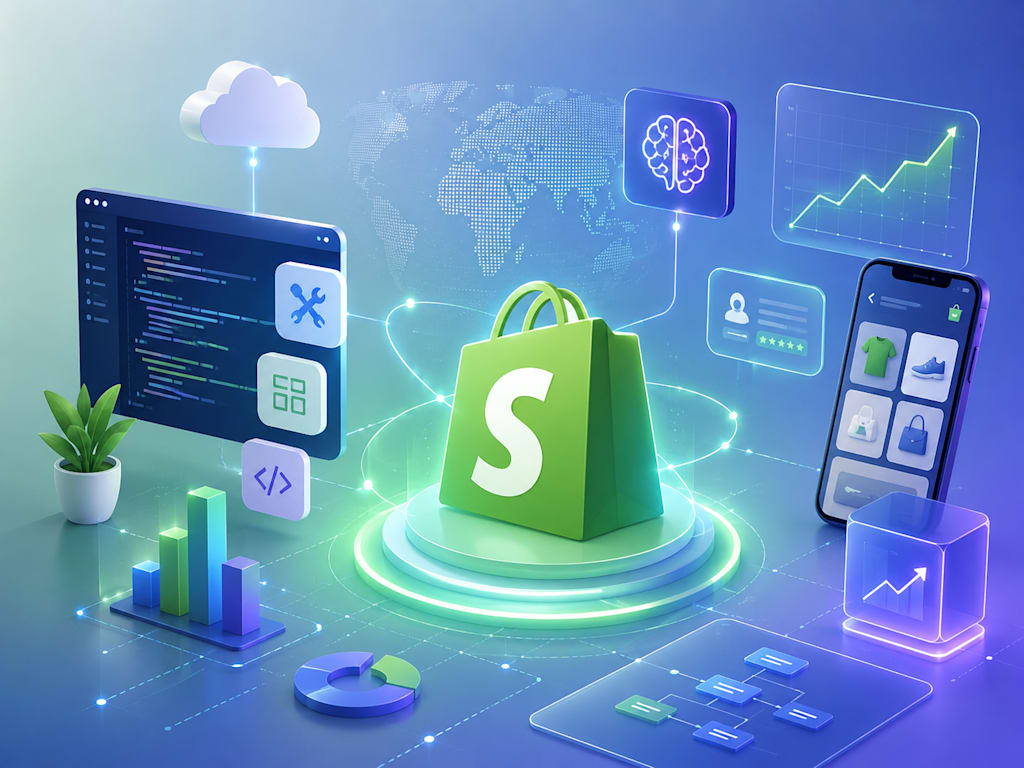
The eCommerce industry is evolving rapidly, and Shopify continues to strengthen its position as one of the most preferred platforms for online businesses. With millions of merchants relying on Shopify to power their digital storefronts, the demand for innovative and scalable Shopify applications is increasing significantly. As customer expectations continue to rise, businesses are investing in advanced solutions that enhance user experiences, automate operations, and drive higher conversions.
Understanding the latest Shopify app development trends can help businesses stay ahead of the competition and leverage emerging technologies effectively. Let's explore the future trends that are shaping the Shopify app development industry.
1. AI-Powered Shopify Applications
Artificial Intelligence (AI) is revolutionizing eCommerce, and Shopify apps are no exception. Businesses are increasingly adopting AI-driven applications to provide personalized shopping experiences, automate customer interactions, and optimize marketing campaigns.
Future Shopify apps will focus on:
- Personalized product recommendations
- AI-powered chatbots and virtual assistants
- Predictive analytics for customer behavior
- Automated inventory forecasting
- Smart search functionality
These capabilities help merchants improve engagement while increasing sales and customer satisfaction.
2. Voice Commerce Integration
Voice-enabled shopping is gaining traction with the widespread use of smart devices. Consumers are becoming comfortable with voice searches and voice-assisted purchases.
As a result, one of the emerging Shopify app development trends is the development of applications that support voice commerce. Shopify merchants will increasingly integrate voice search optimization and voice shopping capabilities into their stores to offer seamless purchasing experiences.
Voice commerce apps can help customers:
- Search products using voice commands
- Track orders hands-free
- Reorder frequently purchased products
- Receive personalized recommendations
3. Headless Commerce Solutions
Headless commerce is transforming the way online stores are built. By separating the frontend presentation layer from the backend infrastructure, businesses gain greater flexibility and faster development capabilities.
Shopify's headless commerce ecosystem is expected to grow significantly in the coming years. Custom applications designed for headless environments enable merchants to deliver highly engaging experiences across websites, mobile apps, kiosks, and other digital touchpoints.
Benefits include:
- Faster page loading times
- Enhanced customization capabilities
- Improved scalability
- Omnichannel customer experiences
4. Augmented Reality (AR) Shopping Experiences
Consumers increasingly prefer interactive shopping experiences before making purchasing decisions. AR technology allows customers to visualize products in real-world environments.
Future Shopify applications will leverage AR features to support industries such as:
- Fashion and apparel
- Furniture and home décor
- Beauty and cosmetics
- Consumer electronics
By enabling virtual product experiences, merchants can improve buyer confidence and reduce return rates.
5. Subscription Commerce Growth
Subscription-based business models have become increasingly popular across multiple industries. Shopify merchants are adopting recurring revenue strategies to build long-term customer relationships.
The future of Shopify app development will include sophisticated subscription management applications offering:
- Flexible billing cycles
- Membership management
- Automated renewals
- Customer retention programs
- Personalized subscription recommendations
These apps help businesses generate predictable revenue streams while improving customer loyalty.
6. Advanced Analytics and Business Intelligence
Data-driven decision-making has become essential for eCommerce success. Merchants are seeking applications that provide deeper insights into customer behavior and business performance.
Future Shopify applications will emphasize:
- Real-time reporting dashboards
- Customer segmentation analysis
- Sales forecasting tools
- Marketing attribution tracking
- Inventory optimization insights
These capabilities empower merchants to make informed strategic decisions that improve profitability.
7. Mobile-First App Development
Mobile commerce continues to dominate online shopping trends worldwide. As smartphone usage increases, Shopify developers are prioritizing mobile-first experiences.
Modern Shopify applications are increasingly designed with:
- Responsive user interfaces
- Faster mobile performance
- Simplified checkout experiences
- Mobile wallet integrations
- Push notification capabilities
A strong mobile experience directly contributes to higher conversion rates and improved customer engagement.
8. Enhanced Cybersecurity Features
As online transactions increase, so do cybersecurity concerns. Data privacy and secure payment processing remain top priorities for Shopify merchants.
Future Shopify applications will integrate advanced security measures, including:
- Multi-factor authentication
- Fraud detection systems
- Secure API integrations
- Data encryption protocols
- Compliance monitoring tools
Businesses investing in secure Shopify applications will gain greater customer trust and minimize operational risks.
9. Sustainable Commerce Solutions
Consumers are becoming more conscious of environmental responsibility. This shift in consumer behavior is influencing the development of sustainability-focused Shopify applications.
Emerging solutions may include:
- Carbon footprint tracking
- Eco-friendly shipping options
- Sustainable product labeling
- Waste reduction reporting
- Donation and offset integrations
These applications help brands align with evolving consumer values while promoting responsible business practices.
10. Seamless Third-Party Integrations
Businesses increasingly rely on multiple digital platforms to manage operations efficiently. Shopify applications that offer seamless integrations with external tools will remain in high demand.
Popular integration areas include:
- CRM systems
- Marketing automation platforms
- ERP software
- Accounting tools
- Shipping and logistics solutions
The ability to connect diverse systems creates a unified business ecosystem that improves productivity and operational efficiency.
11. Low-Code and No-Code Development Approaches
Businesses are seeking faster ways to launch and customize digital solutions without extensive technical expertise. Low-code and no-code development frameworks are expected to influence the future of Shopify app development.
These approaches offer advantages such as:
- Faster deployment timelines
- Reduced development costs
- Greater accessibility for non-technical users
- Simplified customization processes
While custom development remains essential for complex requirements, low-code solutions will complement the Shopify ecosystem.
12. Omnichannel Commerce Experiences
Today's customers interact with brands across multiple channels, including websites, social media platforms, marketplaces, and mobile applications.
Future Shopify apps will focus heavily on enabling omnichannel experiences by synchronizing:
- Inventory management
- Customer profiles
- Marketing campaigns
- Order fulfillment processes
- Loyalty programs
This unified approach ensures consistent customer experiences regardless of the purchasing channel.
Final Thoughts
The future of the Shopify ecosystem will be defined by innovation, personalization, and technological advancement. Businesses that embrace these evolving Shopify app development trends will be better positioned to meet changing customer expectations and achieve sustainable growth.
From AI-powered automation and headless commerce to augmented reality and omnichannel integration, the Shopify app development industry is entering an exciting new phase. Merchants that invest in forward-thinking solutions today can gain a significant competitive advantage in the years ahead.
As eCommerce continues to evolve, partnering with an experienced Shopify app development team can help businesses identify the right technologies, build scalable applications, and future-proof their digital commerce strategies.
About the Creator
keith laurance
Keith Laurance, a Tech Blogger and Entrepreneur working with Octal IT Solution. I'm passionate about my work and want to spread knowledge everywhere, so everyone can take advantage of the latest technologies and trends.
Enjoyed the story? Support the Creator.
Subscribe for free to receive all their stories in your feed.
Comments
There are no comments for this story
Be the first to respond and start the conversation.