
Future Trends In Food Delivery Software
Food Delivery Software Future

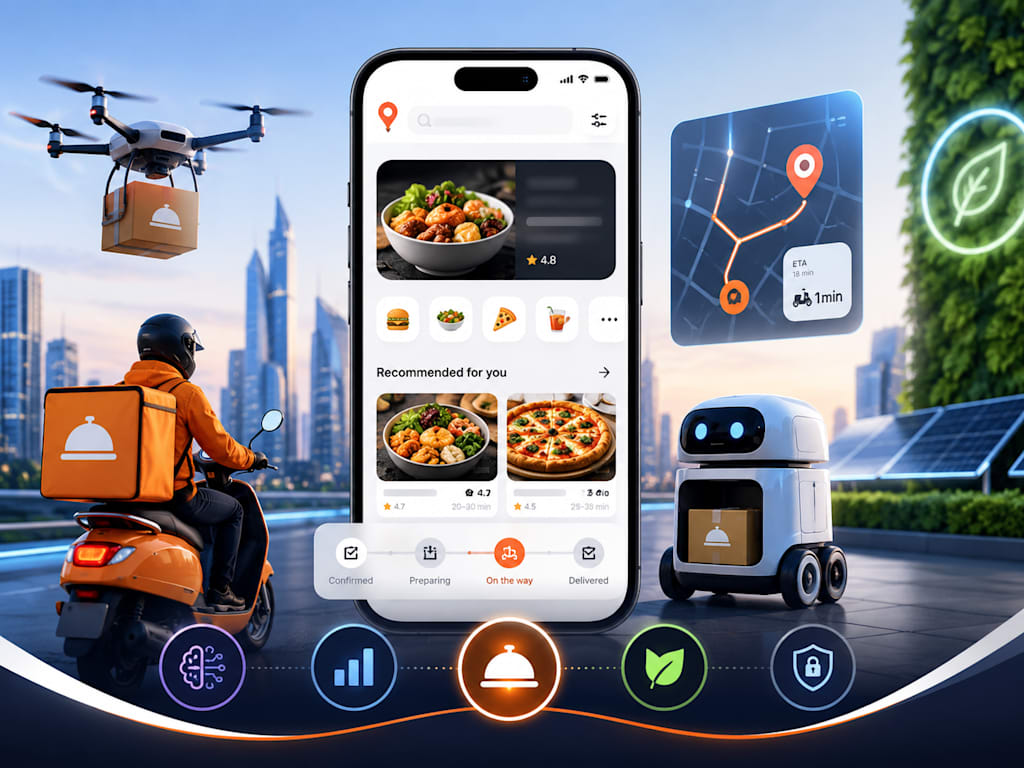
The Software Powering Tomorrow's Food Delivery Is Already Being Built Today
The food delivery industry is not slowing down. It is accelerating in every direction at once, and the software running beneath it is the engine making that possible.
A few years ago, a food delivery app was essentially a digital menu with a cart and a phone number. Today, it is a real-time logistics platform, a customer behavior engine, a payment processor, a driver management system, and a brand-building tool all rolled into one. The demands on food delivery software in 2026 are unlike anything the industry has seen before, and the gap between businesses using smart software and those running outdated systems is widening every single quarter.
Here is where food delivery software is heading and why every restaurant owner, startup founder, and food tech operator should be paying close attention right now.
AI Is Moving From Feature to Foundation
Artificial intelligence used to be a selling point on a product brochure. In food delivery software today, it is becoming the foundational layer that everything else is built on top of.
Modern platforms are using AI to do things that would have required entire operations teams just five years ago. Demand forecasting algorithms now predict order volumes before a single customer opens the app. Dynamic pricing engines adjust delivery fees in real time based on driver availability, weather conditions, and neighborhood order density. Recommendation systems study individual customer behavior and surface meals that feel handpicked rather than algorithmically generated.
The businesses winning with AI are not using it to replace their staff. They are using it to make smarter decisions faster, to reduce food waste, and to keep customers coming back without spending a fortune on discounts and promotions. AI-powered customer retention tools can now identify users who are at risk of churning and trigger personalized re-engagement offers automatically. That is the kind of capability that used to require a dedicated marketing team. Now it runs in the background twenty-four hours a day.
Real-Time Operations Management Is Replacing Guesswork
One of the most significant shifts happening in food delivery software is the move away from reactive operations toward proactive, real-time management.
Old systems waited for problems to happen and then logged them. A driver got stuck in traffic, an order got cold, a customer complained, and a manager reviewed the incident the next morning. Today's best food delivery platforms catch these problems before they escalate. Live dashboards show dispatch managers exactly where every driver is, how long each order has been in transit, and which deliveries are approaching their promised ETAs. Alerts fire automatically when something needs human attention.
The kitchen side of this equation is equally important. Food delivery software is increasingly connecting the front-end customer experience directly to kitchen display systems. When a driver is five minutes away, the kitchen knows to start the final plating. When demand spikes unexpectedly, the system flags it to the prep team before the ticket queue becomes unmanageable. This kind of real-time coordination between the customer interface, the kitchen, and the delivery fleet is what separates a smooth operation from a chaotic one.
Autonomous and Assisted Delivery Is Closer Than It Looks
Drone delivery and autonomous ground vehicles have been discussed as future concepts for years. What is changing now is that the software infrastructure to support them is being built into mainstream platforms.
This matters because autonomous delivery does not work without intelligent routing software, sensor data integration, regulatory compliance tools, and customer handoff protocols. The hardware gets most of the attention, but the software layer is what makes autonomous delivery actually usable at scale. Companies building food delivery platforms today are starting to architect their systems with this in mind, creating modular delivery layers that can swap human couriers for autonomous options as the technology and regulation catch up.
Even if fully autonomous delivery is still a few years from being mainstream, the software patterns being built around it are already influencing how today's platforms handle routing, fallback logistics, and real-time communication with customers.
Subscription and Loyalty Software Is Replacing One-Off Transactions
The economics of food delivery are brutal when every order is treated as a standalone transaction. Customer acquisition costs are high, margins are thin, and price-sensitive users will jump to a competitor for a ten percent discount without hesitation.
The smarter operators have figured out that subscription software changes this equation entirely. Monthly delivery pass programs lock customers into a platform before they even feel hungry. Loyalty systems that reward consistent ordering behavior with meaningful perks, not just discounts, create genuine switching costs that casual promotions cannot replicate.
What makes this trend interesting from a software perspective is how complex it is to execute well. Subscription billing engines need to handle free trials, pauses, upgrades, and cancellations gracefully. Loyalty point systems need to integrate across ordering, referrals, and social sharing without creating fraud vulnerabilities. The platforms that build this infrastructure properly in 2026 will have a compounding retention advantage over those still relying on one-off discount codes.
Sustainability Tracking Is Entering the Core Product
Environmental responsibility is no longer something food delivery companies can address with a recycling logo on their website. Customers are increasingly making purchasing decisions based on a brand's actual environmental behavior, and software is the tool that makes those behaviors visible and credible.
Forward-thinking food delivery platforms are building carbon tracking directly into their order management systems. Each delivery route generates an emissions estimate. Customers can choose consolidated delivery windows that reduce total trips. Restaurants can flag packaging as compostable or biodegradable, and that information surfaces during the ordering experience. None of this is possible without serious investment in the software layer that captures, calculates, and communicates this data accurately.
This is not a small feature addition. It requires rethinking how delivery data is structured and what gets tracked at every step of the order journey. Platforms building this now will have a meaningful competitive and reputational advantage as sustainability requirements become more standardized across markets.
What All of This Means for Your Business
The common thread running through every trend in this article is that food delivery software is becoming more intelligent, more integrated, and more proactive. It is no longer a tool you plug in and forget. It is a strategic asset that either gives your business an edge or holds it back.
Restaurants and operators that treat their software as a commodity, choosing the cheapest option and accepting whatever it offers out of the box, will find themselves competing on price alone. That is a race nobody wants to win.
The businesses building an advantage in 2026 are the ones asking harder questions about their technology. Not just whether the software works, but whether it is learning, adapting, optimizing, and preparing them for what comes next.
The future of food delivery is being written in code right now. The question is whether your business is part of that story.
About the Creator
Ashish Sudra
Ashish Sudra is the founder of Deonde, with over 16 years of experience in IT and On-demand Solutions. He is also an accomplished Business Consultant specializing in delivering Online Food Ordering and Delivery System for startups and SMEs.
Enjoyed the story? Support the Creator.
Subscribe for free to receive all their stories in your feed.
Comments
There are no comments for this story
Be the first to respond and start the conversation.