
From Trash to Treasure: The Retro Computers Collectors Are Desperate to Find
The Most Cherished Retro Computers

That beige, clunky plastic cube sitting under a layer of sawdust in your basement might look like electronic waste. It has no USB ports, an entirely obsolete operating system, and less processing power than a modern smart toaster. But to a growing global community of dedicated tech preservationists and collectors, it is a holy grail.
For decades, early personal computers were treated as worthless junk. When the faster, sleeker models of the late nineties and early 2000s rolled around, millions of historic machines were ruthlessly tossed into dumpsters or sent to recycling centers to be stripped for scrap metal. Today, that mass disposal has created a massive supply shortage. Driven by a wave of tech nostalgia, historical appreciation, and the sheer joy of hands-on restoration, the market for vintage computing has gone mainstream.
If you or your parents held onto any of these four legendary retro computers, you aren't just looking at a piece of office history—you are sitting on a genuine goldmine.
1. Apple Lisa (1983)
Before the Macintosh revolutionized the world, Apple released the Lisa. Named after Steve Jobs’ daughter, it was one of the very first personal computers to offer a graphical user interface (GUI) and a mouse.
Unfortunately, it was also a catastrophic commercial failure. Apple priced the Lisa at a staggering $9,995 in 1983 (roughly $30,000 today). Very few businesses bought them. To make matters worse, Apple later ran a tax write-off scheme where they literally buried thousands of unsold Lisas in a landfill in Utah. Because so few survived, the Apple Lisa is the ultimate crown jewel for Apple collectors. A non-working, cosmetically decent machine can easily command $5,000 to $10,000, while a fully functional, pristine system has been known to fetch upwards of $25,000 to $50,000 at high-end auctions.
2. Commodore 64 (Original Silver Label / Complete in Box)
The Commodore 64 is officially recognized by the Guinness World Records as the highest-selling single computer model of all time. Because millions of them were produced in the 1980s, a standard, beaten-up C64 unit is relatively common and might only net you $50 to $100.
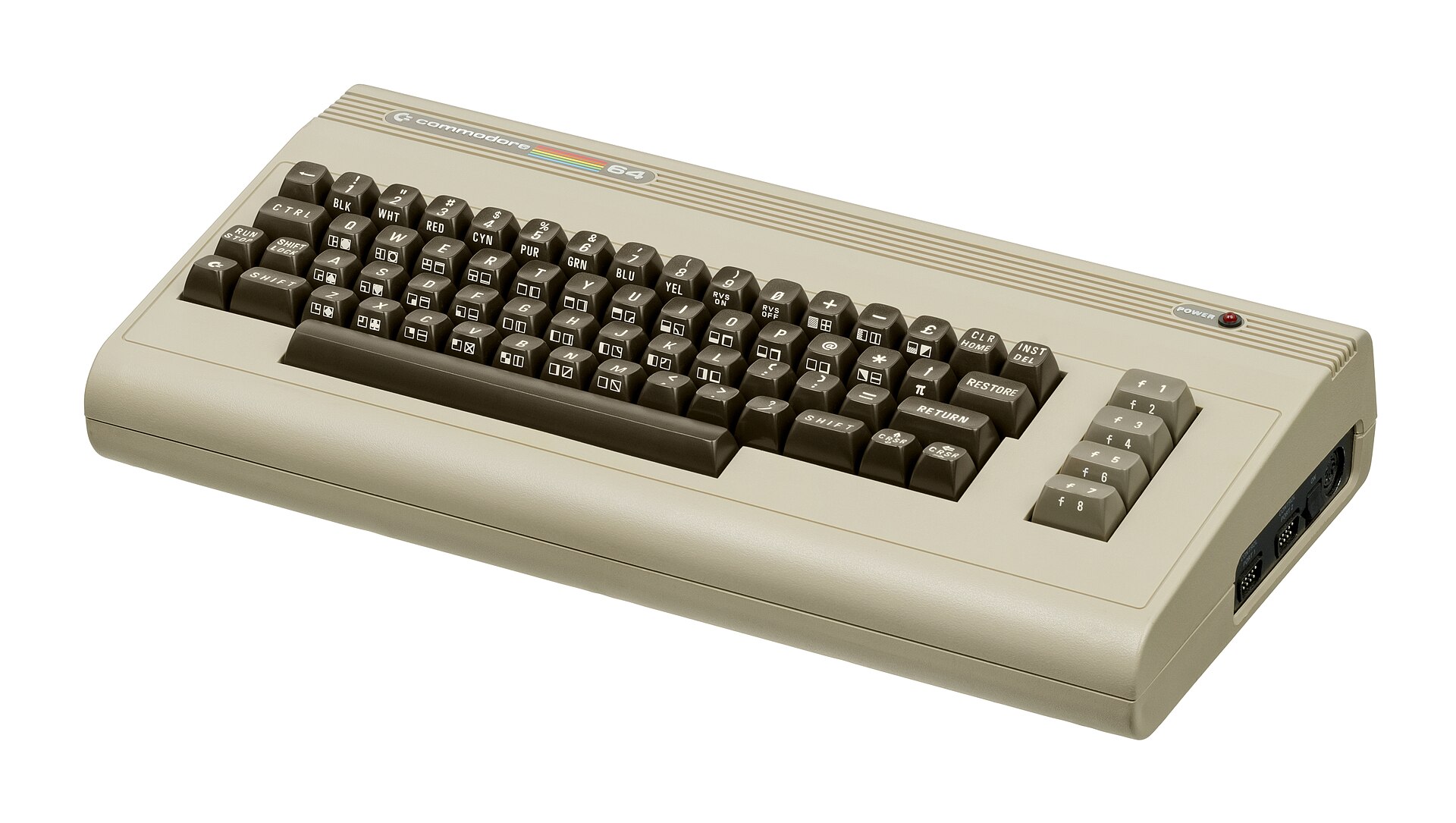
However, collectors are fiercely specific. If you own a rare, early production "Silver Label" version—distinguished by a shiny silver logo emblem rather than the later rainbow version—the price jumps dramatically into the thousands. Furthermore, because most users threw away the packaging, finding a standard Commodore 64 complete in its original box with matching serial numbers, crisp manual inserts, and functional datasets can easily fetch $600 to $1,200 from purists looking for a centerpiece display.
3. IBM Personal Computer / XT 5160 (1983)
The IBM PC XT was the machine that solidified the "IBM Compatible" architecture that still influences modern desktop PCs. It was built like a literal tank, featuring a heavy steel chassis and the legendary, ultra-clicky Model F mechanical keyboard.
While many of these were run into the ground by corporate offices, systems that survived without severe plastic yellowing or internal battery corrosion are highly prized. Collectors are particularly desperate for units that still contain their original 10-megabyte hard drives and matching IBM color monitors. A complete, working IBM XT setup frequently sells for anywhere between $800 and $2,000, depending heavily on the condition of the case and keyboard.

4. Commodore Amiga 3000 or 4000 (Early 1990s)
While IBM was dominating the boring corporate world, Commodore’s Amiga lineup was completely rewriting what computers could do with graphics, sound, and video editing. The Amiga 3000 and 4000 were high-end, professional workstation powerhouses of the early 1990s.
Because Commodore went bankrupt in 1994, these late-era flagship models were produced in much lower quantities than the budget-friendly Amiga 500. Today, demoscene creators, retro programmers, and digital artists hunt for these specific towers to build the ultimate period-correct multimedia rigs. Due to extreme rarity and high demand, a functional Amiga 4000 regularly commands between $2,000 and $4,500 online.

Check the Battery Before Powering Up!
If you are lucky enough to find one of these historic machines hidden away, do not plug it straight into the wall.
The biggest enemy of retro computers isn't time; it's the internal clock batteries. Over decades, the original VARTA or barrel batteries soldered to these motherboards leak highly corrosive acid that quietly eats away at the copper circuits. Before trying to flip the power switch, collectors highly recommend opening the case to inspect for chemical damage.
If the motherboard is clean and the case is free of cracks, leave the dust exactly where it is, snap some photos, and get ready to watch the bids roll in. Your old office relic might just pay off your credit card bill.
Editor’s Note: This article was co-created using AI assistance from Google AI for drafting and research structure, in compliance with Vocal’s community standards
About the Creator
Matthew A
Matthew is the author of Battles of the Pacific War 1941-1945. Battles of the Pacific War is available on Amazon and Lulu in e-book and paperback formats. Check out the book’s blog at battlesofthepacificwar.blogspot.co.uk.
Enjoyed the story? Support the Creator.
Subscribe for free to receive all their stories in your feed.
Comments
There are no comments for this story
Be the first to respond and start the conversation.