
From Dial-Up to Broadband
My First Encounter With the Internet

I recently heard that Al Gore claimed to be the inventor of the internet. As it turned out, it was in a 1999 CNN interview that he actually said, “During my service in the United States Congress, I took the initiative in creating the Internet.”
The biggest issue with this statement is the timeline. It was in 1976, the year I was born, that Al Gore was elected to represent Tennessee's 4th Congressional District in the U.S. House of Representatives. It was on January 3, 1977, that he took office.
It was in 1974, two years before Al was elected to Congress, that Vint Cerf and Bob Kahn published their design for the Transmission Control Program, which eventually evolved into the Transmission Control Protocol and Internet Protocol (TCP/IP). This helped create a universal "language" that allowed different computer networks to communicate with each other.
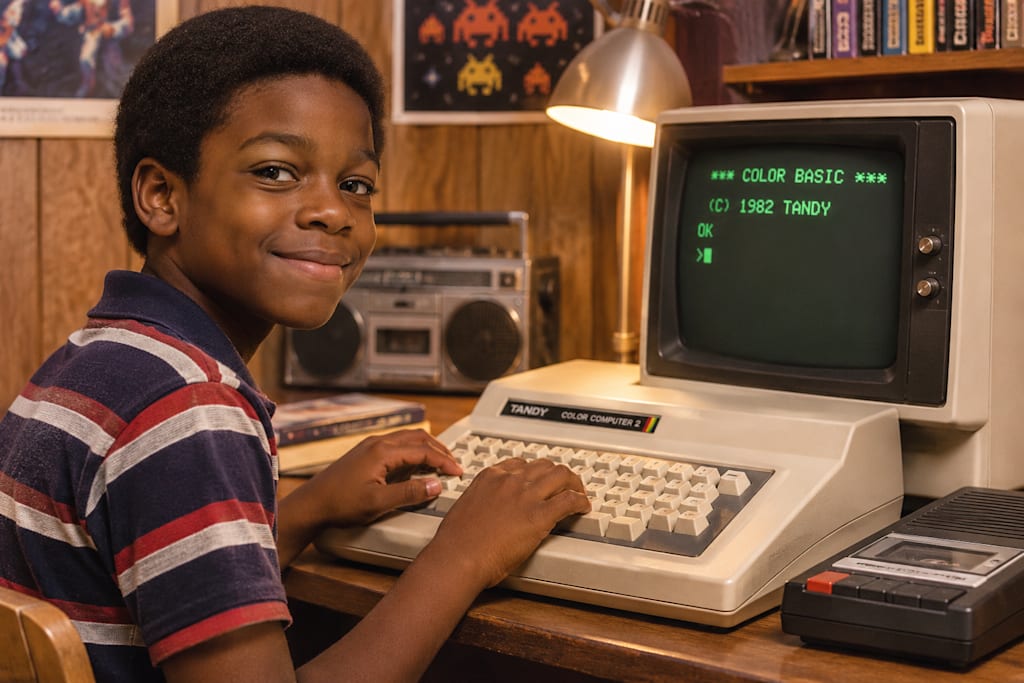
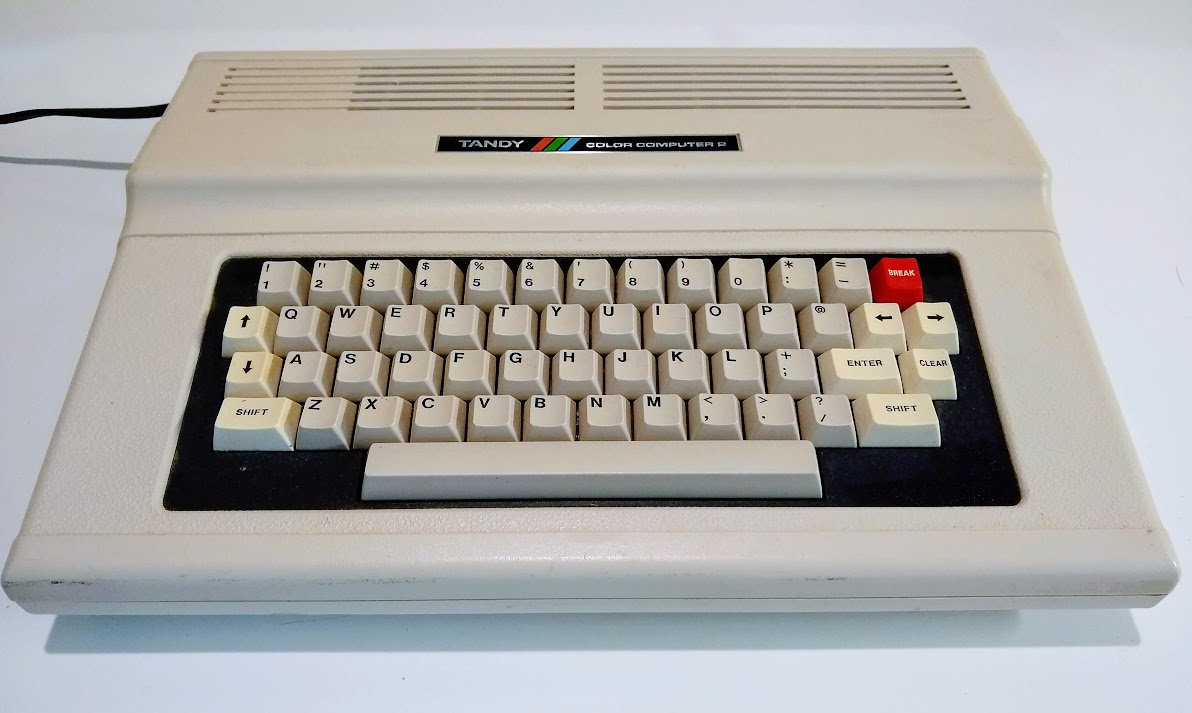
At this point, what would eventually become the internet was still mostly unknown outside of government, military, and academic institutions. The ARPANET, a major predecessor of the modern internet, officially adopted TCP/IP on January 1, 1983. It was sometime around then that my brother first obtained a Tandy CoCo 2 (Color Computer 2).
It was a wonderful device. It was nothing at all like the computers we know today. No windows. No icons. No mouse.
It had a green screen with black text. It had a whopping 0.89 MHz processor and 16KB of RAM. If you could afford it, you could get an upgraded model with 32KB or 64KB. It had 8KB of ROM for Color BASIC or 16KB for Extended Color BASIC. It had an astonishing resolution of 32 × 16 in standard text mode or up to 256 × 192 in graphics mode.
We later upgraded to the CoCo 3 with 512KB of RAM. Big improvement! We knew nothing about MB and GB at the time.
We had a subscription to The Rainbow, a magazine dedicated to Tandy Color Computers. It featured programs that we could sit and type in all day, line by line. If it was a game, it could take hours, even days, to complete. Then we saved the data on a cassette tape using a tape recorder.
Often, we made many mistakes. We had to go through the entire thing, line by line, character by character, until we found the error.
There were many different games and other software cartridges we could buy and stick into the side of the computer. Some cartridges allowed us to connect different devices. We upgraded from our tape recorder to a disk drive. Then we got two more items.
The first was a device that allowed us to connect more than one device at a time. The second was a modem. This allowed us to connect a phone line to the computer, which opened up brand-new doors.
The first door allowed us to connect to a friend's computer, where we could chat or play games together. (Nothing like today's games. With the CoCo 3's maximum graphics resolution of 640 × 225, how could they be?) Our computer would call his computer, or vice versa. We would have to set up a time to do this.
Then came online services like Delphi and CompuServe. These were not the World Wide Web, but they introduced us to a much larger online world. Instead of typing lines of code for hours on end, we could download a file that someone else had already taken the time to type up.
At the time, I knew nothing about download speeds. All I knew was that we would start downloading a game like Pac-Man before going to bed. By the time we woke up in the morning, if there were no connection problems, it would almost be finished downloading. If there was a connection problem, we'd have to start all over.
You can imagine my parents being upset with us for tying up the phone line for so long.
The games back then were so very simple and basic compared to today's standards, but for the time, they were excellent.
Fast-forward about a decade. I was in high school. I had computer classes in which each computer was connected to the school's network. This allowed the teacher to check up on what we were doing. But in my senior year, the school had one computer in the library that was connected to the World Wide Web.
I remember the long line of students building up to use this single computer just to read information from an encyclopedia. It was wonderful! We could get help with our homework. That was, if we had a chance to use it.
After all, there were a few thousand kids trying to use one computer. I'm glad I got a chance to use it at least once.
I remember getting those AOL disks in the mail almost every week. I collected them. Each one had a code that offered free access to their slow dial-up internet service for a limited time. This was great!
Then came a bunch of TV commercials in which a man or woman would enter a hotel and ask a question about the entertainment available. The host would state that they had every movie, every song, in every language imaginable.
They'd ask how that was possible.
The answer was broadband.
Broadband changed everything. No more dial-up. No more tying up the phone line. No more waiting hours to download a single file.
Since then, the internet has only gotten faster, and the world has become dependent on it. Almost every aspect of modern life relies on it.
Children today can't even imagine a world without the internet. They have access to more information in their pockets than we could have dreamed of having in our entire house.
Sometimes, I think back to that little Tandy computer with its green screen, black text, and cassette tape recorder. We would spend hours typing programs and entire nights downloading a single game.
Today, I can download that same game in less time than it takes to blink.
We've certainly come a long way.
And to think, it all started for me with a little green screen and a telephone cord.
(The end was created by ChatGPT. My last words were "Children today can't even imagine a world without the internet. ChatGpt gave the added ending. I liked it, so I kept it.)
About the Creator
David E. Perry
Writing gives me the power to create my own worlds. I'm in control of the universe of my design. My word is law. Would you like to know the first I ever wrote? Read Sandy:
Enjoyed the story? Support the Creator.
Subscribe for free to receive all their stories in your feed. You could also become a paid subscriber, letting them know you appreciate their work.
Comments
There are no comments for this story
Be the first to respond and start the conversation.