
Flight Geometry and Framing Choice Drive Plant Price
Why Drum Internals and Frame Type Decide Your True Rural Budget

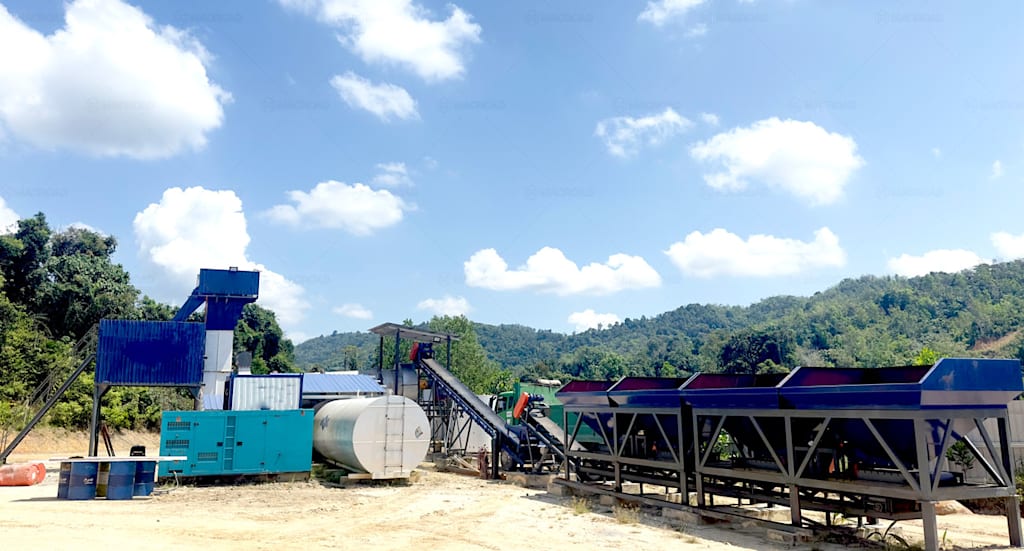
Determining a realistic asphalt plant price for localized rural infrastructure requires understanding two engineering variables procurement teams often evaluate separately: internal aggregate flight arrangements governing thermal efficiency, and primary structural framing options that dramatically shift capital expense once foundation requirements are factored in. A drum asphalt mixing plant optimized for rural deployment must balance heat transfer performance against foundation complexity, since framing decisions made during procurement directly determine concrete pouring costs that often exceed equipment cost on remote sites lacking existing infrastructure.
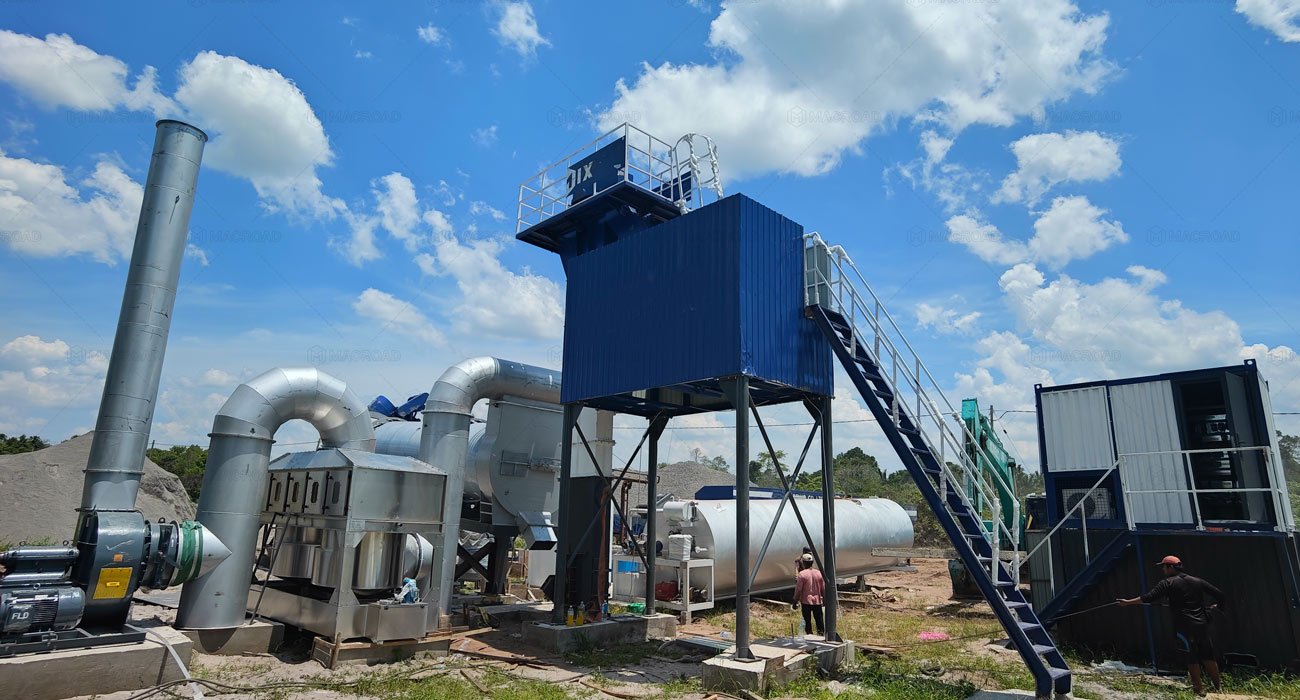
Flight Arrangements Optimize Drum Thermal Performance
Internal aggregate flights inside a drum asphalt mixing plant control material trajectory and residence time within the heated air stream, directly determining thermal efficiency that influences both fuel consumption and final asphalt plant price for rural operations where fuel logistics add cost burden. Conventional shallow-scoop flights lift material partway up the drum wall before gravity-driven cascading, creating variable residence time and uneven aggregate temperature.
Advanced flight geometry employing curved profiles with 35 to 45 degree pitch angles generates controlled helical movement, extending thermal contact without elevated combustion temperatures. Specifically, this arrangement reduces fuel consumption by 10 to 15 percent compared to conventional designs — meaningful savings where transportation adds premium to baseline fuel pricing. Properly spaced flight arrays, positioned at 60 to 90 degree intervals, prevent material clustering that causes uneven heat exposure, achieving temperature uniformity within ±5°C versus ±15°C variance common in basic configurations. This consistency justifies asphalt plant price premiums, since improved efficiency reduces operational expense accumulating across extended rural project timelines.
Structural Framing Determines Foundation Cost Burden
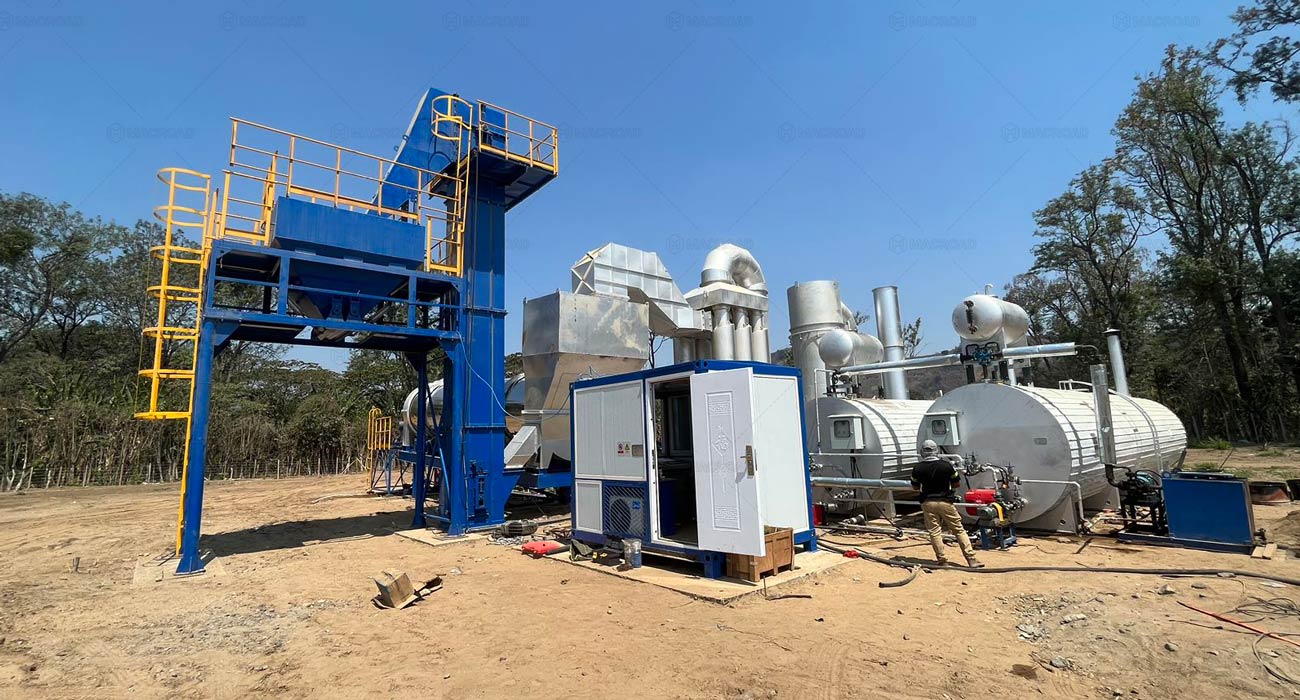
Primary structural framing selection is the single most significant variable affecting total asphalt plant price once foundation requirements are incorporated. Fixed welded-frame designs requiring permanent concrete pouring demand 400 to 600 cubic meters of reinforced concrete for typical rural-capacity installations, generating foundation costs of $85,000 to $140,000 depending on local pricing.
Conversely, modular skid-mounted framing distributes equipment weight across engineered steel bases requiring minimal preparation — often limited to leveling pads consuming 60 to 90 cubic meters. This approach reduces foundation-related expense by 65 to 75 percent, fundamentally altering total asphalt plant price for rural projects where remote access complicates concrete delivery and curing. Rural locations frequently lack readily available concrete supply chains, where extended hauling adds $8,000 to $15,000 transportation premium alone.
Additionally, framing choice affects deployment timeline considerably. Fixed foundations require 21 to 28 day curing before installation, while modular configurations achieve readiness within 5 to 7 days — a meaningful advantage for programs operating under seasonal construction windows.

Total Capital Calculation Requires Integrated Analysis
Accurate asphalt plant price determination demands procurement teams calculate total capitalized investment incorporating equipment cost, framing-specific foundation requirements, and site logistics rather than evaluating equipment pricing independently. A drum asphalt mixing plant with lower baseline cost may generate higher total project expense once fixed-foundation framing requirements meet challenging rural site logistics.
Consequently, planners should request detailed foundation documentation from manufacturers, comparing fixed-frame versus modular options across realistic rural scenarios. This comparison frequently reveals that asphalt plant price advantages from modular framing — through reduced concrete volume, simplified preparation, and accelerated deployment — substantially outweigh any baseline cost differential between framing alternatives.
Conclusion
Determining realistic asphalt plant price for rural infrastructure requires evaluating internal flight geometry affecting thermal efficiency alongside framing decisions influencing foundation expense. A drum asphalt mixing plant optimized through advanced flight arrangements delivers measurable fuel efficiency, while modular framing minimizing concrete requirements provides substantial total-cost benefit for remote locations. Procurement teams pursuing accurate rural budgeting should integrate both engineering variables into comprehensive capital calculation rather than evaluating equipment specifications independently from site-specific installation logistics.
About the Creator
Macroad Asphalt Plant
Macroad, a global leading manufacturer in asphalt mixing plants, offers a wide range of specifications to meet diverse project needs. Its high-quality, efficient equipment is widely applied in road construction.
Enjoyed the story? Support the Creator.
Subscribe for free to receive all their stories in your feed.
Comments
There are no comments for this story
Be the first to respond and start the conversation.