
Flexible Packaging Market Set to Reach US$202.79 Billion by 2034 as Sustainable Packaging and Convenience Trends Drive Growth
Rising demand from food, pharmaceutical, and personal care industries, coupled with growing interest in sustainable packaging solutions, is fueling expansion across the global flexible packaging market.

Introduction: Flexible Packaging Becomes the Future of Modern Product Protection
Packaging plays a critical role in protecting products, extending shelf life, enhancing convenience, and influencing consumer purchasing decisions. As industries seek more efficient, sustainable, and cost-effective packaging solutions, flexible packaging has emerged as one of the fastest-growing segments of the global packaging industry.
From snack foods and beverages to pharmaceuticals and personal care products, flexible packaging has become an essential component of modern supply chains. Its lightweight nature, durability, lower transportation costs, and ability to preserve product quality have made it a preferred choice for manufacturers worldwide.
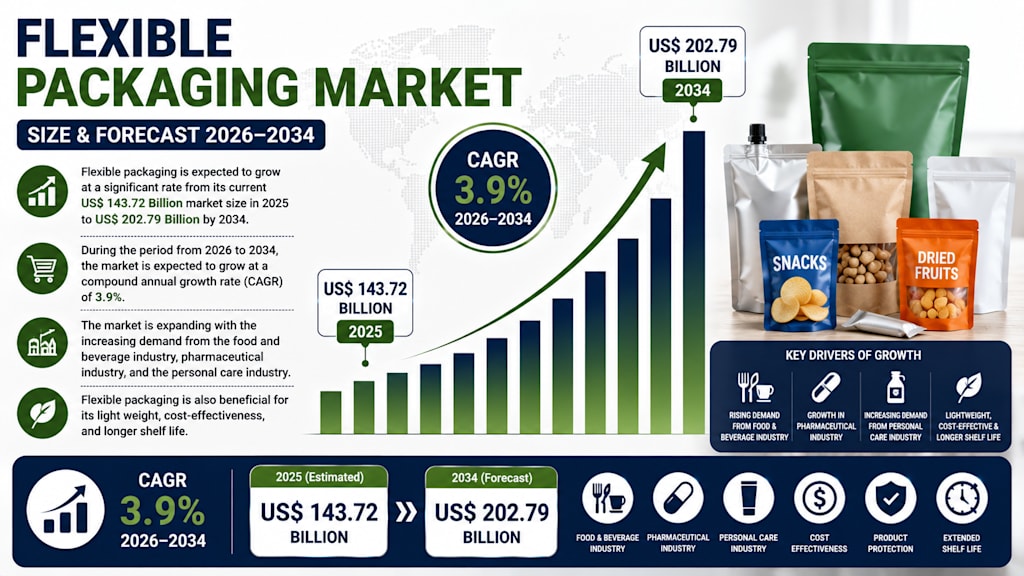
According to Renub Research, the Global Flexible Packaging Market is expected to grow from US$ 143.72 billion in 2025 to US$ 202.79 billion by 2034, expanding at a compound annual growth rate (CAGR) of 3.9% between 2026 and 2034. Increasing demand from food and beverage manufacturers, expanding pharmaceutical applications, and growing adoption of sustainable packaging solutions are expected to support continued market growth.
As consumer preferences evolve and environmental concerns intensify, flexible packaging is becoming a cornerstone of modern packaging innovation.
Understanding Flexible Packaging and Its Advantages
Flexible packaging refers to packaging solutions made from materials such as plastic films, paper, aluminum foil, or combinations of multiple materials. Unlike rigid packaging formats, flexible packaging can easily change shape and adapt to product requirements.
Common examples include pouches, bags, sachets, wraps, and flexible containers. These packaging formats are designed to protect products from moisture, oxygen, light, contaminants, and environmental damage while extending shelf life and maintaining product quality.
Flexible packaging is widely used across industries including food and beverages, pharmaceuticals, cosmetics, household products, and industrial goods.
Its ability to reduce material usage, lower transportation costs, and offer innovative design options continues driving widespread adoption.
Food and Beverage Industry Remains the Largest Growth Driver
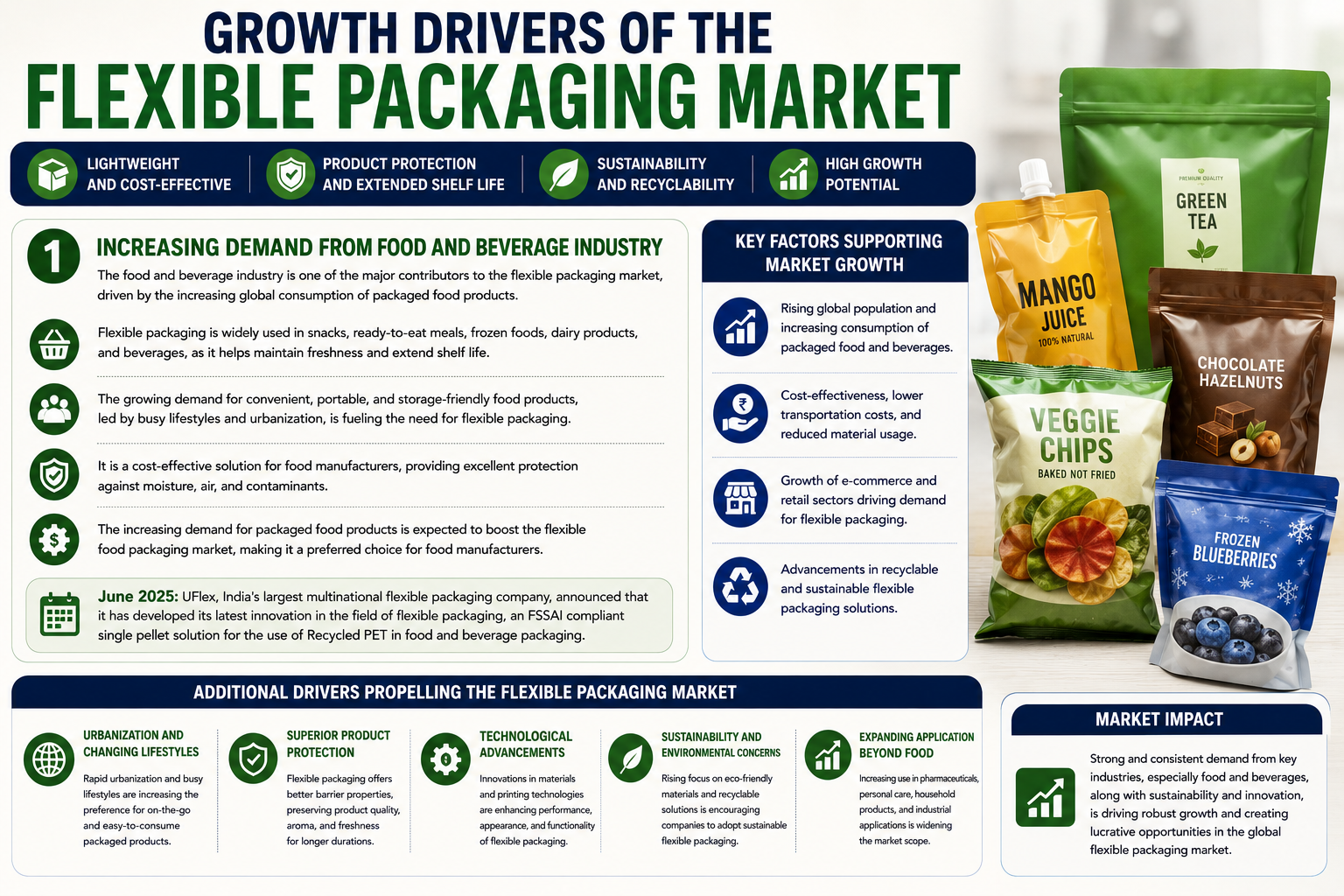
The food and beverage sector continues to be the most significant contributor to the flexible packaging market.
Consumers increasingly demand packaged foods that are convenient, portable, easy to store, and capable of maintaining freshness. Flexible packaging effectively meets these requirements while helping manufacturers reduce packaging costs and improve supply chain efficiency.
Products such as snacks, frozen meals, dairy products, beverages, and ready-to-eat foods commonly rely on flexible packaging because it offers strong protection against moisture, air, and contaminants.
Urbanization, changing lifestyles, and increasing consumption of packaged food products are creating substantial growth opportunities for flexible packaging manufacturers.
The report highlights UFlex's development of an FSSAI-compliant recycled PET solution for food and beverage packaging, demonstrating continued innovation within the sector.
As demand for packaged foods continues increasing worldwide, flexible packaging is expected to remain the industry's preferred packaging solution.
Sustainability Trends Are Reshaping the Industry
Growing environmental awareness has become one of the most important forces influencing packaging decisions globally.
Consumers, governments, and businesses are increasingly prioritizing sustainable packaging solutions that reduce waste and minimize environmental impact. Flexible packaging typically requires less material than rigid packaging alternatives, making it an attractive option for companies seeking to improve sustainability performance.
Its lightweight nature also reduces transportation emissions and logistics costs.
Manufacturers are investing heavily in recyclable, biodegradable, and mono-material packaging technologies designed to improve recyclability and reduce environmental footprints.
The report highlights Huhtamaki's development of sustainable mono-material flexible packaging solutions in paper, polyethylene, and polypropylene formats aimed at supporting circular economy goals.
As sustainability continues becoming a business priority, demand for environmentally responsible flexible packaging is expected to accelerate.
Pharmaceutical Industry Expands Adoption
The pharmaceutical sector is becoming an increasingly important market for flexible packaging solutions.
Medicines, medical devices, powders, capsules, tablets, and healthcare products require secure packaging capable of protecting contents from moisture, light, contamination, and physical damage. Flexible packaging offers effective protection while maintaining product integrity throughout storage and transportation.
The rise of unit-dose packaging, sachets, pouches, and patient-friendly packaging formats has further strengthened adoption within the healthcare industry.
Flexible packaging also supports regulatory compliance while improving convenience for both patients and healthcare providers.
The report highlights Cosmo Plastech's expansion into pharmaceutical packaging solutions, reflecting growing demand from healthcare manufacturers.
As global healthcare spending continues increasing, pharmaceutical packaging applications are expected to grow steadily.
Personal Care Industry Creates New Opportunities
Flexible packaging has become increasingly popular within the personal care and cosmetics sector.
Manufacturers utilize flexible packaging for products such as shampoos, lotions, creams, soaps, facial treatments, and travel-sized personal care items. The format offers convenience, attractive presentation, and cost-effective production while helping brands differentiate products on retail shelves.
Single-use and travel-sized products have become particularly popular among consumers seeking portability and convenience.
Flexible packaging also enables creative branding opportunities through advanced printing technologies and innovative package designs.
As beauty and personal care markets continue expanding globally, demand for flexible packaging solutions is expected to increase accordingly.
Food and Beverage Packaging Leads Application Segments
Food and beverage applications account for the largest share of the flexible packaging market.
Manufacturers rely on flexible packaging to preserve freshness, improve shelf life, and protect food products from environmental factors. Snacks, dairy products, frozen foods, beverages, and ready-to-eat meals are among the most common applications.
Consumers appreciate the convenience of lightweight packaging that is easy to transport, store, and dispose of.
At the same time, food companies benefit from lower shipping costs and reduced packaging material requirements.
Growing urban populations and increasing demand for convenience foods are expected to sustain strong growth within this segment.
Flexible Packaging Films Continue Dominating Material Demand
Flexible packaging films remain one of the most important material categories in the market.
Produced from materials such as polyethylene, polypropylene, and polyester, these films provide excellent barrier protection against moisture, oxygen, and contaminants. Their flexibility, strength, and durability make them suitable for a wide range of consumer and industrial applications.
Flexible films also support high-quality graphics and branding, helping manufacturers improve product visibility and consumer appeal.
Advancements in multilayer film technology continue improving performance characteristics while supporting sustainability objectives.
As packaging requirements become increasingly sophisticated, demand for advanced flexible films is expected to remain strong.
Paperboard Flexible Packaging Gains Momentum
Paperboard-based flexible packaging is becoming increasingly attractive due to growing environmental concerns.
Made from renewable and recyclable materials, paperboard packaging appeals to consumers seeking sustainable alternatives to conventional plastic packaging. It is widely used for snacks, bakery products, dry foods, and personal care products.
Technological advancements have improved the strength, durability, and barrier properties of paper-based packaging materials.
Many companies are transitioning toward paperboard packaging as part of broader sustainability initiatives.
As governments implement stricter environmental regulations, demand for paper-based flexible packaging is expected to increase significantly.
Plastic Flexible Packaging Maintains Market Leadership
Despite growing environmental scrutiny, plastic flexible packaging continues to hold the largest share of the market.
Materials such as polyethylene and polypropylene provide excellent protection against moisture, air, and contamination while remaining highly cost-effective. Their durability, flexibility, and lightweight properties make them suitable for numerous packaging applications.
Plastic packaging also supports innovative features such as resealable closures, easy-open systems, and enhanced barrier technologies.
Manufacturers are increasingly investing in recyclable and biodegradable plastic solutions to address sustainability concerns.
As innovation continues improving environmental performance, plastic packaging is expected to remain a critical component of the industry.
United States Continues Leading Innovation
The United States represents one of the largest and most advanced flexible packaging markets globally.
Strong demand from food manufacturers, pharmaceutical companies, and personal care brands continues driving growth. Sustainability initiatives and investments in recyclable packaging technologies have become major priorities throughout the industry.
The report highlights the launch of Oroflex by Oroville Flexible Packaging, a solution focused on sustainable flexible plastics, packaging, and recycling capabilities.
The country's strong manufacturing base and advanced retail infrastructure continue supporting market expansion.
United Kingdom Focuses on Sustainable Packaging
The United Kingdom market is benefiting from growing demand for environmentally friendly packaging solutions.
Consumers and businesses increasingly prioritize recyclable and biodegradable materials, encouraging manufacturers to adopt sustainable packaging innovations. Flexible packaging remains widely used within food, beverage, pharmaceutical, and personal care applications.
The report highlights Mondi's collaboration with Veetee to introduce paper-based rice packaging in the UK market, reflecting growing interest in sustainable alternatives.
Environmental regulations are expected to continue supporting market growth.
India Emerges as a Fast-Growing Market
India's flexible packaging market is expanding rapidly due to urbanization, rising disposable incomes, and increasing demand for packaged consumer goods.
The growth of organized retail, e-commerce, food processing, pharmaceuticals, and personal care industries has significantly increased demand for flexible packaging solutions. Consumers appreciate the affordability and convenience offered by flexible formats.
The report highlights TOPPAN's expansion of advanced film manufacturing capabilities in India to support growing packaging requirements.
The country's large population and evolving consumer preferences continue creating significant opportunities for industry participants.
Saudi Arabia Supports Advanced Packaging Development
Saudi Arabia's flexible packaging market is benefiting from increasing demand across food, healthcare, retail, and e-commerce sectors.
The country's focus on economic diversification, industrial development, and sustainability initiatives has encouraged greater adoption of advanced packaging technologies. Flexible packaging offers product protection, convenience, and extended shelf life, making it highly attractive across multiple industries.
The report highlights SABIC's partnership with Napco National and FONTE to introduce bakery packaging solutions produced entirely from recycled plastics.
Such initiatives demonstrate the growing importance of sustainable packaging within the region.
Challenges Continue to Affect Market Growth
Despite favorable growth prospects, the flexible packaging industry faces several challenges.
Environmental concerns remain a major issue, particularly regarding plastic waste and recycling limitations. Many flexible packaging products utilize multi-layer structures that are difficult to recycle using conventional systems. Increasing regulatory pressure is encouraging manufacturers to invest in more sustainable alternatives.
Raw material price volatility also presents significant challenges. Prices for plastic resins, aluminum, paper, and other key materials can fluctuate due to global supply-demand imbalances, geopolitical developments, and supply chain disruptions.
These factors can increase manufacturing costs and affect profitability across the industry.
Leading Companies Shaping the Industry
The global flexible packaging market includes several major packaging companies focused on innovation, sustainability, and advanced material development.
Key companies highlighted in the report include Amcor plc, Berry Global Group, Sealed Air, DS Smith, Huhtamaki PPL Limited, and Graphic Packaging Holding Company. These organizations continue investing in recyclable materials, sustainable packaging technologies, and product innovation to meet evolving market demands.
Final Thoughts
The global flexible packaging market is positioned for sustained growth as manufacturers increasingly prioritize efficiency, sustainability, and consumer convenience.
With the market expected to grow from US$ 143.72 billion in 2025 to US$ 202.79 billion by 2034, flexible packaging is becoming one of the most important packaging formats across food, healthcare, personal care, and industrial applications. Its ability to reduce costs, extend shelf life, improve portability, and support sustainability initiatives continues creating significant opportunities worldwide.
Although challenges related to recycling infrastructure and raw material costs remain, the long-term outlook remains positive. As innovation continues driving the development of eco-friendly and high-performance packaging solutions, flexible packaging is expected to remain at the forefront of the global packaging industry.
About the Creator
Enjoyed the story? Support the Creator.
Subscribe for free to receive all their stories in your feed.
Comments
There are no comments for this story
Be the first to respond and start the conversation.