
Fighting the Itch: How Innovation and Awareness Are Transforming the Allergic Conjunctivitis Market
Rising allergy prevalence, worsening environmental triggers, improved diagnostics, and advanced eye-drop therapies are driving steady growth in the global allergic conjunctivitis market.

For millions of people worldwide, seasonal changes bring more than blooming flowers and warmer temperatures. They also bring itchy, watery, red, and irritated eyes—a hallmark of allergic conjunctivitis.
Often dismissed as a minor inconvenience, allergic conjunctivitis can significantly affect daily life, productivity, and overall well-being. Persistent itching, burning sensations, swelling, and tearing can interfere with work, education, outdoor activities, and sleep quality.
As environmental pollution increases, pollen seasons lengthen, and awareness of eye health improves, the prevalence of allergic conjunctivitis continues to rise globally. At the same time, pharmaceutical innovation is providing patients with more effective, longer-lasting, and convenient treatment options.
These developments are creating significant opportunities within the allergic conjunctivitis market.
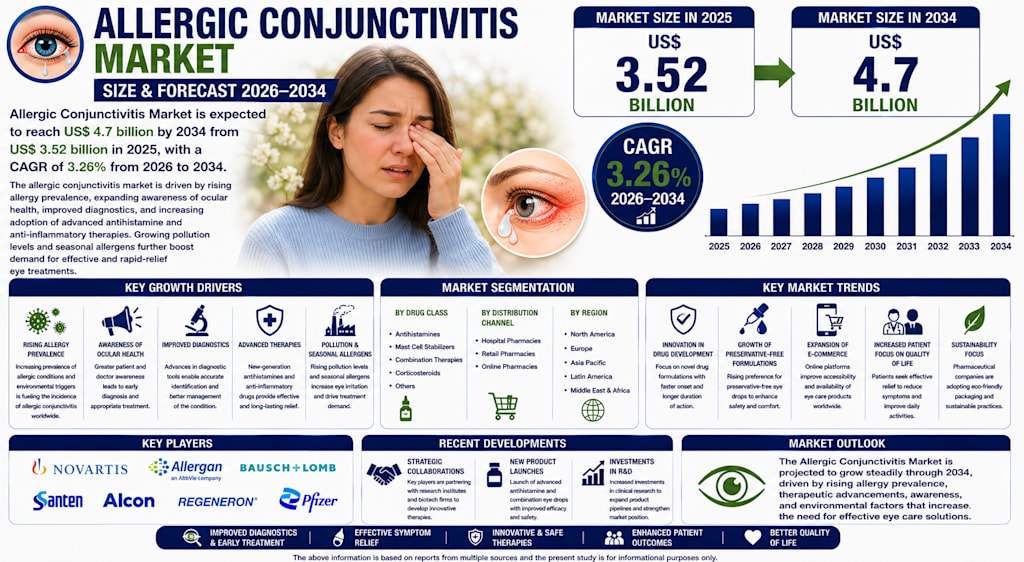
According to Renub Research, the Global Allergic Conjunctivitis Market is projected to grow from US$ 3.52 billion in 2025 to US$ 4.7 billion by 2034, expanding at a compound annual growth rate (CAGR) of 3.26% between 2026 and 2034. Rising allergy prevalence, growing awareness of ocular health, improved diagnostic capabilities, and increased adoption of advanced antihistamine and anti-inflammatory therapies are among the key factors supporting market growth.
As healthcare systems place greater emphasis on preventive care and patient education, allergic conjunctivitis is becoming an increasingly important focus within ophthalmic medicine.
Understanding Allergic Conjunctivitis
Allergic conjunctivitis is an inflammatory condition affecting the conjunctiva, the thin transparent membrane covering the white part of the eye and the inner surface of the eyelids.
The condition develops when the eyes react to allergens such as:
Pollen, dust mites, mold spores, pet dander, air pollutants, and other environmental irritants.
When exposed to these triggers, the body's immune system releases histamine and other inflammatory substances that cause symptoms including:
Itching, redness, tearing, burning sensations, swollen eyelids, and increased sensitivity.
Allergic conjunctivitis can be classified into two primary forms:
Seasonal Allergic Conjunctivitis (SAC), typically associated with pollen exposure, and Perennial Allergic Conjunctivitis (PAC), which occurs throughout the year due to ongoing exposure to indoor allergens.
Although the condition rarely threatens vision, it can significantly impact comfort, productivity, and quality of life.
As awareness of eye health increases, more patients are seeking professional diagnosis and treatment.
Environmental Changes Are Increasing Allergy Cases
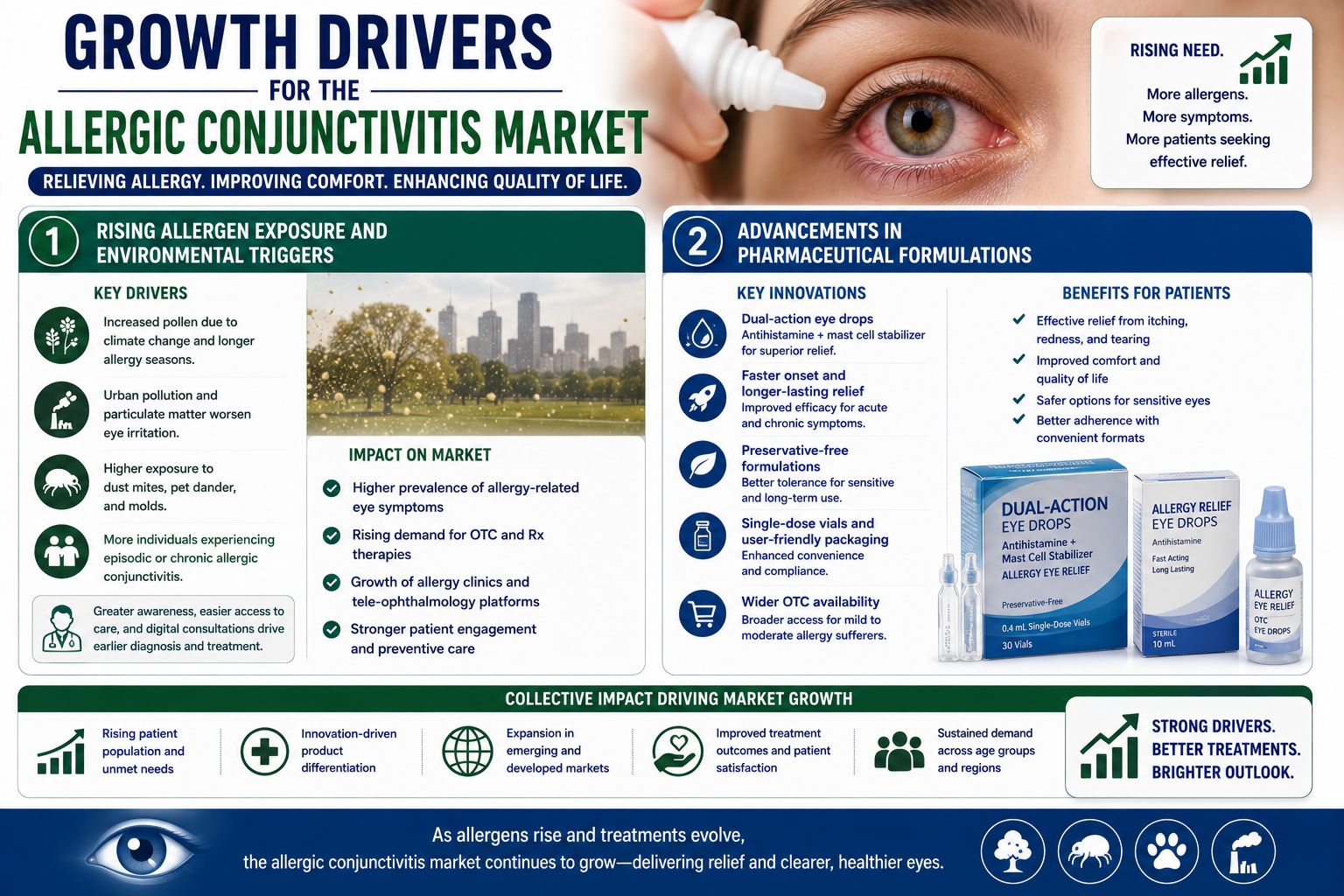
One of the strongest growth drivers in the allergic conjunctivitis market is increasing exposure to environmental allergens.
Climate change has altered pollen patterns worldwide, extending allergy seasons and increasing pollen concentrations in many regions.
At the same time, urbanization has intensified exposure to pollutants, dust particles, and airborne irritants that aggravate eye allergies.
Factors contributing to increased allergic conjunctivitis incidence include:
Longer pollen seasons, worsening air pollution, increased urban density, indoor allergen exposure, and changing environmental conditions.
As a result, healthcare providers are seeing growing numbers of patients seeking relief from allergy-related eye symptoms.
The combination of rising environmental triggers and greater awareness of eye health is creating sustained demand for effective therapeutic solutions.
Pharmaceutical Innovation Is Expanding Treatment Options
Advances in pharmaceutical research continue to improve the management of allergic conjunctivitis.
Traditional treatments often focused primarily on symptom relief. Today's therapies increasingly provide faster onset, longer duration, and improved patient convenience.
Modern treatment options include:
Antihistamines, mast cell stabilizers, dual-action formulations, anti-inflammatory medications, lubricating eye drops, and corticosteroids for severe cases.
Dual-action eye drops have become particularly popular because they simultaneously block histamine activity and prevent future allergic reactions.
Preservative-free formulations are also gaining popularity among patients with sensitive eyes.
Improved packaging designs, single-dose containers, and longer-lasting formulations are enhancing treatment adherence and patient satisfaction.
These innovations are helping shift treatment away from basic symptom management toward more targeted and effective care.
Awareness and Diagnosis Continue to Improve
Historically, many patients with allergic conjunctivitis either self-treated symptoms or failed to seek professional care altogether.
This trend is changing rapidly.
Healthcare organizations, eye-care specialists, digital health platforms, and educational campaigns are increasing public awareness regarding ocular allergies and their management.
Patients are becoming more familiar with symptoms and more likely to seek appropriate diagnosis.
Improved diagnostic tools allow clinicians to distinguish allergic conjunctivitis from bacterial and viral eye infections more accurately.
Techniques such as slit-lamp examinations and allergen-specific testing help identify underlying causes and guide personalized treatment strategies.
Greater awareness and improved diagnostics are contributing directly to increased treatment adoption and market expansion.
Digital Health Is Improving Access to Care
The growth of telemedicine and digital healthcare platforms has expanded access to eye-care services.
Patients can now consult healthcare providers remotely, receive treatment recommendations, and obtain prescriptions without visiting clinics in person.
Tele-ophthalmology has become particularly valuable for individuals living in remote or underserved regions.
Online pharmacies and e-commerce platforms have further improved access to allergy medications by simplifying purchasing processes and increasing product availability.
These developments are helping patients manage symptoms more effectively while encouraging earlier intervention.
As digital healthcare adoption continues increasing, accessibility improvements are expected to support long-term market growth.
Antihistamines and Mast Cell Stabilizers Lead the Market
Among available treatment categories, antihistamines and mast cell stabilizers remain the most widely used therapies.
These medications provide rapid symptom relief while helping prevent future allergic reactions.
Antihistamines work by blocking histamine receptors responsible for itching, redness, and irritation.
Mast cell stabilizers prevent immune cells from releasing inflammatory substances that trigger symptoms.
The combination of effectiveness, safety, and broad availability has made these products central to allergic conjunctivitis management.
Newer dual-action formulations offer additional benefits by combining both mechanisms within a single treatment, improving convenience and treatment outcomes.
As patient awareness grows, demand for advanced antihistamine-based therapies is expected to remain strong.
Seasonal Allergic Conjunctivitis Represents a Major Segment
Seasonal Allergic Conjunctivitis (SAC) continues to account for a significant portion of diagnosed cases worldwide.
This form of the condition is primarily triggered by airborne pollen from trees, grasses, and weeds.
The increasing intensity and duration of pollen seasons associated with climate change have contributed to rising patient numbers.
Many individuals experience recurring symptoms each year, creating ongoing demand for preventive and therapeutic treatments.
Growing awareness regarding seasonal allergies encourages patients to seek treatment earlier, reducing symptom severity and improving quality of life.
As environmental conditions continue evolving, SAC is expected to remain one of the most important segments within the market.
Retail and Online Pharmacies Are Expanding Access
Retail pharmacies continue serving as the primary distribution channel for allergic conjunctivitis treatments.
Consumers frequently seek over-the-counter solutions for mild to moderate symptoms, making pharmacy accessibility critically important.
Online pharmacies have also experienced rapid growth.
Digital platforms offer convenience, competitive pricing, home delivery, and access to a wide range of treatment options.
The expansion of e-commerce has improved medication availability, particularly in regions with limited access to specialty healthcare services.
As consumers increasingly embrace digital purchasing channels, online pharmacies are expected to play a growing role within the market.
Regional Markets Driving Growth
United States
The United States remains one of the largest allergic conjunctivitis markets globally.
High allergy prevalence, prolonged pollen seasons, rising pollution levels, and extensive healthcare infrastructure support strong demand.
Consumers benefit from broad access to both prescription and over-the-counter treatments, while telehealth services and routine eye examinations encourage timely management. Pharmaceutical innovation remains particularly active within the U.S. market.
Germany
Germany's market benefits from strong healthcare infrastructure, high awareness of ocular allergies, and widespread access to specialized eye-care services.
German consumers increasingly favor preservative-free formulations and premium eye-care products designed to minimize irritation while improving comfort. Reimbursement support further encourages adoption of advanced therapies.
China
China represents one of the fastest-growing markets due to rapid urbanization, increasing pollution exposure, and expanding healthcare access.
Growing awareness of eye health and improved diagnostic capabilities are driving demand for both over-the-counter and prescription therapies. E-commerce platforms further enhance treatment accessibility throughout the country.
Saudi Arabia
Saudi Arabia's dry climate, frequent dust storms, and environmental conditions contribute to high rates of eye irritation and allergic symptoms.
Healthcare modernization initiatives, expanding pharmacy networks, and increasing awareness of allergy management are supporting strong market growth. Demand for antihistamine and anti-inflammatory eye drops continues rising across the country.
Recent Innovations Strengthen Market Momentum
The industry continues introducing new therapeutic options designed to improve patient outcomes.
In May 2024, Santen Pharmaceutical Co. and Mitsubishi Tanabe Pharma Corporation launched ALESION Eyelid Cream 0.5% in Japan, expanding available treatment options for allergic conjunctivitis patients.
Another notable development occurred in July 2023 when Harrow acquired U.S. and Canadian commercial rights to six ophthalmic products from Santen Pharmaceutical.
The agreement significantly strengthened Harrow's eye-care portfolio and expanded access to advanced ophthalmic therapies across North America.
These developments illustrate the industry's ongoing commitment to innovation and patient-centered care.
Challenges Continue to Affect Market Expansion
Despite favorable growth prospects, several challenges remain.
One major issue is self-diagnosis and inappropriate self-medication.
Many patients attempt to manage symptoms independently using basic eye drops or over-the-counter products without consulting specialists.
Misdiagnosis can result in inadequate treatment and prolonged symptoms. In some cases, unsupervised corticosteroid use may lead to complications such as elevated intraocular pressure or corneal damage.
Access to advanced treatments also remains limited in many developing regions.
High costs, insufficient insurance coverage, shortages of eye-care specialists, and limited diagnostic infrastructure continue restricting treatment availability. This creates significant unmet medical needs despite rising allergy prevalence.
Addressing these barriers will be important for ensuring broader access to effective therapies.
Final Thoughts
Allergic conjunctivitis may not be a life-threatening condition, but its impact on daily comfort, productivity, and quality of life is substantial for millions of people worldwide.
Increasing environmental allergen exposure, growing awareness of eye health, expanding diagnostic capabilities, and continuous pharmaceutical innovation are creating strong momentum throughout the market.
From advanced antihistamine formulations and preservative-free eye drops to telemedicine services and improved patient education, the treatment landscape is becoming increasingly sophisticated and accessible.
With the market projected to grow from US$ 3.52 billion in 2025 to US$ 4.7 billion by 2034, opportunities for innovation and expansion remain significant.
As healthcare systems continue prioritizing preventive care and patient-centered treatment, allergic conjunctivitis therapies will play an increasingly important role in helping individuals achieve clearer, more comfortable, and healthier vision.
About the Creator
Enjoyed the story? Support the Creator.
Subscribe for free to receive all their stories in your feed.
Comments
There are no comments for this story
Be the first to respond and start the conversation.