
Feeding the Future: The Role of Steel Agricultural Buildings in Sustainable Food Production
Role of Steel Agricultural Buildings in Sustainable Food Production
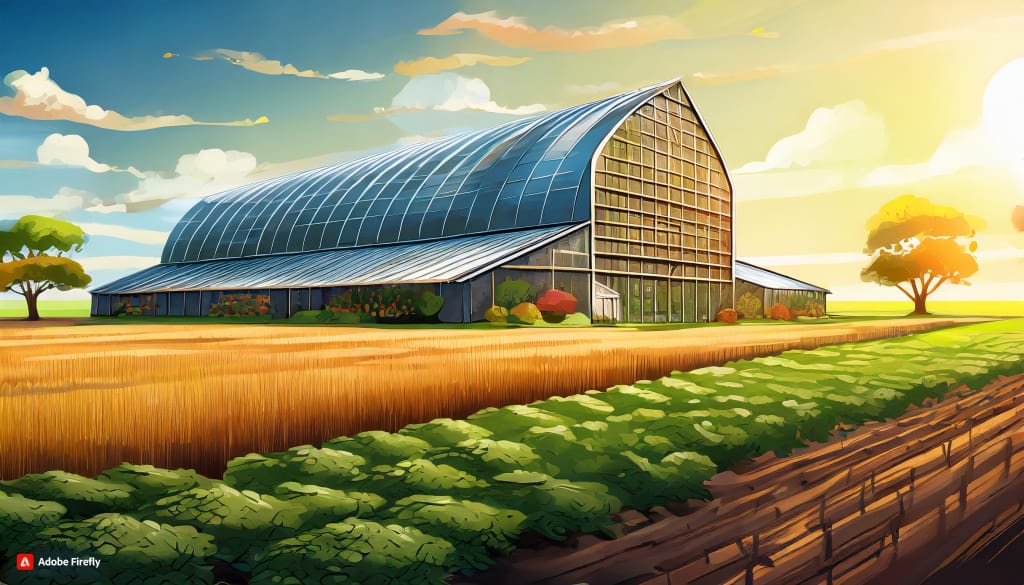
While the global population continues to grow, so is pressure on the world's resources. The quest to fight humanity's hunger isn't just about producing more food but sustainably. Other aspects of agriculture often overshadow the importance of modern infrastructures in achieving this goal. However, their significance is undebatable, especially when these infrastructures are steel structures. Currently, steel agricultural buildings are fast becoming the backbone of the modern agricultural movement. Beyond their role as mere storage facilities or livestock shelters, they serve as landmarks of innovation and sustainability in farming.
Steel Buildings: Durability Meets Efficiency
The argument for steel goes beyond its quality. Its resistance to common agricultural factors like pests, rot, and fire makes it a preferred choice. But the larger picture is the years, even decades, of uninterrupted service these structures provide. This reliability reduces the frequent repair and replacement costs. The nature of steel construction allows for the gradual expansion of a farm as its operations grow.
Cost-Effectiveness in the Long Run
Financial sustainability is as crucial as environmental conservation, especially for farmers. Investing in steel buildings can be viewed as a long-term strategic move. The upfront cost is economically viable across years of minimal maintenance and utility savings. Plus, given the durability and longevity of steel structures, their depreciation rate is lower than traditional materials. This cost-benefit balance means farmers can channel saved funds into other avenues, be it research, expansion, or diversification, further enhancing agricultural productivity and profitability.
Adapting to Modern Agricultural Trends
There’s a considerable difference between farming in the past ten years. With the growth of cutting-edge agricultural techniques, structures need to be able to change quickly. Given their design flexibility, steel buildings are ideal for such evolving trends. Whether retrofitting an existing building with new technology or expanding the structure to accommodate a new type of crop, steel buildings offer unparalleled versatility. Such seamless adaptation ensures that farms remain relevant and productive in a constantly evolving agricultural landscape.
Bolstering Local Economies
Steel agricultural buildings play a role in invigorating local economies that go beyond the farm's boundaries. Farmers indirectly support steel production, transport, and construction industries by opting for steel. Plus, with modern steel buildings enabling more efficient and larger-scale production, local job opportunities in agriculture increase. This leads to employment and promotes skill development as workers use advanced technologies and farming techniques. Hence, the ripple effect of a single steel structure can be felt across an entire community, uplifting it in various ways.
Ensuring Food Security in Uncertain Times
Global events, from pandemics to climatic anomalies, have showcased the vulnerabilities in our food supply chains. However, steel agricultural buildings can be instrumental in bolstering food security. Their durability ensures minimal disruption during extreme events. Their adaptability allows for diversified farming, reducing dependency on a single crop. Furthermore, their efficiency means that food production can be scaled quickly in times of crisis to meet increased demand. In an uncertain world, such infrastructures act as fortresses, safeguarding a community's and, by extension, a nation's food security.
Sustainability and Environment
The global narrative is shifting towards sustainability, and agriculture, a primary human activity, is at the centre of this transition. Steel, with its recyclable nature, is an embodiment of this shift. When a steel structure is deemed outdated, it doesn’t end up as landfill waste. Instead, it gets a new lease on life, being reincarnated into another helpful product, reducing its overall environmental footprint. The energy efficiency of steel buildings, complemented by contemporary insulation methods, ensures operational costs remain low. Think about a cold storage unit that needs less energy to keep produce fresh or a poultry unit that maintains optimal temperatures without extensive heating or cooling. And as we pivot to green energy, the vast expanse of a steel building's roof offers prime real estate for solar panels. Such integration drives operational costs down and can turn these units into power-generating entities, further solidifying their place in a sustainable future.
Final Remarks
In these modern times, agricultural producers are not merely trying to feed billions but feeding billions while respecting the planet we’re eating. Every roleplayer, from farmers on the field to tech innovators in labs, is part of the story. Thanks to their numerous advantages, agricultural steel buildings keep watch over the sustainable future. Steel warehouse manufacturing companies are not just builders but rather visionaries. Most steel structures are at the forefront in steering the need to do sustainable agricultural production. Producers can enjoy more than enough yields thanks to the wide array of products, while the consumers get plenty. Partner with us now to kickstart sustainable agricultural production. Reach out to the company with your design and specifications, and let them mold and fabricate your steel structure to your taste and preference.
About the Creator
Enjoyed the story? Support the Creator.
Subscribe for free to receive all their stories in your feed.
Comments
There are no comments for this story
Be the first to respond and start the conversation.