
Feeding the Future: How Premium Nutrition and Innovation Are Transforming America’s Baby Food and Infant Formula Market
Clean-label ingredients, organic nutrition, e-commerce convenience, and science-backed formulations are reshaping how American parents feed the next generation.

From a baby's first bottle to their first spoonful of solid food, parents carefully evaluate products that can support healthy growth, brain development, immunity, and long-term well-being. As awareness of early childhood nutrition continues to increase, families are demanding more from baby food and infant formula manufacturers than ever before.
Today's parents are no longer satisfied with basic nutrition alone. They are seeking products made with clean ingredients, science-backed formulations, organic sourcing, allergen-sensitive recipes, and transparent labeling practices.
As a result, the baby food and infant formula industry is undergoing a significant transformation.
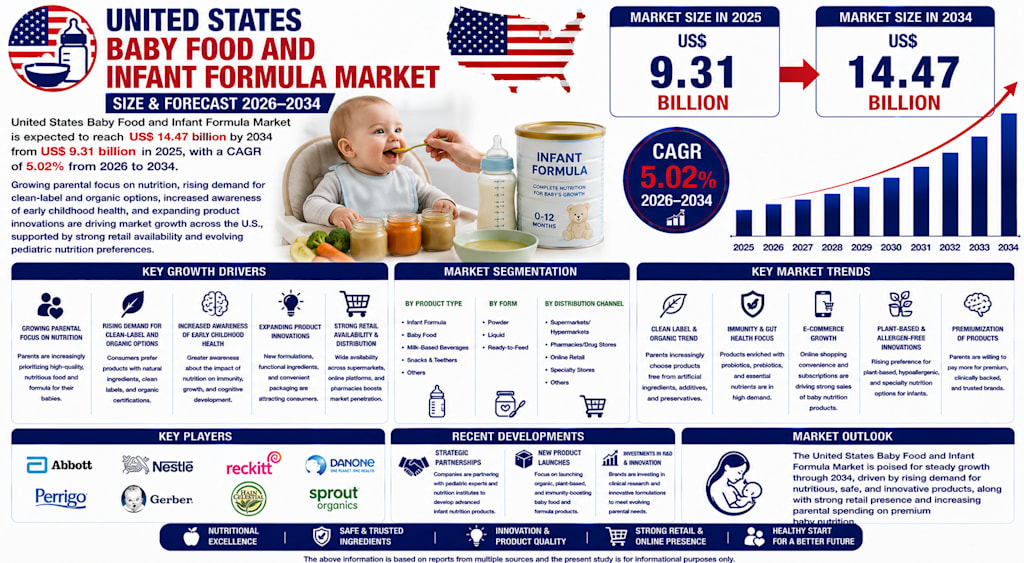
According to Renub Research, the United States Baby Food and Infant Formula Market is expected to grow from US$ 9.31 billion in 2025 to US$ 14.47 billion by 2034, expanding at a compound annual growth rate (CAGR) of 5.02% between 2026 and 2034. Rising parental awareness regarding infant health, growing demand for premium nutrition, expanding product innovation, and increasing availability through retail and e-commerce channels are among the major drivers fueling market growth.
As American families place greater emphasis on early childhood wellness, the future of infant nutrition is becoming increasingly sophisticated, personalized, and health focused.
Why Infant Nutrition Matters More Than Ever
The first years of life represent one of the most critical periods of human development.
During infancy and early childhood, nutrition plays a fundamental role in:
Brain development, immune system function, bone growth, digestive health, cognitive development, and overall physical growth.
While breastfeeding remains widely recommended by healthcare professionals, infant formula provides an important alternative or supplement for many families.
Baby food products help introduce infants and toddlers to solid nutrition while supporting developmental milestones.
Modern infant nutrition products are carefully designed to provide balanced levels of:
Proteins, carbohydrates, fats, vitamins, minerals, and functional nutrients.
As scientific understanding of early childhood nutrition continues advancing, manufacturers are developing increasingly specialized products tailored to different developmental stages and dietary needs.
Premium and Clean-Label Products Are Driving Growth
One of the most influential trends shaping the market is the growing demand for premium and clean-label nutrition.
Parents today are highly informed consumers.
They carefully examine ingredient lists and often seek products that avoid:
Artificial additives, preservatives, synthetic ingredients, genetically modified organisms, and unnecessary processing.
Instead, families increasingly favor:
Organic ingredients, grass-fed dairy sources, non-GMO formulations, and minimally processed nutrition products.
This shift reflects broader consumer interest in wellness and preventive healthcare.
Many parents believe that providing high-quality nutrition during infancy may contribute positively to long-term health outcomes.
Manufacturers are responding by introducing products that closely align with these expectations.
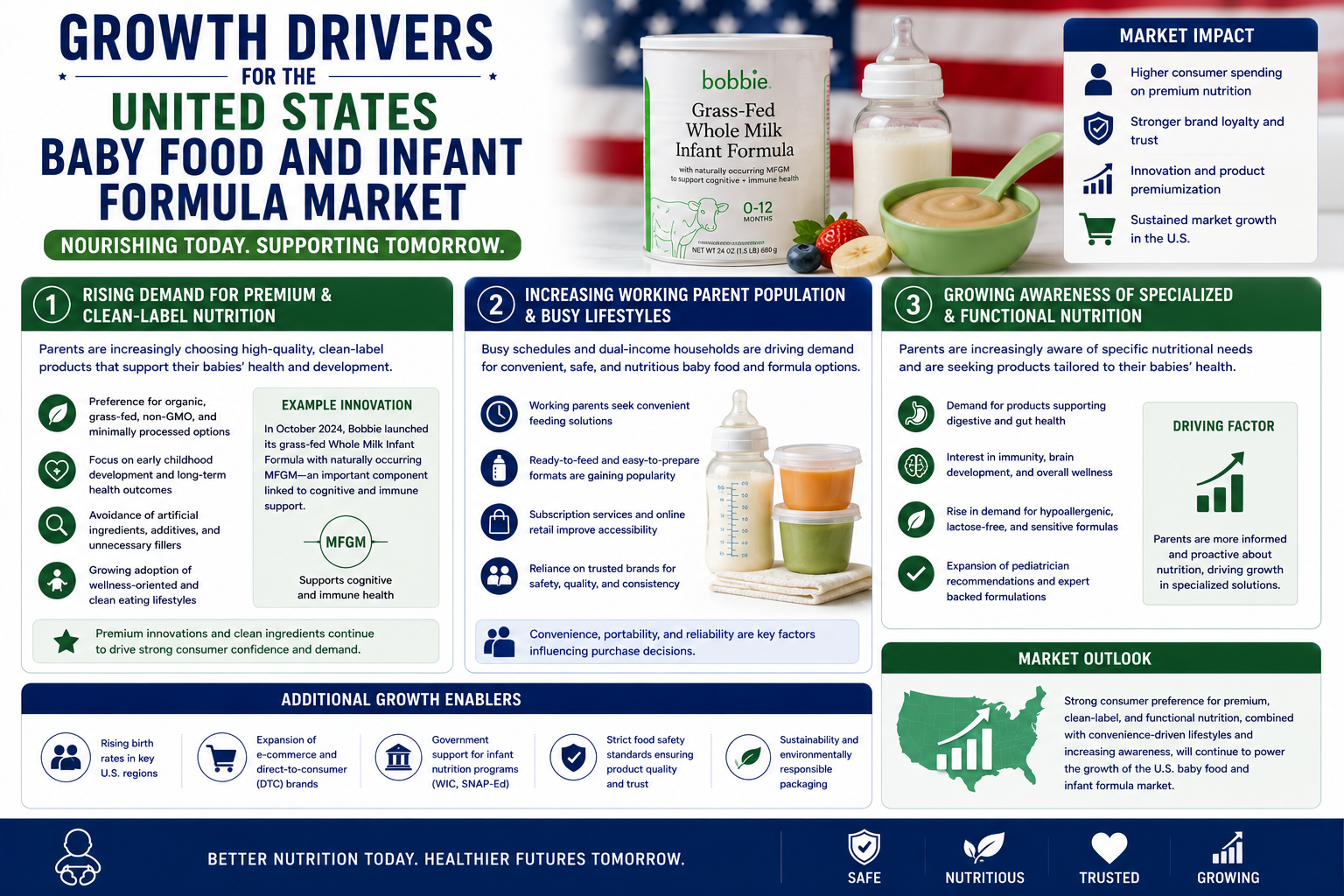
In October 2024, Bobbie expanded its product portfolio by introducing a grass-fed Whole Milk Infant Formula containing naturally occurring Milk Fat Globule Membrane (MFGM), a component associated with cognitive and immune system support.
Such innovations continue strengthening consumer confidence in premium nutrition solutions.
Parents Are Seeking Products Closer to Breast Milk
A major focus within infant nutrition research involves developing formulas that more closely resemble the nutritional composition of breast milk.
Scientific advances have enabled manufacturers to incorporate ingredients that better support infant development and digestion.
Modern formulas increasingly feature:
DHA, ARA, prebiotics, probiotics, MFGM, nucleotides, and specialized protein blends.
These additions are designed to support brain development, digestive comfort, immune function, and overall growth.
As research continues expanding, manufacturers are introducing increasingly sophisticated formulations intended to address specific developmental needs.
Parents increasingly view these innovations as valuable tools for supporting healthy childhood development, contributing significantly to market growth.
Product Innovation Is Creating New Opportunities
Innovation remains one of the most important competitive factors within the baby food and infant formula industry.
Manufacturers continue developing products designed to address specific nutritional requirements and consumer preferences.
Specialized products now target:
Digestive sensitivity, lactose intolerance, allergy management, immune support, plant-based nutrition, and developmental health.
Strategic partnerships are also contributing to innovation.
A notable example occurred in September 2024 when Perrigo Company plc partnered with Dr. Brown's to introduce a new infant formula line designed to improve feeding tolerance while complementing trusted bottle-feeding systems.
These collaborations combine scientific expertise with established consumer trust, helping manufacturers expand their market presence.
As parental expectations continue evolving, innovation is expected to remain a key growth driver.
E-Commerce Is Reshaping Infant Nutrition Purchasing
The way parents purchase baby food and formula has changed dramatically over the past decade.
E-commerce has emerged as one of the fastest-growing distribution channels within the market.
Parents increasingly appreciate the convenience of:
Home delivery, subscription services, scheduled replenishment programs, bulk purchasing options, and expanded product selection.
Online platforms also provide access to detailed product information, ingredient transparency, pediatric recommendations, and consumer reviews.
These resources help parents make informed purchasing decisions.
Direct-to-consumer brands have particularly benefited from this trend by establishing strong relationships with customers through personalized experiences and subscription models.
As digital shopping habits continue strengthening, e-commerce will remain a major contributor to market expansion.
Organic Nutrition Continues Gaining Popularity
Organic infant nutrition represents one of the most rapidly expanding segments within the market.
Parents increasingly associate organic products with:
Higher quality, improved safety, environmental responsibility, and healthier nutrition.
Demand for organic baby foods, cereals, snacks, and formulas continues rising across the United States.
Manufacturers are responding by expanding certified organic product portfolios and emphasizing sustainable sourcing practices.
The organic trend aligns closely with broader consumer preferences favoring transparency and natural ingredients.
As awareness regarding food quality continues increasing, organic infant nutrition is expected to remain a major growth segment.
Plant-Based Nutrition Is Entering the Mainstream
Plant-based products are becoming increasingly relevant within the infant and toddler nutrition space.
Although traditional dairy-based formulas remain dominant, growing numbers of parents are exploring plant-based alternatives due to dietary preferences, allergies, and sustainability concerns.
In May 2024, Sure announced plans to launch a plant-based ready-to-drink toddler beverage developed with pediatric guidance and support from the North Carolina Food Innovation Lab.
Similarly, Else Nutrition expanded its U.S. presence in March 2024 through a partnership with one of North America's largest supermarket operators, increasing availability of its plant-based nutrition products.
These developments highlight the growing importance of alternative nutrition solutions within the broader market.
Milk Formula Remains the Largest Segment
Among all product categories, milk formula continues to represent the largest share of the market.
Infant formula serves as an essential source of nutrition for families who cannot exclusively breastfeed or choose to supplement breastfeeding.
Advances in formulation science continue improving product quality and functionality.
Manufacturers are investing heavily in research to enhance digestibility, nutritional completeness, and developmental benefits.
The continued importance of infant formula within modern childcare ensures that this segment will remain central to industry growth.
Prepared Baby Food Is Growing Rapidly
Prepared baby foods are becoming increasingly popular among busy families seeking convenient nutrition solutions.
Products such as:
Purees, ready-to-eat meals, pouches, fruit blends, vegetable blends, and toddler snacks offer convenience without sacrificing nutritional value.
Working parents particularly appreciate products that simplify meal preparation while maintaining quality and safety.
Manufacturers continue introducing innovative flavors, textures, and nutrient profiles designed to support developmental milestones.
As convenience remains a major purchasing factor, prepared baby foods are expected to experience continued growth.
California Leads Premium Nutrition Trends
California remains one of the most influential markets for baby food and infant formula in the United States.
Several factors contribute to its leadership position.
Parents in California demonstrate strong interest in:
Organic foods, clean-label products, plant-based nutrition, sustainability, and wellness-oriented lifestyles.
The state's large population of young families and strong e-commerce adoption further support market growth.
Healthcare providers also play an important role by promoting awareness regarding early childhood nutrition and developmental health.
As a result, California continues serving as a major market for premium and innovative infant nutrition products.
Texas Drives Volume Growth
Texas represents one of the fastest-growing baby food and infant formula markets in the country.
Population growth, high birth rates, and increasing awareness of infant nutrition contribute to strong demand.
Urban families increasingly seek:
Organic formulas, fortified products, digestive-health solutions, and premium nutrition options.
The state's diverse population also creates demand for a broad range of products serving different dietary preferences and cultural needs.
Combined with expanding retail availability and strong online adoption, Texas remains a key growth engine for the industry.
New York Emphasizes Quality and Convenience
New York's infant nutrition market is characterized by strong consumer focus on quality, safety, and convenience.
Parents frequently select:
Organic purees, DHA-enriched formulas, allergen-sensitive products, and premium nutritional solutions.
The fast-paced lifestyle of many urban families also encourages demand for ready-to-feed formulas, prepared foods, and subscription delivery services.
Strong purchasing power and widespread access to specialty products continue making New York a major market for innovation-driven brands.
Challenges Facing the Industry
Despite strong growth prospects, the market faces several important challenges.
One major concern is affordability.
Premium baby foods and infant formulas often command significantly higher prices due to ingredient quality, production standards, regulatory compliance requirements, and supply-chain costs.
Inflationary pressures affecting dairy ingredients, organic agriculture, packaging materials, and transportation further contribute to rising retail prices. For some families, these costs may limit access to premium nutrition products.
Supply chain vulnerabilities also remain a challenge.
The infant formula industry operates under strict safety regulations requiring rigorous manufacturing and quality-control standards.
While essential for protecting consumers, these requirements can slow production expansion and increase vulnerability to shortages or disruptions.
Past recalls and supply interruptions have heightened parental sensitivity regarding product availability and safety.
Addressing these challenges will be critical for ensuring consistent access to infant nutrition products.
Final Thoughts
The United States baby food and infant formula market is evolving rapidly as parents place increasing emphasis on health, transparency, and nutritional quality.
Driven by clean-label preferences, organic ingredients, product innovation, digital commerce, and growing awareness of early childhood development, the industry continues expanding across multiple segments.
Manufacturers are investing heavily in research and development to create products that better support infant growth while meeting modern consumer expectations.
With the market projected to grow from US$ 9.31 billion in 2025 to US$ 14.47 billion by 2034, opportunities for innovation and expansion remain substantial.
As scientific understanding of infant nutrition continues advancing, the future of baby food and infant formula will likely become even more personalized, evidence-based, and focused on helping children achieve the healthiest possible start in life.
About the Creator
Enjoyed the story? Support the Creator.
Subscribe for free to receive all their stories in your feed.
Comments
There are no comments for this story
Be the first to respond and start the conversation.