
Feather Robotics: Building the "Android of Humanoids" Accessible, Modular, and Ready for Work
Startup Takes a Different Path: Practical Deployable Platform Over Distant General-Promise $30K Robots Already in Kitchens and Labs

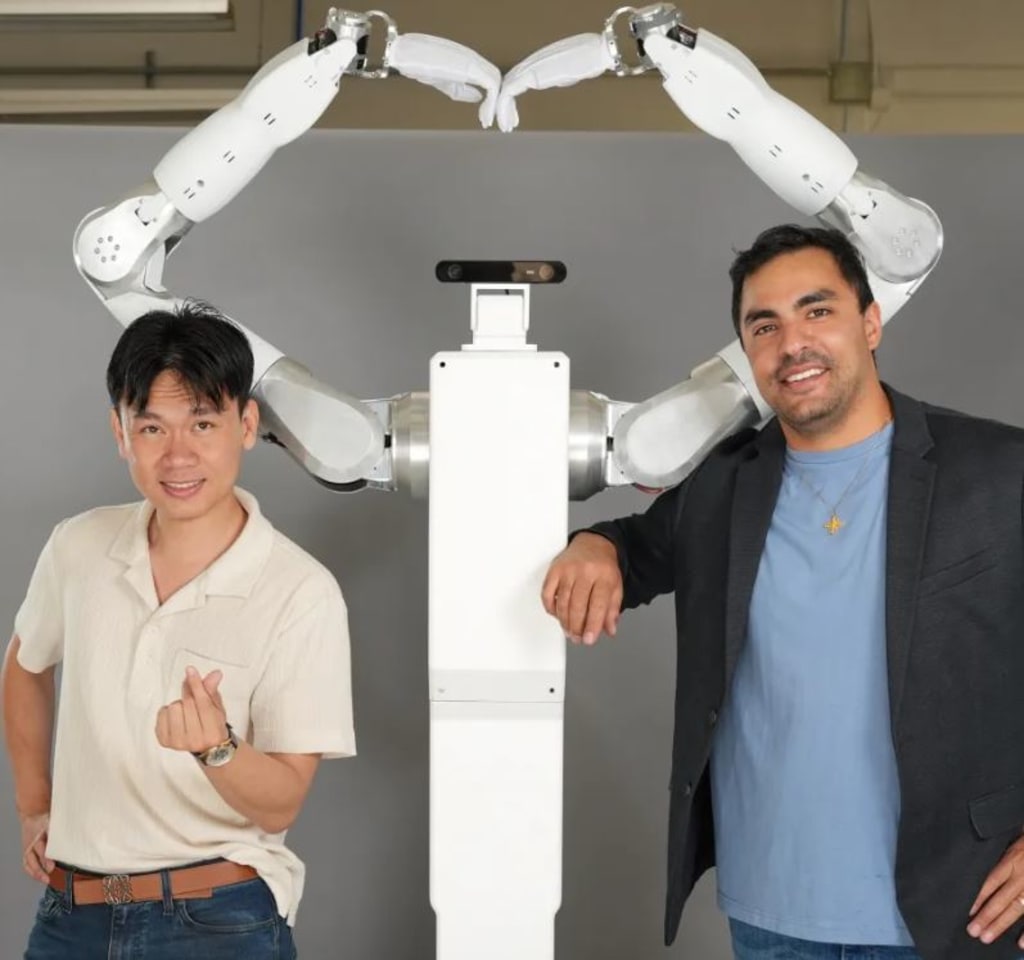
The "ChatGPT moment" for humanoid robots, a universal machine that adapts seamlessly to any environment, has not arrived. Industry leaders disagree on whether it is months away or a decade distant. Amid that uncertainty, Feather, a young startup founded in 2025, is pursuing a third path: building a modular, affordable, fully functional humanoid platform that works today, designed to grow in capability alongside the field. Backed by Gradient Ventures and already surpassing $1 million in revenue, Feather positions itself not as a rival to Tesla or Figure, but as the open foundation upon which countless specialised robotic applications can be built.
A Different Approach: Deploy First, Generalise Later
While Tesla and Figure are pursuing the ambitious goal of creating both the advanced body and the foundational "brain," a general-purpose intelligence that does not yet exist at scale, Feather is shipping working hardware and software now. Co-founder Hoa Mai puts it plainly: "You can’t buy a Tesla robot today and develop on top of it." The company draws inspiration from proven tech history: Nvidia and Apple did not launch with every feature imagined; they built capable platforms, released them, and expanded as the ecosystem grew.
Feather’s system is designed to be customisable: arm lengths can be adjusted, components swapped, and configurations tailored to specific tasks. Crucially, the robot is hardware-agnostic when it comes to intelligence it can run AI models from Nvidia, Skild, Physical Intelligence, or any other leading provider. This flexibility means developers are not locked into one roadmap; they can adopt whatever breakthroughs emerge, whenever they arrive.
Proven in the Field
This is not a prototype. Feather has sold small batches of units to early customers, with revenue already exceeding $1 million. The robots are already at work: preparing meals in restaurant kitchens and maintaining cleanliness in scientific laboratories, practical, repetitive, labour-intensive tasks where reliability matters more than revolutionary versatility. Mai notes that after a year of field testing and resolving nearly all initial issues, the company is preparing for a major product launch.
The founding team brings strong credibility: Mai previously built a humanoid startup acquired by 1X; co-founder Parsa Bakhtiari is a former Tesla Model 3 engineer who reported directly to Elon Musk. Together, they combine deep experience in robotics and mass-manufacturing electric vehicles.
Price, Position, and the Competitive Landscape
At $30,000, Feather’s robot is roughly half the cost of comparable alternatives such as Unitree’s H2 Edu. Gradient Ventures general partner Darian Shirazi frames the value clearly: a human worker in equivalent roles might cost $50,000–$60,000 annually, plus training, HR, and benefits. A one-time purchase at this price point shifts the economics dramatically. Shirazi also notes Feather’s unique standing in the U.S. market: it is not a household robot builder, nor a distant general-purpose aspirant it is the only domestic startup focused purely on a modular, developer-friendly humanoid platform.
Mai acknowledges the competitive challenge from China’s fast-growing robotics sector, which TechCrunch has highlighted as moving rapidly to capture early market share. However, with import restrictions tightening, Feather finds itself in a strengthened position as a homegrown, U.S.-built alternative one that offers not just a product, but a platform under local control.
The Big Bet: Ecosystem Over Product
Feather’s ultimate ambition is larger than selling robots. It aims to become the foundational layer of the physical AI economy the "Android of robotics." As Mai observes, "The market size today for physical AI companies is very small. But if you think about how many physical AI application companies will probably exist in five years, we expect it to be in the thousands." Feather intends to be the common platform they all use.
That means prioritising openness, interoperability, and continuous improvement ensuring that as the intelligence catches up to the hardware, the robot users already trust will grow right alongside it.
Ready Today, Built for Tomorrow
While the world waits for the perfect general-purpose robot, Feather is building something more immediate: machines that show up, do useful work, and provide a sturdy foundation for the next generation of innovation. By keeping costs low, architecture flexible, and software open, the startup is inviting developers everywhere to build the future together one practical deployment at a time.
About the Creator
Mark Lim
Hi I am mark an automotive student and a car, tech and food enthusiast ! Im gonna try and post daily & hope you enjoy what I write and do share my page with people you know. I would gladly appreciate it! Cheers
Enjoyed the story? Support the Creator.
Subscribe for free to receive all their stories in your feed.
Comments
There are no comments for this story
Be the first to respond and start the conversation.