
Evaporative Cooler Market Expands as Rising Global Temperatures Increase Demand for Energy-Efficient Cooling Solutions
Growing concerns about climate change, increasing electricity costs, and rising demand for eco-friendly cooling technologies are driving significant growth in the global evaporative cooler industry.

As global temperatures continue to rise and extreme heat events become more frequent, the need for affordable, energy-efficient cooling solutions has never been greater. Consumers, businesses, and governments worldwide are searching for alternatives to traditional air-conditioning systems that consume large amounts of electricity and contribute to environmental challenges.
Among the most promising solutions is the evaporative cooler, a cooling technology that uses the natural process of water evaporation to reduce air temperatures. Known for their energy efficiency, low operating costs, and environmentally friendly operation, evaporative coolers are gaining popularity in residential, commercial, and industrial applications.
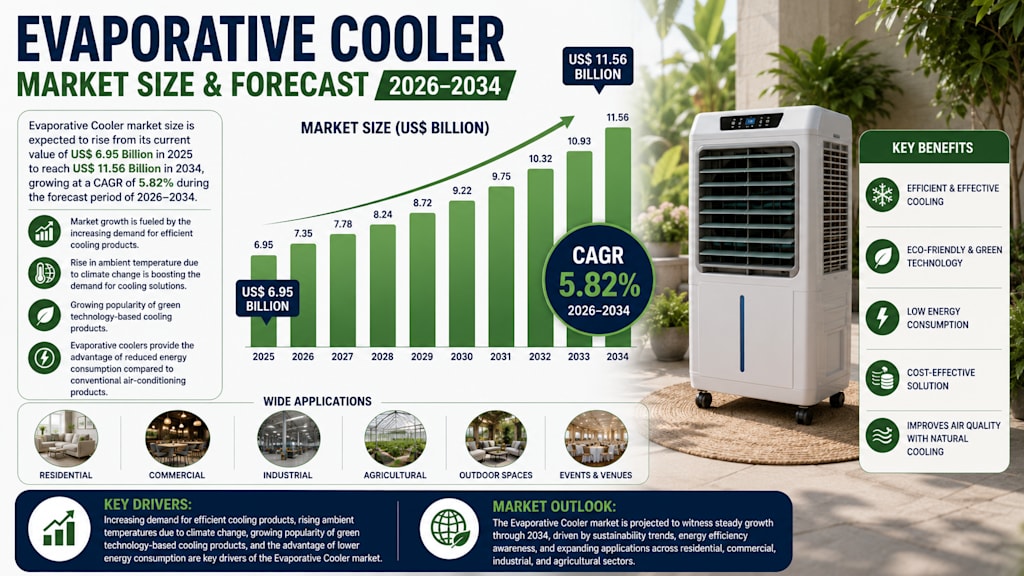
The growing focus on sustainability, combined with increasing awareness of energy conservation, is creating favorable conditions for market expansion. According to Renub Research, the global Evaporative Cooler Market is expected to grow from US$ 6.95 billion in 2025 to US$ 11.56 billion by 2034, registering a compound annual growth rate (CAGR) of 5.82% between 2026 and 2034. This growth reflects the increasing importance of alternative cooling technologies in a warming world.
Understanding Evaporative Cooling Technology
An evaporative cooler, often referred to as a swamp cooler, is a cooling device that utilizes water evaporation to reduce air temperature. Unlike conventional air conditioners that rely on refrigerants and compressors, evaporative coolers use water-saturated pads and airflow to produce cooler air naturally.
The process is relatively simple. Warm air is drawn through water-soaked cooling pads, where water evaporates and absorbs heat from the air. A fan then circulates the cooled air throughout the desired space.
Because evaporative coolers rely on natural processes rather than refrigerant-based cooling cycles, they consume significantly less electricity than traditional air-conditioning systems. This makes them particularly attractive in regions where energy costs are high and environmental sustainability is a priority.
Evaporative coolers are commonly used in homes, offices, warehouses, factories, workshops, outdoor venues, and agricultural facilities, particularly in hot and dry climates where the technology performs most effectively.
Rising Global Temperatures Are Driving Demand
One of the most significant drivers of the evaporative cooler market is the ongoing increase in global temperatures.
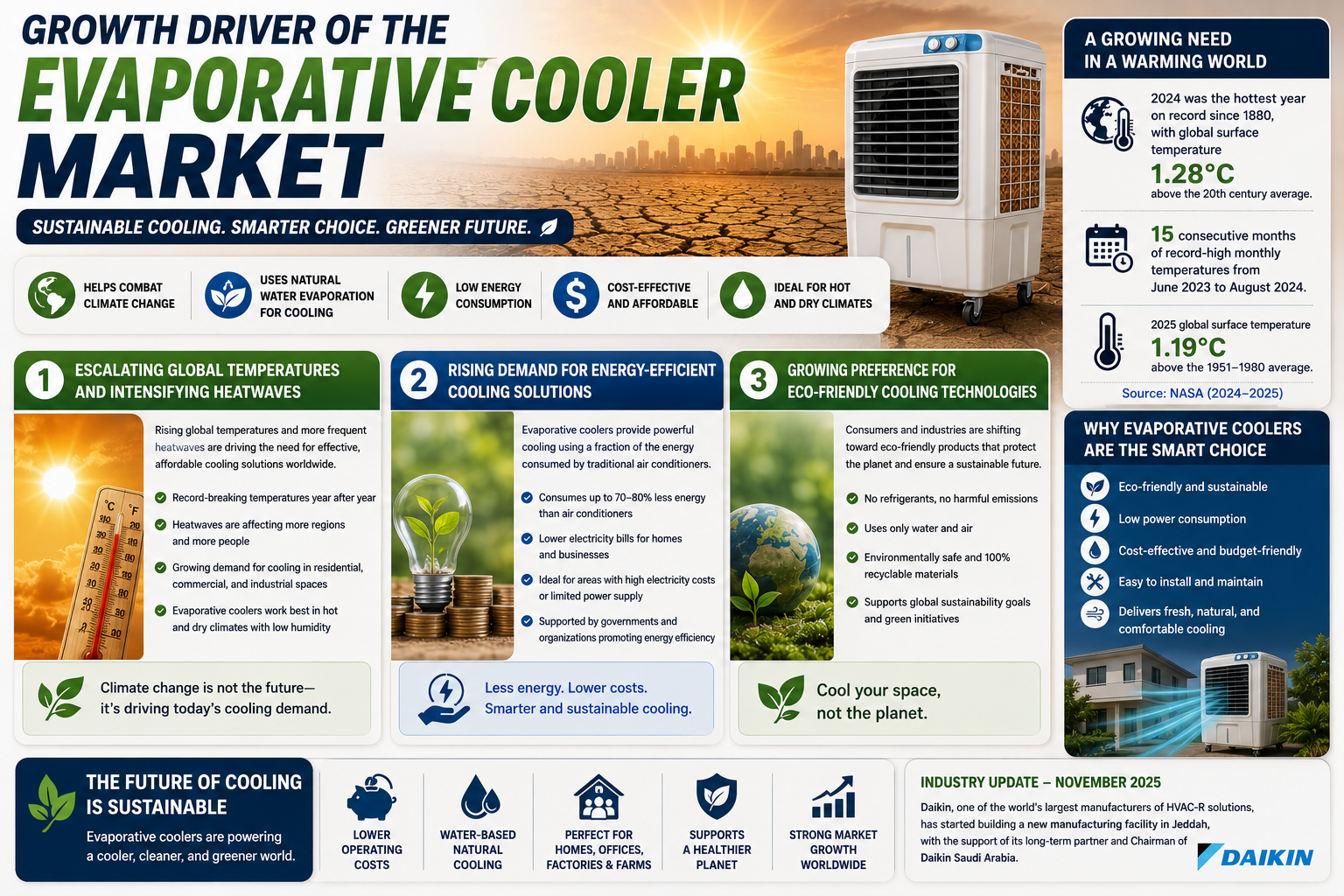
Climate scientists continue reporting record-breaking heat levels across many parts of the world. According to data referenced in the report, 2024 became the hottest year on record, with global average surface temperatures reaching approximately 1.28°C above twentieth-century baseline levels. The world also experienced an unprecedented sequence of record-high monthly temperatures extending from mid-2023 through much of 2024.
The increasing frequency and intensity of heatwaves are creating urgent demand for cooling solutions capable of maintaining comfortable indoor environments while minimizing energy consumption.
As millions of people seek affordable ways to protect themselves from extreme temperatures, evaporative coolers are becoming increasingly attractive alternatives to conventional cooling systems, especially in dry regions where they operate most effectively.
Energy Efficiency Is Becoming a Top Priority
The growing demand for energy-efficient appliances is another major factor supporting market growth.
Traditional air-conditioning systems consume significant amounts of electricity because they rely on compressors and refrigerants to cool indoor spaces. In contrast, evaporative coolers primarily require energy for fans and water circulation systems, resulting in substantially lower electricity consumption.
For households and businesses facing rising utility costs, energy-efficient cooling technologies offer important financial advantages. Lower operating expenses can generate meaningful savings over time, particularly in regions that experience prolonged periods of hot weather.
Governments and environmental organizations are also encouraging the adoption of energy-efficient technologies as part of broader sustainability initiatives. These efforts are helping increase awareness of evaporative cooling systems and their potential benefits.
As energy conservation becomes increasingly important worldwide, demand for evaporative coolers is expected to continue expanding.
Eco-Friendly Cooling Solutions Gain Popularity
Environmental sustainability has become a central consideration in purchasing decisions across many industries, including climate control equipment.
Traditional air-conditioning systems often utilize chemical refrigerants that can contribute to greenhouse gas emissions and environmental degradation if improperly managed. Evaporative coolers, by contrast, rely exclusively on water and air to generate cooling effects.
This natural cooling process reduces environmental impact while supporting broader efforts to lower carbon emissions. Because evaporative coolers consume less electricity, they also contribute indirectly to reduced energy-related emissions.
Consumers are increasingly seeking products that align with their environmental values, while organizations are implementing sustainability programs designed to improve environmental performance.
These trends are creating strong demand for green cooling technologies that combine operational efficiency with environmental responsibility.
Residential Applications Continue Expanding
The residential sector remains one of the largest and fastest-growing markets for evaporative coolers.
Homeowners increasingly choose evaporative coolers as cost-effective alternatives to traditional air-conditioning systems, particularly in regions characterized by hot and dry weather conditions.
These systems are commonly installed in living rooms, bedrooms, apartments, and residential complexes where maintaining comfortable indoor temperatures is a priority. Their relatively simple installation requirements and affordable operating costs make them attractive options for many households.
Portable evaporative coolers have become especially popular because they offer flexibility and convenience without requiring extensive installation work. Consumers appreciate their ability to provide localized cooling while maintaining low energy consumption.
As residential demand for affordable and environmentally friendly cooling solutions continues growing, this segment is expected to remain a key contributor to market expansion.
Commercial Facilities Embrace Energy-Saving Cooling
Commercial applications represent another important source of growth for the evaporative cooler industry.
Businesses operating warehouses, factories, workshops, restaurants, retail stores, offices, and event venues often require cooling systems capable of maintaining comfortable conditions across large spaces. Evaporative coolers provide an effective solution while helping reduce operating costs.
Unlike many conventional air-conditioning systems that recirculate indoor air, evaporative coolers continuously introduce fresh outdoor air into buildings. This can improve indoor air quality while supporting employee comfort and productivity.
Many organizations also view evaporative cooling systems as valuable components of broader sustainability strategies. Reduced energy consumption and lower environmental impact align closely with corporate environmental goals.
As businesses increasingly prioritize energy efficiency and sustainability, commercial demand for evaporative coolers is expected to remain strong.
Direct Evaporative Cooling Dominates the Market
Direct evaporative cooling remains one of the most widely used technologies within the industry.
In direct systems, warm air passes directly through water-saturated cooling pads. As water evaporates, it absorbs heat from the air, lowering the air temperature before it is distributed throughout the building.
This technology is valued for its simplicity, affordability, and effectiveness in hot, low-humidity environments. Direct evaporative coolers are commonly used in homes, workshops, warehouses, and industrial facilities where continuous airflow and energy efficiency are important considerations.
As demand for practical and cost-effective cooling solutions continues increasing, direct evaporative systems are expected to maintain their leading position within the market.
HVAC Professionals Play a Critical Role
Heating, ventilation, and air-conditioning (HVAC) contractors represent an important segment within the evaporative cooler market ecosystem.
These professionals help consumers and businesses select appropriate cooling solutions based on building design, climate conditions, ventilation requirements, and operational objectives. They also provide installation, maintenance, and repair services that ensure long-term system performance.
Regular maintenance is particularly important for evaporative coolers because cooling pads, water pumps, and airflow systems require periodic inspection and cleaning. HVAC contractors help maximize system efficiency while extending equipment lifespan.
As awareness of evaporative cooling technologies grows, HVAC professionals are expected to play an increasingly important role in supporting market adoption.
Big-Box Retailers Improve Product Accessibility
Large retail chains and home improvement stores are helping expand consumer access to evaporative cooling products.
These retailers offer a wide variety of portable, window-mounted, and residential evaporative coolers, enabling consumers to compare options and select products that best meet their needs.
Retail availability has increased product visibility while making energy-efficient cooling solutions more accessible to mainstream consumers. Improved distribution networks are supporting broader market penetration across residential segments.
As awareness of evaporative cooling benefits continues increasing, retail channels are expected to remain important contributors to market growth.
Regional Markets Show Strong Potential
United States
The United States remains a major market, particularly in western and southwestern regions characterized by hot and dry climates. Residential homeowners and industrial operators increasingly utilize evaporative coolers to reduce energy consumption and control cooling costs. Recent innovations continue improving performance and efficiency.
United Kingdom
The United Kingdom market is growing gradually as rising summer temperatures and periodic heatwaves increase demand for temporary and portable cooling solutions. Businesses and consumers are increasingly exploring environmentally friendly alternatives to traditional cooling technologies.
India
India represents one of the largest markets for evaporative coolers due to its hot climate and widespread demand for affordable cooling solutions. Residential, commercial, and small business users rely heavily on evaporative cooling technologies because of their low energy consumption and cost-effectiveness.
Saudi Arabia
Saudi Arabia continues exploring energy-efficient cooling technologies as part of broader sustainability initiatives. Evaporative coolers are increasingly used in workshops, warehouses, outdoor areas, and semi-open commercial spaces where fresh airflow and lower operating costs are important.
Challenges Facing the Market
Despite strong growth prospects, the evaporative cooler industry faces several challenges.
One significant limitation involves performance in humid environments. Because evaporative cooling relies on water evaporation, effectiveness decreases substantially when humidity levels are high. In such conditions, traditional air-conditioning systems often provide superior cooling performance.
Water consumption also presents challenges in regions experiencing water scarcity. Evaporative coolers require a continuous water supply to operate efficiently, which may limit adoption in certain locations.
Regular maintenance requirements, including cleaning cooling pads and managing mineral deposits, can also influence consumer preferences.
Addressing these challenges through technological innovation will remain important for sustaining long-term market growth.
Market Forecast: Strong Growth Through 2034
According to Renub Research, the global Evaporative Cooler Market is expected to expand from US$ 6.95 billion in 2025 to US$ 11.56 billion by 2034, representing a CAGR of 5.82% during the forecast period from 2026 to 2034. Growth will be driven by rising global temperatures, increasing demand for energy-efficient cooling solutions, expanding environmental awareness, and growing adoption of sustainable technologies.
The market's outlook highlights the growing importance of affordable and environmentally responsible cooling systems in addressing future climate challenges.
Final Thoughts
The evaporative cooler market is well-positioned for continued expansion as consumers and businesses seek cooling solutions that balance performance, affordability, and sustainability. Rising temperatures, escalating energy costs, and increasing environmental awareness are creating favorable conditions for widespread adoption.
With Renub Research forecasting market growth from US$ 6.95 billion in 2025 to US$ 11.56 billion by 2034, the industry is expected to play an increasingly important role in the global cooling landscape. Continued advances in design, efficiency, and water management technologies will further strengthen the appeal of evaporative coolers across residential, commercial, and industrial sectors.
About the Creator
Enjoyed the story? Support the Creator.
Subscribe for free to receive all their stories in your feed.
Comments
There are no comments for this story
Be the first to respond and start the conversation.