
Europe Cardiac Surgical Device Market Outlook 2025–2033: How Innovation and Rising Heart Disease Cases Are Shaping the Future of Cardiac Care
Growing cardiovascular disease prevalence, rapid technological advancements, and increasing demand for minimally invasive procedures are driving steady growth in the Europe cardiac surgical device market.

Cardiovascular disease remains one of the leading causes of death across Europe, placing enormous pressure on healthcare systems and driving demand for advanced treatment solutions. As populations age and lifestyle-related health conditions continue to rise, healthcare providers are increasingly investing in innovative cardiac technologies that improve surgical outcomes and enhance patient care.
Cardiac surgical devices play a critical role in modern cardiovascular treatment. These technologies help surgeons perform complex procedures with greater precision, improve patient safety, and reduce recovery times. From heart-lung machines and cardiac ablation devices to minimally invasive surgical systems and ventricular assist devices, technological innovation is transforming the way heart diseases are diagnosed and treated.
The growing burden of cardiovascular disorders, combined with increased healthcare spending and improvements in healthcare infrastructure, continues to create substantial opportunities for manufacturers operating within this sector.
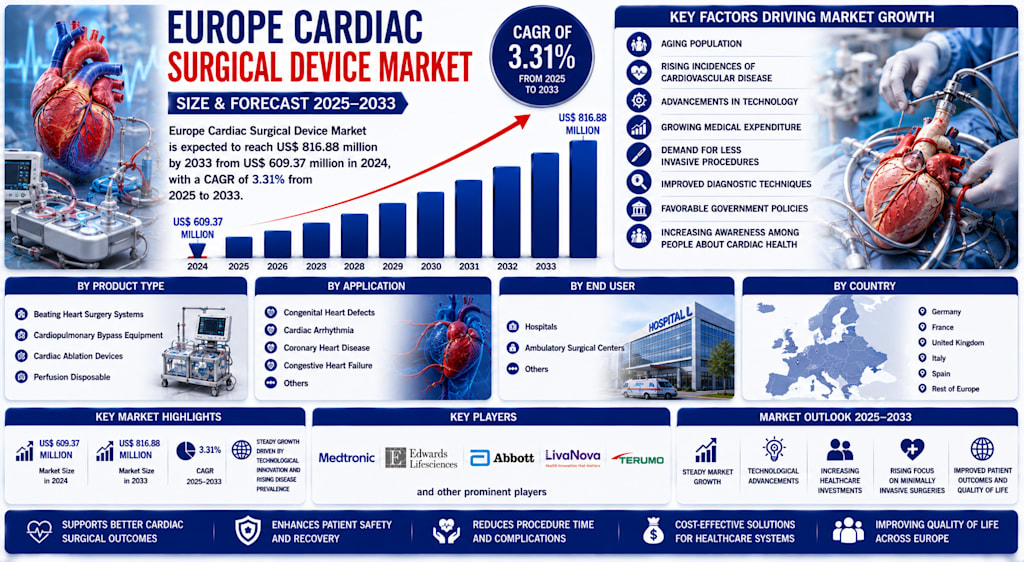
According to Renub Research, the Europe Cardiac Surgical Device Market is expected to grow from US$ 609.37 million in 2024 to US$ 816.88 million by 2033, registering a Compound Annual Growth Rate (CAGR) of 3.31% from 2025 to 2033. An aging population, rising incidence of cardiovascular diseases, technological advancements, increasing healthcare expenditure, and growing adoption of minimally invasive surgical procedures are among the key factors driving market growth.
As European healthcare systems continue prioritizing advanced cardiac care, the demand for innovative surgical devices is expected to remain strong throughout the forecast period.
Understanding Cardiac Surgical Devices
Cardiac surgical devices are specialized medical instruments and equipment used during procedures involving the heart and circulatory system.
These devices help diagnose, manage, repair, or support cardiovascular functions during surgery and treatment.
Common examples include heart-lung machines, cardiac ablation systems, catheters, grafts, valves, ventricular assist devices (VADs), perfusion equipment, and surgical retractors.
They are used in a wide range of procedures including coronary artery bypass grafting (CABG), valve replacement surgeries, heart transplantation, arrhythmia treatment, and minimally invasive cardiac interventions.
Modern cardiac surgical devices are designed to improve precision, maintain circulation during procedures, enhance patient safety, and reduce surgical complications.
Advances in technology continue improving device performance, allowing healthcare providers to achieve better outcomes while minimizing patient recovery times.
Rising Cardiovascular Disease Burden Is Driving Demand
One of the strongest growth drivers in the European cardiac surgical device market is the increasing prevalence of cardiovascular diseases.
Heart-related conditions such as coronary artery disease, heart failure, arrhythmias, and vascular disorders continue affecting millions of people across Europe.
Lifestyle factors including obesity, diabetes, smoking, poor dietary habits, and physical inactivity are contributing to the growing burden of cardiovascular illness.
The increasing number of patients requiring surgical intervention is creating substantial demand for advanced cardiac devices.
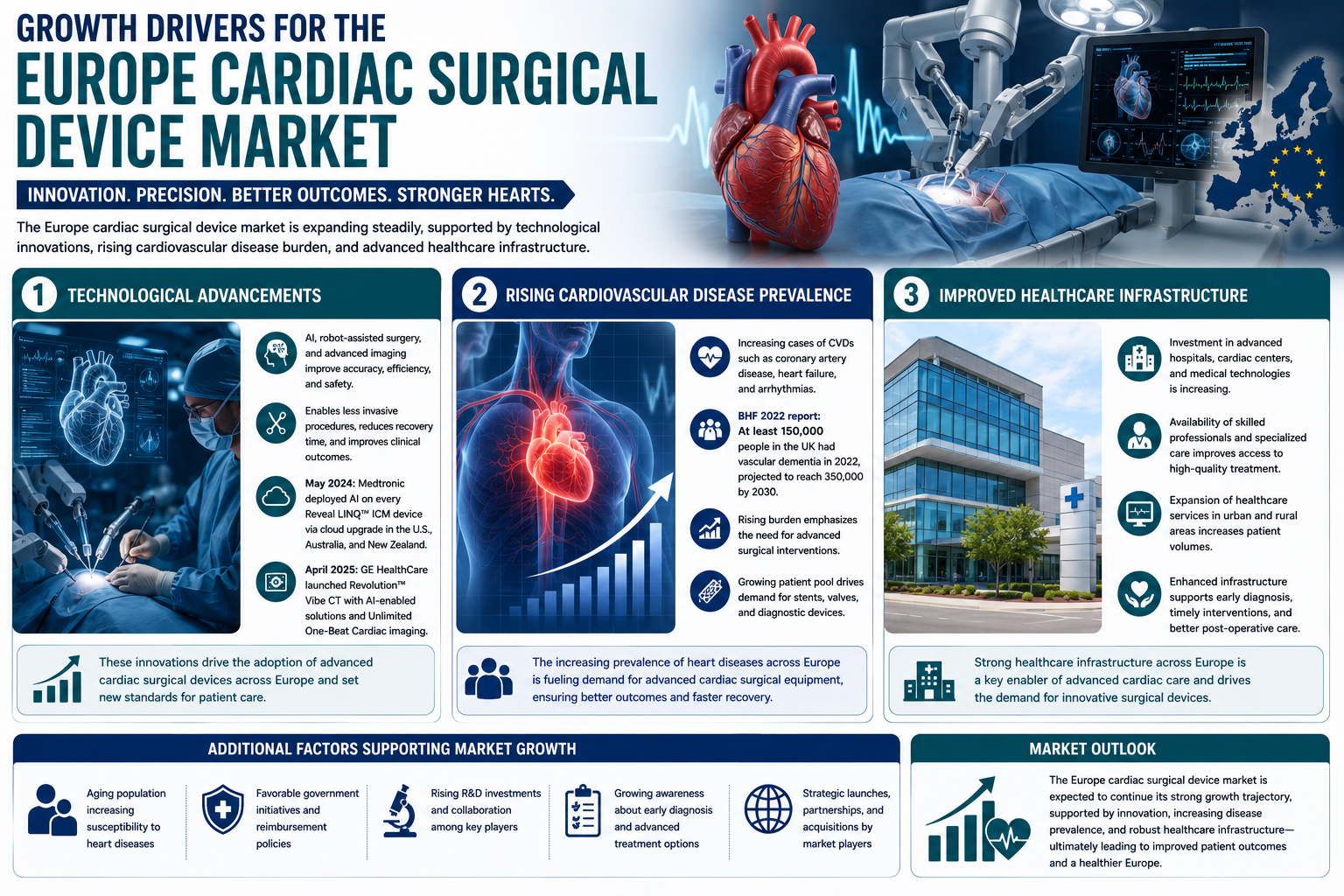
According to the British Heart Foundation, more than 150,000 people in the United Kingdom were living with vascular dementia in 2022, and this figure is expected to rise to approximately 350,000 by 2030, highlighting the broader impact of cardiovascular-related conditions.
As cardiovascular disease rates continue increasing, healthcare providers are expected to rely more heavily on innovative surgical technologies to improve treatment outcomes.
Technological Innovation Is Transforming Cardiac Surgery
Technology remains one of the most important factors influencing growth within the cardiac surgical device market.
Recent innovations are improving surgical precision, reducing procedural risks, and enhancing patient recovery experiences.
Artificial intelligence, robotic-assisted surgery, advanced imaging systems, and digital monitoring technologies are increasingly being integrated into cardiac care.
These innovations allow surgeons to perform more accurate procedures while reducing complications and shortening hospital stays.
In May 2024, Medtronic introduced a cloud-based AI upgrade for its Reveal LINQ™ Insertable Cardiac Monitor system across multiple international markets, demonstrating the growing importance of artificial intelligence within cardiovascular healthcare.
Similarly, GE HealthCare launched the Revolution™ Vibe CT system in April 2025, incorporating AI-enabled solutions and advanced one-beat cardiac imaging capabilities designed to improve diagnostic accuracy.
As technology continues evolving, demand for sophisticated cardiac surgical devices is expected to increase significantly.
Aging Population Supports Long-Term Market Growth
Europe's aging population represents another major contributor to market expansion.
The risk of developing cardiovascular disease increases substantially with age.
Older adults are more likely to experience coronary artery disease, heart failure, arrhythmias, valve disorders, and other cardiac conditions requiring surgical intervention.
As life expectancy continues rising throughout Europe, healthcare providers are seeing growing numbers of elderly patients requiring advanced cardiac treatments.
This demographic trend is expected to create sustained demand for cardiac surgical devices over the coming decade.
Manufacturers are increasingly developing technologies specifically designed to address the unique needs of aging patient populations.
The continued expansion of Europe's elderly demographic will remain a fundamental driver of market growth.
Improved Healthcare Infrastructure Is Supporting Adoption
Healthcare infrastructure improvements across Europe are helping accelerate adoption of advanced cardiac surgical technologies.
Many European countries continue investing heavily in hospitals, specialized cardiac centers, diagnostic facilities, and medical research institutions.
These investments provide healthcare professionals with access to state-of-the-art technologies and advanced treatment options.
Improved healthcare accessibility has also contributed to earlier diagnosis and intervention, increasing demand for surgical procedures and associated devices.
The presence of highly trained cardiac specialists and advanced treatment centers further supports widespread adoption of innovative technologies.
As healthcare infrastructure continues expanding and modernizing, demand for cardiac surgical devices is expected to grow steadily across the region.
Minimally Invasive Procedures Are Becoming More Popular
One of the most significant trends shaping the cardiac surgical device market is the growing preference for minimally invasive procedures.
Traditional open-heart surgeries often require lengthy recovery periods and carry greater procedural risks.
Minimally invasive approaches allow surgeons to perform complex procedures using smaller incisions and specialized instruments.
Benefits include shorter hospital stays, reduced pain, lower infection risk, and faster recovery times.
Patients increasingly prefer these techniques due to their convenience and improved post-operative experiences.
Manufacturers are responding by developing advanced tools that support catheter-based interventions, robotic surgery, and minimally invasive cardiac treatments.
The continued shift toward less invasive procedures is expected to create substantial growth opportunities throughout the market.
Cardiac Ablation Devices Continue Expanding
Cardiac ablation devices represent one of the fastest-growing segments within the market.
These technologies are used to treat abnormal heart rhythms by destroying small areas of heart tissue responsible for irregular electrical activity.
The growing prevalence of arrhythmias, particularly atrial fibrillation, is driving demand for these devices.
Advancements in imaging, navigation systems, and energy delivery technologies have significantly improved treatment effectiveness.
Cardiac ablation procedures offer a less invasive alternative to open-heart surgery while delivering strong clinical outcomes.
As awareness regarding arrhythmia treatment options increases, adoption of cardiac ablation devices is expected to continue rising across Europe.
Cardiopulmonary Bypass Equipment Remains Essential
Cardiopulmonary bypass equipment continues to play a vital role in cardiac surgery.
Often referred to as heart-lung machines, these systems temporarily take over the functions of the heart and lungs during complex surgical procedures.
By maintaining circulation and oxygenation, they allow surgeons to perform delicate interventions while minimizing risks to patients.
Continuous technological improvements have enhanced the safety, reliability, and efficiency of these systems.
Hospitals throughout Europe continue investing in advanced bypass equipment to support growing surgical volumes and improve patient outcomes.
As demand for cardiac procedures remains strong, this segment is expected to maintain a significant share of the overall market.
Hospitals Remain the Largest End Users
Hospitals continue representing the largest end-user segment within the European cardiac surgical device market.
These facilities perform the majority of complex cardiovascular procedures and maintain the infrastructure required for advanced cardiac care.
Specialized cardiac departments, catheterization laboratories, operating theaters, and intensive care units all rely heavily on advanced surgical devices.
Growing patient volumes, rising cardiovascular disease prevalence, and increasing adoption of minimally invasive procedures continue driving hospital demand.
Healthcare providers are also investing in advanced technologies that improve surgical efficiency and patient outcomes.
The central role of hospitals within cardiovascular treatment pathways ensures their continued importance as major purchasers of cardiac surgical equipment.
Ambulatory Surgical Centers Are Growing in Importance
Ambulatory surgical centers (ASCs) are becoming increasingly important within the European healthcare landscape.
These facilities offer outpatient surgical procedures that often reduce healthcare costs and improve convenience for patients.
Advancements in minimally invasive technologies have enabled a growing number of cardiovascular procedures to be performed safely outside traditional hospital environments.
ASCs benefit from lower operating costs, streamlined workflows, and shorter patient recovery periods.
As healthcare systems continue emphasizing efficiency and cost management, demand for cardiac surgical devices within ambulatory settings is expected to increase.
High Device Costs Present Challenges
Despite favorable growth prospects, the market faces several challenges.
One of the most significant barriers is the high cost associated with advanced cardiac surgical technologies.
Robotic surgical systems, AI-powered monitoring devices, advanced imaging platforms, and sophisticated surgical instruments often require substantial financial investment.
In addition to acquisition costs, healthcare providers must also manage expenses related to maintenance, staff training, software upgrades, and infrastructure requirements.
Smaller hospitals and healthcare facilities may struggle to justify these expenditures, particularly in regions facing budget constraints.
Managing affordability while maintaining innovation remains a key challenge for manufacturers and healthcare systems alike.
Regulatory Complexity Can Slow Market Expansion
Regulatory requirements represent another important challenge within the European cardiac surgical device market.
Manufacturers must comply with strict European Union regulations governing medical device safety, efficacy, and performance.
Obtaining certifications such as CE marking often requires extensive clinical testing, documentation, and regulatory review.
These processes can be costly and time-consuming, potentially delaying product launches and increasing development expenses.
Frequent regulatory updates also create uncertainty and additional compliance burdens for manufacturers.
While these requirements are essential for ensuring patient safety, they can create obstacles for innovation and market entry.
Country-Level Market Insights
France
France's cardiac surgical device market is benefiting from an aging population, rising cardiovascular disease rates, and increasing adoption of minimally invasive procedures. Innovations such as robotic-assisted surgery and bioresorbable stents continue improving treatment outcomes. Major global companies including Medtronic, Abbott Laboratories, Boston Scientific, Getinge AB, and LivaNova PLC maintain strong market presence within the country.
Germany
Germany represents one of Europe's largest cardiac surgical device markets due to its advanced healthcare system, favorable reimbursement policies, and strong demand for innovative technologies. Growing adoption of AI-enhanced diagnostics and minimally invasive procedures continues supporting market expansion.
United Kingdom
The United Kingdom market continues expanding as cardiovascular disease prevalence increases and healthcare providers invest in advanced treatment technologies. Strong healthcare infrastructure and favorable reimbursement systems support widespread adoption of cardiac surgical devices.
Spain
Spain's market is experiencing steady growth due to increasing use of minimally invasive procedures such as Transcatheter Aortic Valve Replacement (TAVR) and Percutaneous Coronary Intervention (PCI). Technological advancements and strong healthcare infrastructure continue driving adoption.
Competitive Landscape
The Europe cardiac surgical device market remains highly competitive, with leading medical technology companies investing heavily in innovation, research, and product development.
Major industry participants include Abbott Laboratories, Boston Scientific Corporation, Edwards Lifesciences, Cardinal Health Inc., Medtronic PLC, GE Healthcare, LivaNova PLC, and Terumo Corporation.
These companies continue focusing on advanced imaging technologies, minimally invasive surgical systems, AI-powered diagnostics, and next-generation cardiac monitoring solutions.
Strategic partnerships, research investments, and product launches are expected to remain key competitive strategies throughout the forecast period.
Final Thoughts
The Europe cardiac surgical device market is positioned for steady growth as cardiovascular disease remains one of the region’s most pressing healthcare challenges. Rising disease prevalence, an aging population, increasing healthcare investment, and rapid technological innovation are creating significant opportunities for device manufacturers and healthcare providers.
Advances in artificial intelligence, robotic surgery, minimally invasive procedures, and diagnostic imaging are transforming the way cardiac care is delivered while improving patient outcomes and recovery experiences.
With the market projected to grow from US$ 609.37 million in 2024 to US$ 816.88 million by 2033, cardiac surgical devices will continue playing a vital role in modern cardiovascular treatment. Companies that successfully combine innovation, affordability, regulatory compliance, and patient-centered solutions will be best positioned to capture future growth opportunities in this evolving healthcare market.
About the Creator
Enjoyed the story? Support the Creator.
Subscribe for free to receive all their stories in your feed.
Comments
There are no comments for this story
Be the first to respond and start the conversation.