
Epic Games Pivots to an "AI-First" Future, Delaying Major Disney Title Amid Industry Backlash
CEO Tim Sweeney defends the strategic integration of artificial intelligence into Unreal Engine and internal workflows, framing it as a tool for creative empowerment rather than workforce reduction, even as skepticism and project delays mount.

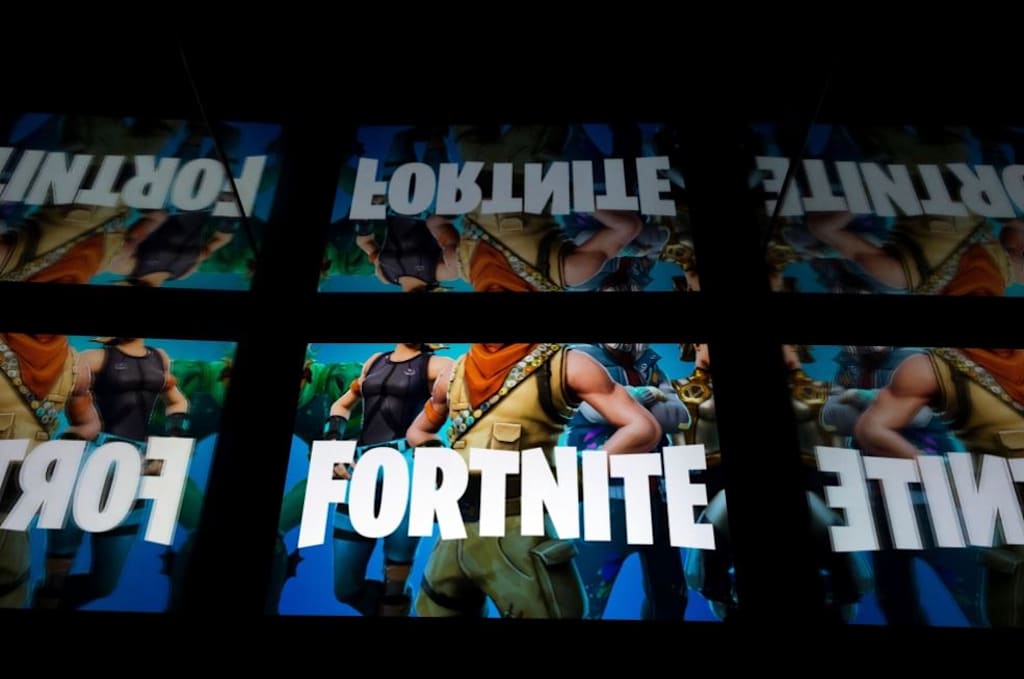
Epic Games, the titan behind the global phenomenon Fortnite and the ubiquitous Unreal Engine, is executing a seismic strategic shift. In a recent declaration, CEO Tim Sweeney announced that the company is making a "huge pivot" toward artificial intelligence, fundamentally reshaping its approach to video game development. Sweeney stated that the American gaming giant is actively "moving developers around to retool for maximum AI acceleration." Crucially, he emphasized that the objective is not to achieve the same output with a smaller workforce, but rather to "enable everyone here to build MORE and BETTER stuff, and to bring the benefits to all teams using Unreal."
This internal mandate is designed to cascade outward, embedding advanced, AI-driven development tools directly into the Unreal Engine ecosystem. By doing so, Epic is not just changing how it makes its own games; it is attempting to dictate the future standard for the entire interactive entertainment industry, from solo indie developers to massive AAA studios.
The Real-World Friction: Delaying the Disney Collaboration
The real-world impact of this aggressive new mandate is already being felt within Epic’s own studios, serving as a stark reminder that technological transitions are rarely seamless. According to a recent report from Bloomberg, the company has delayed the release of a highly anticipated game developed in collaboration with Disney. The ambitious project, which was originally slated to launch in March and was expected to feature iconic characters from both the Marvel and Star Wars universes, has reportedly been restructured.
Employees have allegedly been instructed to adopt an "AI-first" approach to the game's development. While Epic has not officially commented on the delay, the pivot suggests that integrating generative AI into complex, AAA-level pipelines requires significant retooling of established workflows. In practice, an "AI-first" mandate does not instantly accelerate production; it often introduces temporary bottlenecks. Teams must build new tools, establish rigorous quality-control benchmarks for AI-generated assets, and retrain artists and programmers to work alongside these new systems. The delay proves that this transition is a complex, disruptive engineering challenge that can slow down production in the short term, even as it promises long-term efficiency gains.
The Shadow of Layoffs and the "Empowerment" Debate
This strategic push arrives amid a highly charged and ongoing debate about the role of AI in art and creative sectors. The gaming industry, in particular, has been a flashpoint for concerns over job security, artistic integrity, and the devaluation of human craftsmanship.
Skepticism was immediate and vocal following Sweeney’s announcement. Critics on social media accused the CEO of an "astounding" inability to read the room, pointing to the stark contrast between his optimistic rhetoric and the lived reality of game developers. Sweeney pushed back firmly, stating, "Our job, as the provider of tools and technology to much of the industry, is to design for the present that is and the future that will soon be. Personally, I’m optimistic about it and see it as empowering for creators."
However, this tech-optimist stance clashes with deep-seated industry anxieties. The timing of the AI pivot is particularly sensitive, as it comes roughly six months after Epic laid off more than 1,000 employees. While the company attributed those cuts at the time to broader macroeconomic factors and slower growth rather than AI integration, the proximity of the two events has inevitably fueled distrust. For many developers, corporate rhetoric about "empowerment" and "building more" rings hollow when juxtaposed with recent downsizing. The fear is that "efficiency" and "acceleration" are ultimately euphemisms for doing more with fewer people, threatening entry-level and mid-level creative roles that have traditionally served as the training ground for the next generation of game developers.
A Global Divide in AI Adoption
The cultural and regional divide in AI adoption further complicates the landscape, highlighting that the backlash is not uniform. According to data cited by PC Gamer, more than 85% of game developers in Japan are already utilizing AI in their workflows, compared to just 36% in North America.
This disparity points to differing industry cultures and labor dynamics. Japan’s gaming industry has a long history of embracing procedural generation and automation to manage massive, detail-oriented projects, and its labor structures may view AI tools as a natural extension of existing workflows rather than an existential threat. North America, conversely, is currently experiencing a wave of labor organizing, high-profile strikes (such as recent actions by voice actors over AI replication of their voices), and a deep-seated cultural emphasis on individual artistic expression. In the West, the rapid, unregulated deployment of generative AI is increasingly viewed through the lens of labor rights and the protection of human artistry.
The Stakes for the Future of Game Development
As Epic Games doubles down on its AI-first strategy, it is effectively betting the farm on this technological evolution. By embedding these tools deeply into Unreal Engine, Epic is positioning itself as the indispensable architect of the next generation of game development. If successful, this pivot could democratize creation, allowing smaller teams to build sprawling, dynamic worlds that were previously only possible with billion-dollar budgets.
However, the risks are monumental. If the integration is mishandled, or if the resulting games feel soulless, derivative, or plagued by the artifacts of generative AI, it could fracture the relationship between developers, players, and the art of game-making itself. The delay of the Disney project is a cautionary tale: the path to an AI-accelerated future is not a straight line, but a complex maze of technical hurdles, workforce morale, and artistic integrity. Whether this pivot will truly empower a new generation of creators or irrevocably alter the soul of the medium remains the defining question of this new technological era.
About the Creator
Mark Lim
Hi I am mark an automotive student and a car, tech and food enthusiast ! Im gonna try and post daily & hope you enjoy what I write and do share my page with people you know. I would gladly appreciate it! Cheers
Enjoyed the story? Support the Creator.
Subscribe for free to receive all their stories in your feed.
Comments
There are no comments for this story
Be the first to respond and start the conversation.