
Electric Two-Wheeler Market Accelerates as Sustainable Mobility and Rising Fuel Costs Drive Global Adoption
Growing environmental awareness, government incentives, and advancements in battery technology are fueling rapid expansion across the global electric two-wheeler industry.

The global transportation sector is undergoing one of the most significant transformations in its history. As governments, businesses, and consumers increasingly prioritize sustainability, electric mobility has emerged as a critical solution for reducing carbon emissions and dependence on fossil fuels. Among the various segments of the electric vehicle industry, electric two-wheelers have gained exceptional momentum due to their affordability, convenience, and environmental benefits.
Electric scooters, motorcycles, and mopeds are becoming increasingly popular in both developed and emerging economies. These vehicles provide a practical alternative to conventional fuel-powered transportation, especially in densely populated urban areas where traffic congestion, rising fuel costs, and environmental concerns continue to challenge commuters.
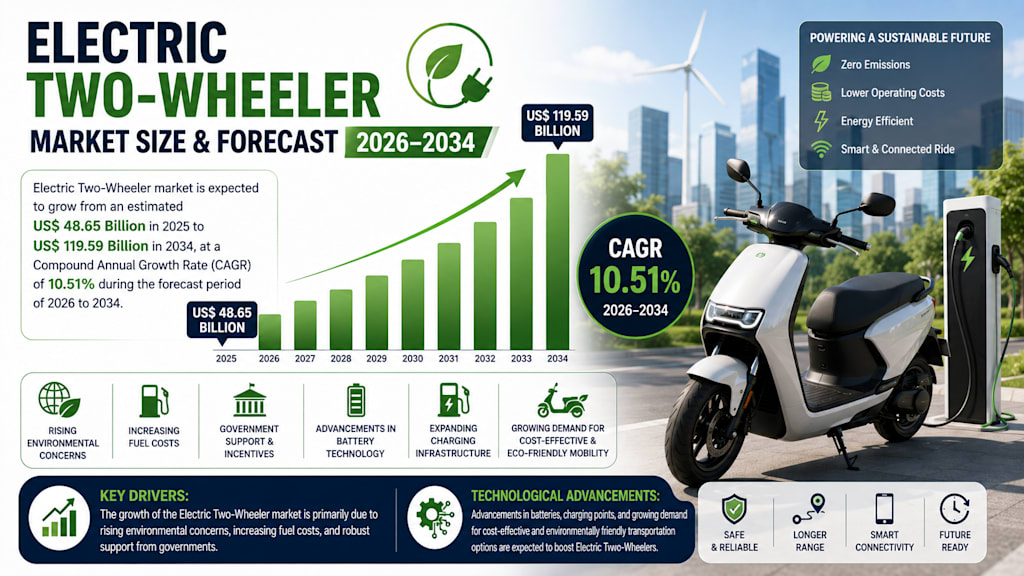
The combination of technological innovation, supportive regulations, and growing consumer awareness is creating favorable conditions for market expansion. According to Renub Research, the global Electric Two-Wheeler Market is projected to grow from US$ 48.65 billion in 2025 to US$ 119.59 billion by 2034, registering a compound annual growth rate (CAGR) of 10.51% between 2026 and 2034. This remarkable growth highlights the increasing role of electric mobility in shaping the future of transportation.
Electric Two-Wheelers Are Transforming Urban Transportation
Electric two-wheelers are vehicles powered by electric motors rather than conventional internal combustion engines. These vehicles utilize rechargeable battery systems to store energy, which is then used to propel the vehicle forward.
The market includes electric scooters, electric motorcycles, and electric mopeds, each designed to address different transportation needs. Unlike gasoline-powered vehicles, electric two-wheelers produce zero tailpipe emissions, making them environmentally friendly alternatives for urban mobility.
Modern electric two-wheelers are equipped with advanced technologies such as smart connectivity features, digital dashboards, regenerative braking systems, GPS integration, and mobile application compatibility. These features enhance user convenience while improving overall vehicle performance.
Their growing popularity reflects a broader global movement toward cleaner and more sustainable transportation solutions. As cities continue expanding and environmental concerns intensify, electric two-wheelers are becoming increasingly important components of modern mobility ecosystems.
Government Incentives Are Fueling Market Growth
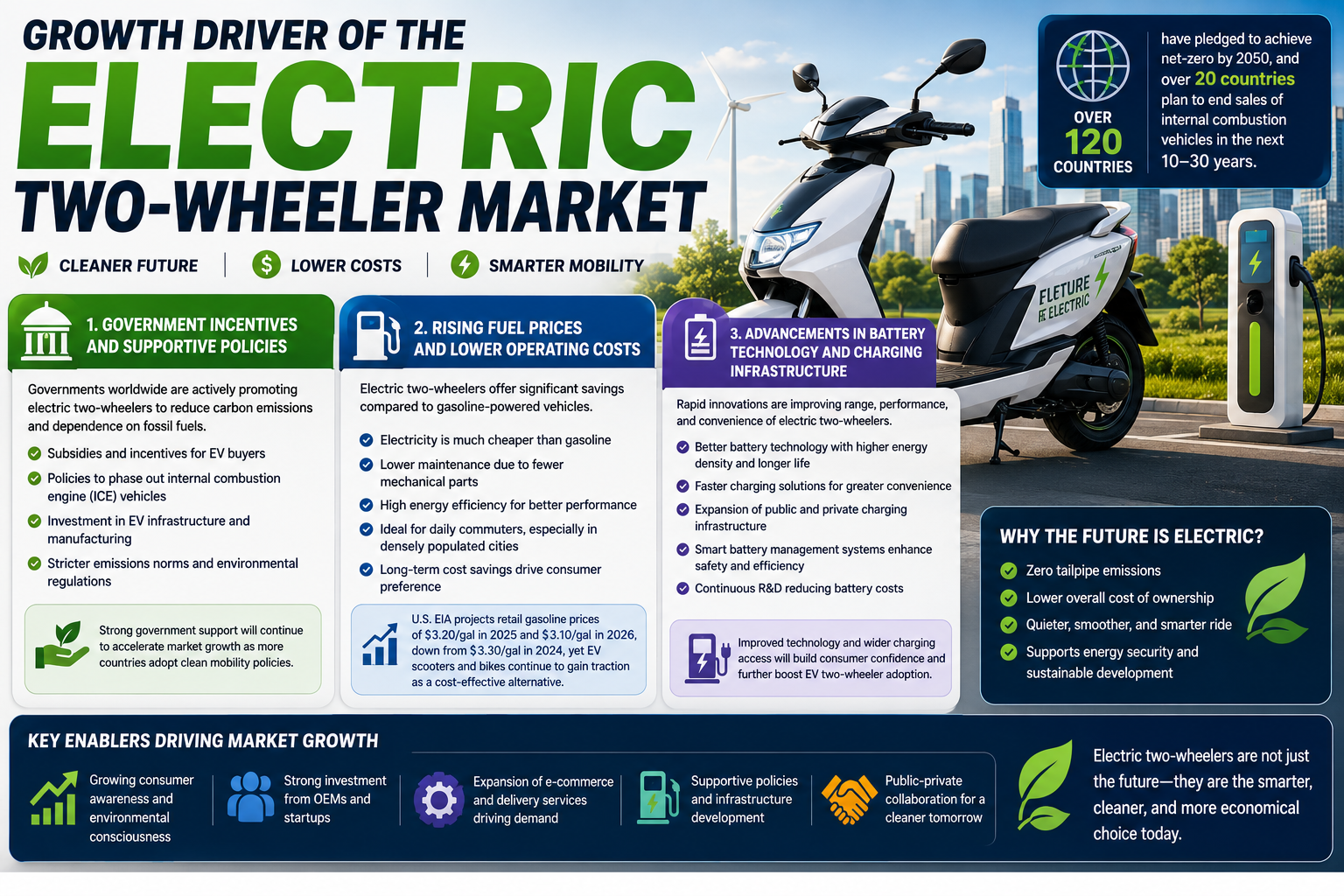
One of the strongest drivers of the electric two-wheeler market is the widespread support provided by governments worldwide.
Many countries have introduced subsidies, tax benefits, rebates, and financial incentives designed to encourage the adoption of electric vehicles. These policies aim to reduce carbon emissions, improve air quality, and decrease reliance on imported fossil fuels.
Governments are also implementing regulations that promote electrification within the transportation sector. Some countries have announced plans to phase out internal combustion engine vehicles over the coming decades, creating long-term opportunities for electric mobility manufacturers.
More than 120 countries have established net-zero emission goals, and transportation electrification is considered a critical component of achieving these objectives. The transition toward electric mobility is therefore receiving strong political and regulatory support globally.
As environmental policies become increasingly ambitious, government initiatives are expected to remain major catalysts for market expansion.
Rising Fuel Prices Encourage Consumers to Switch
The increasing cost of gasoline and diesel is another significant factor driving demand for electric two-wheelers.
Traditional motorcycles and scooters require continuous fuel expenditures, making ownership costs vulnerable to fluctuations in fuel prices. For many consumers, especially daily commuters, rising fuel expenses have become a major financial burden.
Electric two-wheelers offer a more economical alternative because electricity generally costs significantly less than conventional fuels. Additionally, electric vehicles contain fewer moving parts, reducing maintenance requirements and associated expenses.
These cost advantages make electric scooters and motorcycles particularly attractive for individuals seeking affordable transportation solutions. Urban commuters benefit from lower operating costs while enjoying reliable and efficient mobility.
As consumers become more aware of the long-term financial benefits associated with electric transportation, the shift toward electric two-wheelers is expected to accelerate.
Battery Technology Is Advancing Rapidly
Technological progress in battery development has significantly improved the appeal and practicality of electric two-wheelers.
Modern lithium-ion batteries provide greater energy density, longer operating ranges, faster charging times, and improved durability compared to earlier battery technologies. These improvements address many of the concerns that previously limited consumer adoption.
Range anxiety, one of the most frequently cited barriers to electric vehicle ownership, is gradually diminishing as battery performance continues to improve. Today's electric scooters and motorcycles can travel substantially farther on a single charge than previous generations.
Manufacturers are investing heavily in research and development to enhance battery efficiency while reducing costs. Continuous innovation is making electric two-wheelers more competitive with traditional gasoline-powered alternatives.
The growing adoption of lithium-ion batteries is expected to remain a major factor supporting industry growth throughout the forecast period.
Charging Infrastructure Expansion Supports Adoption
The development of charging infrastructure is playing a critical role in the growth of the electric two-wheeler market.
Consumers are more likely to adopt electric vehicles when convenient charging options are readily available. Governments, utilities, and private companies are investing heavily in charging networks to support the transition toward electric mobility.
Public charging stations, battery-swapping facilities, and workplace charging solutions are becoming increasingly common across major urban centers. In some regions, removable battery systems allow users to charge batteries at home or in office environments, further enhancing convenience.
India, for example, continues expanding its charging infrastructure rapidly, while several manufacturers are investing in large-scale retail and service networks to support electric vehicle adoption. These developments are helping address one of the most important challenges facing the industry.
As charging infrastructure continues expanding globally, consumer confidence in electric transportation is expected to strengthen further.
Electric Motorcycles Gain Popularity
The electric motorcycle segment is attracting growing interest from consumers seeking high-performance and environmentally responsible transportation options.
Unlike early electric motorcycles that primarily focused on efficiency, modern models increasingly emphasize speed, acceleration, design, and riding experience. Manufacturers are introducing advanced products capable of competing directly with traditional gasoline-powered motorcycles.
Electric motorcycles offer several advantages, including lower maintenance requirements, quiet operation, instant torque delivery, and reduced environmental impact. These characteristics appeal to both commuting riders and recreational enthusiasts.
Government incentives and growing environmental awareness are further supporting demand within this segment. As battery technology continues improving, electric motorcycles are expected to become increasingly attractive to mainstream consumers.
Lithium-Ion Batteries Remain the Dominant Technology
Among available battery technologies, lithium-ion systems continue to dominate the electric two-wheeler market.
Lithium-ion batteries offer numerous advantages, including high energy density, lightweight construction, longer operational life, and faster charging capabilities. These characteristics make them particularly well suited for electric mobility applications.
Manufacturers increasingly rely on lithium-ion batteries to improve vehicle performance while maintaining affordability and practicality. Ongoing innovation is helping reduce production costs and enhance safety features, further strengthening the technology's market position.
As electric vehicle adoption expands worldwide, demand for lithium-ion battery systems is expected to increase significantly.
The continued evolution of battery technology will remain a cornerstone of industry development.
Hub Drive Motors Support Efficiency and Reliability
Hub drive systems represent one of the most widely adopted motor technologies within the electric two-wheeler industry.
These systems integrate electric motors directly into the vehicle's wheel hubs, eliminating the need for chains, belts, and complex transmission components. The result is a simpler, more efficient, and lower-maintenance drivetrain.
Hub motors provide smooth acceleration, quiet operation, and reliable performance, making them particularly popular in electric scooters and commuter-oriented motorcycles.
Their relatively simple design contributes to reduced manufacturing costs and improved reliability, supporting broader adoption across multiple market segments.
As manufacturers continue focusing on efficiency and affordability, hub drive systems are expected to remain an important technology within the industry.
48V Models Remain Popular for Urban Mobility
The 48V electric two-wheeler segment continues to serve as one of the most practical solutions for urban transportation.
Vehicles operating on 48V battery configurations offer a balanced combination of affordability, efficiency, and performance. They are particularly well suited for daily commuting in densely populated cities where travel distances tend to be relatively short.
Manufacturers increasingly target this segment because it provides accessible mobility solutions for a broad range of consumers. Lower production costs and simplified maintenance requirements further enhance their appeal.
As urban populations continue growing and traffic congestion increases, 48V electric two-wheelers are expected to remain important contributors to market growth.
Regional Markets Show Strong Growth Potential
United States
The United States market is expanding steadily as environmental awareness, rising fuel costs, and government incentives encourage consumers to adopt electric transportation. Urban commuters increasingly view electric scooters and motorcycles as practical alternatives for short-distance travel.
United Kingdom
The United Kingdom continues promoting clean transportation initiatives aimed at reducing carbon emissions. Electric two-wheelers are becoming popular due to their affordability, low operating costs, and suitability for urban environments. Recent product launches by international manufacturers highlight growing market opportunities.
India
India represents one of the fastest-growing electric two-wheeler markets globally. High fuel prices, government incentives, urban congestion, and strong domestic manufacturing activity are driving adoption. The country's extensive two-wheeler user base creates enormous long-term potential for market expansion.
Saudi Arabia
Saudi Arabia is gradually embracing electric mobility as part of broader sustainability and economic diversification efforts. Investments in smart cities, charging infrastructure, and green technologies are supporting the development of the electric two-wheeler segment.
Challenges Facing the Industry
Despite its strong growth prospects, the electric two-wheeler market faces several challenges.
Limited charging infrastructure remains a concern in certain regions, particularly rural and developing areas. Consumers may hesitate to adopt electric vehicles if convenient charging options are unavailable.
The relatively high upfront purchase price of electric two-wheelers also presents a barrier for some buyers. Although operating costs are generally lower, the initial investment can discourage price-sensitive consumers.
Battery replacement expenses and concerns regarding charging times continue influencing purchasing decisions. Addressing these issues will be important for sustaining long-term market growth.
Nevertheless, ongoing technological innovation and infrastructure development are expected to gradually overcome these challenges.
Market Forecast: Strong Growth Through 2034
According to Renub Research, the global Electric Two-Wheeler Market is forecast to increase from US$ 48.65 billion in 2025 to US$ 119.59 billion by 2034, representing a CAGR of 10.51% during the period from 2026 to 2034. Growth will be supported by government incentives, rising fuel prices, expanding charging infrastructure, advancements in battery technology, and increasing consumer demand for sustainable transportation solutions.
The industry's outlook reflects the broader transformation occurring within the global transportation sector as electrification becomes increasingly mainstream.
Final Thoughts
The Electric Two-Wheeler Market is emerging as one of the most dynamic segments within the global mobility industry. Driven by environmental concerns, economic advantages, supportive government policies, and rapid technological progress, electric scooters and motorcycles are becoming viable alternatives to traditional fuel-powered vehicles.
With Renub Research forecasting market growth from US$ 48.65 billion in 2025 to US$ 119.59 billion by 2034, the industry is positioned for substantial expansion over the coming decade. Improvements in battery technology, charging infrastructure, and vehicle performance will continue accelerating adoption across developed and emerging markets alike.
About the Creator
Enjoyed the story? Support the Creator.
Subscribe for free to receive all their stories in your feed.
Comments
There are no comments for this story
Be the first to respond and start the conversation.