
Electric Toothbrush Market Set to Double by 2034 as Smart Oral Care Becomes Mainstream
From AI-powered brushing guidance to long-lasting battery technology, electric toothbrushes are transforming daily oral care and creating a booming global market.

For decades, brushing teeth has been one of the simplest daily routines practiced around the world. Yet, in recent years, this everyday habit has undergone a technological transformation. Electric toothbrushes, once considered luxury products reserved for dental enthusiasts, are rapidly becoming a mainstream personal care necessity.
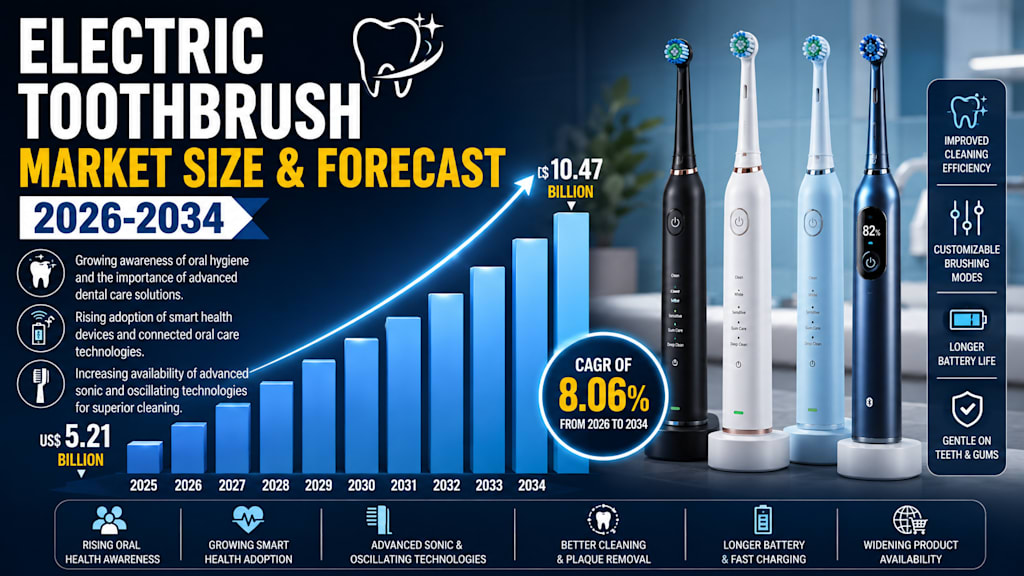
According to Renub Research, the global electric toothbrush market is expected to grow from US$ 5.21 billion in 2025 to US$ 10.47 billion by 2034, expanding at a compound annual growth rate (CAGR) of 8.06% between 2026 and 2034. This remarkable growth highlights a significant shift in consumer behavior, where health-conscious individuals increasingly seek smarter and more effective solutions for maintaining oral hygiene.
The rise of electric toothbrushes is not simply about convenience. It reflects broader trends in preventive healthcare, connected devices, personalized wellness, and growing awareness of the relationship between oral health and overall well-being.
Why Oral Health Is Receiving More Attention Than Ever
Healthcare professionals have long emphasized that oral health extends beyond having a bright smile. Scientific studies continue to show links between poor oral hygiene and serious health conditions, including cardiovascular disease, diabetes, and chronic inflammation.
As consumers become more educated about these connections, they are investing more heavily in preventive dental care. This growing awareness has encouraged many individuals to upgrade from traditional manual toothbrushes to electric alternatives that promise superior cleaning performance.
Electric toothbrushes offer several advantages. Their automated brushing motions help remove plaque more effectively, maintain consistent pressure, and reach difficult areas of the mouth. For many users, these features make maintaining healthy brushing habits easier and more reliable.
Dentists worldwide increasingly recommend electric toothbrushes because they can improve brushing efficiency while reducing the risk of aggressive brushing that may damage gums or enamel.
Technology Is Redefining the Toothbrush
One of the most important factors driving market growth is technological innovation.
Modern electric toothbrushes are far more sophisticated than the early battery-operated models introduced decades ago. Today's devices often include advanced features such as:
- Sonic cleaning technology
- Oscillating-rotating brush heads
- Pressure sensors
- AI-powered brushing guidance
- Bluetooth connectivity
- Mobile application integration
- Multiple cleaning modes
- Smart timers
- Real-time performance feedback
These innovations transform a basic hygiene task into a personalized wellness experience.
Artificial intelligence is becoming particularly influential. Some premium electric toothbrushes can analyze brushing behavior, identify missed areas, and provide recommendations through smartphone applications. This level of personalization appeals strongly to consumers already using fitness trackers, smartwatches, and health-monitoring applications.
As smart homes become more common, connected oral-care devices fit naturally into consumers' broader digital lifestyles.
Premium Products Are Raising Consumer Expectations
Major manufacturers continue introducing increasingly advanced products designed to improve cleaning effectiveness and user experience.
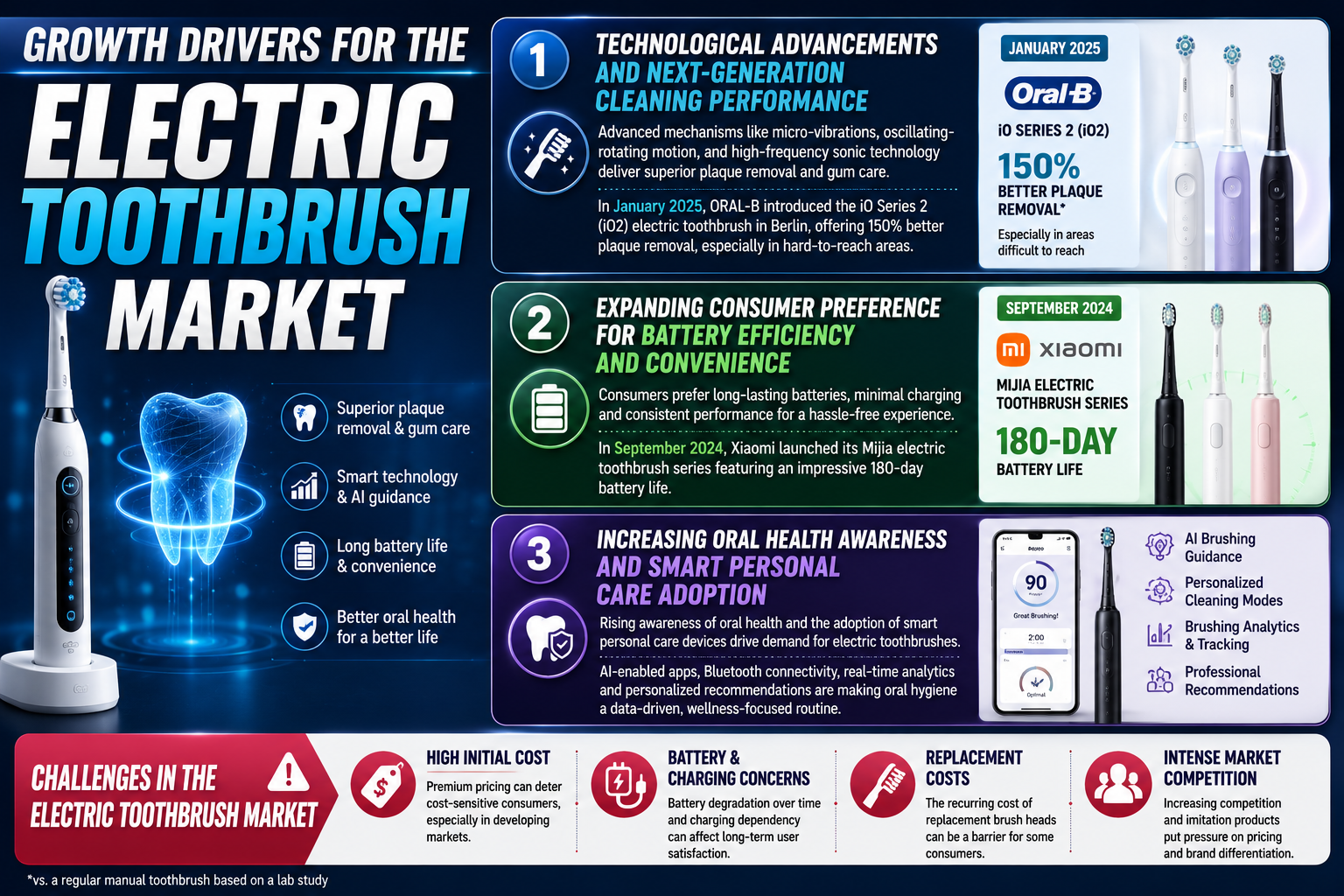
In January 2025, Oral-B introduced the iO Series 2 electric toothbrush, highlighting significant improvements in plaque removal, especially in hard-to-reach areas. Innovations such as these demonstrate how companies are competing not only on design but also on measurable oral health outcomes.
Consumers today expect products that combine performance, convenience, and personalization. As a result, premium electric toothbrushes are increasingly viewed as long-term health investments rather than luxury purchases.
Many brands now position their products as professional-level cleaning tools capable of delivering dentist-inspired results at home.
This shift in perception is helping expand adoption among both existing users and first-time buyers.
Battery Life Has Become a Competitive Advantage
Battery technology is another area where manufacturers are making substantial progress.
For many consumers, one of the biggest concerns about electric toothbrushes has traditionally been charging frequency. Frequent charging can reduce convenience, especially for travelers or busy professionals.
Recognizing this challenge, companies are introducing products with dramatically improved battery performance.
A notable example emerged in September 2024 when Xiaomi launched a new electric toothbrush series offering battery life of up to 180 days. Combined with multiple brushing modes and sonic cleaning technology, such innovations significantly improve the user experience.
Long-lasting batteries reduce maintenance requirements and increase consumer confidence in electric toothbrush ownership. As battery efficiency continues improving, barriers to adoption are expected to decline further.
The Rise of Smart Personal Care
Electric toothbrushes are benefiting from a broader consumer trend toward smart personal care products.
People increasingly want products that provide data, insights, and measurable results. Whether tracking steps, monitoring sleep, or analyzing workout performance, consumers are becoming accustomed to technology-assisted wellness.
Oral care is now joining that ecosystem.
Smart toothbrushes can track brushing duration, pressure, frequency, and coverage. Some devices even create detailed reports that help users improve brushing habits over time.
For younger generations, especially Millennials and Gen Z consumers, these features align perfectly with their interest in self-improvement and digital health management.
As a result, electric toothbrushes are evolving from simple cleaning tools into connected health devices.
E-Commerce Is Expanding Market Reach
The growth of online retail has played a critical role in accelerating electric toothbrush adoption.
Consumers can now compare products, read reviews, watch demonstrations, and purchase replacement brush heads without leaving home. E-commerce platforms have also increased access to international brands that may not be available in local retail stores.
Subscription services have emerged as another important trend. Many manufacturers now offer automated brush-head replacement programs, ensuring customers receive fresh brush heads at recommended intervals.
This recurring business model benefits both consumers and manufacturers while encouraging long-term product usage.
The convenience of online purchasing is particularly important in emerging markets, where physical retail availability may be more limited.
Challenges Still Remain
Despite strong growth prospects, the electric toothbrush industry faces several challenges.
The most significant obstacle remains pricing.
Premium electric toothbrushes equipped with advanced features can be considerably more expensive than manual alternatives. In addition, replacement brush heads create ongoing ownership costs that some consumers find difficult to justify.
This issue is particularly relevant in developing countries, where affordability remains a key purchasing consideration.
Although manufacturers are introducing lower-cost models, budget products sometimes lack the durability or advanced capabilities that attract consumers to premium brands.
As a result, price sensitivity continues to influence adoption rates across many regions.
Consumer Education Is Still Necessary
Another challenge involves awareness and trust.
Many potential buyers remain uncertain about whether electric toothbrushes genuinely provide better cleaning than manual brushes. Others worry about charging requirements, maintenance needs, or possible gum sensitivity.
These concerns are especially common among older adults and first-time users.
Dental professionals play an important role in addressing misconceptions and educating patients about the benefits of electric brushing technology.
Marketing campaigns, product demonstrations, and professional endorsements will likely remain essential for expanding market penetration.
As awareness improves, industry growth is expected to accelerate further.
Regional Markets Driving Growth
The United States remains one of the most mature and influential electric toothbrush markets worldwide.
High disposable incomes, strong dental awareness, and widespread acceptance of smart personal care devices have created favorable conditions for adoption. American consumers frequently seek premium products featuring advanced technology and personalized functionality.
Germany also stands out as a major European market. Consumers there have demonstrated strong interest in preventive healthcare and technologically advanced wellness products. Sustainability considerations additionally support demand for rechargeable electric toothbrushes.
China represents one of the fastest-growing opportunities globally. Rising incomes, expanding urbanization, and growing enthusiasm for smart consumer electronics are fueling rapid adoption. Domestic brands continue introducing innovative products that combine advanced features with competitive pricing.
Saudi Arabia is emerging as another promising market. Increasing health awareness, a young technology-oriented population, and growing demand for premium personal care products are supporting market expansion across the region.
Innovation Continues at a Rapid Pace
Recent product launches demonstrate how dynamic the industry has become.
In 2024, Quip introduced its first oscillating electric toothbrush featuring a pressure sensor, multiple intensity settings, and American Dental Association approval.
The same year, Keosaa expanded its electric toothbrush portfolio with ultrasonic cleaning technology and multiple brushing modes designed to offer affordable yet effective oral care solutions.
Meanwhile, Philips Sonicare introduced Philips One for Kids, targeting children aged three to twelve with colorful designs and age-appropriate features aimed at encouraging healthy brushing habits.
These launches illustrate the industry's commitment to serving a wide variety of consumers, from young children to technology enthusiasts and budget-conscious buyers.
Looking Toward the Future
The future of the electric toothbrush market appears exceptionally promising.
As artificial intelligence, sensor technology, and battery innovation continue advancing, toothbrushes will likely become even more personalized and effective. Future devices may integrate more deeply with digital health platforms, allowing users and dental professionals to monitor oral health in entirely new ways.
Affordability improvements are also expected to expand adoption in developing markets, helping manufacturers reach millions of new consumers.
Perhaps most importantly, growing recognition of oral health as a critical component of overall wellness will continue driving demand for advanced dental care solutions.
What was once a simple bathroom accessory is rapidly becoming a sophisticated health technology product.
Final Thoughts
The electric toothbrush market is entering a period of sustained expansion fueled by technological innovation, rising oral health awareness, and increasing consumer interest in connected wellness devices.
With the market projected to grow from US$ 5.21 billion in 2025 to US$ 10.47 billion by 2034, the industry is poised for significant transformation. Consumers are no longer satisfied with basic brushing tools; they want smarter, more efficient, and more personalized oral care experiences.
As manufacturers continue pushing the boundaries of innovation and accessibility, electric toothbrushes are likely to become a standard household product rather than a premium alternative. The result will be a healthier, more informed, and increasingly technology-driven approach to oral care around the world.
About the Creator
Enjoyed the story? Support the Creator.
Subscribe for free to receive all their stories in your feed.
Comments
There are no comments for this story
Be the first to respond and start the conversation.