
Driving Fintech Innovation Through Cloud Computing
This blog will cover how cloud computing has transformed the finance industry.

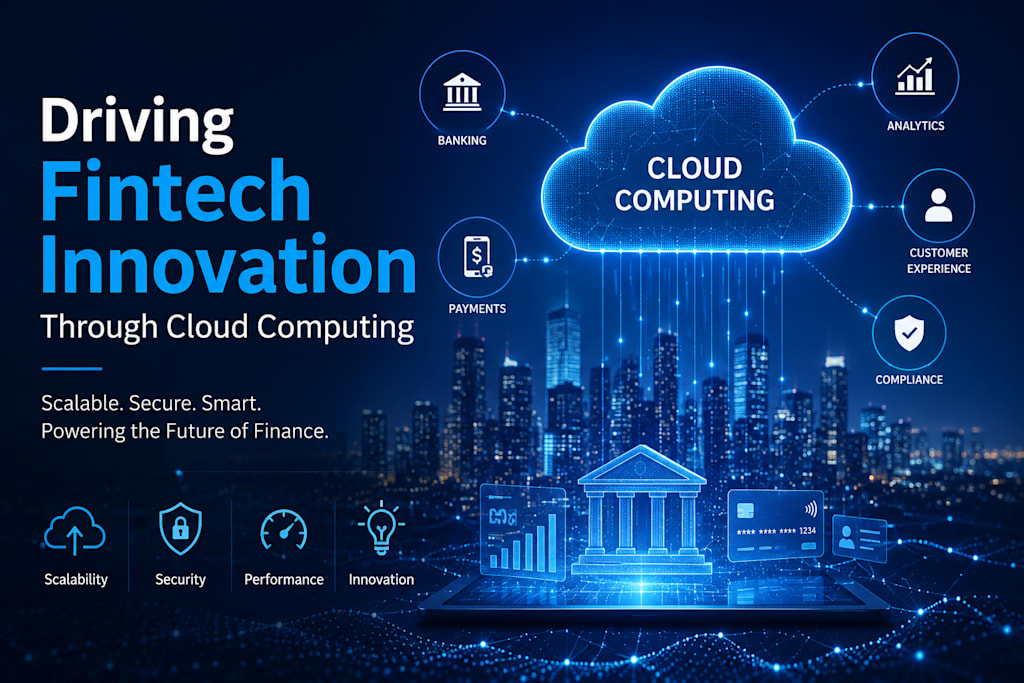
Financial services organizations are expected to operate at a scale and pace never seen before. Customers demand 24/7 account access, mobile-first experiences, and so much more. These institutions process more data every minute than one could ever imagine. Then there are the constantly evolving regulatory requirements to which financial institutions must adhere. It's truly a Herculean feat. The kind that requires advanced computing power, unparalleled security, and robust global operations.
None of this can happen if the underlying infrastructure isn't designed for this type of intense workload. Banks, capital markets, and FinTech companies need infrastructure that is ultra-scalable, capable of processing transactions and data in real-time, and is cost-effective. Which is precisely why the finance industry has undergone a cloud revolution. Moving away from legacy on-premises data centers to cloud computing has transformed how financial organizations think about data storage, risk management, etc.
In this blog, I will discuss why cloud consulting is critical for the fintech industry. Then we will move over to the benefits of cloud computing for the sector.
Why Cloud Computing Is Important For The Fintech Industry
Cloud computing plays a critical role in the fintech industry due to its scalability, flexibility, and cost efficiency. It enables fintech companies to process billions of transactions and manage financial data in real time without investing heavily in physical server infrastructure. Cloud platforms allow businesses to scale resources up or down based on market demand while supporting faster software deployment and seamless access to advanced technologies such as data analytics and fraud detection tools. Additionally, cloud computing reduces operational costs and enables smaller fintech firms to securely compete with large banks and financial institutions.
Benefits of Cloud Computing for Fintech Business
Cloud computing is transforming how fintech businesses operate by enabling faster scalability, stronger data accessibility, improved operational efficiency, and cost optimization. It supports secure digital financial services, accelerates innovation, enhances customer experiences, and helps fintech companies adapt quickly to evolving market demands and regulatory requirements.
Listed are the core benefits;
- Resource optimization: On-premises infrastructure requires fintechs to allocate large portions of their development teams to internally manage physical equipment, server rooms, etc. Additionally, networks must be manually set up. Cloud computing allows you to outsource all of that to cloud providers who maintain the physical data centers for you. Routine infrastructure tasks can also be automated.
- Enhanced data management: Fintechs deal with large amounts of structured and unstructured information. Every day. Cloud technology can break down data silos by having different teams and ML algorithms tap into the same data repository at the same time. Cloud-native technologies allow fintechs to analyze millions of pieces of information simultaneously, so they can use real-time analytics for live credit decisions and even fraud detection at the millisecond a transaction is made. Cloud-first data management systems even have automatic audit logs built in. This eases reporting and compliance requirements.
- Scalability: Workloads can often be elastic. Say the market tanks or surges. Then an investment app could suddenly have thousands or millions of users trying to use it all at once. The cloud seamlessly scales up through policy-driven automation, so you never have to lift a finger. The user demand creates an event that triggers horizontal scaling and your cloud instantly spins up more servers to keep your app lightning fast and online without crashing. If demand plummets, it scales back down. No guesswork.
- Rock-solid security: Cloud providers today offer better security than most on-premises data centers. They mandate stringent, automated encryption of financial data at rest and in transit. Cloud-native IAM tools allow zero-trust networks to restrict lateral movement of access within an organization. And they use automated threat detection 24/7 and geographical redundancy, which stores encrypted copies of data in different physical locations for instant failover with no data loss.
Final Thoughts
Cloud computing has become the foundation of modern fintech operations by enabling scalability, security, agility, and innovation at scale. With the right cloud consulting approach, financial institutions can improve operational efficiency, deliver better customer experiences, strengthen compliance, and stay competitive in a rapidly evolving digital landscape. Ready to take your fintech business to the next level? Then I'd recommend that you start looking for an expert provider of services for cloud consulting.
About the Creator
Ryan Williamson
Tech-savvy professional with 13+ years of experience in app development, leveraging technical knowledge to build strategic partnerships and promote innovative solutions. Passionate about engaging with technical communities, and more.
Enjoyed the story? Support the Creator.
Subscribe for free to receive all their stories in your feed.
Comments
There are no comments for this story
Be the first to respond and start the conversation.