
DeepSeek Won't Sell You a Subscription. It's Installing a Meter.
That dollar figure in your free chat window isn't a limit. Look at what it's actually doing.
A timer would have been enough
Last week someone asked whether DeepSeek would ever sell a consumer subscription. I said no, and that if it ever did, it would probably just hand people the API price list and call it a product. Days later the app started showing that price list inside the chat window.
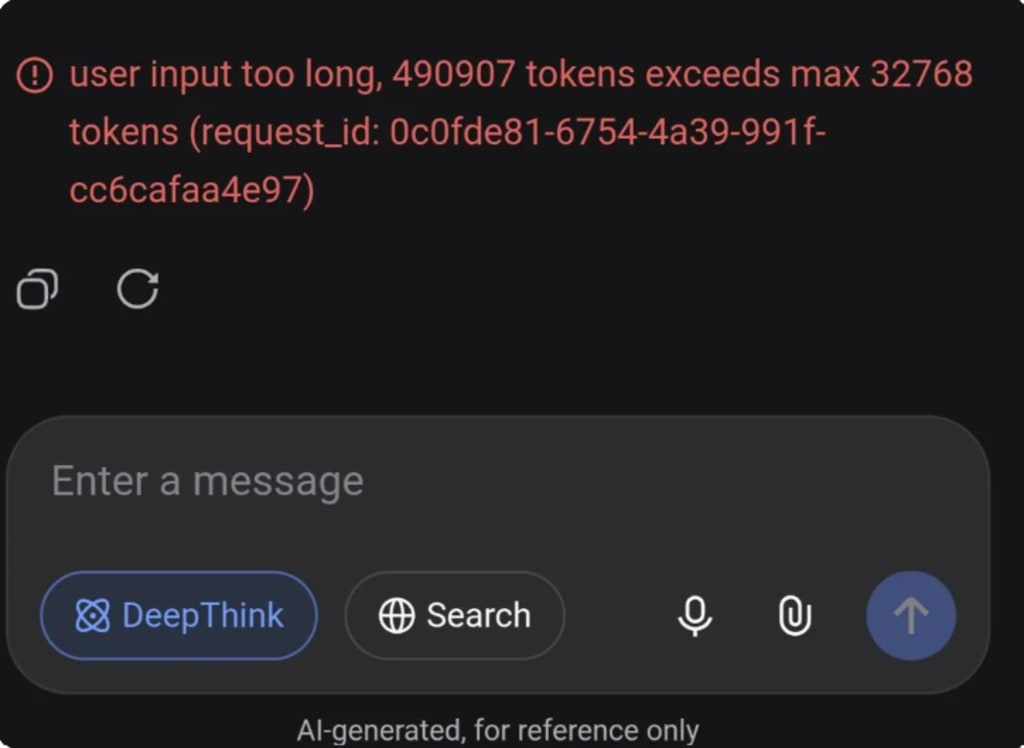
Look at the screenshot. 405 pixels wide, 413 tall. A small panel of cost figures sitting where a usage bar normally lives. That panel is the whole story.
Consider what DeepSeek actually needs if the only goal is to slow down free users. A percentage. A token count. A reset timer. That's the entire toolkit. ChatGPT tells you when you're locked out until Thursday. Claude draws a bar. Neither one hands you a dollar amount for a query you didn't pay for.
DeepSeek handed over the dollar amount, then put the API rate beside it.
Nobody builds a meter for something they never intend to sell. The meter is the storefront, assembled in public, one line of pricing at a time.
What a receipt does to a user
There are two ways to explain a free limit. The first is "we capped you." That reads as arbitrary, and arbitrary makes people angry. The second is "here is what you consumed." That reads as accounting, and accounting feels fair even when the number is ugly.
The second version only works if you show the number. So show it. The next time you paste a 99-million-character txt file into a roleplay bot and the model grinds through it for forty minutes, you get a receipt. Four million tokens in, here's the list price, here's the free credit you just burned. The cap stops looking like a whim and starts looking like a subsidy with a visible ceiling.
That reframing is worth money to a company planning to sell something later. You can't charge people for a resource they believe is free and infinite. You can charge them for a resource they've watched themselves consume.
Off-peak pricing only makes sense if someone is paying
DeepSeek already discounts API calls during off-peak hours. Ask what that discount is for. It's demand shaping: move batch workloads into the hours when GPUs sit idle, and the same hardware serves more requests.
Free users don't respond to price signals. They respond to caps. A discount schedule is an instrument you build for customers who are choosing when to spend money, which means the pricing infrastructure is already pointed at a paying audience. The consumer side is just catching up to it.
Subscriptions are the harder business
Everyone assumes a subscription is the obvious next move because OpenAI and Anthropic both sell one. The math is worse for DeepSeek, and the reason is structural.
A flat monthly fee buys unlimited-feeling access. Inference costs scale with usage. You end up modeling the tail: price for the 90th percentile, then write fair-use clauses for the people pushing batch jobs through a chat app at 3 a.m., then staff a team to enforce those clauses, then absorb the anger when a paying customer gets throttled. That's a support org, a billing org, and a trust problem you can't hire your way out of.
Now price the alternative. The API rate card already exists. The peak and off-peak schedule already exists. The billing pipeline already runs. A top-up entry point is a credit balance, a payment processor, and a line in the interface. Price book unchanged. Cost model unchanged. You're renting metering you already built.
Barnacles and fans
Free users attach to a product and cost money to carry. They aren't hostile. They're weight. The usual playbook converts them at the moment of peak intent, which lands about thirty seconds after they hit the wall mid-conversation.
A subscription asks for commitment at that exact moment: twelve dollars a month, sight unseen, for a service they've been using for free. A top-up asks for two dollars right now, for the thing they were already doing. Smaller ask, and it matches a decision they've already made emotionally. They wanted to keep going. You just needed a door.
There's a downstream effect too. Someone who has topped up once owns a credit balance, a billing relationship, and a working intuition that tokens are currency. Moving that person onto the developer platform later becomes a step rather than a leap. The consumer app turns into the on-ramp instead of a separate product with its own rules.
What would prove me wrong
I'm making a claim you can check, so here's the test. If DeepSeek ships a subscription priced on some curve other than API rate plus a thin convenience margin, the thesis dies. If the price readout disappears after a fortnight and never comes back, it was an A/B test on transparency rather than groundwork for a payment flow. And if a full quarter passes with no recharge entry anywhere in the app or web chat, the meter was decoration.
But if a top-up button appears beside that balance, the sequence will look obvious in hindsight. Show the cost. Teach the unit. Sell the unit. DeepSeek is on step one, and step one is the only part that asks you to sit still and look at it.
About the Creator
Jin
Writer of reamstories
https://reamstories.com/jin
Enjoyed the story? Support the Creator.
Subscribe for free to receive all their stories in your feed. You could also become a paid subscriber or give them a one-off tip, letting them know you appreciate their work.
Comments
There are no comments for this story
Be the first to respond and start the conversation.