
DeepSeek Went Down for 5 Hours. The Silence Afterward Is the Real Story.
MaaS platforms want to be water and electricity. Their failure reports still read like a chatbot that lost the thread.
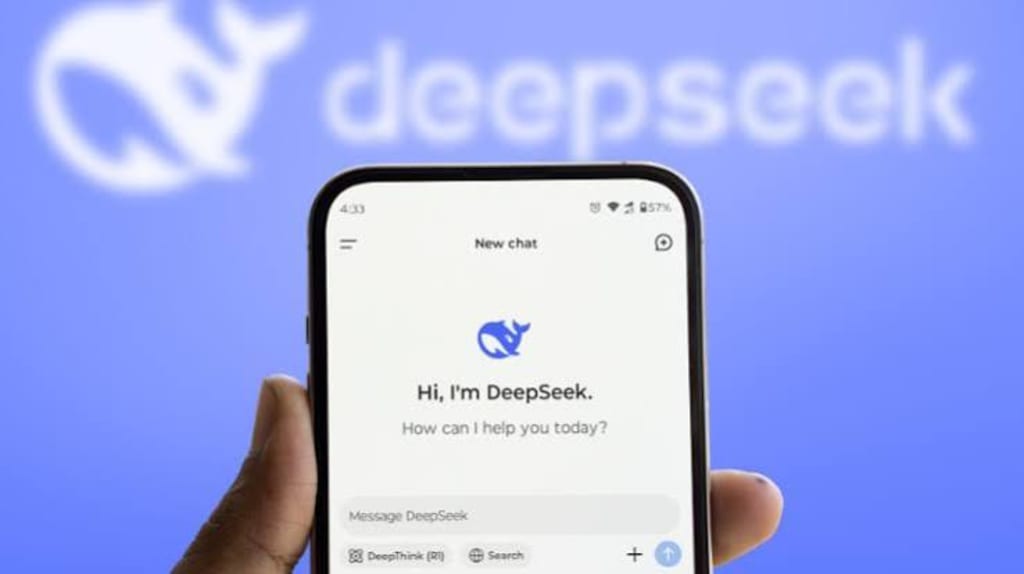
At 8:11 a.m. on October 15, 2026, the customer service system of a tech company in Shenzhen stopped. Queued messages lined up on the screen. No one knew when service would return. At the same time, tens of millions of Chinese office workers opened DeepSeek and saw: “Server temporarily unavailable.”
That line stayed for 4 hours and 52 minutes. DeepSeek restored service at 13:04.
This was at least DeepSeek’s 18th large-scale service anomaly in 2026, averaging one or two per month. At the end of March, an outage lasted more than 12 hours. In May, five consecutive interruptions. In September, at least seven service fluctuations. Three days earlier, on October 12, DeepSeek had just gone through another failure.
An AI uses “speculation” to explain why it went down
DeepSeek gave no formal announcement about the cause. The service status page updates were as concise as ever: “Cause identified, implementing fix,” then “Fix implemented, monitoring results,” and finally “Issue resolved.” No one knew what the cause was.
When media asked through the DeepSeek chat interface, DeepSeek’s own reply was: “Although the official side has not said so explicitly, the outside world generally speculates that this is probably related to ‘imbalance between computing supply and demand.’”
An AI using “speculation” to explain why it went down is itself telling.
The phrase “imbalance between computing supply and demand” is not new. It is the most frequently cited explanation after every DeepSeek outage over the past year. But it has a fundamental problem: it describes a long-term structural condition, not the root cause of a specific failure.
For a platform whose daily active users surged from 120 million to 200 million while computing reserves grew only 8.3%, its system should be near supply-demand imbalance every day. The explanation does not say whether a traffic peak broke a threshold, a regional inference cluster failed, the scheduling system deadlocked in a retry storm, or a microservice configuration change triggered a chain reaction. “Imbalance between computing supply and demand” cannot answer any of those questions.
Technical architecture fragility also matters. The MoE architecture DeepSeek uses has high scheduling requirements for sudden traffic spikes and can fluctuate under traffic peaks. In high-concurrency scenarios, large numbers of users refreshing and retrying create a “retry storm,” which increases server load and creates a vicious cycle. Those technical details are also outside official disclosure.
Users and developers need more than the known fact that “the system is strained.” They need to know what went wrong, whether it will happen again, and what they can do to prepare.
The industry of two nines
To understand why DeepSeek goes down so frequently, look at the underlying logic of the MaaS industry.
Traditional PaaS and cloud infrastructure services usually have an industry standard of three nines (99.9%), meaning no more than 8.76 hours of unavailability per year. Enterprise production environments require API SLAs of at least 99.9%, and core business scenarios require close to 99.99%. If a cloud vendor can only achieve two nines (99%), that means up to 3.65 days of unavailability per year. In the traditional enterprise services market, that level is basically “unable to stay in business.”
The reality of the MaaS industry is that most platforms can only guarantee two nines.
DeepSeek is not alone. An Ookla analysis based on 471 days and 3.72 million user reports showed that in the first quarter of 2026, the number of high-signal outage days for ChatGPT, Claude, Gemini, and Copilot soared from 6 days in the same period of 2025 to 51 days, an increase of more than eightfold. Anthropic’s Claude accounted for 39 days alone, becoming “the most notable case of volatility during scale expansion.” Claude’s user report volume in March 2026 was nearly three times that of February. In March alone, it generated 192,773 reports.
OpenAI’s situation is no better. On December 2, 2025, ChatGPT generated about 68,000 outage reports in a single day. Since 2026, multiple mainstream AI services such as ChatGPT, Claude, Grok, and Cursor have even experienced rare simultaneous outages.
The root of the problem is that demand growth for MaaS far exceeds that of any traditional software service. When ChatGPT reached 100 million monthly active users in 60 days, the entire industry was shocked. But no one solved the problem of maintaining service stability on such a steep growth curve.
Large-model inference consumes computing power rigidly. Traditional web services can elastically absorb traffic through CDNs and caching. Every additional user means an additional GPU inference load. The procurement, deployment, and debugging cycle for GPUs is measured in months, far behind user growth measured in days. Claude later acknowledged that it had underestimated the speed at which enterprise customers would onboard, causing infrastructure to bear pressure far beyond expectations in the first quarter of 2026.
The black hole of failure disclosure
Back to DeepSeek on October 15. The official status page was so sparse it could be described as ritual broadcasting: investigating, identified, fixing, fixed. Beyond that, not a single extra word.
This contrasts with the internet infrastructure industry.
After major failures, AWS and Cloudflare usually release preliminary incident reports within 72 hours and full root-cause analysis reports within 7 to 14 days. These reports explain what happened, why it happened, which parts of the system failed, and what measures will prevent recurrence. After its global outage on November 18, 2025, Cloudflare released a detailed postmortem report. It pointed out that the problem originated from “a malformed bot-management file that caused proxy panic and global 5xx errors.” After the DynamoDB failure on October 20, 2025, AWS disclosed the technical details of the DNS bug and the fix.
The practice traces to aviation, medical, and nuclear safety industries. Researchers in these high-risk fields independently reached the same conclusion: when organizations punish individuals for failures in complex systems, they get less information, not more. Sidney Dekker, an aviation safety professor and former Boeing 737 first officer, put it incisively: “Underneath every simple, obvious story about human error, there is a deeper, more complex story about the organization.”
Google’s SRE team formalized this idea as “blameless postmortem,” and it became a benchmark practice for software engineering.
MaaS vendors have chosen another path.
Several considerations likely drive this. Publicly admitting “our computing power is insufficient” or “our architecture is flawed” hands a knife to rivals in a fierce model race. Detailed failure reports can become the basis for user claims or regulatory scrutiny. Many MaaS engineering teams are already struggling with daily operations and maintenance, with no spare capacity for systematic failure reviews and public disclosure.
Whatever the reason, the result is the same: users and developers are left in an information black hole.
When AI becomes water and electricity
AI services are changing from productivity tools into business infrastructure, but their reliability has not caught up.
A Forrester analyst said in a September 2026 report: “AI has become operational infrastructure, not a productivity add-on. Organizations that have not established multi-model fallback plans, dependency inventories, and continuity plans are exposing themselves to revenue loss and decision paralysis.”
Most enterprises are not prepared. A June 2026 PagerDuty survey of 1,250 business professionals found that 66% of employees admitted to using AI tools in violation of company policy. The spread of this “shadow AI” means that when an AI platform goes down, the impact goes far beyond enterprises that have formally procured AI services.
The DeepSeek outage on October 15 coincided with the morning rush on a workday. It directly affected the daily operations of some small and medium-sized tech companies in Shenzhen: intelligent customer service halted, content production stopped, program debugging blocked, and customer inquiries piled up. Thousands of downstream developer applications running on DeepSeek’s API also lost their underlying support.
The MaaS industry is becoming infrastructure like water, electricity, and gas. It cannot yet provide reliability commitments at that level.
What about next time?
DeepSeek’s 18th outage shows the same problem across the MaaS industry: growth speed and service reliability are out of balance.
When you compete for users in a rapidly expanding market, reliability is often the first variable sacrificed. Adding a GPU takes months. Acquiring a new user takes only a trending topic. Under this asymmetric incentive structure, outages become an “acceptable cost.”
For users and developers who have embedded AI into daily workflows, every outage is a loss of productivity. All they get is the sentence “server temporarily unavailable.”
We do not need MaaS vendors to promise four nines. Current technical reality may not allow it. We also do not need a ten-thousand-word essay after every outage. But after service is restored, users should know what happened, whether it will happen again, and what they can do to prepare.
Transportation, aviation, and cloud computing show that accident investigation and disclosure are a core source of reliability, not a burden. When an airline has an accident, the investigation aims to make the industry safer. When AWS has an outage, the postmortem report lets customers and the wider market understand the system’s boundaries and risks.
The MaaS industry faces the same choice. Transparency or silence will determine whether it can win enterprise trust. A platform that cannot explain why it went down is hard to trust with core business.
DeepSeek recovered at 13:04 on October 15. The question is what happens next time.
About the Creator
Jin
Writer of reamstories
https://reamstories.com/jin
Enjoyed the story? Support the Creator.
Subscribe for free to receive all their stories in your feed. You could also become a paid subscriber, letting them know you appreciate their work.
Comments
There are no comments for this story
Be the first to respond and start the conversation.