
Data Warehouse Development
Learn how to create resilient data storage systems: core components, potential challenges, and approximate costs.


As a startup scales, there comes a tipping point where data reporting shifts from being a routine task to a source of interpersonal tension. Finance presents one set of revenue figures, while Sales cites another. Meanwhile, Product teams rely on dashboards that appear robust until questioned about sudden, unexplained fluctuations. The situation often culminates in silence when a founder reveals the "source of truth": a chaotic spreadsheet with a name like final_report_v8_real_final.xlsx.
This friction rarely stems from the visualization tools themselves; rather, it signals a crumbling data infrastructure.
In the early stages, fragmented data sources are inevitable. Information is scattered across product databases, payment processors like Stripe or Adyen, CRMs such as HubSpot or Salesforce, project management tools like Jira, support platforms like Zendesk, and analytics services like Google Analytics, alongside various CSV files buried in personal downloads folders. Teams cobble these together out of necessity. However, growth demands a shift toward data that is consistent, readily accessible, and reliable enough to drive strategic decisions.
This is the role of data warehouse engineering. It is not a panacea for every data challenge, but rather a structured approach to aggregating, cleansing, modeling, and preparing business data for analytics, business intelligence (BI), forecasting, and AI applications.
This overview explores the architecture, workflows, technologies, expenses, and common pitfalls associated with this process. The focus remains practical, avoiding the abstract theoretical concepts that often cause data projects to lose momentum.
Defining the Data Warehouse
At its core, building a warehouse involves creating a centralized system for analysis. It ingests data from diverse origins, validates and transforms it, and stores it in a format optimized for querying. This provides a secure foundation for dashboards, reports, internal applications, and product analytics.
The critical distinction is analytical utility. A data warehouse is distinct from the operational database powering your application. Operational databases are engineered for high-speed transactions—such as user creation, order processing, subscription updates, event logging, and permission changes. Running complex reports on these systems can degrade performance and lead to unmaintainable, ad-hoc queries.
A data warehouse provides a dedicated environment for analytics, sitting alongside several related components:
- Operational Databases: Designed for daily transactional integrity.
- Data Lakes: Ideal for storing raw, unstructured files and events, though they risk becoming disorganized "swamps" without proper data modeling.
- Data Marts: Subset repositories tailored to specific departments (e.g., finance, product, marketing, sales, or operations).
- BI Tools: Visualization platforms that display charts and dashboards. However, these tools cannot correct underlying data quality issues; they only reflect what is fed into them.
Organizations require different warehouse configurations depending on their needs.
Enterprise Warehouses
Enterprise-level development prioritizes organization-wide reporting consistency. It consolidates data from various departments into a governed framework, establishing unified definitions for key metrics such as revenue, churn rates, active users, profit margins, inventory levels, and customer segments.
This structure is vital for larger businesses with multiple divisions or geographic regions, where disagreements over "correct" numbers are common. Typically, these disputes are not about the visual representation but rather the hidden assumptions and logic embedded within the data models.
Cloud-Based Warehouses
Modern cloud warehouses operate on platforms like Snowflake, BigQuery, Amazon Redshift, Azure Synapse, or ClickHouse. These solutions offer superior flexibility in scaling storage and computing power compared to traditional on-premise hardware.
However, cloud adoption does not guarantee cost savings. While initialization and scaling are simpler, the ease of use can lead to unchecked consumption of resources through inefficient queries, resulting in unexpected billing shocks.
Real-Time or Near-Real-Time Warehouses
While some organizations tolerate daily data updates, others require immediacy. Real-time warehouses employ streaming ingestion, change data capture (CDC), event pipelines, or rapid synchronization jobs to reflect business activities almost instantly.
Industries such as fraud detection, logistics, marketplace operations, risk management, customer support, and operational analytics depend on this latency reduction. A weekly summary is ineffective when addressing an incident that occurred hours earlier.
Data Mart Architectures
Data marts serve as specialized analytical repositories for individual teams. For instance:
- Finance requires data on invoices, refunds, revenue recognition, and payment errors.
- Product focuses on user activation, retention rates, feature adoption, and cohort analysis.
- Marketing needs attribution models and campaign performance metrics.
Attempting to consolidate all these diverse requirements into a single, monolithic table is a common temptation, but it typically results in significant technical debt and operational difficulties down the line.
Foundational Architecture
The architecture of a data warehouse serves as the blueprint for transporting information from disparate source systems into a reliable analytical environment. While specific implementations vary by organization, the general workflow typically follows a standard sequence: sourcing, ingestion, staging, transformation, storage, metric definition, visualization, governance, and monitoring.
While this framework appears orderly in theory, practical application is often far more complex.
Data Sources
Data originates from a wide array of systems, including CRMs, ERPs, payment gateways, product databases, marketing platforms, customer support tools, IoT sensors, APIs, server logs, third-party datasets, and even legacy spreadsheets that remain critical despite their informal status.
The primary challenge is heterogeneity. These systems operate using different standards and identifiers. For instance, a customer might be identified by an email address in one system, a UUID in another, and a billing account number in a third. Additional complications include inconsistent time zones, shifting event nomenclature, and frequent renaming of products or features by development teams. Furthermore, discrepancies often arise when finance teams close their monthly books, yet dashboard figures continue to fluctuate due to late-arriving data.
Effective warehouse design addresses these mundane but critical inconsistencies, as they are often the root cause of data inaccuracies.
Ingestion Layer
The ingestion layer is responsible for moving data into the analytical ecosystem. Methods range from batch imports and API calls to webhooks, change data capture (CDC), streaming pipelines, and managed connectors like Airbyte or Fivetran.
There is no universal solution; the choice depends on latency requirements. A daily financial report may suffice with scheduled batch loads, whereas a dynamic marketplace pricing engine might require updates every few minutes, and a fraud detection system may need near-instantaneous event processing.
A common error is selecting ingestion tools based on popularity rather than assessing the actual freshness requirements of the data.
Staging Area
The staging area acts as a temporary holding zone for raw or partially processed data. It allows engineering teams to preserve original source records, track changes, validate field integrity, and prepare data for transformation.
This layer is not intended for direct business reporting. Analogous to a kitchen counter during meal preparation, it is a functional workspace for data engineers, not a presentable interface for end-users.
ETL and ELT Pipelines
Data pipelines generally follow either an ETL (Extract, Transform, Load) or ELT (Extract, Load, Transform) pattern. Both approaches move data from sources to analytical models, but they differ in where the transformation logic is applied.
Modern cloud warehouses frequently favor ELT, leveraging the warehouse’s computational power to handle transformations after loading. However, ETL remains relevant when sensitive data requires cleaning, masking, filtering, or restructuring before being stored, ensuring security and compliance prior to ingestion.
Pipeline management involves schema mapping, deduplication, validation, data enrichment, orchestration, error handling, incremental loading, historical backfills, and alerting. Robust alerting is particularly crucial; silent pipeline failures can compromise critical reports, such as board presentations, with little warning.
Storage Layer
The storage layer houses cleaned and modeled data. Implementation strategies may include star or snowflake schemas, fact and dimension tables, data partitioning, clustering, columnar storage formats, and materialized views.
Data modeling should reflect business processes rather than simply replicating source table structures. For example, a comprehensive "orders" model might integrate checkout details, payment records, refunds, inventory adjustments, subscription modifications, support interactions, and customer profiles. While disparate systems view these as separate events, the business interprets them collectively as "revenue."
Semantic and Metrics Layer
The semantic layer establishes standardized business logic. It answers fundamental questions: How is an "active user" defined? At what point is churn recognized? Which refunds impact revenue calculations? How are currency conversions handled? Are trial users included in sales pipeline metrics?
These definitions may seem minor until conflicting KPIs are presented by different departments in the same meeting, at which point they become significant strategic issues.
BI, Reporting, and Analytics Layer
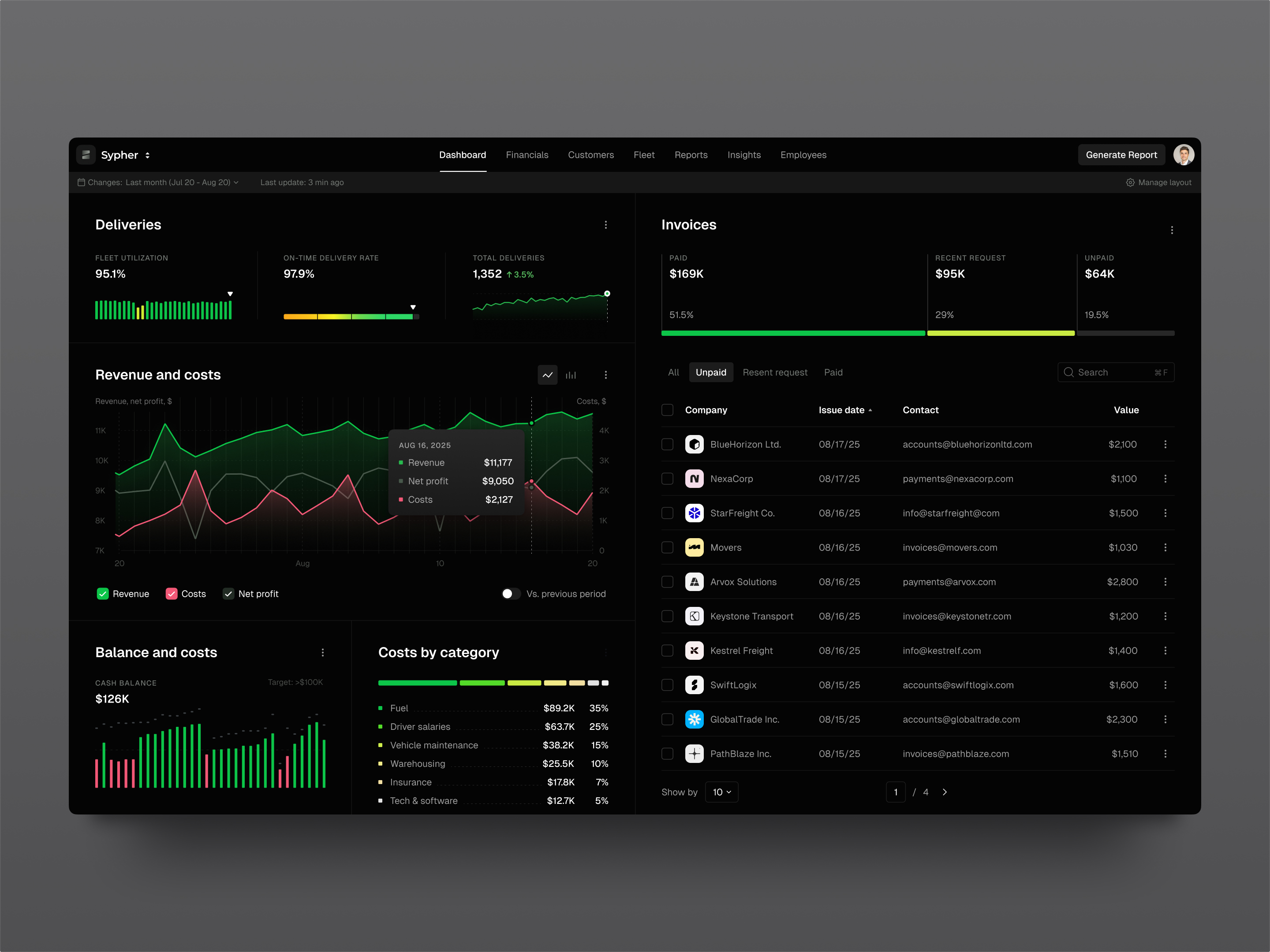
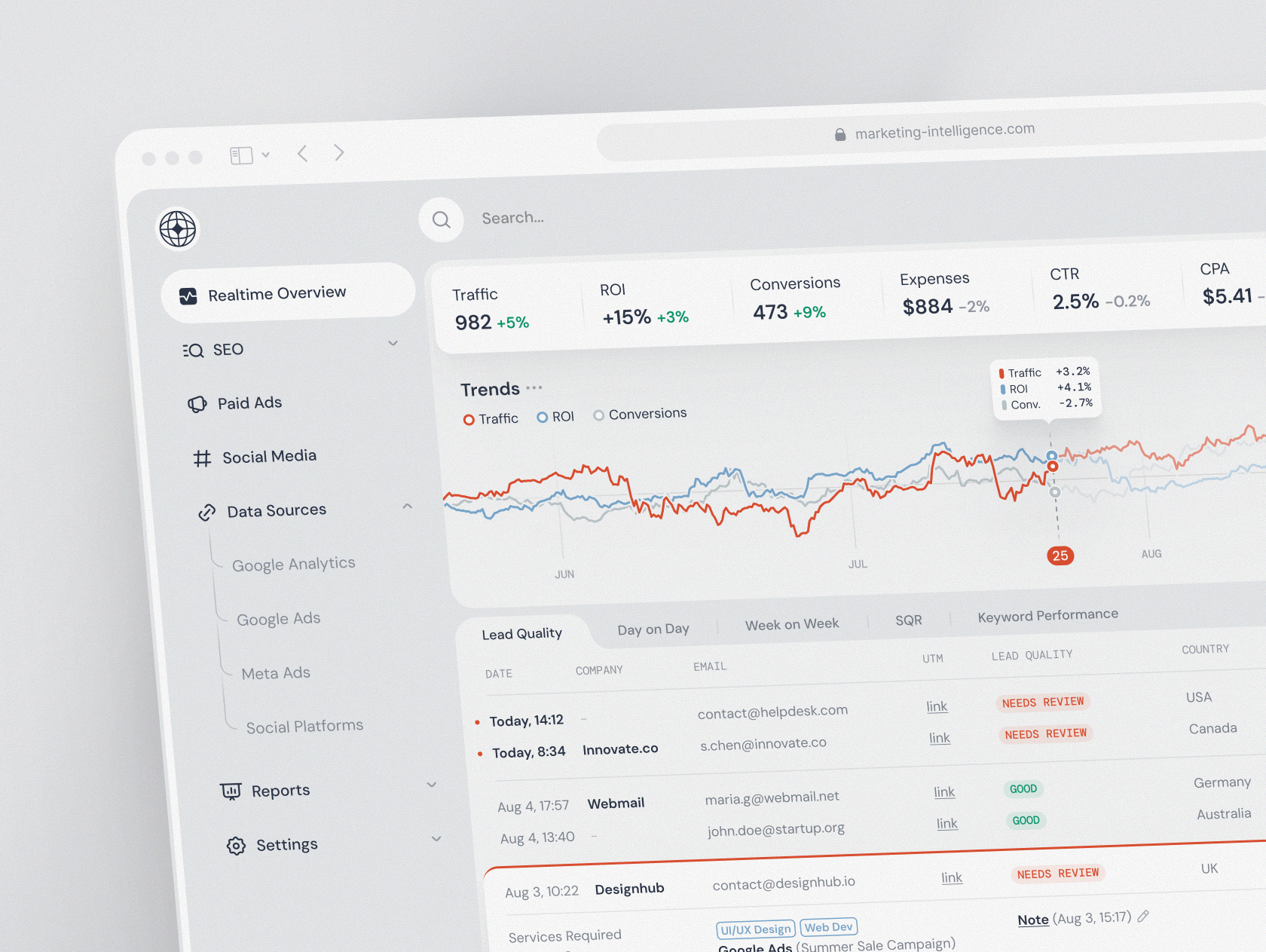
This layer makes data accessible to users through tools like Looker, Power BI, Tableau, Metabase, Superset, custom React-based dashboards, embedded analytics, scheduled emails, or internal applications.
The mere existence of data does not guarantee value. Users require responsive dashboards, intuitive filtering, export capabilities, role-based permissions, saved views, and clear documentation explaining metric definitions. Attention to user experience (UX) details determines whether stakeholders trust the system or revert to manual spreadsheets.
Governance, Security, and Monitoring
Data warehouses often store sensitive information, including customer PII, financial records, healthcare data, and proprietary operational metrics. Governance frameworks manage access controls, audit trails, data lineage, retention policies, encryption standards, and regulatory compliance.
Monitoring ensures system health by tracking data freshness, job failures, data quality metrics, query performance, and cloud infrastructure costs. While often overlooked, these maintenance tasks are essential for maintaining system reliability and trust.
Essential Characteristics of Contemporary Data Warehousing
A modern data warehouse must transcend the role of a mere repository for raw tables. Its primary objective is to enhance data reliability and usability, ensuring that information is both trustworthy and accessible.
Holistic Data Integration
A robust warehouse consolidates data from diverse domains—product, sales, finance, marketing, operations, and support—into a unified environment. This integration enables complex cross-functional analysis. For instance a SaaS organization can correlate user trial behavior with subscription payments, CRM pipeline stages, support interactions, and feature adoption rates.
Without this cohesion, teams operate in silos, viewing only fragmented aspects of the business. While isolated data slices can be informative, they often lead to misinterpretation when viewed out of context.
Rigorous Data Quality Assurance
Automated quality checks are essential for identifying duplicate entries, null values, invalid formats, broken relationships, unexpected volume fluctuations, and reconciliation discrepancies. Aligning warehouse data with external sources—such as payment gateways, accounting exports, and operational tools—is critical for maintaining accuracy.
Although implementing these checks may seem time-consuming, neglecting them invariably results in higher costs and effort downstream. Proactive quality management prevents the accumulation of technical debt.
Scalable Query Performance
As data volumes expand, query latency can degrade dashboard performance. Optimization techniques such as data partitioning, clustering, caching, pre-aggregation, and materialized views are vital for maintaining speed. Additionally, data models should be structured around high-frequency user queries.
While occasional reports can tolerate slower load times, mission-critical dashboards accessed daily by numerous stakeholders require immediate responsiveness to remain effective.
Historical Context Preservation
Unlike operational systems that primarily reflect current states, data warehouses preserve historical records. This capability allows organizations to analyze trends over months, quarters, or years, evaluate cohort performance, compare regional differences, and understand the impact of business cycles.
By tracking changes over time, warehouses provide insights into what changed, when it occurred, and how those shifts influenced business outcomes.
Standardized Business Metrics
Effective warehouse development eliminates the need for users to reverse-engineer metric definitions. A centralized semantic layer should define key performance indicators (KPIs) such as revenue, churn, profit margins, active users, inventory turnover, customer lifetime value (CLV), and claim rates.
Standardization simplifies onboarding and ensures consistency. New analysts should not need to repeatedly verify which definition of "churn" applies to specific reports, reducing ambiguity and improving efficiency.
Granular Access Control
Data visibility must be restricted based on roles, teams, regions, tenants, departments, or sensitivity levels. This is particularly crucial in regulated industries like fintech, healthcare, and enterprise SaaS, where protecting customer and financial data is paramount.
Implementing robust permission structures during the initial design phase is far more efficient than retrofitting security measures later. Early planning prevents complex remediation efforts and ensures compliance from the outset.
Seamless Visualization and Product Integration
While the underlying infrastructure constitutes the bulk of the work, end-users primarily interact with visualization layers. Tools such as Looker, Power BI, Tableau, Superset, and Metabase address many reporting needs. However, for product-embedded analytics, custom interfaces often provide a superior user experience.
Frontend development thus becomes integral to the data strategy. Features like intuitive filters, interactive tables, dynamic charts, export functions, saved views, and embedded reports must align with user workflows to maximize adoption and utility.
Foundation for AI and Predictive Analytics
High-quality, consistent historical data is the prerequisite for advanced analytics, including forecasting, customer segmentation, anomaly detection, recommendation engines, and AI-driven insights. If source data is fragmented or inconsistent, AI initiatives often stall as teams spend excessive time cleaning data rather than building models.
Consequently, data warehouse planning and AI strategy are increasingly interconnected. This alignment is not driven by a mandate to use AI in every project but by the recognition that reliable AI outputs depend fundamentally on reliable data infrastructure.
A Practical Guide to Data Warehouse Construction
The most effective approach to building a data warehouse begins not with technology selection, but with defining business objectives. Tools are secondary; clarity of purpose is primary.
1. Strategic Discovery and Assessment
Begin by identifying the specific problems the warehouse aims to solve. Are the goals to accelerate reporting cycles, enhance investor communications, deepen customer insights, improve financial transparency, strengthen operational oversight, or prepare for AI integration?
Next, audit the existing data landscape. Identify critical systems, determine ownership, and pinpoint areas where data credibility is low. Note which reports are currently generated manually. While this process may reveal significant disorganization, understanding the current state is a prerequisite for improvement.
2. Defining Requirements and KPIs
Catalog the specific questions the system must answer. Examples include:
- Which user behaviors correlate with long-term retention?
- What is the net revenue breakdown by plan, segment, and region?
- Which marketing campaigns acquire high-value, long-term customers?
- Where do support tickets predominantly originate?
- Which accounts exhibit early indicators of churn?
Define key entities, metrics, dimensions, reporting frequencies, access roles, and compliance requirements. This documentation is not bureaucratic overhead; it prevents costly misalignments and confusion during development.
3. Architectural Design
Select appropriate modeling methodologies and deployment strategies.
Additionally, decide on ingestion patterns (batch, near-real-time, or streaming) and infrastructure location (cloud, on-premise, or hybrid). These foundational choices significantly influence long-term costs and maintenance efforts.
4. Technology Stack Selection
A typical modern stack might include:
- Warehousing: Snowflake, BigQuery, Amazon Redshift, Azure Synapse, or ClickHouse.
- Storage: S3, Google Cloud Storage, Azure Blob, or PostgreSQL for metadata.
- Pipelines & Transformation: Airbyte, Fivetran, Kafka, AWS Kinesis, dbt, Apache Spark, or Apache Airflow.
- Backend Development: Python, FastAPI, Node.js, or .NET.
- Visualization: Looker, Power BI, Tableau, Superset, Metabase, or custom React dashboards.
- Infrastructure & Monitoring: Docker, Kubernetes, Terraform, Grafana, Prometheus, and OpenTelemetry.
Prioritize maintainability over novelty. The optimal stack is one your team can effectively manage; overly complex technologies introduce unnecessary risk and operational burden.
5. Data Modeling
Design schemas that define facts, dimensions, slowly changing dimensions (SCDs), data marts, naming conventions, and metric logic.
Effective models reflect business realities rather than source system structures. For example, a customer lifecycle model should integrate acquisition sources, account creation dates, activation events, subscription changes, support history, invoicing data, and churn reasons. While source systems treat these as separate entities, the business requires a unified view.
6. Pipeline Engineering
Develop robust pipelines handling connectivity, ingestion, transformation, validation, error retry logic, orchestration, incremental loading, change data capture (CDC), schema evolution, and historical backfills.
Attention to detail is critical. Minor issues—such as renamed events, late-arriving records, duplicate IDs, or failed jobs—can silently compromise executive reporting if not properly managed.
7. Interface and API Integration
Once data models are curated, connect them to dashboards, internal tools, embedded analytics, and APIs.
While standard BI tools suffice for many needs, custom web development may be necessary for complex requirements such as detailed account-level reporting, advanced filtering, specific export formats, or product-native analytics interfaces.
8. Testing and Reconciliation
rigorous testing ensures that reports align with source systems and business rules. Validation should cover data completeness, duplicate detection, latency handling, job failure recovery, timezone accuracy, currency conversion, permission enforcement, and edge cases.
Quality assurance in data engineering extends beyond visual inspection; it verifies the logical integrity and believability of the numbers.
9. Deployment and Lifecycle Management
Post-launch, the warehouse requires continuous management via CI/CD pipelines for data models, monitoring systems, freshness alerts, quality checks, query optimization, access audits, and cost control mechanisms.
Data systems are dynamic, evolving alongside the business. New products, markets, data fields, and analytical questions emerge constantly. Ongoing maintenance and support are essential to prevent the system from becoming opaque or unreliable over time.
Frequent Obstacles in Data Warehousing
Even highly competent teams encounter significant hurdles. Data engineering often exposes the accumulated technical debt and informal compromises an organization has made over time.
Data Integrity Issues
Incomplete records, duplicate entries, inconsistent identifiers, timezone discrepancies, and ambiguous metric definitions can severely undermine report reliability. While a data warehouse highlights these inconsistencies, it does not automatically resolve them; active cleansing and standardization are required.
Source System Fragmentation
Integrating diverse systems—such as CRMs, ERPs, payment gateways, product databases, legacy platforms, and third-party APIs—is inherently complex. These sources rarely align seamlessly. API endpoints may change without notice, export formats can be erratic, and field names might be altered unexpectedly, disrupting established workflows.
Schema Instability
Product development involves constant iteration. Events are renamed, pricing structures evolve, and deprecated fields are removed. Without robust version control, formal data contracts, and proactive monitoring, these upstream changes frequently cause pipeline failures.
Performance Bottlenecks
As data volumes increase, poorly optimized models lead to sluggish reporting. While techniques like partitioning, clustering, pre-aggregation, caching, and refined semantic logic can mitigate latency, they require deliberate architectural planning rather than retroactive fixes.
Uncontrolled Cloud Expenses
The flexibility of cloud infrastructure is a double-edged sword. Without strict workload management, inefficient queries, excessive data scanning, and redundant refreshes can lead to unexpected and substantial cost overruns.
Security and Governance Complexities
Protecting sensitive information requires rigorous access controls, encryption standards, audit trails, and governance protocols. These measures are mandatory in regulated sectors and represent best practices for any organization handling proprietary or personal data.
Low User Adoption
This challenge is particularly detrimental because it can occur despite technically sound engineering. If dashboards fail to address genuine business questions or if users distrust the underlying metrics, they will bypass the system entirely, reverting to manual spreadsheets or alternative, unverified data sources.

The Strategic Value of Data Warehouse Consulting
Engaging a specialized data partner becomes advantageous when a project spans multiple complex disciplines, including system architecture, backend engineering, analytics user experience (UX), quality assurance (QA), security, and long-term operational maintenance.
The primary benefit extends beyond simply adding headcount. It involves leveraging the expertise of professionals who recognize common failure points in data systems, such as ambiguous metric definitions, unstable data connectors, underutilized dashboards, inadequate monitoring, delayed security implementation, and unmanaged cloud expenditures.
Experienced data warehouse consultants provide critical support in several key areas:
- Architectural Design: Establishing robust frameworks for data ingestion, modeling, storage, performance optimization, and governance.
- Engineering & Integration: Developing reliable pipelines, APIs, integrations, and monitoring systems.
- Analytics UX: Ensuring that dashboards and reports align seamlessly with actual user workflows and decision-making processes.
- Security & Compliance: Implementing strict access controls, audit logging, encryption, and preparing for standards such as GDPR and SOC 2.
- End-to-End Delivery: Managing the full lifecycle from strategy and UX/UI design to backend/frontend development, QA, deployment, and ongoing support.
For SaaS organizations, this holistic approach is particularly valuable because analytics intersects with product strategy, customer success, revenue operations, investor relations, and AI initiatives simultaneously.
Conclusion
The true value of a data warehouse lies not in its technical sophistication, but in its ability to eliminate uncertainty and enable confident decision-making.
While the concept of data warehousing is straightforward—aggregating, cleaning, modeling, and visualizing data from diverse sources—executing it effectively is challenging. Success requires continuous adaptation as the business evolves.
Three pillars determine the success of any data warehouse initiative:
- Accuracy: Trust is the foundation of adoption; users will ignore reports they perceive as unreliable.
- Scalable Architecture: The system must be designed to accommodate new data sources and increasing volumes without requiring complete reconstruction.
- Usability: A technically impressive warehouse that remains incomprehensible to end-users is merely an expensive infrastructure project with no business impact.
About the Creator
Shakuro
We are a web and mobile design and development agency. Making websites and apps, creating brand identities, and launching startups.
Enjoyed the story? Support the Creator.
Subscribe for free to receive all their stories in your feed.
Comments
There are no comments for this story
Be the first to respond and start the conversation.