
Data Centers Are Picking Fights With the Towns They Need And They're Losing
AI's trillion-dollar infrastructure bet is colliding with a basic reality: communities won't quietly hand over their water and power supply for a corporate gamble they don't benefit from


For years, the tech industry operated on a simple, mostly unchallenged assumption: build the data center, offer the tax revenue, and local resistance would be minimal or nonexistent. That assumption has expired. Communities across the country are organizing, protesting, and successfully blocking proposed data center developments worth billions in planned investment, and the reasons why are rooted in straightforward physics, not abstract politics.
What's Actually Driving the Backlash
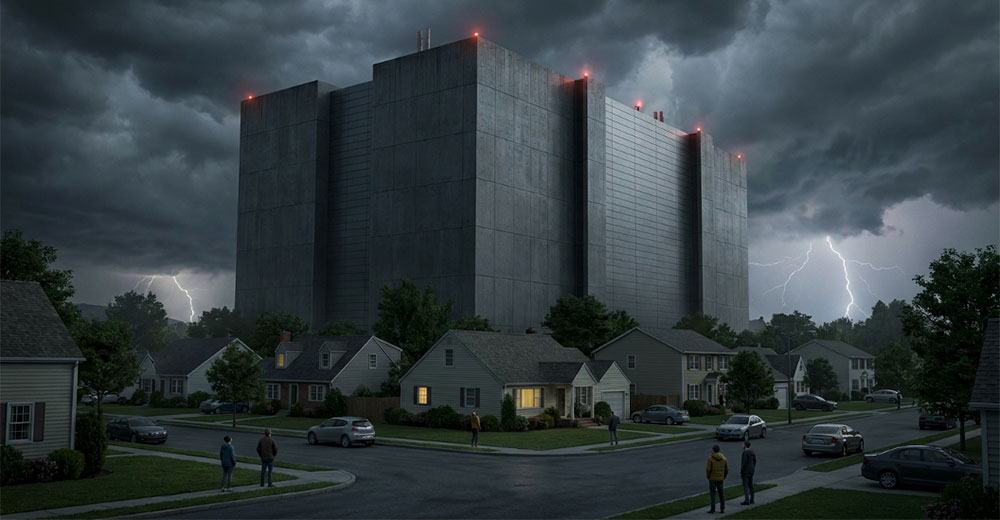
The shift from traditional cloud computing to AI-driven workloads has fundamentally changed what a data center actually consumes. Modern GPUs, the chips powering AI training and inference, draw enormous amounts of electricity. A single server rack can pull more power than an entire city block. When a hyperscale facility drops onto a regional grid, it can drive up local utility rates and increase the risk of rolling blackouts for everyone else sharing that grid.
Water consumption is, if anything, the more politically combustible issue. To prevent dense server racks from overheating, many facilities rely on industrial-scale evaporative cooling towers that consume millions of gallons of potable drinking water daily. In regions already dealing with drought conditions, this becomes a genuinely impossible political sell, telling a farming community or residential suburb to conserve water while a nearby data center evaporates enormous volumes to cool servers training a language model simply doesn't fly, regardless of the tax revenue attached.
The Obsolescence Trap Nobody's Talking About Enough
There's a second, less visible problem compounding the resource conflict: data centers are being built too slowly relative to how fast the hardware inside them changes.
AI silicon is advancing on a roughly 12-to-18-month generational cycle, with each new generation often requiring different thermal management and power delivery architecture than the last. Meanwhile, a hyperscale data center typically takes three to five years to permit, construct, and bring online. By the time a facility opens, the hardware it was designed around is already multiple generations behind.
This creates a genuinely dangerous economic dynamic: rigid facilities optimized for yesterday's cooling and power requirements simply can't easily accommodate the liquid-cooled, ultra-dense architectures that next-generation AI chips require. Retrofitting is expensive enough to undermine the entire financial model. The result is a landscape increasingly littered with stranded assets, billion-dollar facilities too outdated to run current hardware and too expensive to demolish.
The Fix: Stop Building Monuments, Start Building Machines
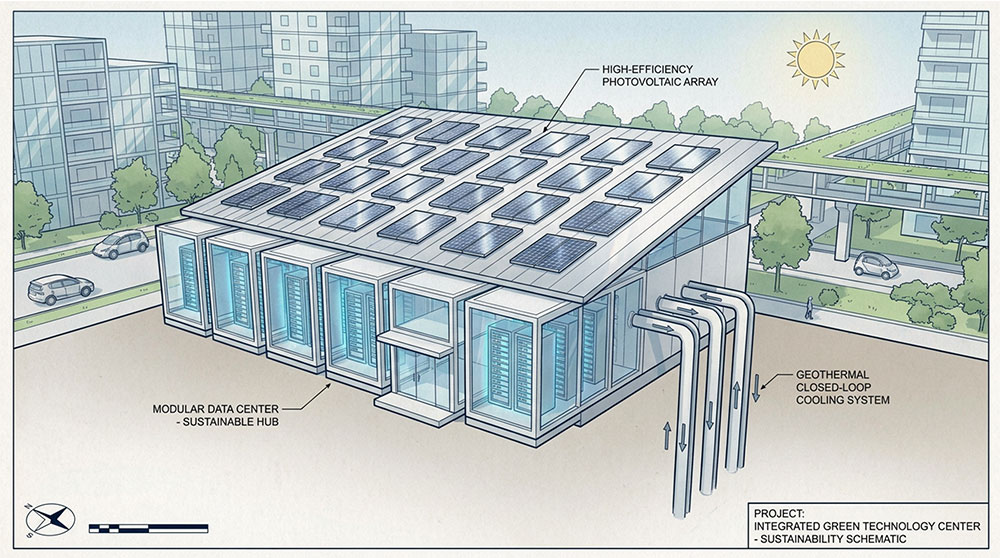
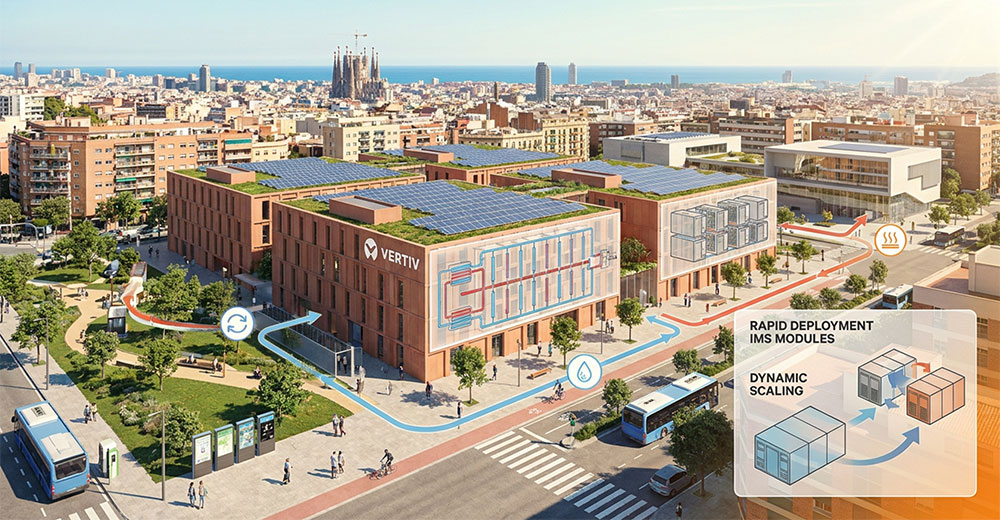
The solution to both problems, community resistance and premature obsolescence, requires treating data centers less like static commercial real estate and more like modular, upgradeable equipment.
Delay final technology decisions as long as possible. Build the shell, lay foundational power and networking infrastructure, but hold off committing to specific cooling layouts and server configurations until months, not years, before deployment. This "just-in-time" approach ensures a facility launches with genuinely current technology rather than whatever was popular when permits were filed years earlier.
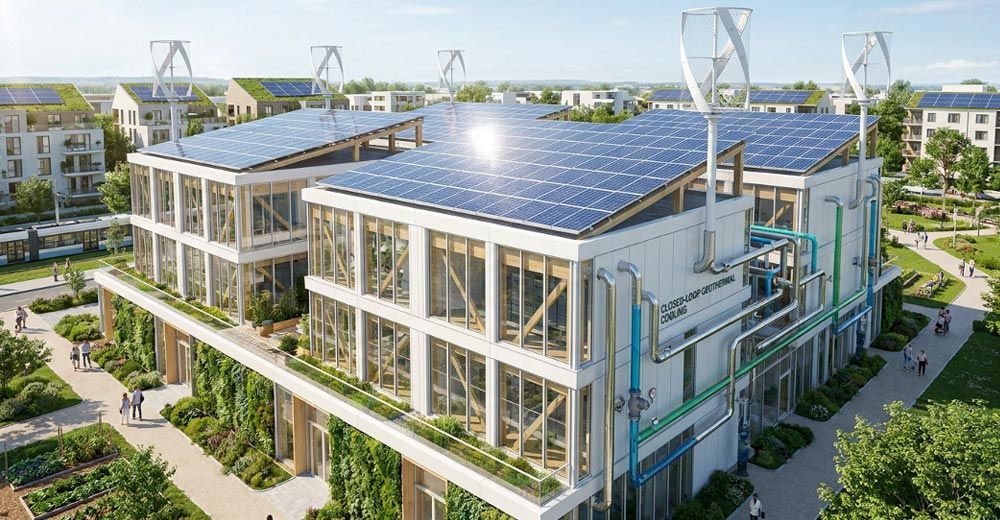
Bring your own power. Future builds need to incorporate dedicated local energy generation, co-located solar, geothermal, or even small modular reactors, rather than indiscriminately drawing from the public grid that residential neighborhoods also depend on.
Switch to closed-loop cooling. Evaporative cooling is cheaper upfront, but its political and environmental costs have become unsustainable. Closed-loop systems recycle the same liquid continuously rather than drawing substantial daily volumes from municipal water supplies, eliminating one of the two biggest points of community objection.
Turning Data Centers Into Actual Community Assets
Solving the resource-drain problem is necessary but not sufficient on its own. The more interesting opportunity is flipping data centers from pure extractors into active community contributors.
Consider waste heat. Thousands of running servers generate enormous amounts of it, and forward-thinking facilities in parts of Europe are already capturing that thermal energy and feeding it into municipal district heating networks, effectively providing free winter heating for nearby schools, hospitals, and residential buildings. A facility that was previously viewed purely as a burden becomes a tangible community benefit.
Data centers can also function as microgrid anchors. With on-site battery storage installed for their own backup needs, these facilities could export stored power back to the public grid during peak demand periods, helping prevent the very blackouts their presence might otherwise contribute to.
There's also an edge-computing opportunity: municipalities could receive dedicated access to local processing power for smart-city applications, real-time traffic optimization, emergency response coordination, and similar civic infrastructure needs that benefit from low-latency local compute.
What a Well-Designed Partnership Could Actually Look Like
Picture a town that successfully integrates one of these next-generation facilities rather than fighting it. The tech company brings its own renewable power generation and closed-loop cooling, meaning the town gains commercial tax revenue without needing to fund expensive expansions to water treatment or power infrastructure. Those tax dollars flow instead into schools, roads, and property tax relief.
Environmentally, the community gets free district heating piped from server waste heat into public pools and community buildings, while the local grid actually becomes more resilient, stabilized by the facility's battery arrays rather than strained by its operations. The presence of advanced infrastructure also tends to attract secondary technology businesses, creating local high-paying jobs that help retain talent rather than losing it to coastal tech hubs.
None of this is speculative or utopian. The underlying technology already exists. What's been missing is corporate willingness to engage with host communities as partners rather than as obstacles to route around.
The Real Stakes
The trillion-dollar industry bet on AI infrastructure cannot succeed if every proposed facility gets bogged down in zoning fights, public opposition, and permit denials. Communities pushing back against resource-extractive projects aren't being unreasonable, they're protecting finite shared infrastructure from disproportionate new demands.
The path forward requires the tech sector to genuinely shift its approach: modular architectures that avoid obsolescence before launch, mandatory closed-loop cooling and local power generation to neutralize the worst environmental friction, and a real commitment to sharing the technological and economic benefits with the towns hosting these facilities.
Companies that make this shift will secure their long-term ability to keep building. Companies that don't will increasingly find their expansion plans stalled by organized, justified local resistance and a wall of revoked permits that no amount of capital can simply buy past.
About the Creator
Mark Lim
Hi I am mark an automotive student and a car, tech and food enthusiast ! Im gonna try and post daily & hope you enjoy what I write and do share my page with people you know. I would gladly appreciate it! Cheers
Enjoyed the story? Support the Creator.
Subscribe for free to receive all their stories in your feed.
Comments
There are no comments for this story
Be the first to respond and start the conversation.